Cases · 2026-06-19
Best Violin Cases for Electric Violinists Who Travel to Gigs
The best violin case for most electric violinists who travel to gigs is a premium hard-shell 4/4 case with reliable latches, balanced backpack carry, and enough interior discipline to keep one show-ready routine from airport to backstage. My safest all-around pick is the BAM Classic Violin Case 4/4 because it balances protection, manageable carry, and a polished professional look. GEWA Bio is the smarter lighter-value buy, Bobelock Fiberglass makes more sense when protection matters more than weight, and Crossrock Fiberglass is the budget hard-shell answer. The key warning is fit: not every electric violin belongs in a standard case, so measure first if your body shape is unusual.
Follow Tanya Strings on Google
Add the site as a preferred source to see more new violin posts from Tanya Strings in Google.
Affiliate disclosure: Some links in this article are affiliate links. I may earn a commission if you make a purchase, at no extra cost to you.

What is the best violin case for most electric violinists who travel to gigs?
For most players, it is the BAM Classic Violin Case 4/4. I like it because it hits the right performer balance: hard-shell protection, a clean professional silhouette, and enough daily-carry practicality that the case still feels believable on trains, in ride shares, and during long venue corridors. Tanya Strings needs a case that protects the instrument, carries well with one compact gear bag, and still looks sharp when the same day includes content, a flight, hotel check-in, and a real show. The best case is not the one with the loudest marketing. It is the one that removes friction from the whole route.
My performer rule: if a case protects the violin but makes every transfer, stair, and stage-door move more stressful, it is still the wrong case for the gig.
Which violin cases are worth buying for electric violin travel right now?
These are the cases I would shortlist first if the goal is better protection, cleaner travel discipline, and fewer bad surprises between home, transit, and performance time.
| Product | Best for | Why Tanya would use it | Watch out for | Amazon link |
|---|---|---|---|---|
| BAM Classic Violin Case 4/4 | Most electric violinists who want one premium all-around travel case | I would trust it when the day mixes polished city gigs, flights, and fast load-ins and I still want the rig to feel elegant instead of bulky. | Premium pricing, and you still need a fit check if your electric violin body shape is far from a normal acoustic outline. | Check on Amazon |
| GEWA Bio Violin Case 4/4 | Players who want a lighter hard case for frequent city movement | I like it when the travel day includes stairs, train platforms, taxis, and long walks where lower carrying fatigue matters. | Lighter weight is helpful, but it does not replace a careful fit check or smart packing discipline. | Check on Amazon |
| Bobelock Fiberglass Violin Case 4/4 | Performers who want stronger shell confidence for rougher handling days | I would move here when baggage stress, van loading, or tougher event logistics matter more than shaving every gram from the carry. | Heavier carry can become annoying if most of your work is quick urban movement instead of rough transport. | Check on Amazon |
| Crossrock Fiberglass Violin Case 4/4 | Budget-conscious players who still want a hard shell instead of a soft bag | I would consider it when I want stronger basic protection at a friendlier price and I am ready to check the hardware carefully before trusting it for heavier travel. | Less refined finishing and hardware consistency than the more expensive options. | Check on Amazon |
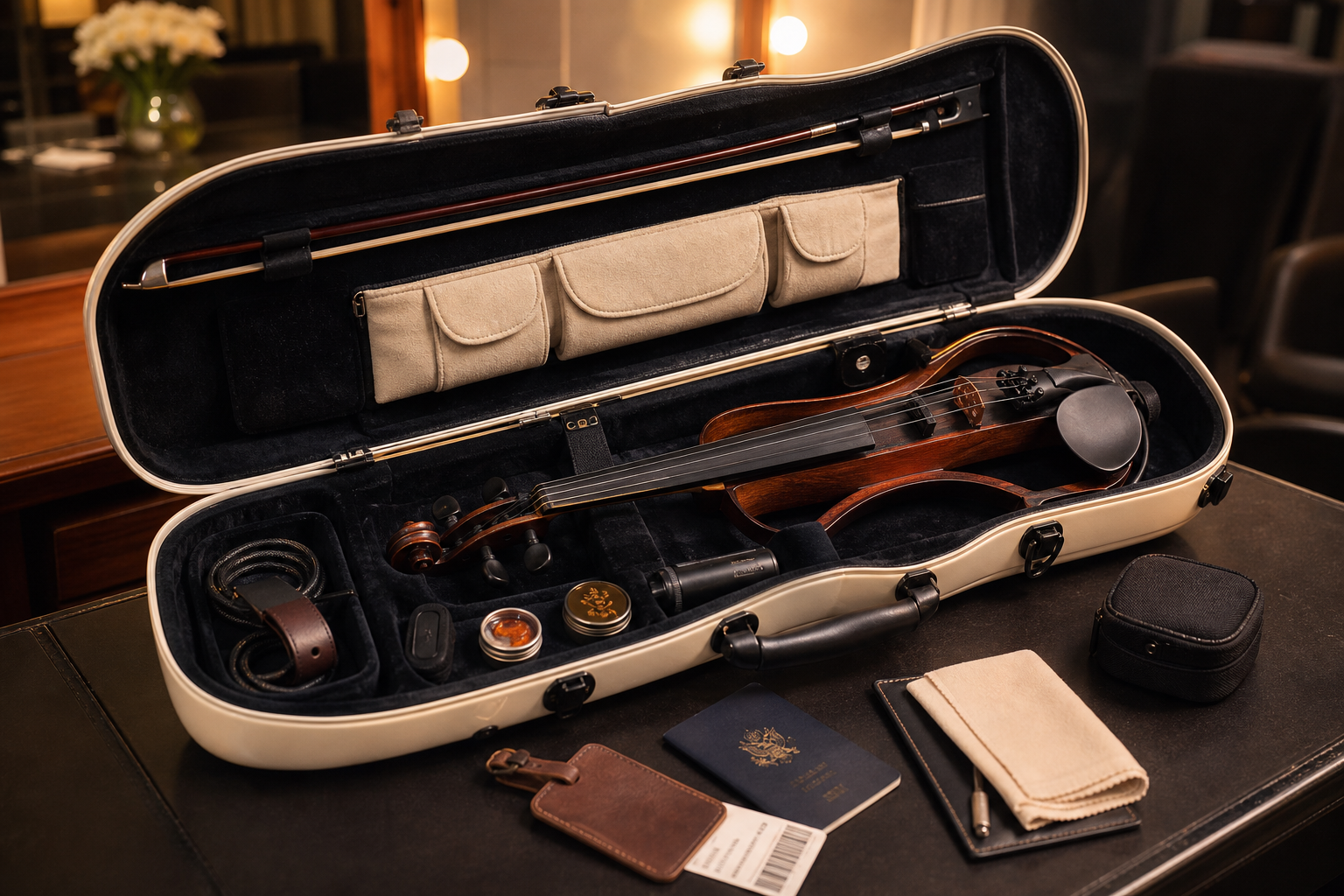
Will a normal 4/4 violin case fit every electric violin?
No, and this is where many electric violinists waste money. A standard 4/4 case usually works best for acoustic-outline electrics and slim solid-body instruments that stay close to normal violin dimensions. It becomes riskier with open-frame designs, larger five-string bodies, deep onboard control knobs, unusual lower bouts, or built-in rests that change the total depth.
What should you measure before buying?
I would measure the full body length, lower-bout width, upper-bout width, total depth at the highest hardware point, and whether the instrument still fits once the shoulder rest comes off. For Tanya Strings, fit matters more than branding because a premium case that pinches the wrong place is still the wrong purchase.

Why is BAM Classic the safest premium all-around travel case?
Because it feels balanced instead of extreme. I trust it when the case has to move through airports, trains, hotels, and stage doors without ever feeling like the weakest part of the day. It also suits Tanya Strings visually: professional, refined, and ready for the kind of electric violin work that lives equally on stage and on camera.
When does BAM Classic make the most sense?
It makes the most sense when you want one strong premium case instead of rotating between a light local case and a more serious travel shell.
- Pros: premium feel, clean professional appearance, dependable hard-shell logic, and strong all-around travel credibility.
- Cons: higher price and less value if your instrument shape still forces compromise on fit.
See BAM violin cases · Find BAM Classic options on Amazon
When is GEWA Bio the smarter lighter-weight buy?
The GEWA Bio is the better answer when your real problem is carrying fatigue. If the typical day includes city walking, train changes, stairs, waiting rooms, and one shoulder already working around a gear bag, lighter carry starts to matter as much as shell toughness. I like this lane when the violinist already travels carefully and wants less physical drag without dropping down to a soft case mindset.
Who should pick GEWA Bio first?
I would point it at working performers who move often, travel cleanly, and need a case that stays practical even when the whole day is built on transfers rather than one direct load-in.
- Pros: lighter carry, cleaner city-travel workflow, and a strong balance between protection and mobility.
- Cons: less psychological armor than a heavier fiberglass shell on rougher transport days.
See GEWA cases and accessories · Find GEWA Bio options on Amazon
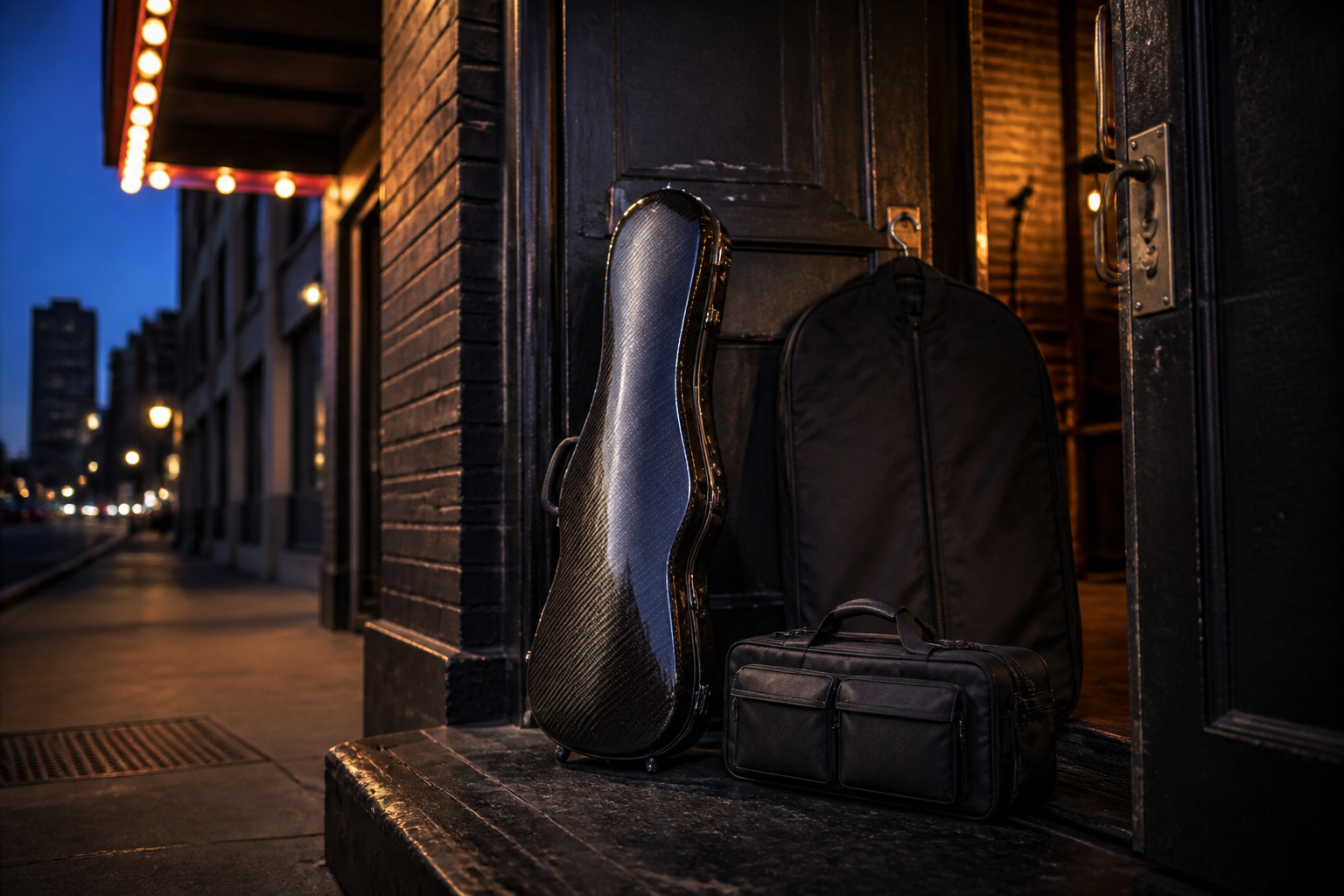
Who should choose Bobelock Fiberglass over lighter cases?
The Bobelock route makes sense when you expect tougher handling and want stronger shell reassurance. I would rather carry extra weight than gamble with a valuable electric violin on rough van days, event loading, or baggage scenarios that already look unfriendly. This is the case for performers who know the route is not always gentle and who want protection to win the argument.
What does Bobelock solve better than lighter cases?
It solves peace of mind. If you tend to flinch every time the case touches a van floor, venue wall, or hotel cart, the heavier shell logic may be worth it.
- Pros: stronger shell confidence, better emotional comfort on rougher travel, and a serious protection-first personality.
- Cons: more carry weight and less elegance if your typical day is mostly smooth urban transit.
See Bobelock cases · Find Bobelock Fiberglass options on Amazon

When is Crossrock Fiberglass the best budget hard-shell option?
Crossrock makes the most sense when the budget is real but you still want a hard shell, not a soft compromise. I would look at it for players who are moving into more frequent gigs, want to leave entry-level soft bags behind, and are willing to inspect hardware and fit more carefully instead of buying on autopilot.
Why can Crossrock still be a smart buy?
Because the first serious travel upgrade does not always need premium pricing. Sometimes the real win is simply moving from nervous carrying to a shell that finally feels deliberate.
- Pros: better protection than soft bags, friendlier price, and a useful step-up for gigging players.
- Cons: less refined details, and not the case I would trust first for the most demanding travel schedule.
See Crossrock cases · Find Crossrock Fiberglass options on Amazon
What should you buy first if your case budget is limited?
If money is tight, I would buy in this order:
- Buy the fit first: measure the electric violin honestly and remove bad options before chasing brand prestige.
- Buy the shell next: get the lightest case that still matches the real route you travel most often.
- Buy later: nicer accessory pouches, premium strap comfort, or a second travel-specific case after the core protection is solved.
I would rather see one correctly fitting mid-priced hard case than an expensive shell that fights the instrument or turns every transfer into a chore.

How does Tanya Strings choose a violin case for real gig travel?
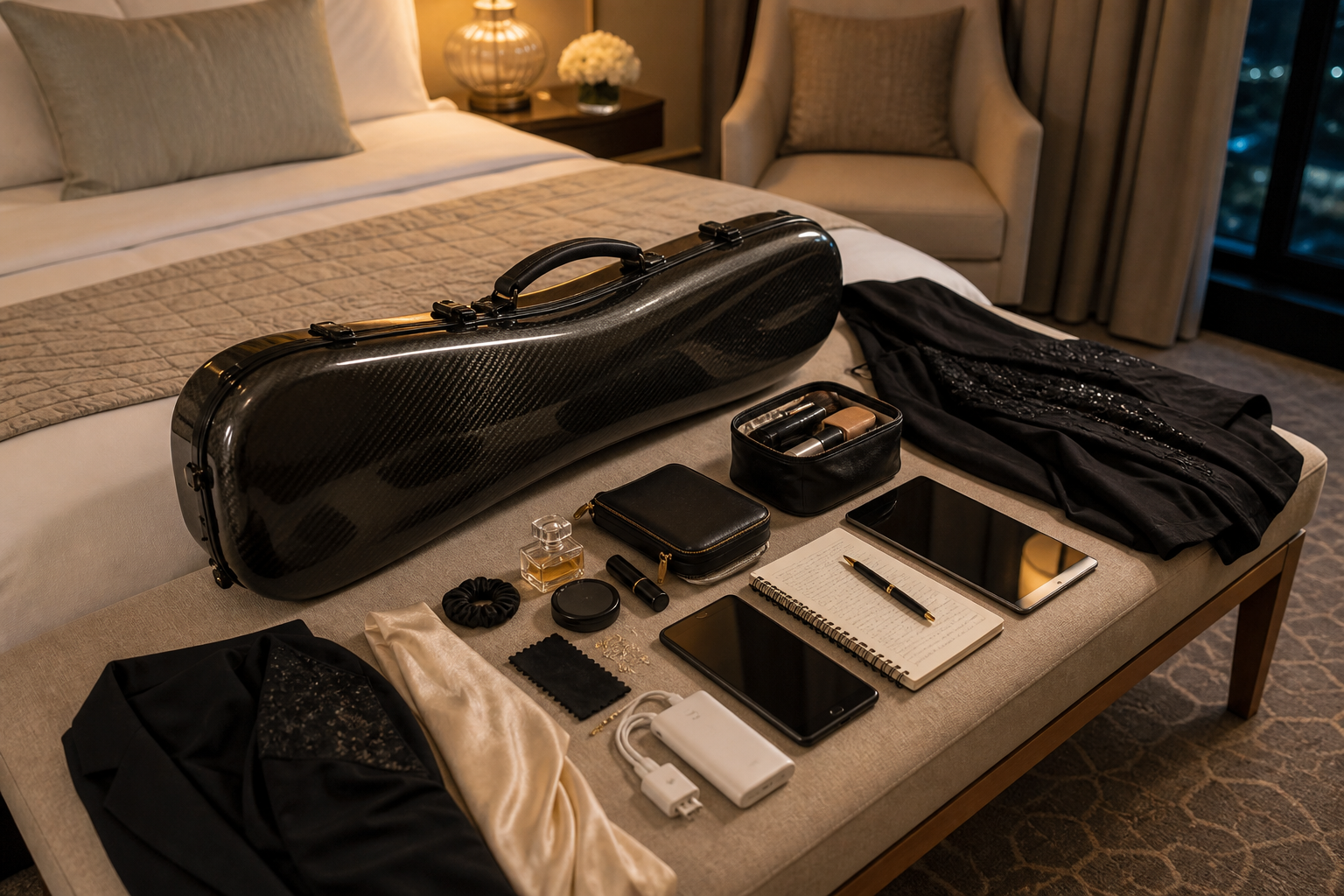
I think about the whole travel chain, not just the case in isolation. An electric violin performer and content creator needs the instrument, the look, and the movement between locations to stay consistent. If the case slows down check-in, catches on doorways, ruins shoulder comfort, or turns hotel prep into a mess, it is hurting the performance before the first note.
- Check the route first: local car gigs, train travel, flights, and rough event logistics all ask different things from the case.
- Protect the fit: shell quality does not matter if the instrument sits awkwardly or hardware presses where it should not.
- Keep the carry disciplined: I want one clear movement pattern with the case plus one compact secondary bag.
- Keep the look professional: the case is part of the artist presentation before the violin is even out.
That is why Tanya Strings buys cases like a performer, not like a collector. The right case makes the whole day more stable, more elegant, and easier to trust.
FAQ
What is the best violin case for most electric violinists who travel to gigs?
For most performers, a premium hard-shell 4/4 case is the safest route, and BAM Classic is my all-around pick because it balances protection, carry comfort, and a polished professional feel.
Will a standard 4/4 violin case fit every electric violin?
No. Acoustic-outline electrics often fit more easily, but open-frame shapes, deeper hardware, and some five-string bodies need careful measurements before you buy.
Should I buy the lightest case or the strongest case?
Buy the lightest case that still matches the roughness of your real travel route. Smooth city movement rewards lighter carry. Tougher handling justifies more shell.
Can I carry my electric violin case onto a plane?
Often yes, but never assume it. A slim violin case helps, yet airline policy, aircraft size, and boarding timing still matter.