News · 2026-06-21
Violin News Roundup: Brahms on Record, EOIVC's Winner, Valencia's Festival Model, and Crossover Touring Scale
As of Saturday, June 21, 2026, the most useful violin and performance news is pointing in four directions at once. The Guardian's June 18 review of James Ehnes and Andrew Armstrong's Brahms album says top-level violin recording still wins through partnership and tone, the Elevar Foundation's EOIVC page keeps Hyun Jae Lim's January first prize in view as a real career signal, Valencia's Serenates festival opened June 20 with ARTE filming its launch and 5-euro tickets, and Guitar World's June 17 report on Polyphia's world tour shows how wide the market still is for precise, genre-fluid instrumental shows.
Follow Tanya Strings on Google
Add the site as a preferred source to see more new violin posts from Tanya Strings in Google.
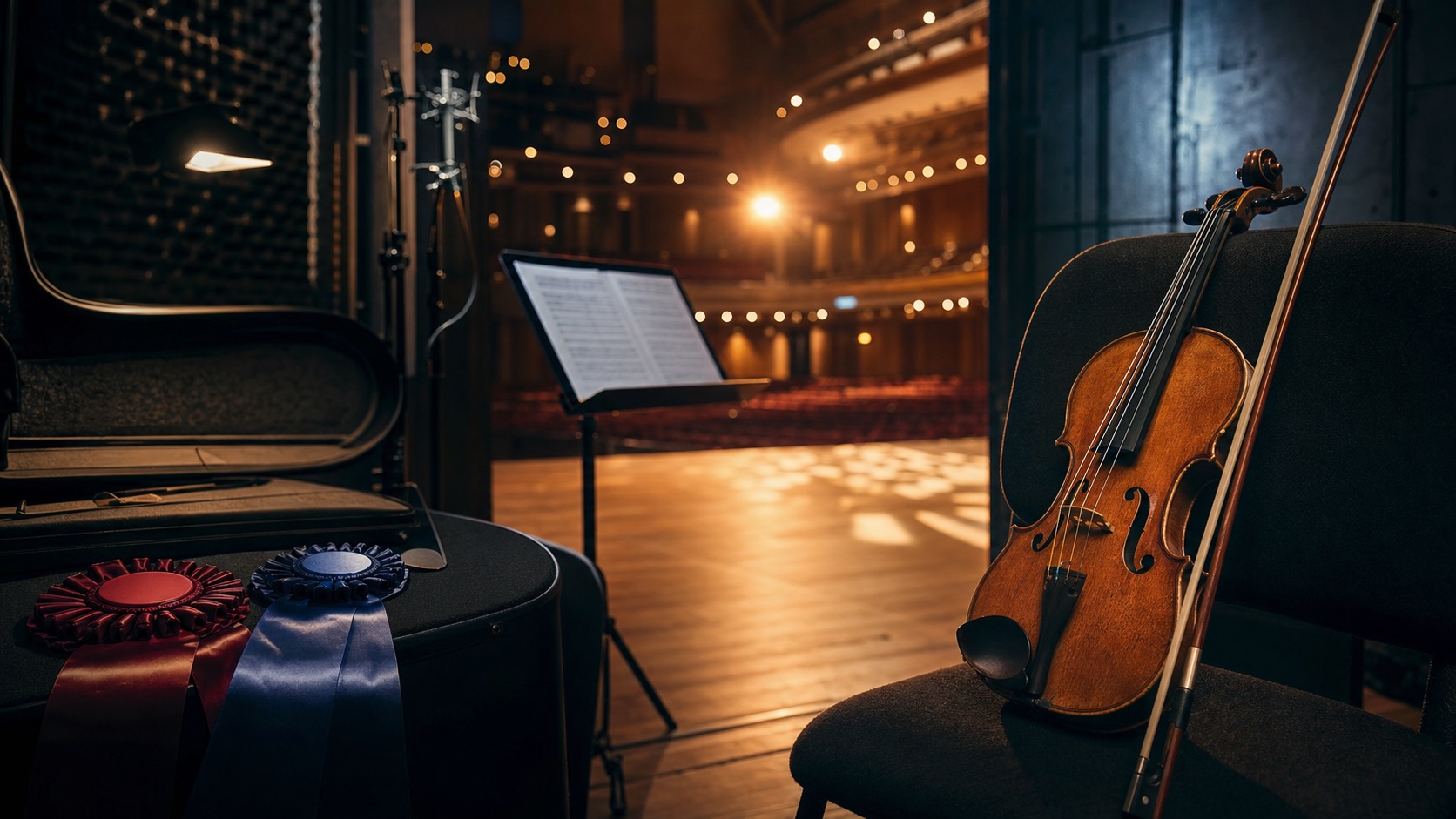
Why does the Ehnes-Armstrong Brahms review matter right now?
Because it points back to an old truth that still decides whether a violin release lasts: the partnership has to sound lived in. In the Guardian's June 18 review, James Ehnes and Andrew Armstrong are praised for performances that feel technically effortless, warm, and deeply aligned rather than flashy for the sake of quick attention. That matters in 2026 because the recording market is crowded with isolated singles, fast clips, and visually driven launch cycles. A full Brahms statement still cuts through when the phrasing, pacing, and piano-violin balance feel inevitable. It is a reminder that classical violin recording is not surviving on museum value. It is surviving when the artistic relationship is strong enough to make familiar repertoire feel specific again.
Tanya's performer take: violinists and content creators should read this as a quality-control lesson. A polished clip can open the door, but the career lift still comes when collaborators make the music sound coherent over a full program, not just for fifteen seconds.
What does EOIVC's 2026 winner tell us about the violin pipeline?
The most useful competition signal here is not new in the calendar, but it is still current in career terms. The Elmar Oliveira International Violin Competition page shows Hyun Jae Lim taking first prize at the January 18 finals, plus special awards for the commissioned work and an Ysaÿe solo sonata. That combination is more interesting than a single headline prize because it suggests range under pressure: concerto authority, contemporary fluency, and solo command. For anyone watching the next generation of violin soloists, that is a stronger sign than a bio line alone. It also fits Tanya Strings' audience well. Event planners, collaborators, and music fans are increasingly looking for artists who can move between standard repertoire, new music, and a camera-ready public profile without losing seriousness.
Tanya's performer take: competitions still matter most when they point to repeatable professional skills. Winning is valuable. Winning across several musical demands is what makes promoters and presenters keep watching after the medal moment passes.

Why is Valencia's Serenates model worth attention outside Spain?
Because it shows a live-music formula that many organizers talk about and too few actually execute. Cadena SER reported on June 18 that Serenates returns to the cloister of La Nau from June 20 to July 2 with twelve concerts, a broad stylistic mix, ARTE coverage of the opening concert, and general admission priced at 5 euros. That is a serious programming choice. It keeps artistic ambition high while removing the feeling that summer culture must choose between prestige and access. For violinists and string performers, the lesson is practical: audiences often respond when the setting is distinctive, the framing is clear, and the barrier to entry is low enough for curiosity to turn into attendance. For planners, this is a strong reminder that reach can come from smart design, not only from giant budgets.
Tanya's performer take: if you want broader audiences for strings, do not flatten the art. Sharpen the context. Beautiful spaces, visible storytelling, and realistic pricing can do more for live turnout than another vague promise of accessibility.
What does Polyphia's new world tour signal for crossover string performers?
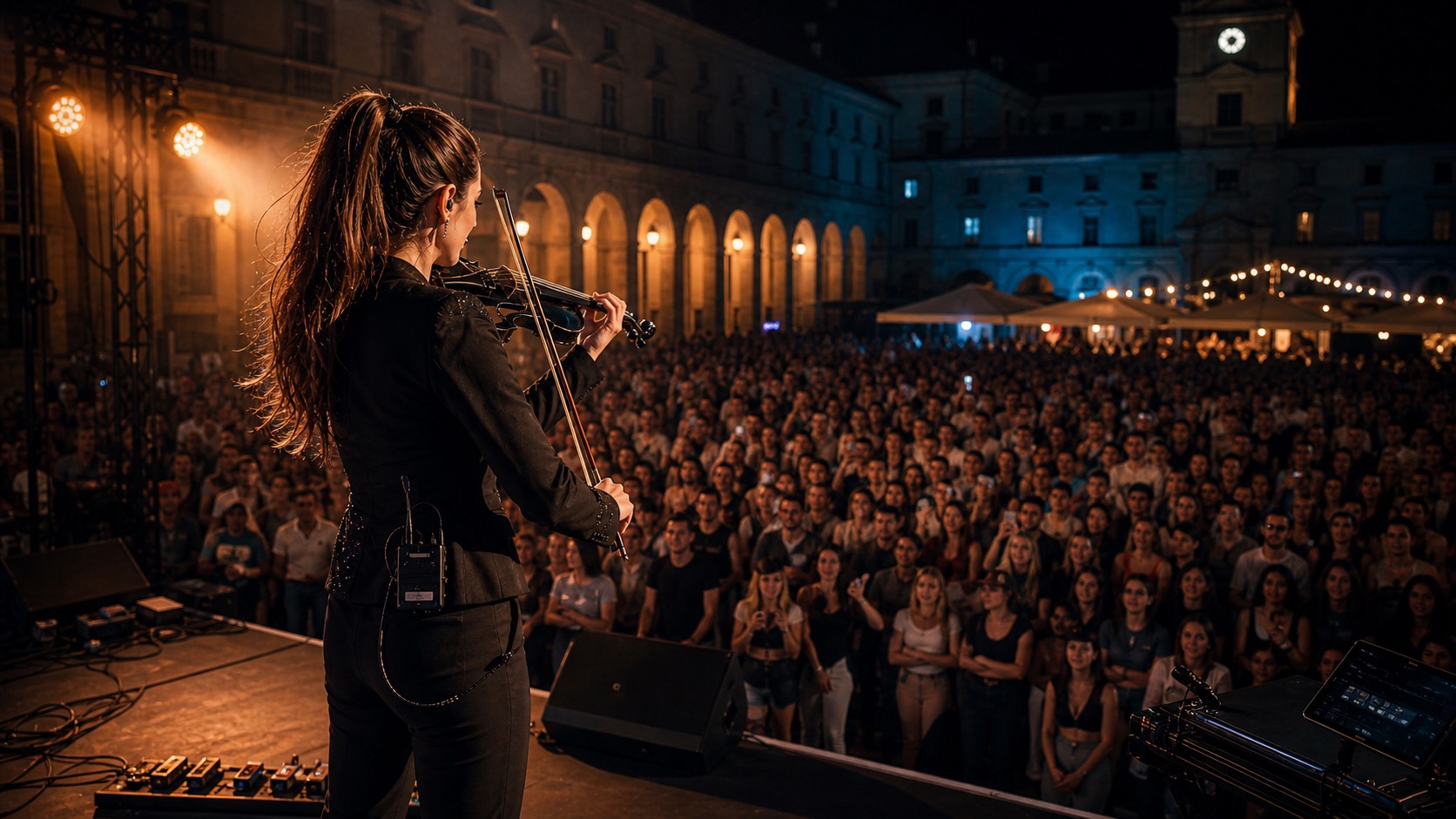
Even though the headline comes from the guitar world, the booking lesson is highly relevant for electric violinists. Guitar World reported on June 17 that Polyphia's 2026 world tour will run across North America, Europe, and the UK, with presales beginning June 16 and general on-sale from June 19, while the band promotes a new single and upcoming album. The key point is not genre fandom. It is scale. A detailed, instrumental, production-aware live act can still sell a large international routing plan when the artistic identity is sharp enough. That matters for Tanya Strings because crossover string performers are often told to simplify the music or soften the visual concept in order to travel. Polyphia's touring logic argues the opposite. Precision, a defined sonic world, and a committed fan base can travel together when the show feels authored from top to bottom.
Tanya's performer take: electric violin is strongest when it is treated as a full live language, not as a novelty add-on. Fans will follow technical music if the performance world is clear, the tone is repeatable, and the energy on stage feels intentional.
What should violinists, planners, and music fans watch next?
- Watch whether new violin releases feel collaborative enough to outlast the launch week.
- Track which young soloists prove range across concertos, solo work, and contemporary repertoire.
- Pay attention to festival models that pair strong curation with realistic ticket access.
- Expect more crossover touring to reward artists with a clean sonic identity and a stage world people recognize fast.