News · 2026-06-22
Violin News Roundup: Verbier's Summer Signal, Aspen's Screen Strategy, Grand Teton's Mahler Push, and Real-Time AI Accompaniment
As of Monday, June 22, 2026, the most useful violin news is less about a single star turn and more about how strong festivals are packaging string performance for live and remote audiences. Verbier Festival's official 2026 page is already pushing a July 23 Daniel Harding, Joshua Bell, and Bryn Terfel date while keeping Virtual Hall and streaming in the frame. Aspen Music Festival and School is treating video screens as part of the concert experience. Grand Teton Music Festival is using a fresh Mahler release to reinforce its summer identity, and a June 10 arXiv paper on StreamMUSE shows real-time accompaniment systems getting more practical.
Follow Tanya Strings on Google
Add the site as a preferred source to see more new violin posts from Tanya Strings in Google.
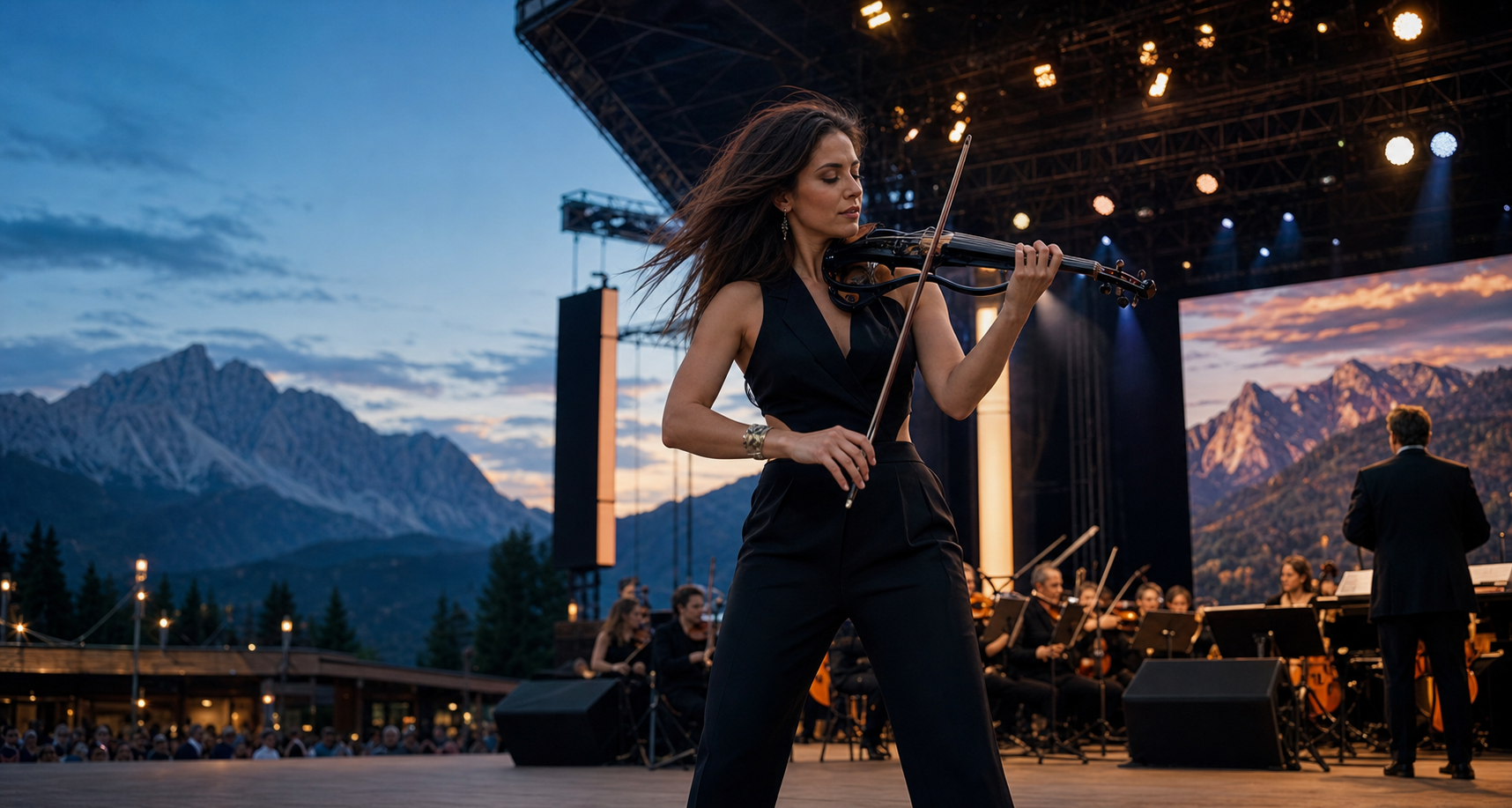
Why does Verbier's current program feel bigger than a standard summer listing?
Because the current signal from Verbier is about format as much as repertoire. The festival's official homepage places July 16 to August 2, 2026 front and center, shows tickets already on sale, and highlights a July 23 orchestral concert with Daniel Harding, Joshua Bell, and Bryn Terfel. On the same page, the festival keeps its Virtual Hall experience and its broadcast and streaming offer visible as part of the main identity, not as an afterthought. That matters for violinists because it shows how top-level summer branding now works: a violin event is being sold as a destination experience with live prestige, digital replay value, and a recognizable visual frame around the artist.
Tanya's performer take: this is the level electric and crossover string performers should study. The playing still has to be elite, but the event becomes stronger when the audience instantly understands the world around the performance.
What is Aspen really saying with its video-screen experiment?
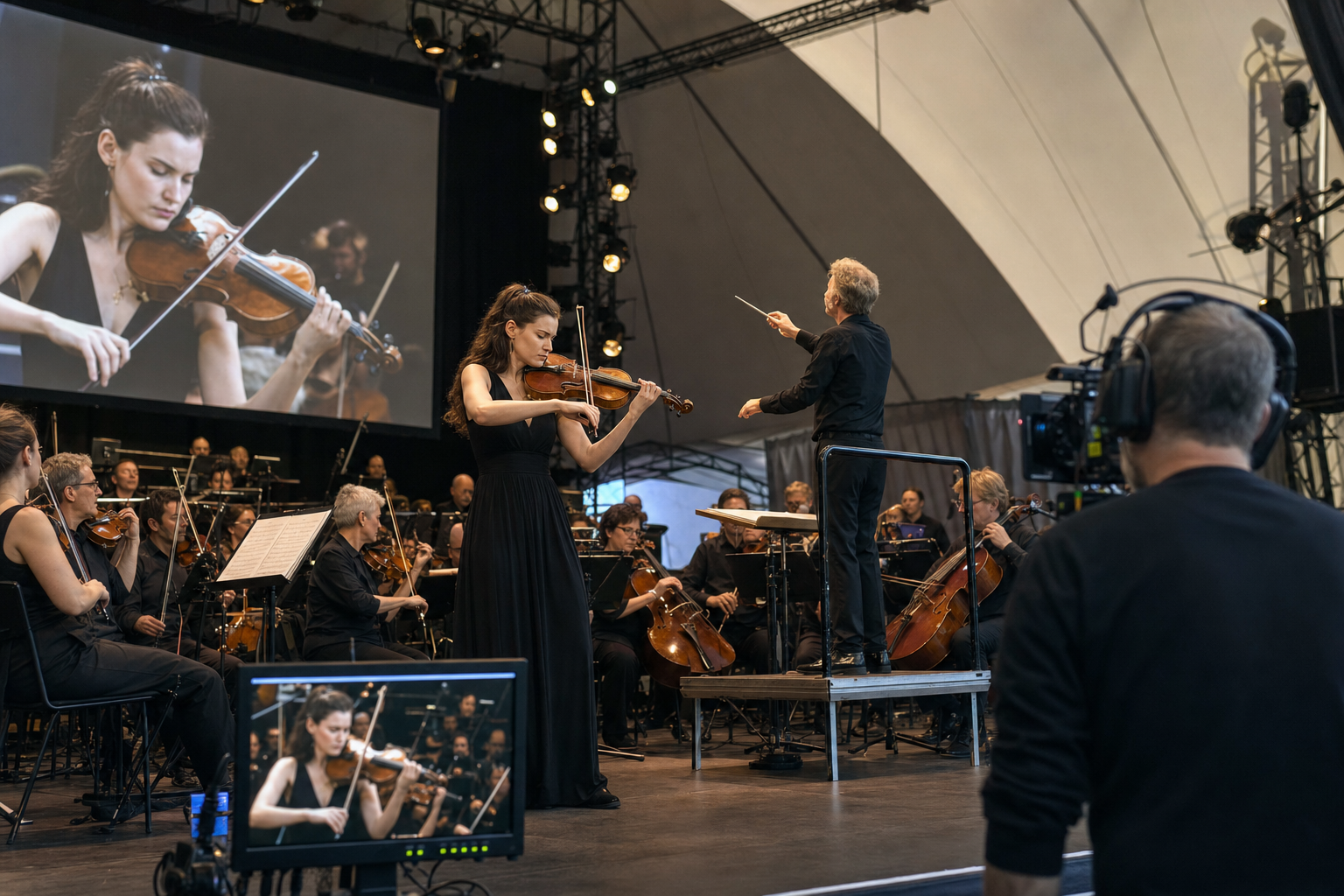
Aspen's current homepage is unusually direct about it. In its news section, the festival says that during weeks 7 and 8 a professional team will capture close-up images coordinated with the music, specifically highlighting performers' faces, fingers, interactions, and dramatic musical moments. That is more than venue utility. It is a statement that visual access can deepen attention when it is designed musically instead of dumped on top of the concert. Aspen also frames its 77th season, running July 1 to August 23, under the theme "For All," which makes the screen decision even more interesting. For planners, the lesson is practical: better sightlines and better camera language can make string playing feel more immediate without turning the concert into empty spectacle.
Tanya's performer take: violin is one of the few instruments that gains real dramatic value from intelligent close-ups. Bow contact, left-hand confidence, and ensemble communication are part of the show when the production team knows what to reveal.
Why does Grand Teton's Mahler release matter to violinists who care about live reputation?
Because Grand Teton is showing how a summer orchestra can extend its value beyond the dates on the calendar. The festival's homepage is currently promoting Season 65 with names including Maria Ioudenitch, Madeline Adkins, and Punch Brothers, while also giving a clear spotlight to Mahler: Symphony No. 5, available worldwide on Reference Recordings. The festival's album page frames the recording as a serious international statement from Sir Donald Runnicles and the Festival Orchestra, with physical and digital formats and repeated emphasis on the sound of Walk Festival Hall. For violinists and music fans, that is a reminder that a festival can turn one strong recording into year-round proof of artistic level. It is not just a souvenir. It becomes evidence.
Tanya's performer take: performers should notice the career logic here. A live season is stronger when it leaves behind a document that sounds authoritative enough to keep working after the final applause.
Is real-time AI accompaniment close enough to matter on stage yet?
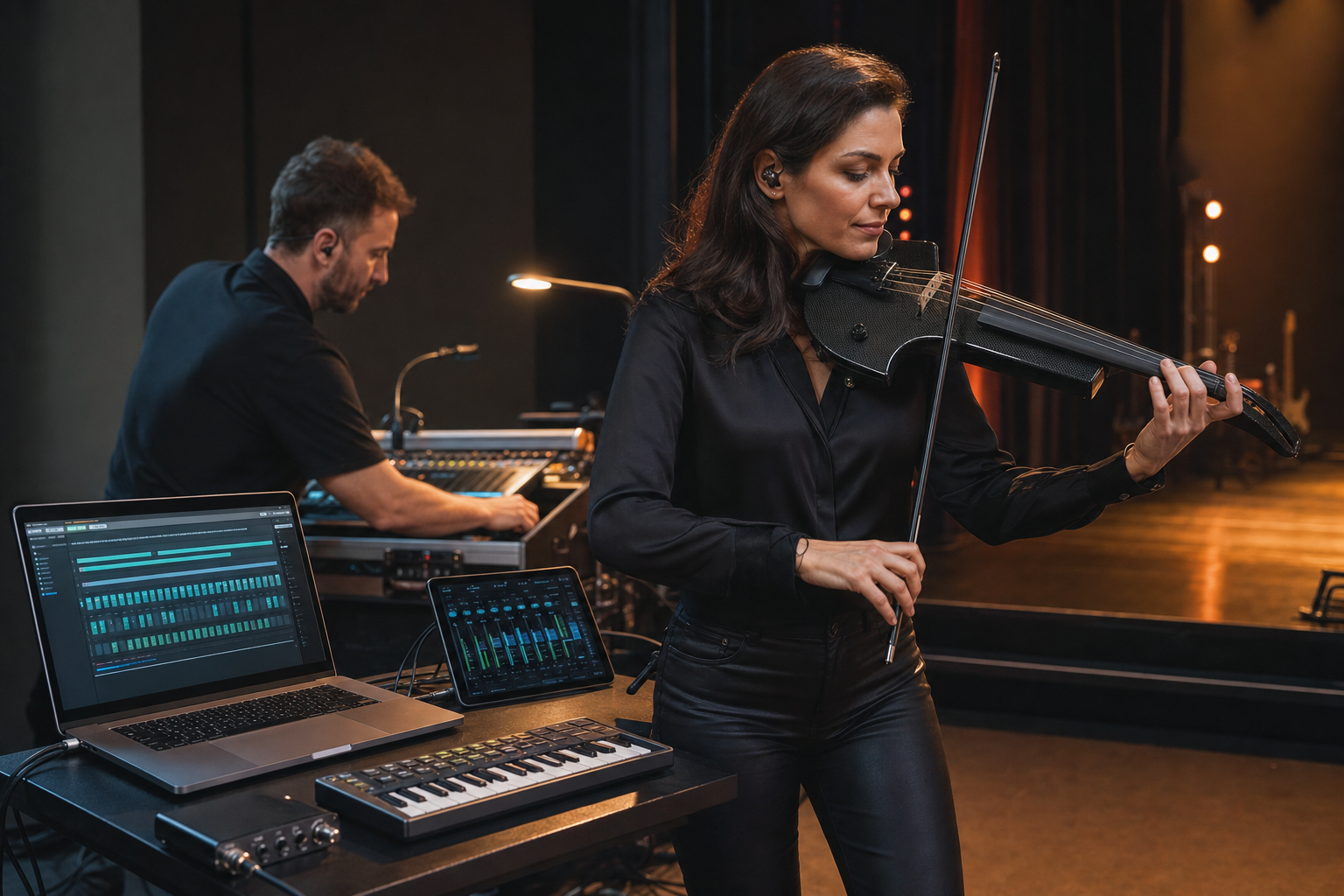
The new StreamMUSE paper suggests that the answer is now serious enough to watch closely. In "Real-Time Language Model Jamming: A Case Study for Live Music Accompaniment Generation", posted on arXiv on June 10, the authors describe a client-server system for frame-synchronous streaming inference, built to keep generated accompaniment aligned with an external musical signal under real latency constraints. That does not mean human accompanists are about to disappear, and it should not be read that way. What it does mean is that the technical conversation is moving from vague demos toward timing discipline, deployment limits, and creative use cases that performers can actually test. For crossover violinists and content creators, that is where the topic becomes interesting.
Tanya's performer take: I would treat tools like this as arrangement labs, rehearsal extensions, and content-development partners first. They matter when they help a solo performer test ideas faster without breaking musical timing.
What should violinists, planners, and music fans watch next this week?
- Watch which summer festivals sell violin as a full visual and digital experience rather than just a prestige booking.
- Track whether screen direction and camera work make string playing feel clearer or merely louder.
- Pay attention to recordings that keep a seasonal orchestra visible after the festival dates pass.
- Expect more real-time AI music tools to be judged by synchronization and usability, not by novelty alone.