News · 2026-06-23
Violin News Roundup: Seattle's Summer Circuit, Bowdoin's Streaming Scale, Lindsey Stirling's Tour Signal, and the KeyComp Warning
As of Tuesday, June 23, 2026, the clearest violin story is about reach. The Seattle Chamber Music Society is running a June 18 to July 26 festival that stretches from concert halls to islands, parks, and a Concert Truck route. Bowdoin International Music Festival is pairing 80 faculty and guest artists with 200 concerts and events and live streaming to 113 countries. Lindsey Stirling's official site is actively pushing the Duality Untamed Tour with PVRIS, and today's Guardian reporting on KeyComp is a warning about what happens when software starts replacing pit players.
Follow Tanya Strings on Google
Add the site as a preferred source to see more new violin posts from Tanya Strings in Google.
Why does Seattle Chamber's current festival model matter beyond Seattle?
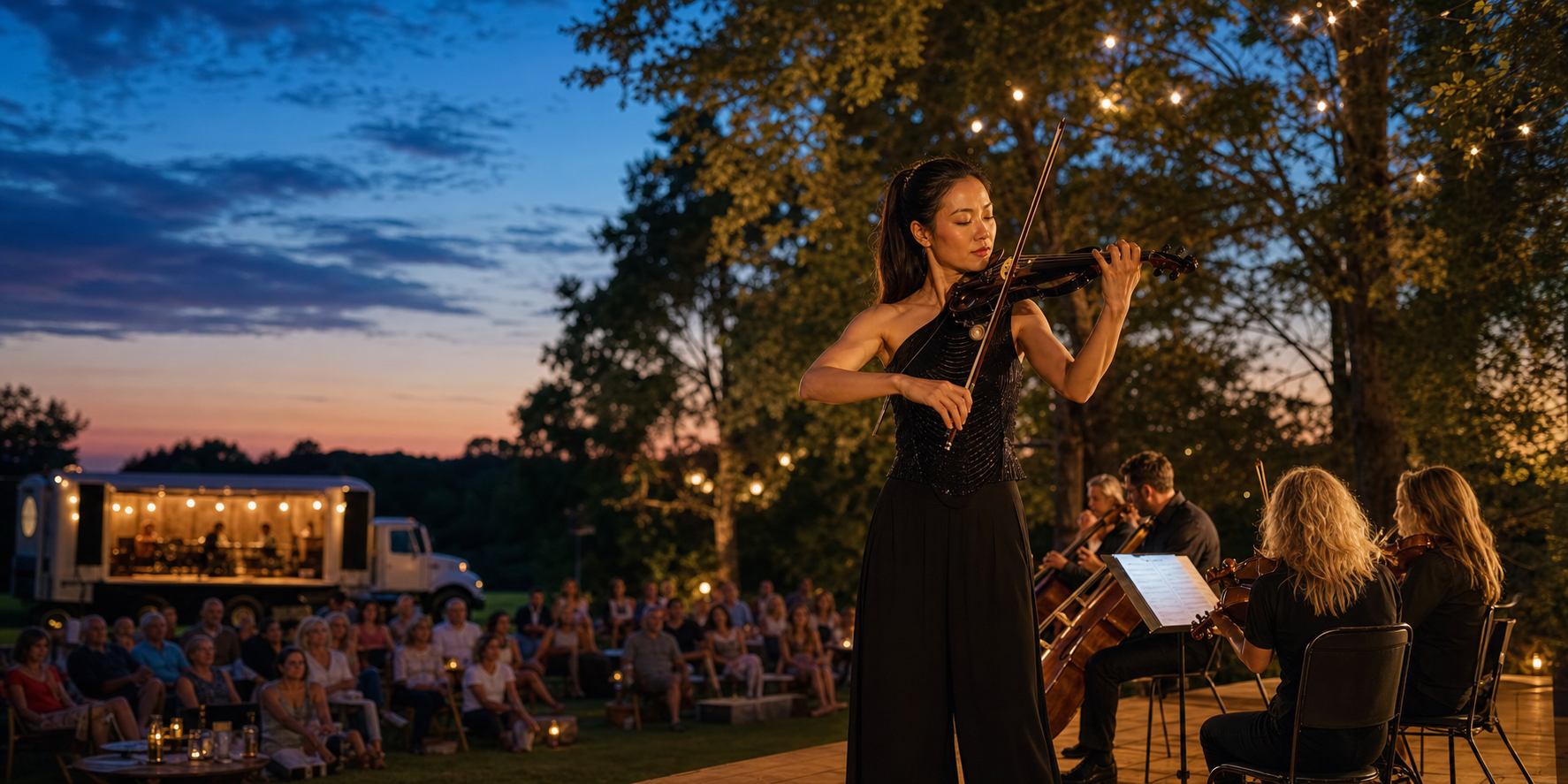
Because the Seattle Chamber Music Society is showing how a violin-centered organization can stay serious without staying still. Its homepage currently frames the 2026 Summer Festival as running from June 18 to July 26, with music moving across concert halls, islands, parks, neighborhoods, and a visible Concert Truck schedule. The same page also pushes the Virtual Concert Hall with six HD camera angles, behind-the-scenes material, and livestream plus on-demand access. That combination matters because it gives presenters a cleaner answer to a problem many still handle poorly: how do you widen access without flattening the art? Seattle's answer is to keep the music ambitious while changing the delivery system around it.
Tanya's performer take: this is the kind of model electric violinists, chamber artists, and event planners should study closely. A stronger audience does not always come from lighter programming. Sometimes it comes from sharper distribution.
What does Bowdoin tell us about the current ceiling for summer string visibility?
Bowdoin's homepage is unusually blunt about scale, and that is why it matters. Right now the festival is advertising that all tickets are on sale, while also placing four numbers front and center: 80 faculty and guest artists, over $650,000 in scholarships, 200 concerts and events, and live streaming to 113 countries. For violinists, that is more than a campus-festival brag sheet. It is evidence that serious string training and public-facing performance no longer have to live in separate lanes. Bowdoin is selling excellence, access, and international visibility together. When a summer institution can make that blend feel normal, it raises expectations for everyone else in the field, from conservatory programs to regional presenters.
Tanya's performer take: performers should pay attention to the message behind the numbers. Skill still wins first, but visibility now grows faster when education, performance, and digital reach are designed as one system.
Why is Lindsey Stirling's current tour push still a useful signal for electric violinists?
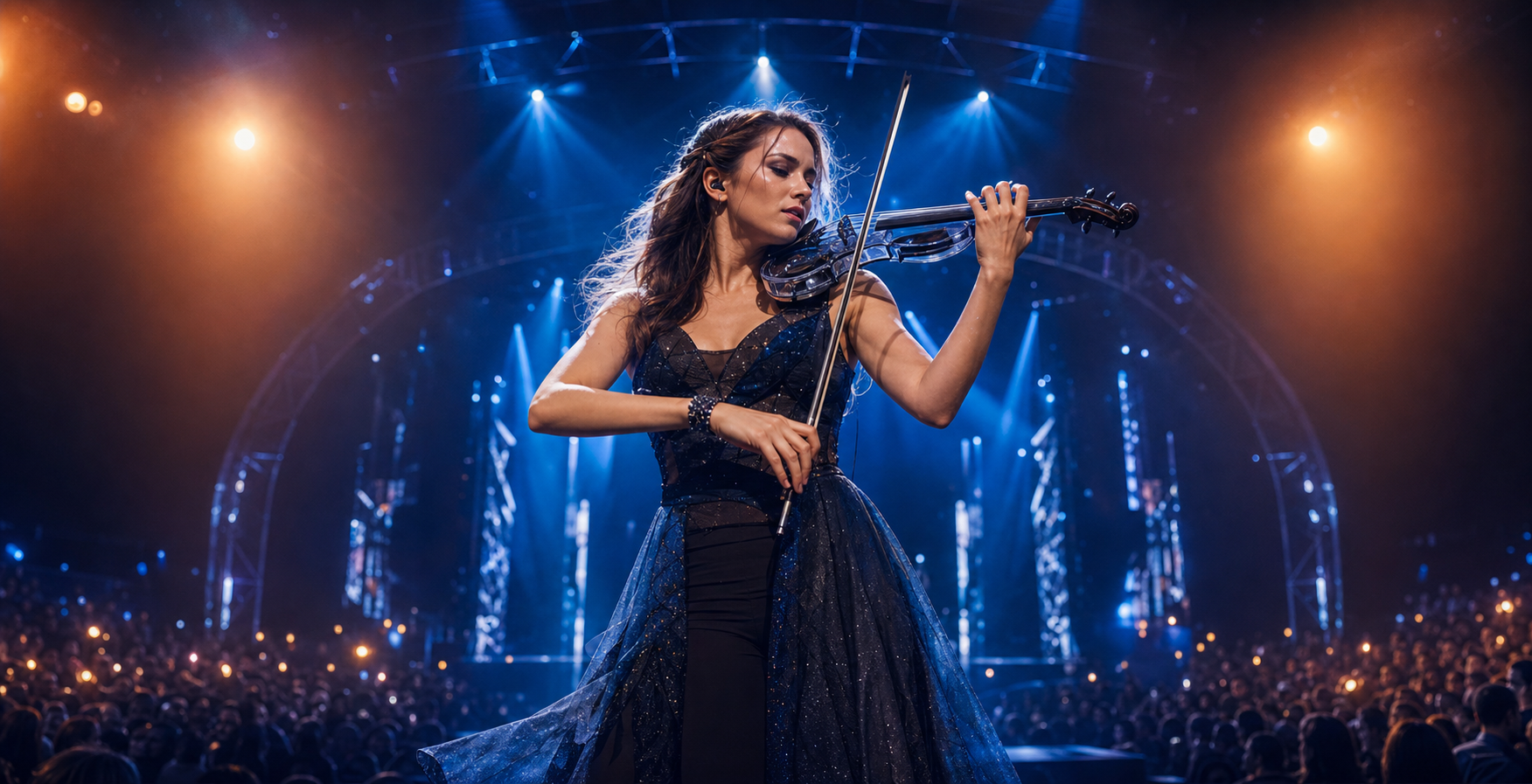
Because the official Lindsey Stirling site is still selling the right lesson. The homepage is currently centered on the Duality Untamed Tour with PVRIS, while also keeping new music and deluxe releases in view. The point is not that every electric violinist should copy her sound or scale. The point is that electric violin still works best when it is treated as a complete entertainment language instead of a specialty instrument that appears only for texture. Stirling's public framing keeps reminding the market that violin can headline a branded world with pop pacing, visual clarity, and ticket-level ambition. For Tanya Strings, that matters because it supports the same performer-first truth: audiences follow a violinist further when the show feels authored, not improvised.
Tanya's performer take: world-class electric violin performance is not only about clean playing. It is about building a stage identity people can recognize in one glance and trust over a full set.
What should violinists make of today's KeyComp warning from the musical-theatre pit?
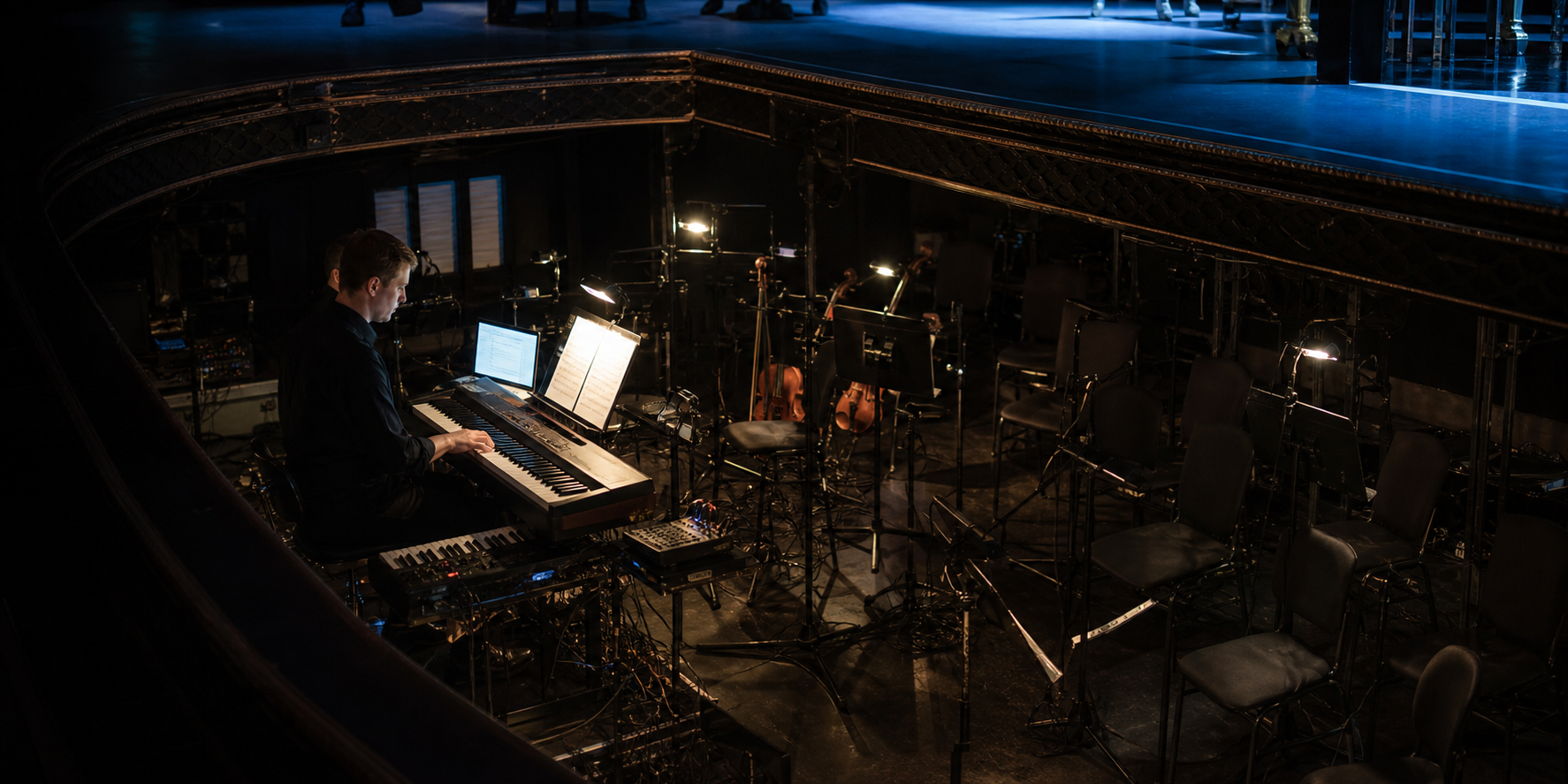
The Guardian's June 23 report matters because it pulls a quiet labor issue into plain sight. The story describes how KeyComp is being used to let a single keyboardist trigger custom-recorded orchestral material in real time, allowing producers to shrink pit bands and, in some cases, reduce string chairs to one or two players. For violinists, violists, and freelancers who rely on theatre work, that is not abstract technology news. It is a direct signal about where live-instrument jobs can erode first when budgets tighten and software becomes easier to justify. This story also matters for audiences and planners. Once a production normalizes thinner live forces, it changes what listeners expect from "live music" itself, and that can ripple far beyond musical theatre.
Tanya's performer take: I would separate useful stage tech from labor-cutting substitution. Tools that help performers deliver better shows are welcome. Tools that remove the players who make the show breathe should be challenged hard.
What should performers, planners, and music fans watch next this week?
- Watch which festivals make chamber and violin programming easier to access without softening the artistic standard.
- Track how often streaming is being treated as core programming instead of leftover documentation.
- Pay attention to crossover violin tours that present a full stage world rather than a novelty slot.
- Expect more arguments this year about where useful music software ends and job-cutting replacement begins.