Multi-Effects · 2026-06-24
Best Multi-Effects Pedals for Electric Violinists on Stage
The best multi-effects pedal for most electric violinists is the Line 6 HX Stomp because it gives you touring-grade tones, flexible routing, IR support, and a serious USB interface in a compact box that still fits a violin-friendly fly rig. If you want a faster touchscreen workflow with an expression pedal already built in, the BOSS GX-10 is the smarter pick. If you hate menu diving, the BOSS ME-90 is the easiest live buy. The HeadRush MX5 is strong for scene changes and hands-free editing, while the Zoom G6 makes sense for bigger patch libraries and long looper sets. Tanya Strings buys multi-effects for repeatable performance control, not gadget collecting.
Follow Tanya Strings on Google
Add the site as a preferred source to see more new violin posts from Tanya Strings in Google.
Affiliate disclosure: Some links in this article are affiliate links. I may earn a commission if you make a purchase, at no extra cost to you.
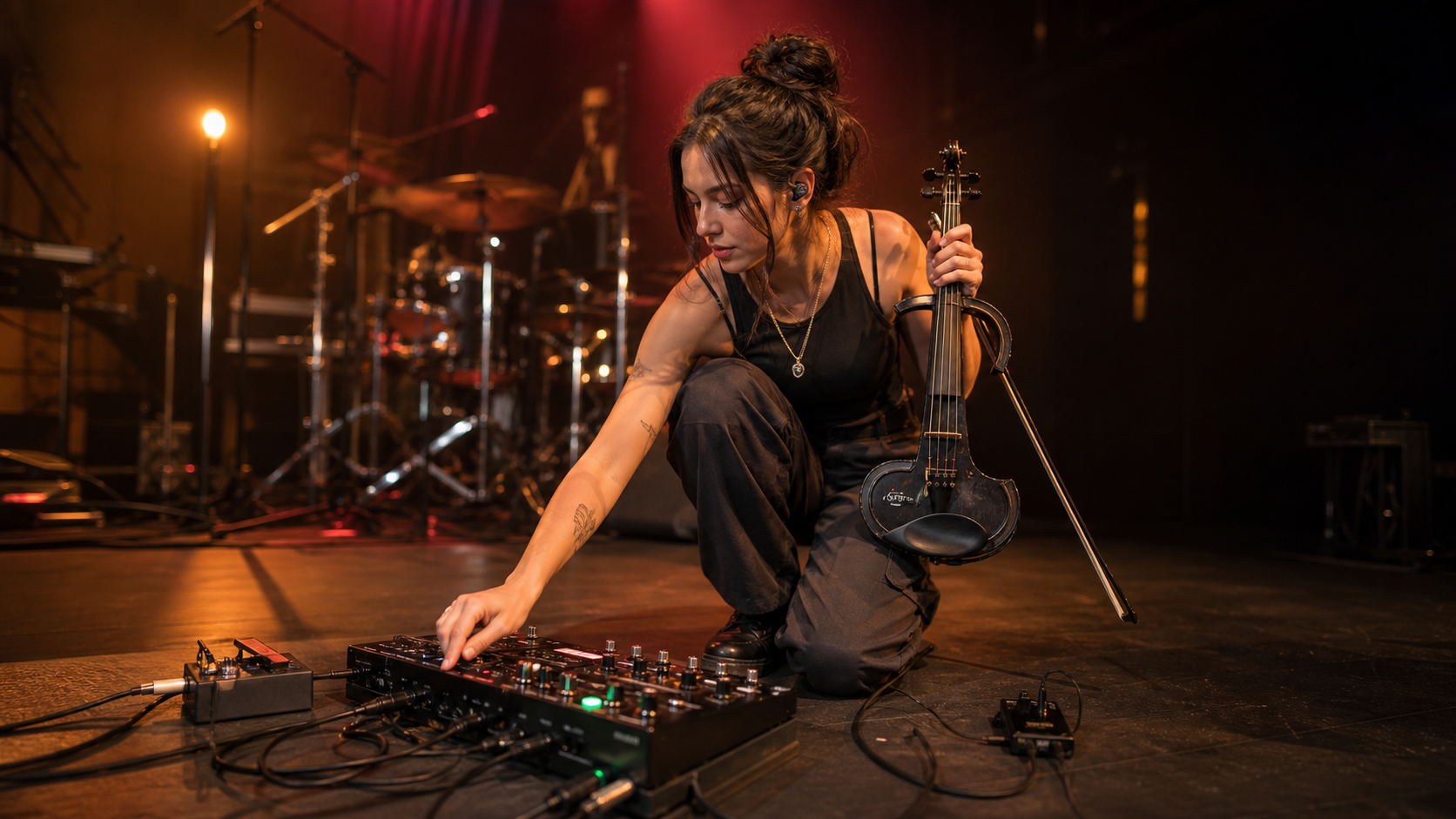
What is the best multi-effects pedal for most electric violinists?
For most players, it is the HX Stomp. The reason is not hype. It is balance. An electric violin rig usually needs compact size, reliable wet effects, a clean direct path, IR support, and enough routing freedom to behave well with a DI, preamp, or full-range monitor. The HX Stomp hits that balance better than most units because it can still act like a serious touring brain without forcing Tanya Strings into a huge board. I want one box that can cover stage ambience, volume control logic, content capture, and backup direct recording while still fitting in a travel case.
My performer rule: a multi-effects pedal is worth buying only after the violin already has a dependable front-end. It should organize the show, not hide a weak signal path.
Which multi-effects pedals are worth buying right now?
This shortlist stays focused on stage reality: patch recall, expression control, IR workflow, direct-to-PA confidence, and whether the unit still feels manageable when the soundcheck is short.
| Product | Best for | Why Tanya would use it | Watch out for | Amazon link |
|---|---|---|---|---|
| Line 6 HX Stomp | Most electric violinists who want one compact pro-level brain for stage and content | I trust it when I need flexible routing, polished wet effects, IR loading, and a strong backup recording box in one travel-friendly unit. | Six blocks is enough for disciplined rigs, but it rewards players who plan patches instead of stacking everything at once. | Check on Amazon |
| BOSS GX-10 | Players who want fast touchscreen editing and built-in expression in a compact floor unit | I would use it when I want quick patch building on the floor, modern switching modes, and direct recording from the same box. | The compact layout is smart, but it still needs organized set design if you rely on lots of scene changes. | Check on Amazon |
| HeadRush MX5 | Performers who want visible editing, scene flexibility, and fast mid-show control | I like it when I need a bright touch display, gapless preset changes, and hands-free adjustments that fit a real live workflow. | The workflow is the reason to buy it, so test whether its overall voicing and footprint suit your violin rig. | Check on Amazon |
| BOSS ME-90 | Artists who want stompbox-style control and the least menu friction possible | I would reach for it when the venue is chaotic and I want direct hands-on control, battery power, and quick full-range output switching. | It is physically larger than the small-box units and less deep if you want advanced routing experiments. | Check on Amazon |
| Zoom G6 | Players who want bigger patch organization, long looping, and a visual floorboard workflow | I would use it for solo content sets, bigger patch libraries, and performances where the looper and patch memory matter as much as the core sound. | It is less fly-rig friendly than the smallest units, so buy it for workflow depth, not for minimal luggage. | Check on Amazon |
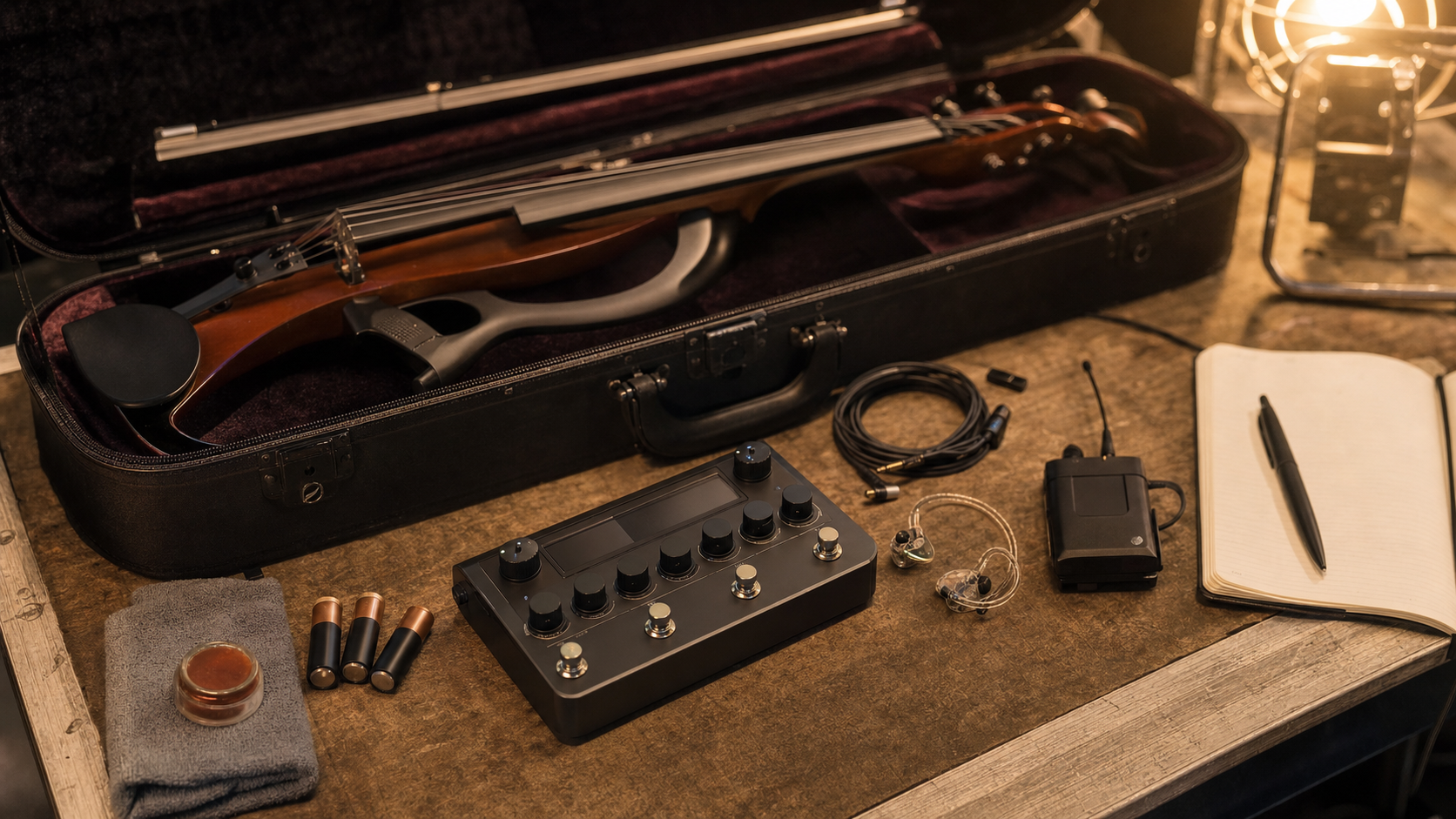
Why is HX Stomp my safest all-around pick?
The HX Stomp stays ahead because it covers the most professional use cases in the smallest serious format. Line 6 positions it as a complete backup or travel rig that can go direct to front of house, feed a backline amp, and still give you up to six amp, cab, effect, and IR blocks at once. It also doubles as a 24-bit/96 kHz USB audio interface with built-in DI and re-amping. That matters for Tanya Strings because the same box can support live electric violin tone, fast content capture, hotel-room revisions, and emergency backup duties without changing the whole rig.
Who should buy HX Stomp first?
I would buy it first if I travel often, record often, and want one compact processor that can live between a violin-friendly front-end and a full-range stage system without feeling like a compromise.
- Pros: compact pro workflow, flexible routing, strong IR support, direct-to-FOH confidence, and real recording usefulness.
- Cons: six blocks rewards disciplined patch design more than careless feature collecting.
See the official Line 6 HX Stomp page · Find HX Stomp options on Amazon
When is BOSS GX-10 smarter than HX Stomp?
The GX-10 is smarter when speed on the floor matters more than shrinking the box to the smallest possible size. BOSS says it brings the core GX-100 engine and the same color touch display into a more portable footprint, with AIRD amps and effects, an integrated expression pedal, a send/return loop, and USB-C audio connectivity. For electric violin, that combination is attractive when I want faster patch building, direct tactile control, and the ability to move from nightly stage work to desktop recording without changing workflow language.
What makes GX-10 easier to build patches on fast?
The touchscreen matters. So does the built-in expression pedal and the fact that BOSS gives you multiple control modes for live use. If I need to drag blocks, reorder effects, and get a stage patch ready without opening a laptop, GX-10 starts making a lot of sense.
- Pros: fast touchscreen editing, built-in expression, generous effect count, send/return, and strong direct recording utility.
- Cons: still asks for preset discipline if the show depends on lots of switching inside one song.
See the official BOSS GX-10 page · Find GX-10 options on Amazon
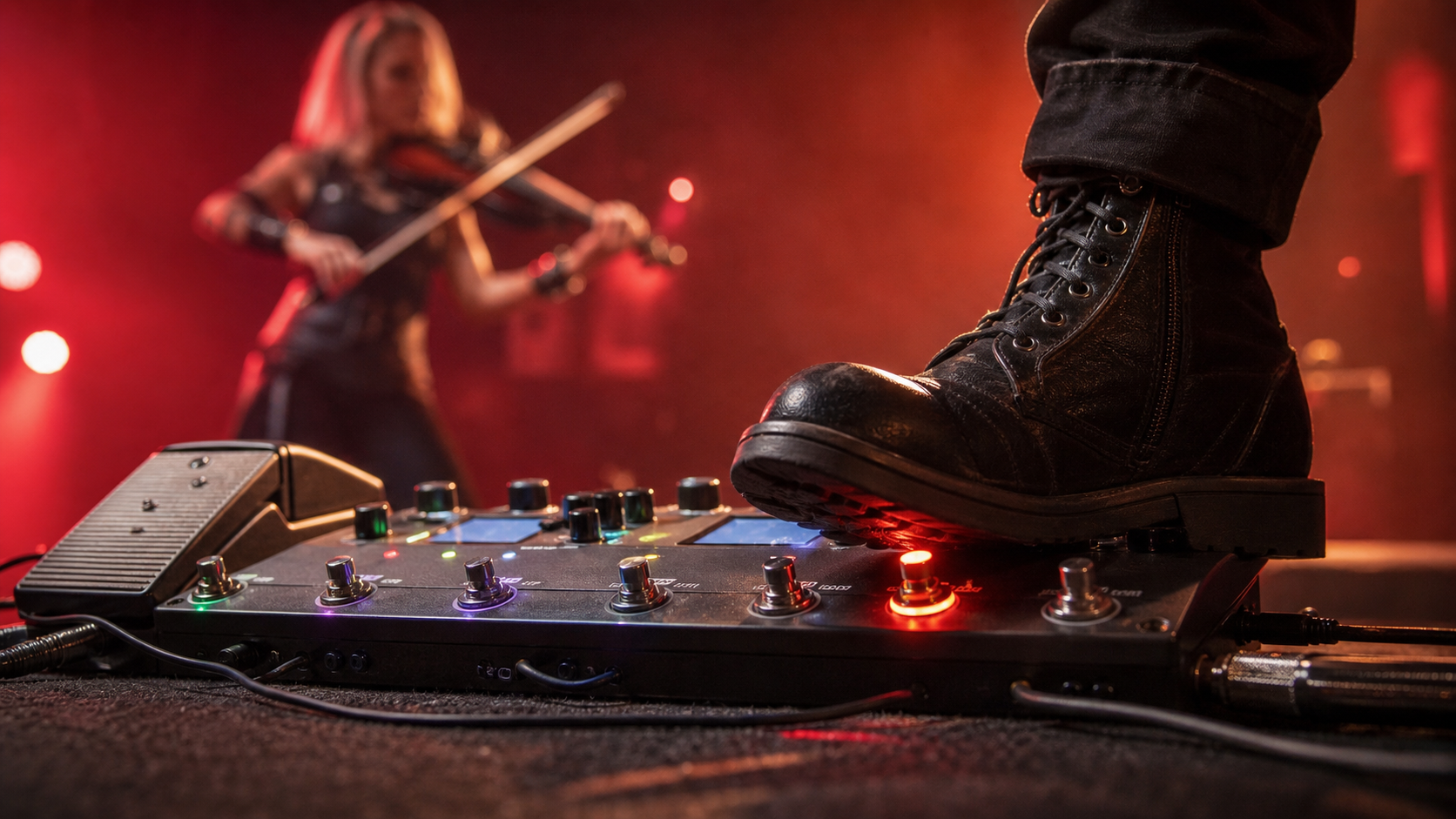
Who should buy the HeadRush MX5 for stage work?
The MX5 is the unit I would point toward performers who care as much about visible, fast editing as they do about raw feature count. HeadRush builds it around a 4-inch high-resolution touch display, gapless preset switching, an onboard expression pedal with toe switch, a stereo FX loop, and hands-free edit mode. That is a compelling electric violin story because violinists often need quick changes between dry lead tone, wider cinematic patches, and more controlled ambient scenes without audible gaps or awkward bending mid-show.
Why do scenes and hands-free edits matter on electric violin?
Because the bow never stops telling the truth. If I need to add more width, soften the top end, or switch from verse texture to solo lift, I want that move to happen cleanly and quickly. The MX5’s scene logic and hands-free editing are built for that kind of stage pressure.
- Pros: visible touchscreen workflow, gapless preset switching, hands-free edits, strong expression control, and solid live flexibility.
- Cons: the workflow is excellent, but I would still test whether its tonal center matches my violin and front-end before committing.
See the official HeadRush MX5 page · Find MX5 options on Amazon
Why does the BOSS ME-90 make sense if you hate menu diving?
The ME-90 is the easiest recommendation for performers who want a multi-effects unit to behave like a pedalboard instead of a small computer. BOSS centers it around an intuitive knob-based interface, manual mode for pedalboard-style operation, memory mode for complete patch switching, eight footswitches, USB-C connectivity, and output optimization for a guitar amp or a full-range sound system. It also runs on four AA batteries or an AC adaptor. Tanya Strings would care because some gigs punish deep menu systems. The ME-90 is built to get a player from load-in to set time with less mental drag.
When is the ME-90 the best backup or fast-change unit?
When the venue is unpredictable and I want direct control without a learning curve. If the job is simple presets, quick stomp access, and low stress, the ME-90 is a smarter buy than a deeper but fussier box.
- Pros: knob-per-function feel, manual mode, battery-powered flexibility, easy full-range output switching, and quick soundcheck behavior.
- Cons: larger footprint and less advanced routing depth than the smaller high-flex units.
See the official BOSS ME-90 page · Find ME-90 options on Amazon

When is the Zoom G6 the better value play?
The G6 makes sense when you want a more visual floor workflow, a larger patch plan, and a looper that can do serious solo-duty experiments. Zoom gives it a 4.3-inch color touchscreen, room for 240 patches with 100 presets, up to seven effects per patch, four play modes, and a looper that can run up to two hours with an SD card. For Tanya Strings, that becomes attractive in hybrid performer-content-creator workflows where patch organization, memory access, long looping, and backing-track style thinking all matter together.
Who benefits most from the G6 looper and set-list workflow?
I would point the G6 toward solo crossover performers, creators building layered content pieces, and artists who want many prepared patches in one place without carrying a second dedicated looper.
- Pros: clear touchscreen editing, larger patch organization, multiple play modes, and a looper that suits solo builds well.
- Cons: bigger physical footprint and less appeal if your main goal is the smallest possible fly rig.
See the official Zoom G6 page · Find G6 options on Amazon
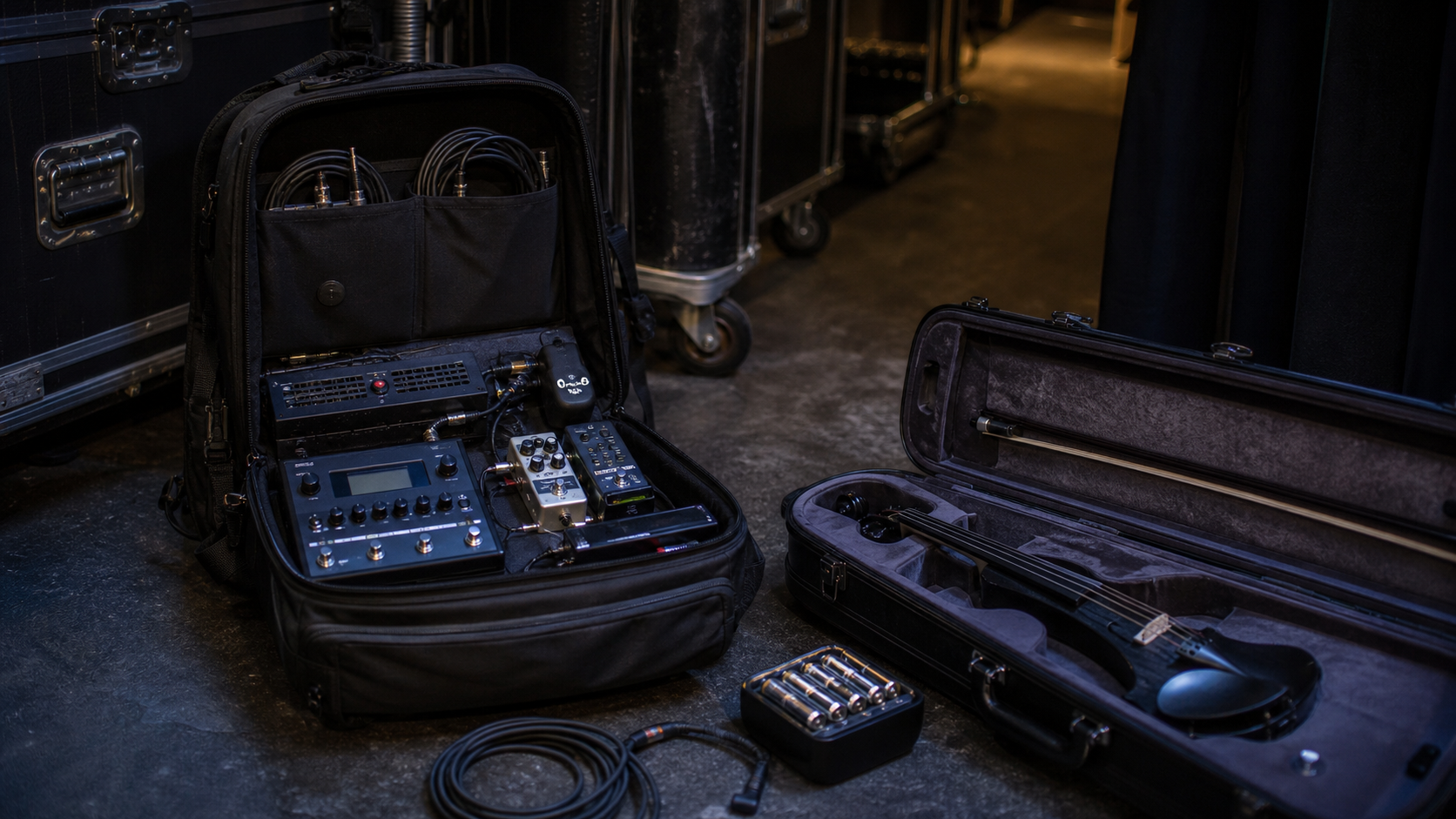
What should you buy first if your rig is still unstable?
If the electric violin still sounds thin, spiky, or unpredictable at the input stage, buy the real fix first. That usually means stabilizing the DI, preamp, gain staging, or monitor path before buying a multi-effects box. A processor can make a good rig more expressive, but it rarely rescues a rig that already feels nervous in the PA. Tanya Strings treats multi-effects as a performance-control hub after the foundation is honest. I want wet effects, scenes, and looping only after the base tone already knows how to stand on stage.
Buying order I trust: first the front-end, then monitoring, then the multi-effects brain, then extra specialty pedals only if the show still truly needs them.
What matters most when choosing a multi-effects pedal for electric violin?
Electric violin exposes the wrong processor quickly. Upper mids, bow attack, and ambience balance all tell on you fast. My shortlist stays simple.
- Keep the direct tone honest: if the core signal loses focus before the reverb turns on, the unit is not helping enough.
- Prefer live control over feature count: the best pedal is the one you can operate under stage light without panic.
- Watch routing and output logic: send/return, IR support, and full-range output behavior matter more than marketing words.
- Match the footprint to the career: city gigs, flights, club sets, and content shoots all punish oversized boards differently.
- Protect repeatability: if the patch system makes soundcheck slower every time, it is the wrong win.
How does Tanya Strings build patches that survive real gigs?
I build from the violin outward. First the dry path has to stay centered and clear. Then I decide what the set actually needs: one controlled ambient patch, one tighter rhythmic patch, one wider solo lift, and one clean emergency preset that can survive anything. I keep expression assignments obvious, avoid overstacking time effects, and make sure the loudest patch still behaves in a wedge or full-range speaker. For a world-class electric violin show, the goal is not maximum option count. The goal is a tone map that still makes sense when the room, audience, and adrenaline all change at once.
FAQ
What is the best multi-effects pedal for most electric violinists?
The HX Stomp is the safest all-around answer because it gives electric violinists compact size, flexible routing, IR support, and strong direct-recording value without forcing a huge floorboard.
Do electric violinists need amp models in a multi-effects pedal?
Not always, but subtle amp or cab modeling can smooth the direct tone, widen the sound, and help effects sit more naturally in a PA or recording chain.
Should Tanya Strings buy HX Stomp or BOSS ME-90 first?
Choose HX Stomp if routing depth, travel size, and content recording matter most. Choose the ME-90 if you want the fastest stompbox-style control and the least menu friction on live jobs.
Can one multi-effects pedal replace separate reverb, delay, and modulation pedals on stage?
For many electric violin performers, yes. A good unit can cover those jobs in one board, as long as the base DI or preamp path is already dependable.