News · 2026-07-06
Violin News Roundup: NYO2, NYO-USA, Edinburgh's String Focus, and Lindsey Stirling's Summer Crossover Signal
As of Monday, July 6, 2026, the clearest violin story is broader than star soloists alone. It is about pipeline, travel, and room size. Carnegie Hall’s National Youth Ensembles put NYO2 on Stern Auditorium on July 30 and NYO-USA there on July 31 before overseas dates in the Dominican Republic, Berlin, Amsterdam, Aldeburgh, and Edinburgh. The Edinburgh International Festival, led by violinist Nicola Benedetti, is already advertising real string weight in August. And Lindsey Stirling’s July 13 Saratoga stop shows that electric-violin crossover still fills big summer rooms when the stage identity is sharp.
Follow Tanya Strings on Google
Add the site as a preferred source to see more new violin posts from Tanya Strings in Google.
Why does Carnegie Hall’s NYO2 launch matter for violinists right now?
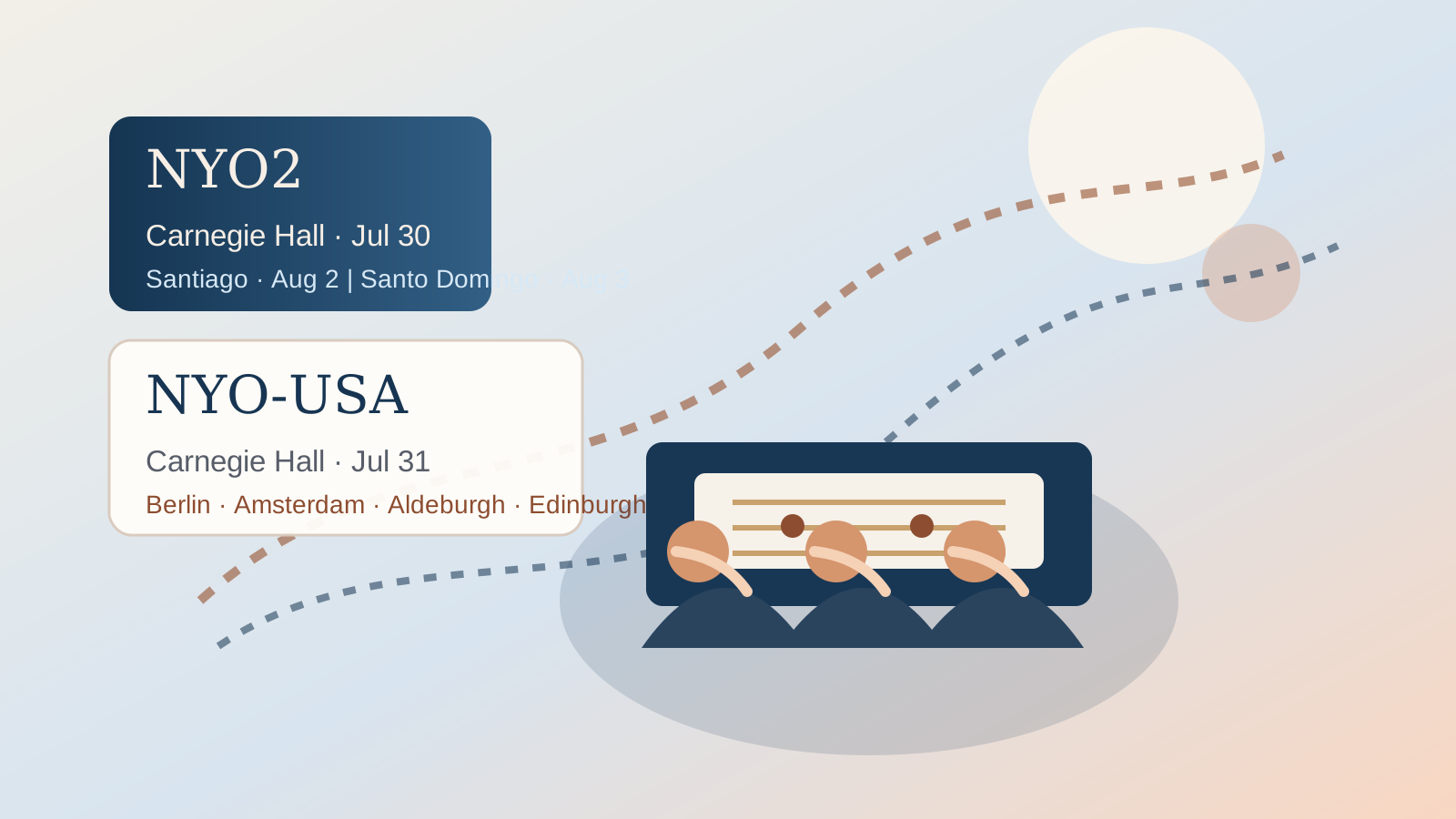
Because it makes the entry point visible. On its official page, Carnegie Hall describes NYO2 as an intensive summer training program for outstanding musicians ages 14 to 16, then lists the 2026 run clearly: NYO2 plays Stern Auditorium on Thursday, July 30, before going to Santiago on August 2 and Santo Domingo on August 3. That is a strong public signal for string players. The important part is not just prestige. It is sequencing. Young players are not hidden in a classroom-only story. They are presented as concert artists first, then sent into an international setting. For violinists and parents watching the field, that is a cleaner picture of what the upper youth pipeline now looks like.
Tanya’s performer take: serious development needs a visible stage, not only private excellence. If the public can hear the work early, the career story starts feeling real much faster.
What changes when NYO-USA follows the next night and then heads overseas?
NYO-USA’s current page pushes that idea further. Carnegie Hall positions the free national ensemble for ages 16 to 19 as both a training residency and an ambassador project, then lists a dense 2026 route: Stern Auditorium on Friday, July 31, followed by Berlin on August 4, Amsterdam on August 6, Aldeburgh on August 8, and Edinburgh on August 10. For violinists, that matters because touring is part of the training, not a bonus added later. Different halls, different acoustics, different audiences, and fast travel discipline shape string playing just as much as another week in a practice room. The page reads like a reminder that top youth orchestras are being asked to perform like mobile professional organizations earlier than before.
Tanya’s performer take: repeatable playing is the modern test. Great tone in one room is not enough if it does not survive flights, quick rehearsals, and a new acoustic the next morning.

How string-heavy is Edinburgh’s current festival picture under Nicola Benedetti?
More than a generic arts-season headline suggests. The festival homepage frames the 2026 Edinburgh International Festival as running from August 7 to August 30 under Nicola Benedetti’s “All Rise” banner. Then the classical music page shows where strings land inside that wider story: NYO-USA in Edinburgh on August 10, Vilde Frang & Friends on August 22, and the Gringolts Quartet on August 24. That is useful programming logic. Edinburgh is not treating violin and chamber strings as one symbolic prestige booking. It is spreading them across the month in solo, ensemble, and youth-orchestra forms. For presenters, that is a reminder that string presence becomes more memorable when audiences encounter it repeatedly in different scales.
Tanya’s performer take: this is smart festival architecture. One violin event creates noise; a sequence of string events creates identity.
Why does Lindsey Stirling still belong in the same week’s violin conversation?
Because the electric-violin lane still shows what scale looks like outside the classical system. In January, the Times Union reported that Lindsey Stirling’s “Duality Untamed” tour with PVRIS would hit Saratoga Performing Arts Center on July 13, and Stirling’s own official tour page keeps the live cycle active. The reporting is older than the festival pages above, but the booking is still relevant this week because it shows the room size electric violin can hold when choreography, production, and artist branding work as one package. For Tanya Strings readers, that is the crossover lesson: audiences do not need the violin to stay in one cultural lane. They need the performer’s concept to be strong enough that the instrument still reads from the back row.
Tanya’s performer take: world-class electric violin is not a side category. When the visual concept, movement, and tone are disciplined, it competes for the same summer attention as much bigger mainstream packages.
What should violinists, presenters, and music fans track next?
- Watch whether more summer organizations make youth string players visible on flagship stages before sending them into tour circuits.
- Track festivals that give strings repeated placement across the month instead of one prestige cameo.
- For electric violinists, note which bookings prove that a crossover show can still read as a major live event rather than a niche add-on.
- The July 6 lesson is direct: violin momentum grows when pipeline, programming, and stage scale reinforce each other.