Tone Shaping · 2026-07-17
Best EQ Pedals for Electric Violinists Who Need Faster Tone Fixes on Stage
The best EQ pedal for most electric violinists is the BOSS EQ-200 because it gives Tanya Strings dual 10-band control, useful memories, stereo routing, and external control in a footprint that still belongs on a real stage board. If you want deeper programmable precision, Source Audio EQ2 is the smarter premium buy, while Empress ParaEq MKII Deluxe is the best choice for players who think like studio engineers and want broad shelves plus surgical mids. MXR Ten Band EQ is the bold workhorse, BOSS GE-7 is the fast compact fix, and LR Baggs Align Equalizer is the hybrid-set answer for acoustic pickup rigs. Buy the EQ that matches your signal path, not the loudest spec sheet.
Follow Tanya Strings on Google
Add the site as a preferred source to see more new violin posts from Tanya Strings in Google.
Affiliate disclosure: Some links in this article are affiliate links. I may earn a commission if you make a purchase, at no extra cost to you.
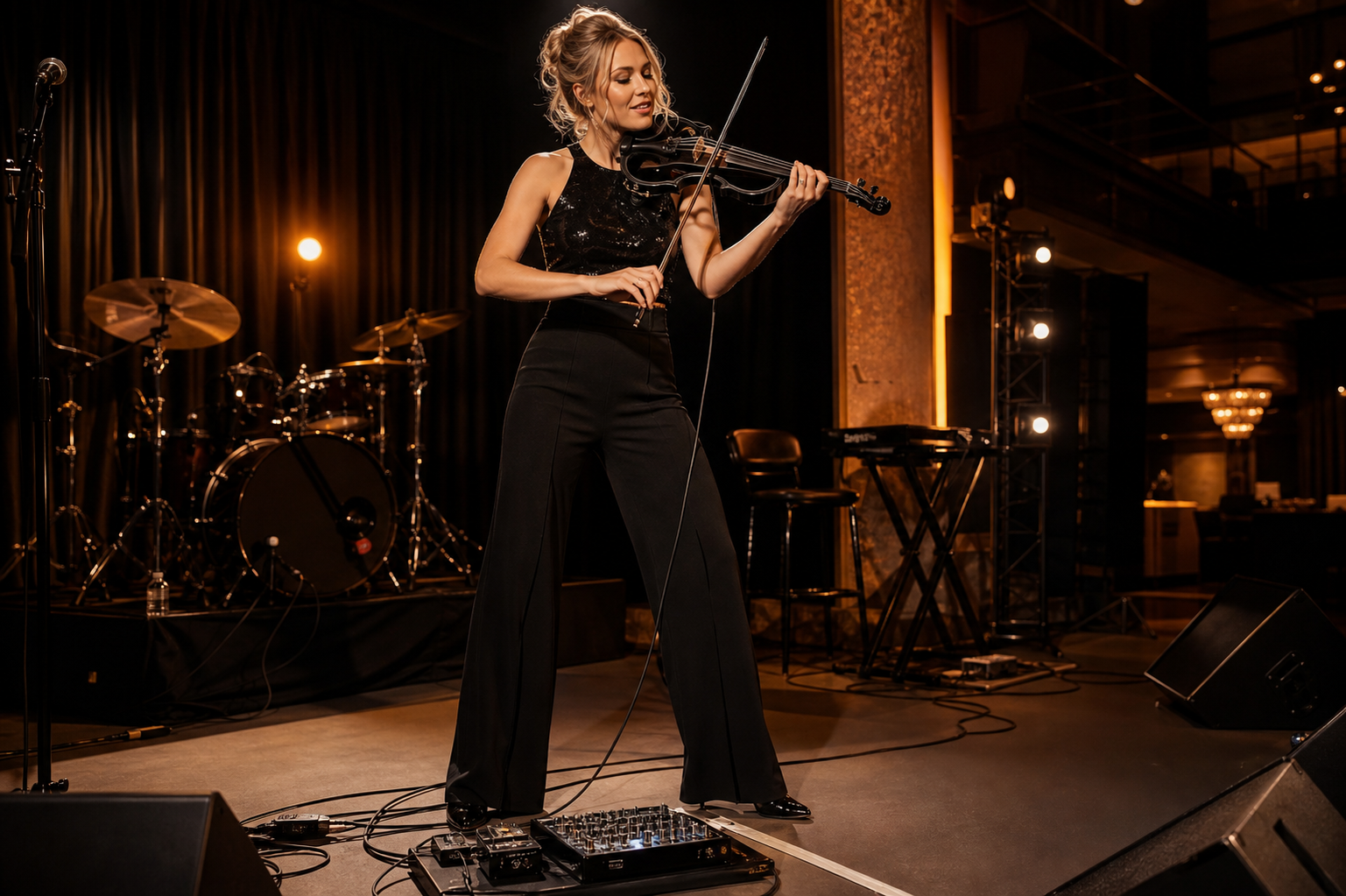
What is the best EQ pedal for most electric violinists?
For most working performers, I would buy the BOSS EQ-200 first. BOSS built it around dual 10-band control, flexible routing, memory recall, and support for footswitch, expression, and MIDI control, which makes it much more than a rescue pedal. That matters on electric violin because your problem is rarely one fixed frequency forever. One room punishes the upper mids, the next makes the low end cloudy, and another makes a pickup-driven tone feel thin. EQ-200 gives Tanya Strings enough control to handle those shifts without dragging a full rack mindset onto the floor.
My performer rule: if an EQ pedal cannot help me make a room feel easier within one rushed soundcheck pass, it is too complicated for the job.
Why does an EQ pedal matter if your direct tone already works?
Because a stable direct tone is only the start. Electric violin reacts brutally to venue changes, wedge placement, PA voicing, pickup character, and how aggressively you want the instrument to sit above backing tracks or a band. I still want the core rig sorted with the right pickup, DI or acoustic preamp, or amp sim pedal. But once that foundation exists, EQ is the fastest way to remove ice-pick highs, tighten low build-up, or help the violin claim space without simply turning up.
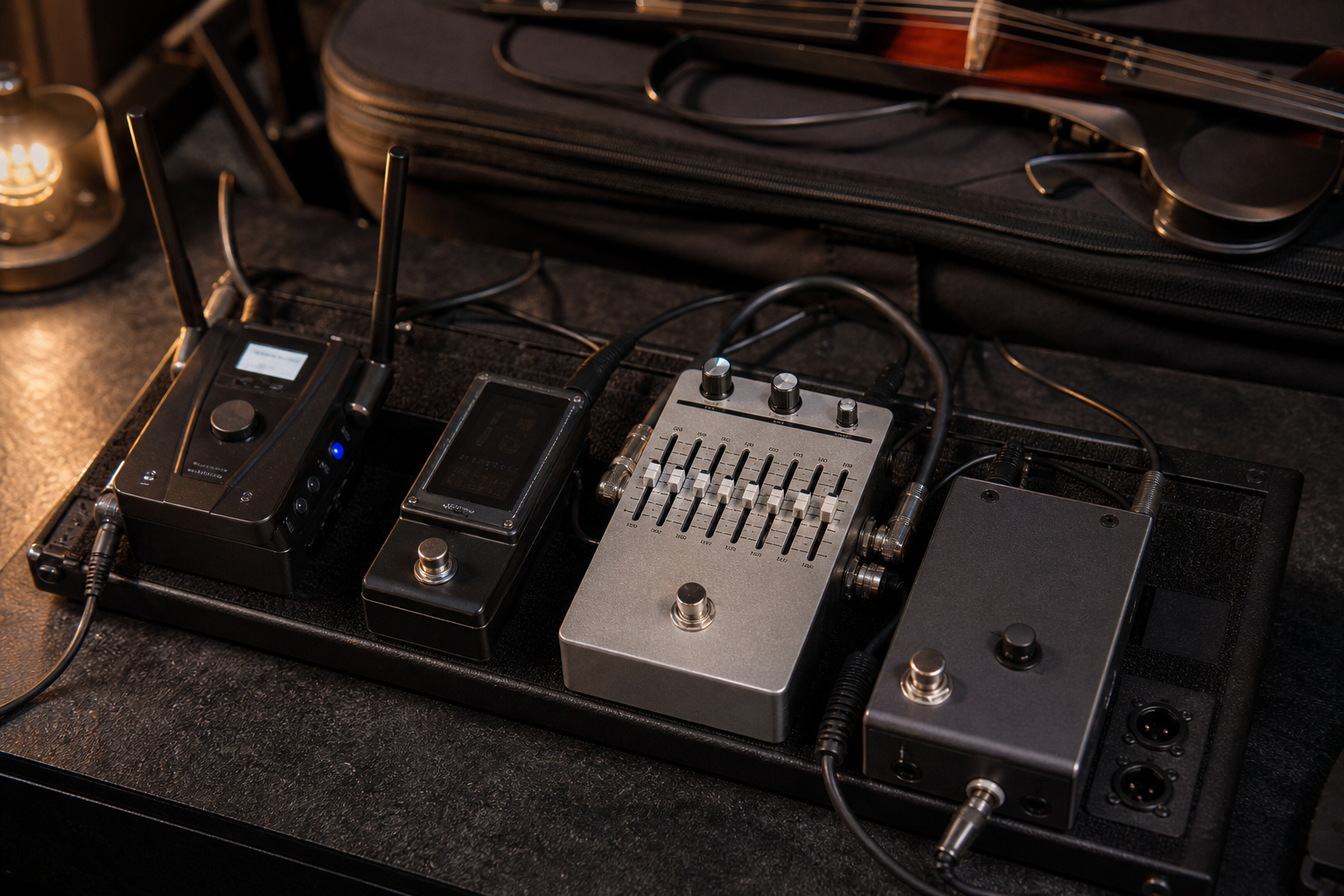
Which EQ pedals are worth buying right now?
This shortlist stays focused on pedals that make sense for real violin stage work. I care about speed, useful frequency control, footprint, and whether the pedal helps a performer sound better tonight instead of just offering more menus.
| Product | Best for | Why Tanya would use it | Watch out for | Links |
|---|---|---|---|---|
| BOSS EQ-200 | Most electric violinists who want the best all-around stage EQ pedal | I trust it because the dual 10-band layout, memories, routing options, and external control support let me adapt fast without changing the whole rig. | More pedal than you need if you only want one fixed corrective curve and never save presets. | Official · Amazon |
| Source Audio EQ2 | Advanced players who want deep programmable control, stereo flexibility, and MIDI-friendly recall | I would use it when the board already behaves like a system and I want graphic plus parametric control, 128 presets, tuner utility, and serious routing flexibility. | It rewards preparation. If you hate editor-based depth, the extra power may become friction. | Official · Amazon |
| Empress ParaEq MKII Deluxe | Precision-minded performers who want parametric control and big clean headroom | I would choose it when I want broad sweetening shelves plus focused mid control and enough headroom to stay graceful in a demanding premium rig. | It is a more surgical tool, so it suits players who already know what frequency areas they are chasing. | Official · Amazon |
| MXR Ten Band EQ | Players who want bold hands-on control and a classic room-fixing workflow | I like it when I want ten useful bands, input and output level controls, and a pedal that feels like a straightforward stage tool instead of a software conversation. | It needs 18V power and takes more space than ultra-compact solutions. | Official · Amazon |
| BOSS GE-7 | Compact boards that need a fast seven-band corrective pedal | I would buy it when space matters and I mainly want quick upper-mid taming, level balancing, or a compact pre-drive shaping lane. | It is fast and proven, but it is less flexible than the modern multi-memory options above. | Official · Amazon |
| LR Baggs Align Equalizer | Hybrid or acoustic-violin rigs that want anti-feedback tools and acoustic-friendly tone shaping | I would use it when the signal path leans acoustic and I want six useful bands plus a notch filter, high-pass filter, phase, and gain help in one pedal. | It makes the most sense for pickup-driven acoustic or hybrid sets, not every fully electric rig. | Official · Amazon |
Why is BOSS EQ-200 my best overall pick?
EQ-200 is the smartest center-ground answer because it gives enough power to stay relevant without forcing the whole pedalboard to become a programming project. BOSS positions it around dual 10-band EQ channels, multiple routing modes, and deep recall and control options. That translates perfectly to electric violin. Tanya Strings often needs one curve for a direct path, another for a stereo or parallel idea, or one saved setup for a harsh rehearsal room and another for a polished venue PA. I do not want to rebuild those choices from scratch every time.
Who should buy BOSS EQ-200 first?
Buy it first if you play live often, want one serious long-term EQ purchase, and need the pedal to solve both corrective and creative tone-shaping jobs.
- Pros: dual 10-band design, memories, strong routing flexibility, expression and MIDI support, and a footprint that still fits disciplined boards.
- Cons: more expensive and deeper than a simple always-on corrective EQ.
See BOSS EQ-200 · Find EQ-200 options on Amazon
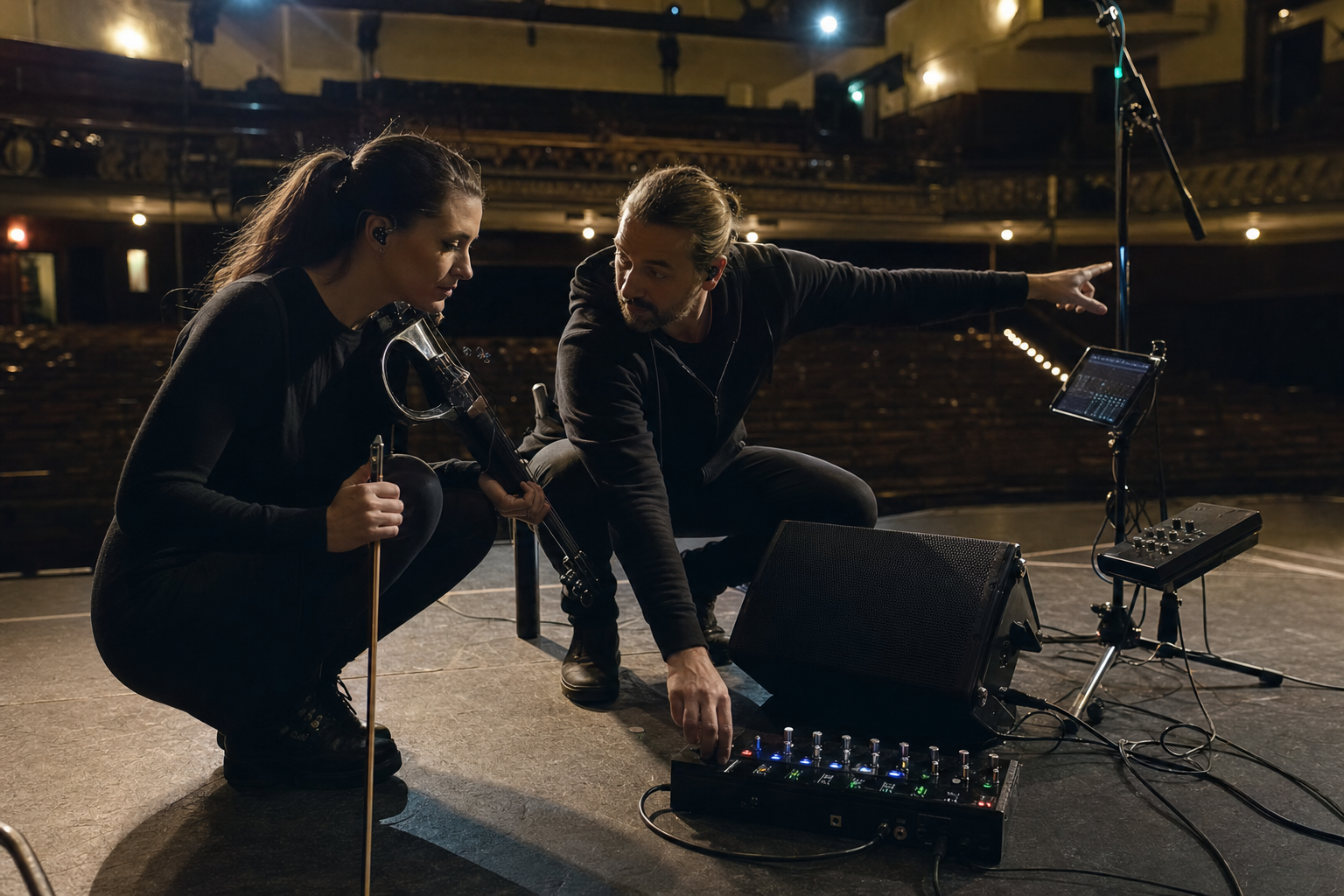
When is Source Audio EQ2 the smarter premium choice?
Source Audio EQ2 is the better buy when your rig already behaves like a modern programmable system. Source Audio frames it as a stereo graphic and parametric equalizer with full MIDI control, 128 presets, onboard tuner utility, and optional gate and limiter functions inside Neuro 3. That is serious range. I would go here when the set needs scene-based recall, precise frequency shaping, and the freedom to move beyond fixed graphic bands. For Tanya Strings, EQ2 shines when one show needs tight corrective EQ, another wants broad tonal character changes, and I still want the entire thing to recall cleanly.
Who should buy Source Audio EQ2?
Buy EQ2 if your board already includes MIDI thinking, stereo routing, or more than one repeatable performance scene.
- Pros: graphic plus parametric control, 128 presets, stereo I/O, tuner, and powerful editor depth.
- Cons: less attractive if you prefer immediate one-glance control and never want to open an editor.
See Source Audio EQ2 · Find EQ2 options on Amazon

Who should buy Empress ParaEq MKII Deluxe or MXR Ten Band EQ?
These are the right answers when your best personal workflow is either more surgical or more old-school tactile than the all-around winner above.
Why would Empress ParaEq MKII Deluxe be the high-end precision pick?
Empress built the ParaEq MKII Deluxe around focused parametric shaping, Baxandall shelving, and internally boosted 27V headroom. That is exactly why it appeals to performers who hear tone in terms of problem zones rather than preset names. I would use it when the violin needs elegant top-end sweetening, a precise mid cut, and clean headroom that does not collapse when the set gets more aggressive.
- Pros: precise control, musical shelves, big headroom, and premium feel for serious corrective work.
- Cons: less beginner-friendly than a graphic EQ and more expensive than simpler options.
See Empress ParaEq MKII Deluxe · Find ParaEq MKII Deluxe options on Amazon
When is MXR Ten Band EQ the better straightforward workhorse?
Choose MXR Ten Band EQ when you want ten fixed bands, visible sliders, input and output level controls, and zero mystery about how the pedal wants to be used. MXR also gives it a second output and an upgraded noise-reduction design, which makes it more useful than a pure nostalgia piece. Tanya Strings would buy it for a hands-on board where quick visible adjustment matters more than preset memory.
- Pros: immediate workflow, ten useful bands, level controls, second output, and a practical room-fix mindset.
- Cons: larger footprint and 18V power requirement compared with smaller modern alternatives.
See MXR Ten Band EQ · Find MXR Ten Band EQ options on Amazon
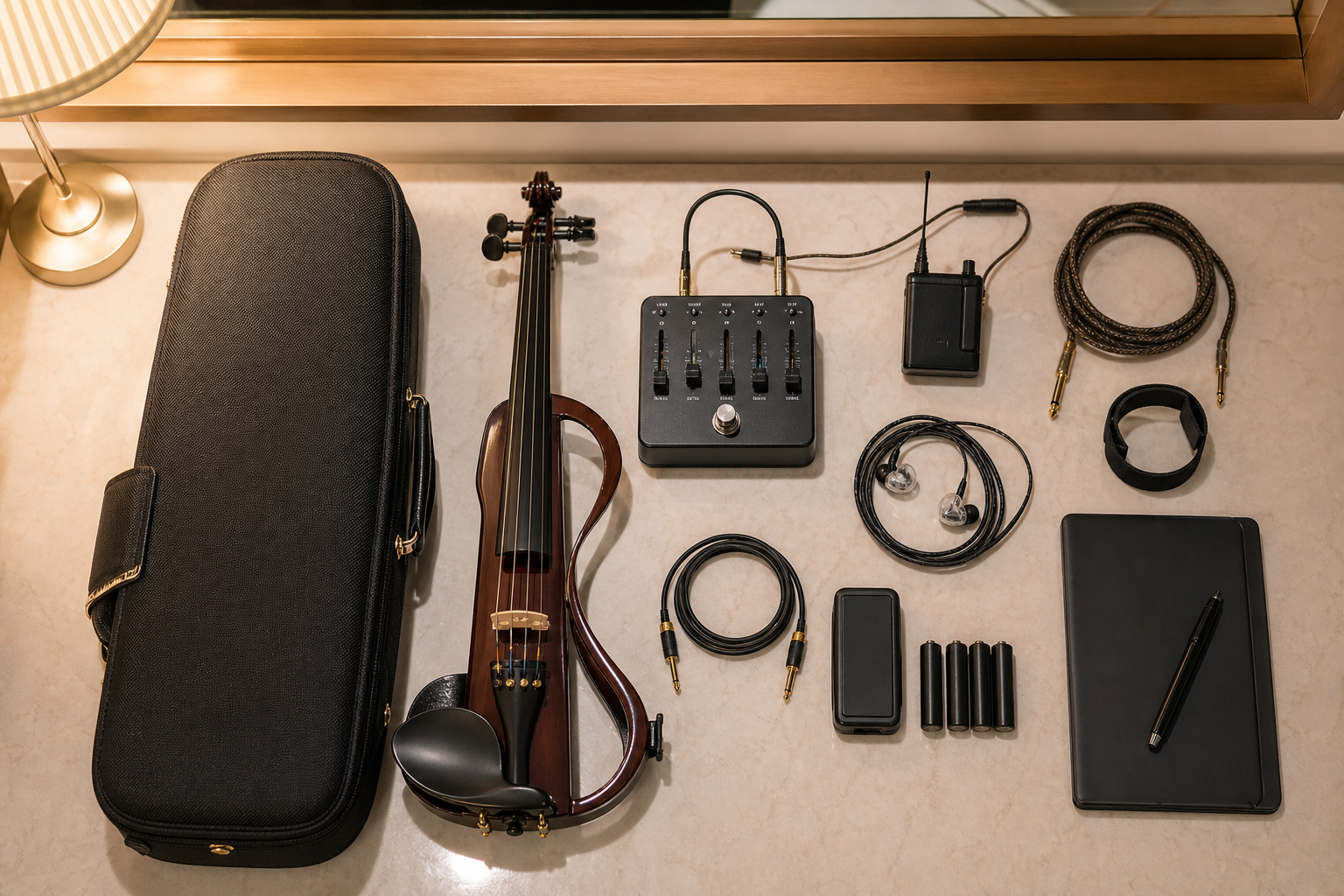
When do BOSS GE-7 and LR Baggs Align Equalizer make more sense?
They make sense when the fastest or most acoustic-aware answer beats the most feature-rich one.
Why would anyone still buy BOSS GE-7?
Because it still solves real stage problems fast. BOSS describes the GE-7 around seven bands, plus or minus 15 dB of boost or cut, and a level slider that can also work as a clean boost. That formula remains useful. I would buy GE-7 for a compact electric violin board that only needs quick midrange taming, subtle body restoration, or a simple pre-drive tone shape before other effects.
- Pros: compact size, proven workflow, fast visual corrections, and easy fit on crowded boards.
- Cons: fewer bands and less system-level flexibility than the newer premium pedals.
See BOSS GE-7 · Find GE-7 options on Amazon
Who should choose LR Baggs Align Equalizer instead?
Choose the LR Baggs Align Equalizer when the rig is not purely electric and stage reality looks more acoustic or hybrid. LR Baggs built it around six useful EQ bands, a notch filter, a high-pass filter, phase control, and a gain switch. That package makes a lot of sense for acoustic violin pickup rigs that fight feedback or need more natural body management than a standard guitar-focused EQ pedal provides.
- Pros: acoustic-friendly voicing, notch filter, high-pass filter, phase help, and practical hybrid-set logic.
- Cons: not the first choice for every fully electric pedalboard with broader programmable ambitions.
See LR Baggs Align Equalizer · Find Align Equalizer options on Amazon
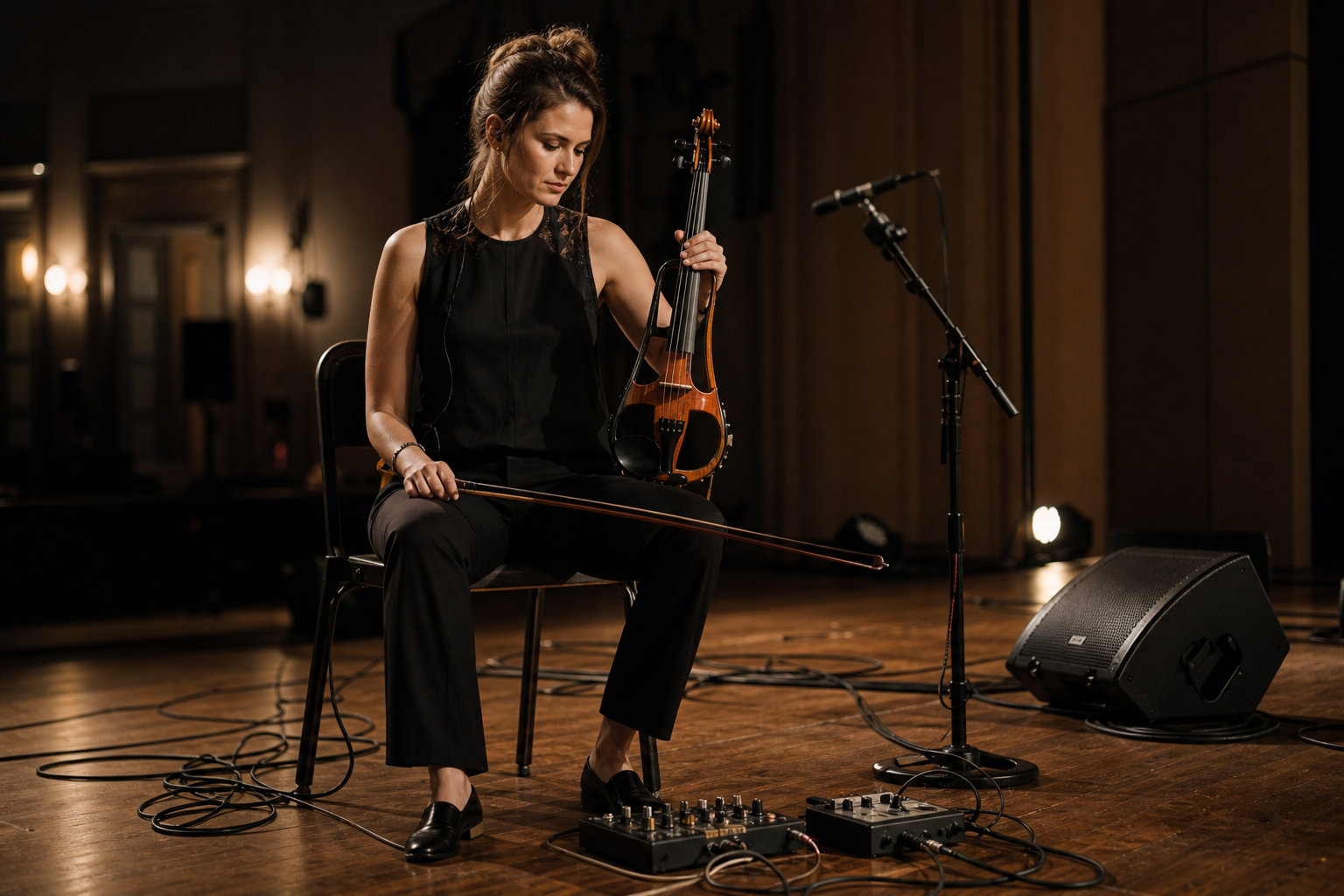
How should you buy an EQ pedal for electric violin?
Buy the pedal that matches how you actually solve tone problems. Electric violinists do not need a glamorous spec sheet if the board gets slower, heavier, or less repeatable. Tanya Strings wants one move that makes the room clearer fast, keeps the violin expressive, and still feels manageable on a rushed load-in.
My buying checklist:
- Decide whether your real problem is corrective room EQ, creative sound design, acoustic pickup management, or scene-based preset recall.
- Choose graphic EQ first if you want speed and visibility. Choose parametric EQ if you care more about precision and already hear the target frequency area clearly.
- Check the rest of the chain before buying: pickup, DI, amp sim, monitor plan, and gain staging still matter more than the pedal itself.
- Measure board space and power requirements, especially if you are comparing compact options with larger pedals like MXR Ten Band EQ.
- Save one trusted room-fix preset if your pedal supports memory, then refine from there instead of rebuilding from zero at every venue.
My buying order: first stabilize the base violin signal, then buy the EQ pedal that fixes your most common stage problem, and only after that chase deeper routing or advanced preset ecosystems.
FAQ
What is the best EQ pedal for most electric violinists?
BOSS EQ-200 is my best overall answer because it balances deep control, useful memories, external control support, and a still-practical pedalboard footprint.
Should I buy a graphic EQ or a parametric EQ pedal for violin?
Buy a graphic EQ if you want the fastest visible stage fixes. Buy a parametric EQ if you already know which frequency bands you want to target more precisely.
Can an EQ pedal replace my DI box or acoustic preamp?
No, not by default. EQ helps shape tone, but many rigs still need the right DI, acoustic preamp, or amp sim to send a healthy signal to the PA.
What is the first thing Tanya Strings usually fixes with EQ on stage?
Usually the harsh upper-mid or sharp high-end zone that makes the violin feel smaller and more tiring in the room. Once that is calmer, the rest of the mix gets easier.