News · 2026-07-18
Violin News Roundup: Breakout Stages, EDM Strings, and the New Trust Layer
As of Saturday, July 18, 2026, the most useful violin story is how many different stages the instrument is claiming at once. The Boston Symphony Orchestra’s Tanglewood schedule put 20-year-old Keila Wakao into Friday night’s Barber concerto slot, the NN North Sea Jazz Festival gave the North Sea String Quartet’s EDM-shaped ZONAR set a major festival platform, the Twin Lakes National Fiddler Championship is filling a courthouse square today with certified fiddle divisions and serious prize money, and the RIAA-led music community has moved closer to standard AI track labels. For performers and content creators, that mix matters more than any one isolated headline.
Follow Tanya Strings on Google
Add the site as a preferred source to see more new violin posts from Tanya Strings in Google.
Why does Keila Wakao’s July 17 Tanglewood slot matter beyond one debut?
Because big institutions still decide who gets framed as tomorrow’s violin headline, and Tanglewood used a premium Friday evening slot to do exactly that. The official BSO event page for “Simon, Barber, and Selections from Nixon in China” listed Keila Wakao alongside Andris Nelsons, Renée Fleming, and Thomas Hampson on July 17. Her BSO profile adds the context: Wakao is 20, won the 2026 Avery Fisher Career Grant, and made this Tanglewood debut in Barber’s Violin Concerto after already building serious momentum. For violinists, that is a reminder that the breakout lane is still built through major repertory, high-trust presenting, and artist identity that reads instantly.
Tanya’s performer take: a world-class solo career still needs marquee rooms, but the real lever is clarity. When a presenter can place a young violinist next to household names without the evening feeling mismatched, the audience is being taught who matters next.
What is North Sea String Quartet proving by pushing EDM through acoustic strings?
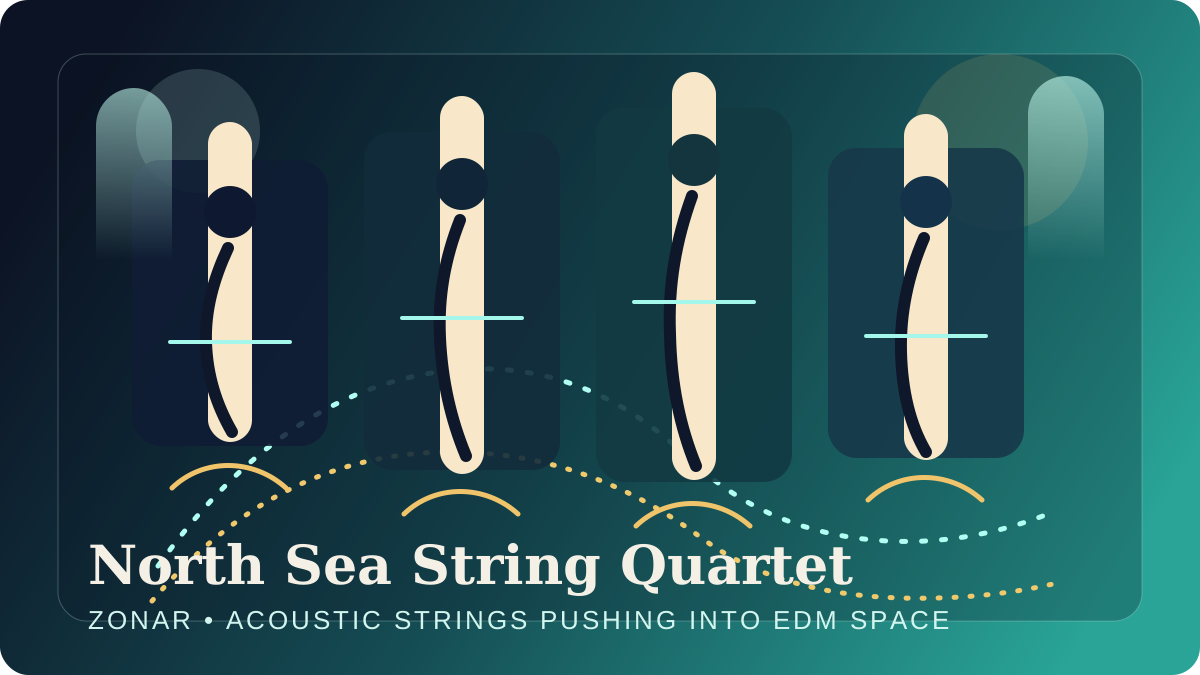
That crossover does not need to become soft background branding to feel contemporary. The official North Sea Jazz program page says the Rotterdam-based quartet’s 2026 album ZONAR explores the world of electronic dance music through acoustic means, built from “laboratory sessions,” unusual sound-altering objects, and stage design by Roelof Pothuis. It is one of the sharper current examples of string players treating electronic culture as structure, not decoration. For electric violinists and hybrid string acts, that matters. The lesson is not “copy EDM.” The lesson is that audiences will accept radical string framing when the sonic concept, the visual concept, and the performance discipline all point in the same direction.
Tanya’s performer take: the strongest crossover work keeps the strings central. If the violin only acts as visual spice, the set feels replaceable. If the instrument shapes the language of the show, the identity becomes much harder to ignore.
Why is a Kentucky fiddler championship still serious violin news on July 18?
Because violin relevance is not limited to elite summer halls. The official Twin Lakes National Fiddler Championship page says the fifteenth annual event takes place on July 18, 2026, in downtown Leitchfield, Kentucky, awards more than $14,500 in prizes, and runs six certified fiddle divisions tied to the National Oldtime Fiddlers’ Contest and NOTFA. That is not a novelty sideshow. It is a public, rules-based performance system with real status, real money, and strong community visibility. For planners and fans, this is the reminder that string culture still scales in open-air civic settings. For working performers, it is a signal that authenticity and crowd contact still win when the event feels rooted rather than overproduced.
What changed for recording artists and content creators with the RIAA-led AI labeling plan?
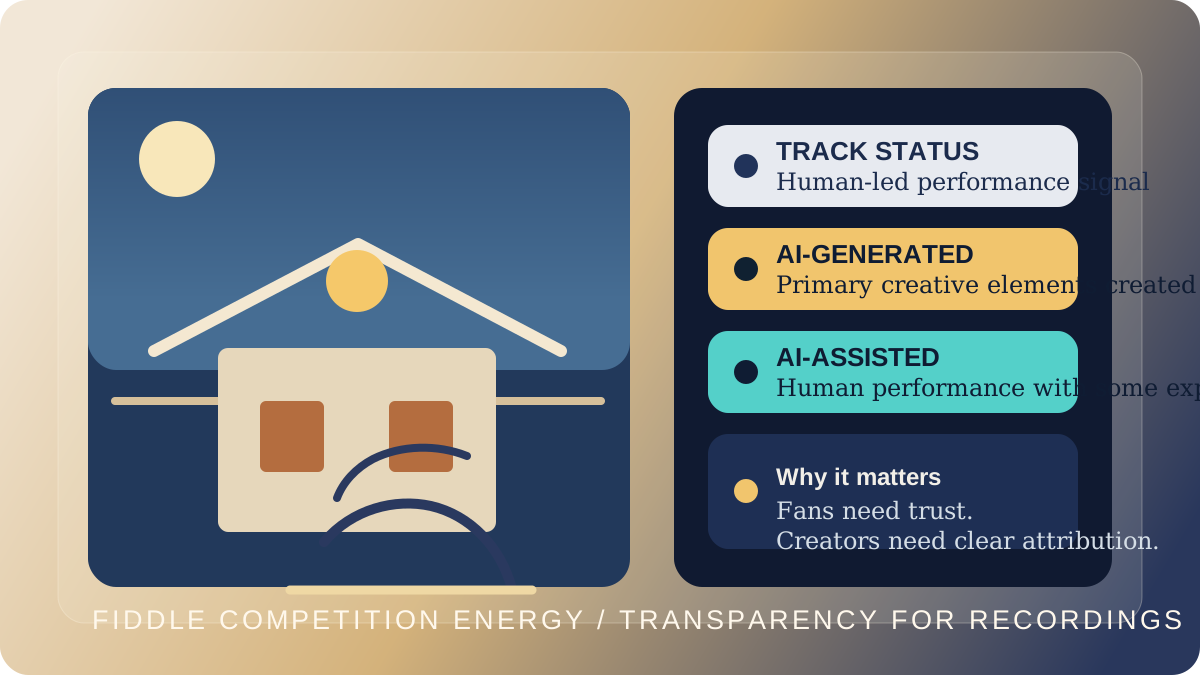
Potentially a lot. On July 10, 2026, IFPI, RIAA, A2IM, WIN, IMPALA, The Grammys, SAG-AFTRA, and the Human Artistry Campaign announced a shared approach to voluntary track-level labels distinguishing “AI-Generated” from “AI-Assisted” recordings. The official RIAA statement says the goal is clearer transparency for fans across digital music services and partners, with one label for recordings whose primary creative elements are generated by AI and another for recordings still created substantially by humans but using AI for some expressive elements. For violin performers who also publish content, record singles, or build crossover releases, this matters now. Audience trust is part of the product. Clear disclosure may soon become normal professionalism rather than a niche ethics discussion.
Tanya’s performer take: the more technology enters the release chain, the more important it becomes to tell fans what they are actually hearing. Human artistry stays stronger when the framing is honest, not vague.
What should violinists, electric violinists, planners, and music fans watch next?
- Track which young soloists are being moved into serious evening slots, not only youth-marketing side lanes.
- Notice which crossover string projects build a full sonic world instead of adding electronics as surface styling.
- Keep an eye on public fiddle events with real prizes and certification, because they show where audience energy still gathers naturally.
- Expect AI disclosure language to become part of normal release planning for performers who live across stage, studio, and content platforms.