News · 2026-07-19
Violin News Roundup: Headliner Weekends, Festival Debuts, and the Live-Experience Layer
As of Sunday, July 19, 2026, the most useful violin story is not one isolated headline but the way presenters are packaging the instrument as a full audience experience. Ravinia is putting María Dueñas into a broad-entry Chicago Symphony summer event, Aspen is framing Augustin Hadelich inside a world-premiere orchestral program, Verbier is using Stephen Waarts' debut as an opening-weekend discovery signal, and Sennheiser is treating sound culture and fan activations as part of the live-music offer. For performers, planners, and fans, that combination matters.
Follow Tanya Strings on Google
Add the site as a preferred source to see more new violin posts from Tanya Strings in Google.
Why does María Dueñas at Ravinia matter as more than another summer concerto date?
Because the Ravinia page shows violin being sold as a serious headline across multiple entry points at once. Sunday's July 19 event puts Marin Alsop and the Chicago Symphony Orchestra together with María Dueñas in Beethoven's Violin Concerto, starts at 5:00 p.m., and lists all-in ticket pricing from $17 to $91. Ravinia is not only selling seats. It is also building a wider summer-evening proposition around lawn admission, reserved blocks, and a themed pre-concert package. That matters because top-level violin performance is being positioned for broad public reach, not fenced off as a narrow donor-room product.
Tanya's performer take: when a presenter trusts violin repertory to carry both premium seats and open lawn traffic, that is a strong signal that the soloist is functioning as an event engine, not just as repertory decoration.
What does Aspen's Hadelich program say about current violin booking strategy?
A lot. Aspen's July 19 event page frames "Festival Orchestra: Hadelich Plays Barber" as a 4:00 p.m. tent program with tickets starting at $48, but the important detail is the program shape. Augustin Hadelich is not isolated in a safe gala shell. He is placed inside a high-energy lineup that also includes the world premiere of Matthew Aucoin's Two Thresholds, plus Dvorak, Enescu, and a live Aspen Public Radio carry. That is a smart current model: combine star solo violin, new-music ambition, and broadcast reach so the violin helps pull audience attention toward the whole orchestral product.
Tanya's performer take: the strongest summer violin bookings right now do not hide behind nostalgia. They put the solo instrument next to new work, wider orchestral color, and media reach, which makes the whole concert feel more alive.
Why is Stephen Waarts' Verbier debut still a useful signal on the same weekend?
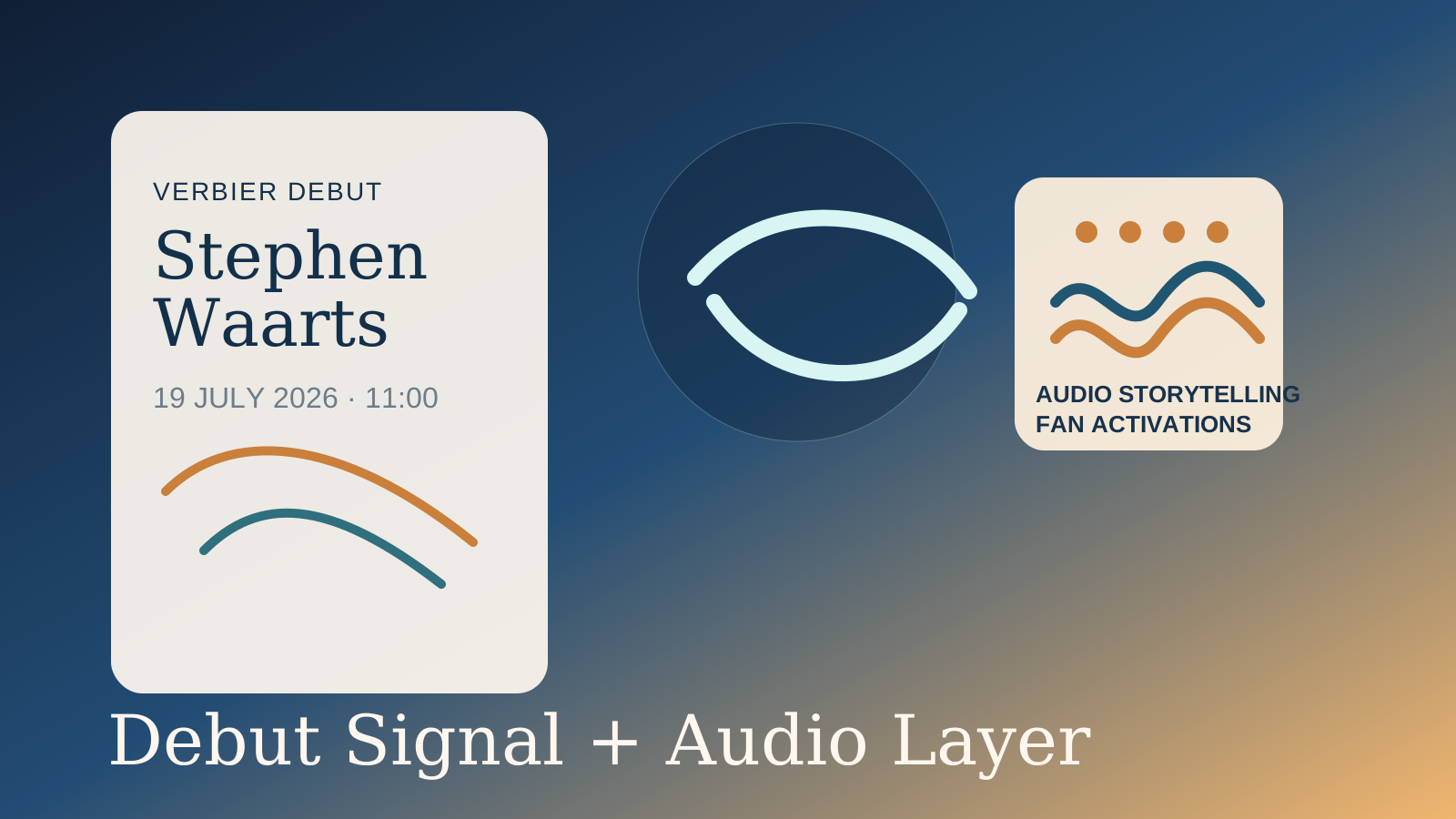
Because major festivals still use debuts to teach audiences who to watch next. Verbier's official program page for Sunday, July 19, places Stephen Waarts with Julien Quentin at 11:00 a.m. in the Eglise de Verbier and frames him as "another young talent to discover during this opening weekend." The page also reminds readers that Waarts is a Yehudi Menuhin and Queen Elisabeth competition winner who studied at Curtis and Kronberg. That is classic prestige framing, but it still works. For violinists, it shows that narrative matters alongside playing. For planners, it shows how efficiently a festival can package authority when biography, repertoire, and timing line up cleanly.
Tanya's performer take: the debut label only lands when the artist profile reads instantly. If the presenter can explain in two lines why a violinist belongs on that stage, the booking already has momentum before the first note.
What does Sennheiser's new fabric London partnership change for performers and planners?
The July 16 official Sennheiser announcement matters because it says the quiet part out loud: sound culture itself is now marketable programming. The partnership with fabric London covers live events, fan activations, audio storytelling, artist collaborations, and content with "long-term educational value." Sennheiser also says the project will show real-world use of pro-audio tools including EW-DX digital wireless systems. That is relevant well beyond club culture. Violinists, electric violinists, and event planners all work in an environment where audiences increasingly care about what the room feels like, how the signal path behaves, and whether the technical identity of a show is visible and believable.
Tanya's performer take: good stage sound is no longer just backstage infrastructure. It is part of the audience narrative, and artists who understand that layer have a better chance of building a show people remember.
What should violinists, electric violinists, planners, and fans watch next?
- Notice which violin soloists are being trusted to carry public-facing summer events, not only specialist classical slots.
- Watch the mixed programs around big violin names, because they reveal whether a presenter is programming for habit or for energy.
- Track how festivals describe debuts, since that language often signals who institutions are trying to move into the next tier.
- Expect more venues and brands to make technical storytelling visible, especially where wireless audio, content capture, and fan experience overlap.