Hearing Protection · 2026-07-22
Best Musician Earplugs for Electric Violinists Playing Loud Stages and Festivals
The best musician earplugs for most electric violinists playing loud stages and festivals are EARPEACE Music PRO because Tanya Strings gets the comfort, clarity, and venue-specific attenuation choices that matter in real performance life: a near-custom contour fit plus 16dB, 20dB, or 24dB filter options. If you want the smartest value kit, Alpine MusicSafe Pro is the better buy. Etymotic ER20XS is the discreet low-cost backup, Loop Experience 2 Plus is the secure movement-friendly option, Earasers is the low-visibility clarity-first choice, and Decibullz High-Fidelity Filters make sense when you want a remoldable custom-style fit.
Follow Tanya Strings on Google
Add the site as a preferred source to see more new violin posts from Tanya Strings in Google.
Affiliate disclosure: Some links in this article are affiliate links. I may earn a commission if you make a purchase, at no extra cost to you.
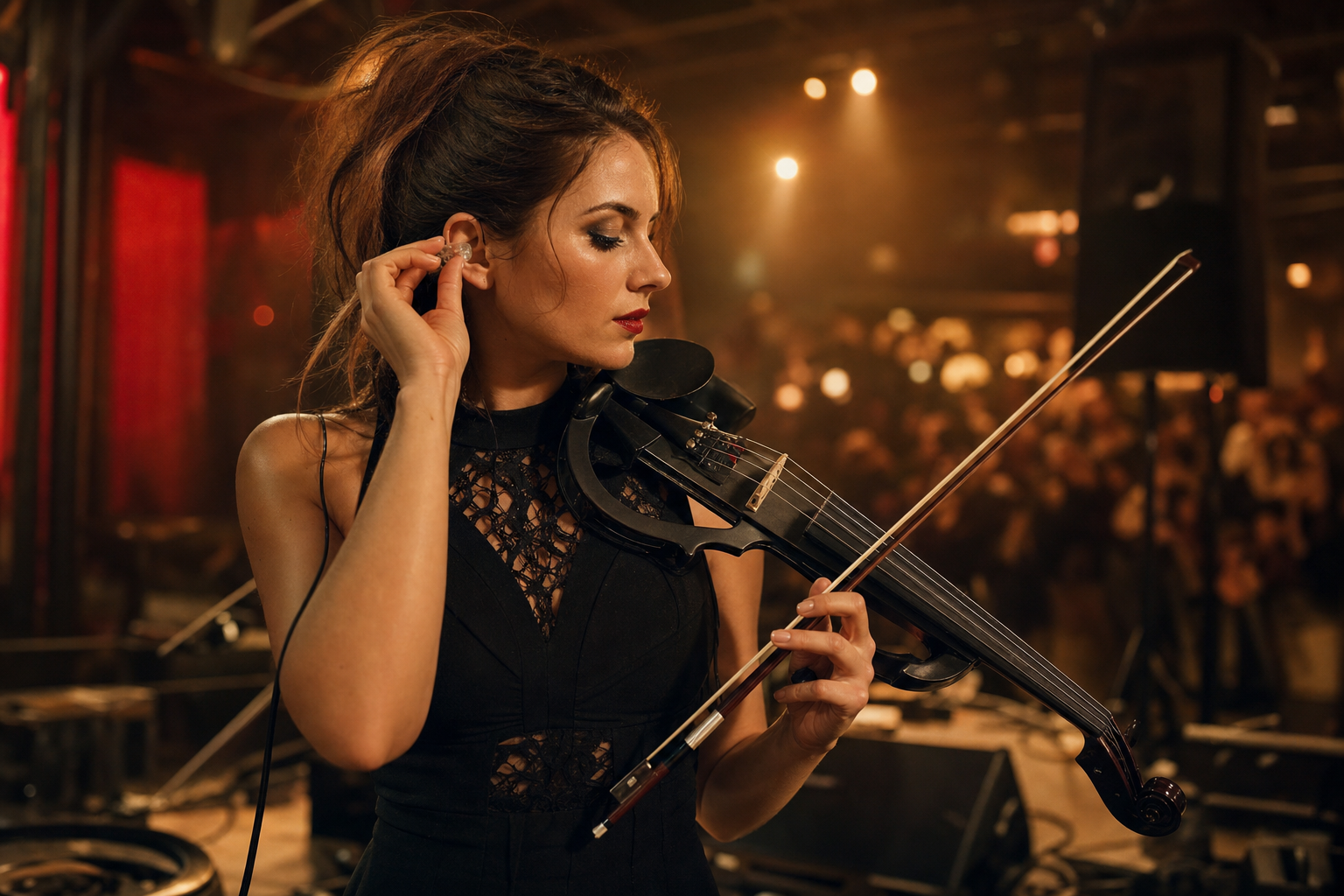
What are the best musician earplugs for most electric violinists playing loud stages and festivals?
For most working players, I would start with EARPEACE Music PRO. EARPEACE says the design combines a near-custom contour shape with your choice of 16dB, 20dB, or 24dB PRO filters, and that combination lines up well with how real electric violin calendars behave. Some dates are only loud enough to need moderation. Some clubs and festival stages are genuinely punishing. Tanya Strings wants an earplug that still lets phrasing, pitch, click, and crowd energy feel believable while reducing the kind of volume that leaves your ears angry at 2 a.m. That is why this topic belongs in the same serious category as your monitoring plan, your stage setup, and your PA choices.
My performer rule: if the stage volume is hurting your ears after one soundcheck, you are already late on hearing protection.
Which musician earplugs are worth buying right now?
This shortlist stays focused on live usefulness for electric violin: believable tone, secure fit during movement, clear reasons to choose more attenuation, and honest tradeoffs when the product is better as a backup than as your main show solution.
| Product | Best for | Why Tanya would use it | Watch out for | Links |
|---|---|---|---|---|
| EARPEACE Music PRO | Most electric violinists who want the strongest all-around live-music balance | I trust it because the contour fit and 16dB, 20dB, or 24dB filter options make it easier to match the protection level to the room without losing the shape of the music. | You choose one filter set at purchase unless you buy extras, so be honest about whether your calendar is mostly clubs, festivals, or mixed. | Official · Amazon |
| Alpine MusicSafe Pro | Players who want one value kit with multiple filter strengths in the box | I like it when I want one affordable package that covers lighter rehearsals, mid-volume venues, and louder dates through 16dB, 19dB, and 22dB filters. | The universal fit is practical, but it is less tailored than the premium contour-style options above and below it. | Official · Amazon |
| Etymotic ER20XS Universal | Discreet low-profile backup wear and budget-minded performers | I would keep it in the case because Etymotic positions it as a stem-less low-profile design with 20-dB equal sound reduction and strong clarity for musicians. | It is excellent as a compact workhorse, but it feels more like a straightforward tool than a premium comfort-first stage luxury. | Official · Amazon |
| Loop Experience 2 Plus | Mobile performers who want secure fit, cleaner style, and extra attenuation on demand | I would use it when movement matters and I want a product that stays put, gives 17dB SNR by default, and adds more control with the included Mute accessory. | The design is elegant, but the buying logic makes most sense when comfort and wearability matter as much as raw filter variety. | Official · Amazon |
| Earasers | Performers who hate the plugged-up feeling and want very low visual profile | I would consider them when the priority is comfort, transparency, and keeping the earplug visually discreet while still preserving musical layering. | You need to care about sizing and filter choice more than with simple one-size kits, and the range can feel more specialized to shop. | Official · Amazon |
| Decibullz High-Fidelity Filters | Players who want a remoldable custom-style fit without paying for full custom impressions | I would buy this when fit is the problem and I want a moldable, remoldable earplug that is more personal than a standard universal shape. | Decibullz says the music filters are safe up to 102dB with SNR 15dB, so it is not the obvious answer if your regular stages are brutally loud. | Official · Amazon |
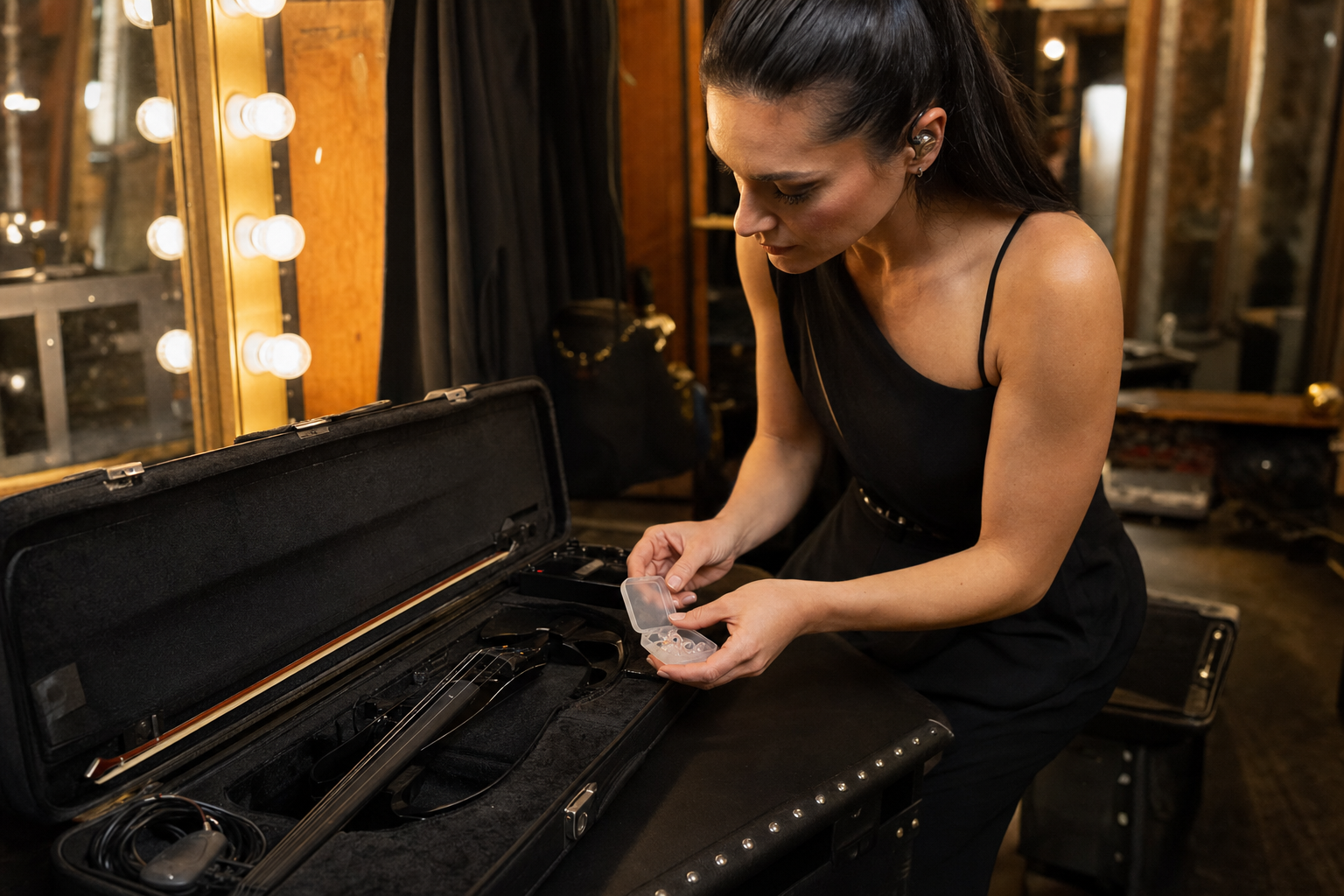
Why is EARPEACE Music PRO my best overall pick?
Because it solves the actual stage problem instead of only sounding good in marketing copy. EARPEACE says Music PRO uses a patented Contour earplug with a near-custom fit and multi-layered filters offered in 16dB, 20dB, and 24dB versions. That matters because electric violin players bounce between very different environments: smaller indoor venues where too much attenuation can disconnect you from the set, outdoor festivals where the PA wash is broader, and louder rooms where cymbals and wedges can suddenly dominate. Tanya Strings does not want earplugs that make the band feel dead. I want the level turned down while phrasing, intonation, and groove still feel trustworthy.
Who should buy EARPEACE Music PRO first?
Buy it first if live music is the main use case, you move a lot on stage, and you want a more premium fit than basic universal plugs without jumping straight to costly custom work.
- Pros: stronger comfort story, clearer venue-specific filter logic, polished sound-preserving identity, and a design that makes sense for long club and festival nights.
- Cons: extra filters cost more, and you should think honestly about whether you really need 24dB before defaulting to the biggest number.
See EARPEACE Music PRO · Find Music PRO options on Amazon
When are Alpine MusicSafe Pro or Etymotic ER20XS the smarter buy?
These two win when budget discipline, simplicity, or backup readiness matter more than chasing the fanciest fit story. Both are serious tools. They just solve slightly different problems.
Why does Alpine MusicSafe Pro win on value and flexibility?
Alpine says MusicSafe Pro includes three interchangeable filters at 16dB, 19dB, and 22dB, plus a cord, storage case, and cleaning spray. That is a very usable bundle. I would recommend it to electric violinists who play mixed calendars and do not yet know which attenuation level feels most natural to them. Tanya Strings likes buying one kit that can survive rehearsals, weddings, club dates, and festival side-stage time without immediately forcing a second purchase.
- Pros: smart value, multiple filters in the box, easy giftable kit logic, and enough range for many real-world stage situations.
- Cons: universal fit is not magic, and some performers will still prefer a more contoured plug once they get serious about all-night wear.
See Alpine MusicSafe Pro · Find MusicSafe Pro options on Amazon
When is Etymotic ER20XS the better backup or low-profile choice?
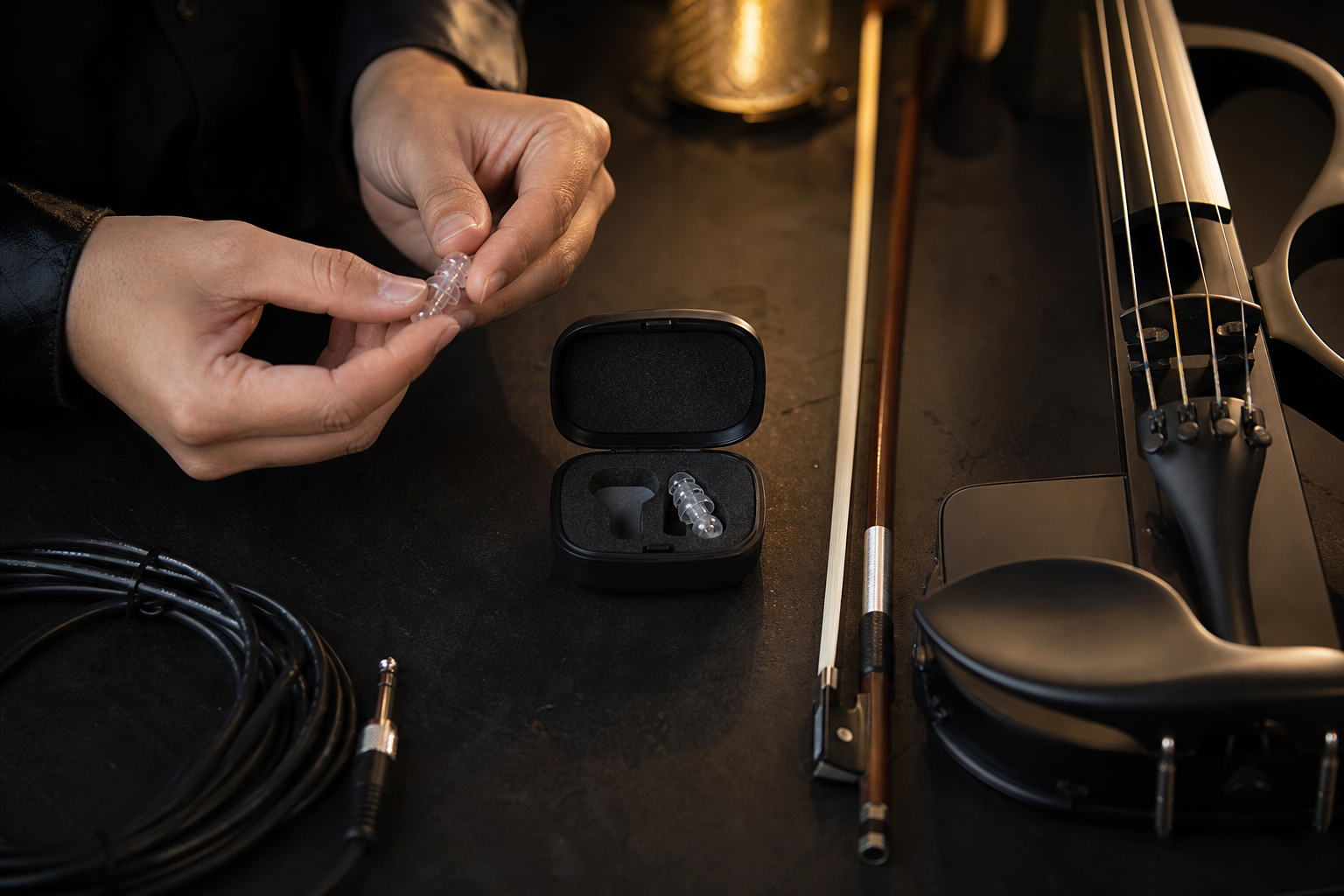
Etymotic positions ER20XS as a low-profile stem-less design with a universal pack, triple-flange contact, and 20-dB equal sound reduction across the hearing spectrum. I like that logic for two situations: the performer who always wants an emergency pair in the case, and the player who prioritizes compact, discreet wear under fast-moving real life. This is the kind of product that earns trust by always being there. If your main earplugs get lost on a festival weekend, a dependable backup matters more than a complicated feature list.
- Pros: discreet shape, compact case-friendly footprint, straightforward 20-dB protection, and useful clarity for music work.
- Cons: less customizable than multi-filter kits and less luxurious than the premium contour-focused options.
See Etymotic ER20XS · Find ER20XS options on Amazon
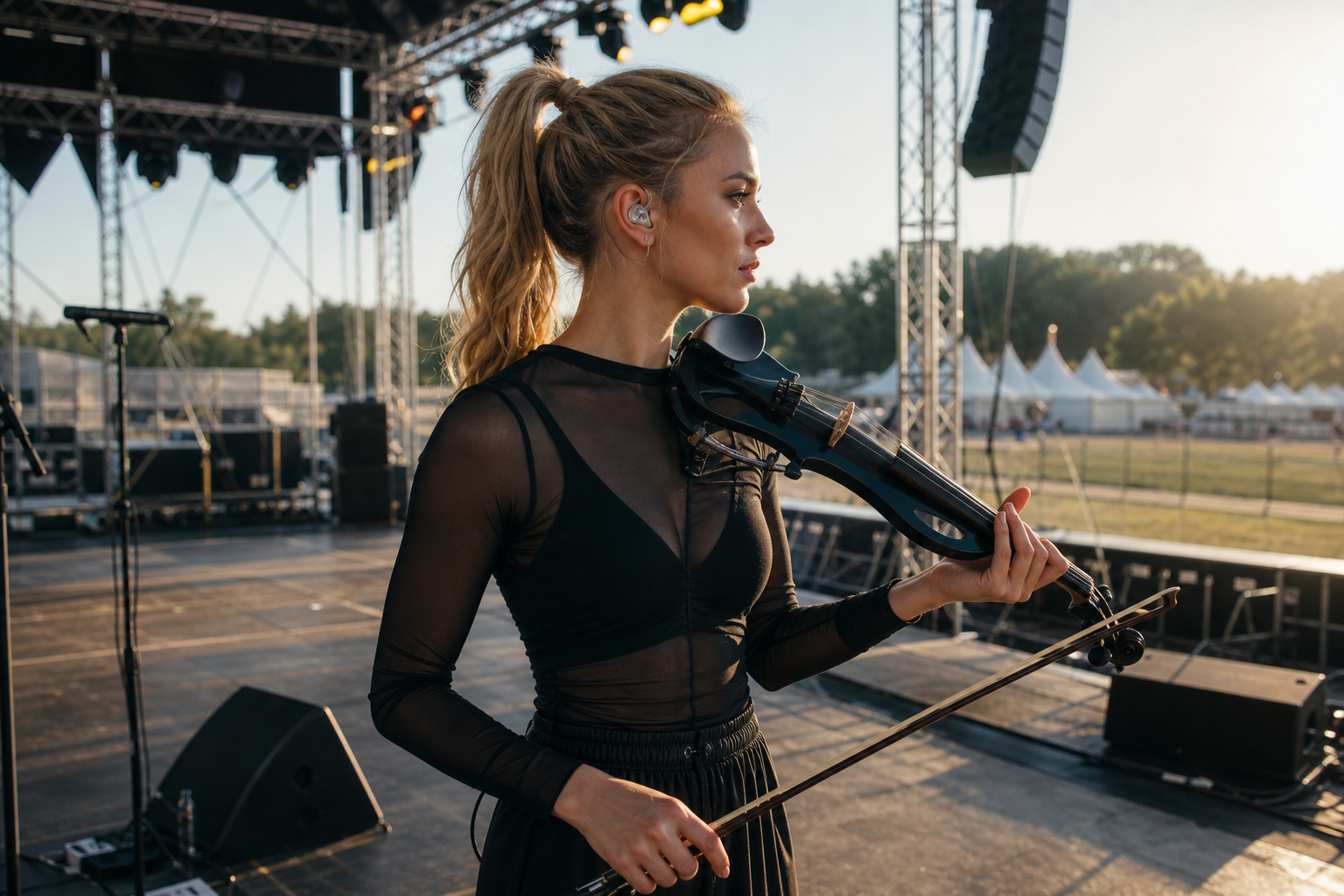
Who should choose Loop Experience 2 Plus, Earasers, or Decibullz instead?
Choose one of these when your buying logic becomes more specific than simply “I need earplugs for concerts.”
Why would Tanya Strings choose Loop Experience 2 Plus?
Loop says Experience 2 Plus reduces noise by 17dB SNR and can add 3dB more with the removable Mute accessory, while focusing on secure fit and live-event wearability. I would look here if stage movement is part of the show and I want something comfortable, consistent, and visually clean. It is also attractive for players who dislike the more medical look of some traditional musician plugs.
- Pros: secure wear, elegant design, useful add-on attenuation, and good crossover between performance, events, and travel.
- Cons: not the broadest filter toolkit and less obviously musician-specific than the specialist brands built around stage protection first.
See Loop Experience 2 Plus · Find Experience 2 Plus options on Amazon
When are Earasers the right clarity-first choice?
Earasers says the plugs use medical-grade silicone, an open-canal shape, and filter placement intended to keep sound more natural while reducing the sensitive resonance area of the ear canal. I would consider them when the whole battle is “I hate how earplugs make everything feel blocked.” Tanya Strings knows that some performers simply will not keep wearing gear that feels like a wall between them and the room. Earasers is the answer for those people if they are willing to care about sizing and filter selection.
- Pros: very discreet appearance, strong clarity reputation, comfort for long wear, and a good answer for players who reject the plugged-up sensation.
- Cons: more sizing thought, more shopping complexity, and a price that only makes sense if comfort and clarity are genuinely the problem you are solving.
See Earasers · Find Earasers options on Amazon
Why would a performer pay for Decibullz High-Fidelity Filters?
Decibullz says the high-fidelity version custom molds to your ears in minutes, can be re-molded, and uses a clear-sound filter rated at SNR 15dB / NRR 7dB for music environments up to 102dB. That makes it interesting when fit keeps failing with universal plugs and you want a more personalized seal without going through a full audiologist custom-mold process. I would buy it for medium-loud environments, repeated travel, and people who are especially sensitive to fit inconsistency. I would not buy it as my first answer for a brutally loud rock-stage calendar.
- Pros: remoldable custom-style fit, stronger security than generic universal shapes, and a clear solution for seal problems.
- Cons: more setup effort and less obvious headroom for the loudest stage situations than some higher-attenuation alternatives.
See Decibullz High-Fidelity Filters · Find Decibullz options on Amazon
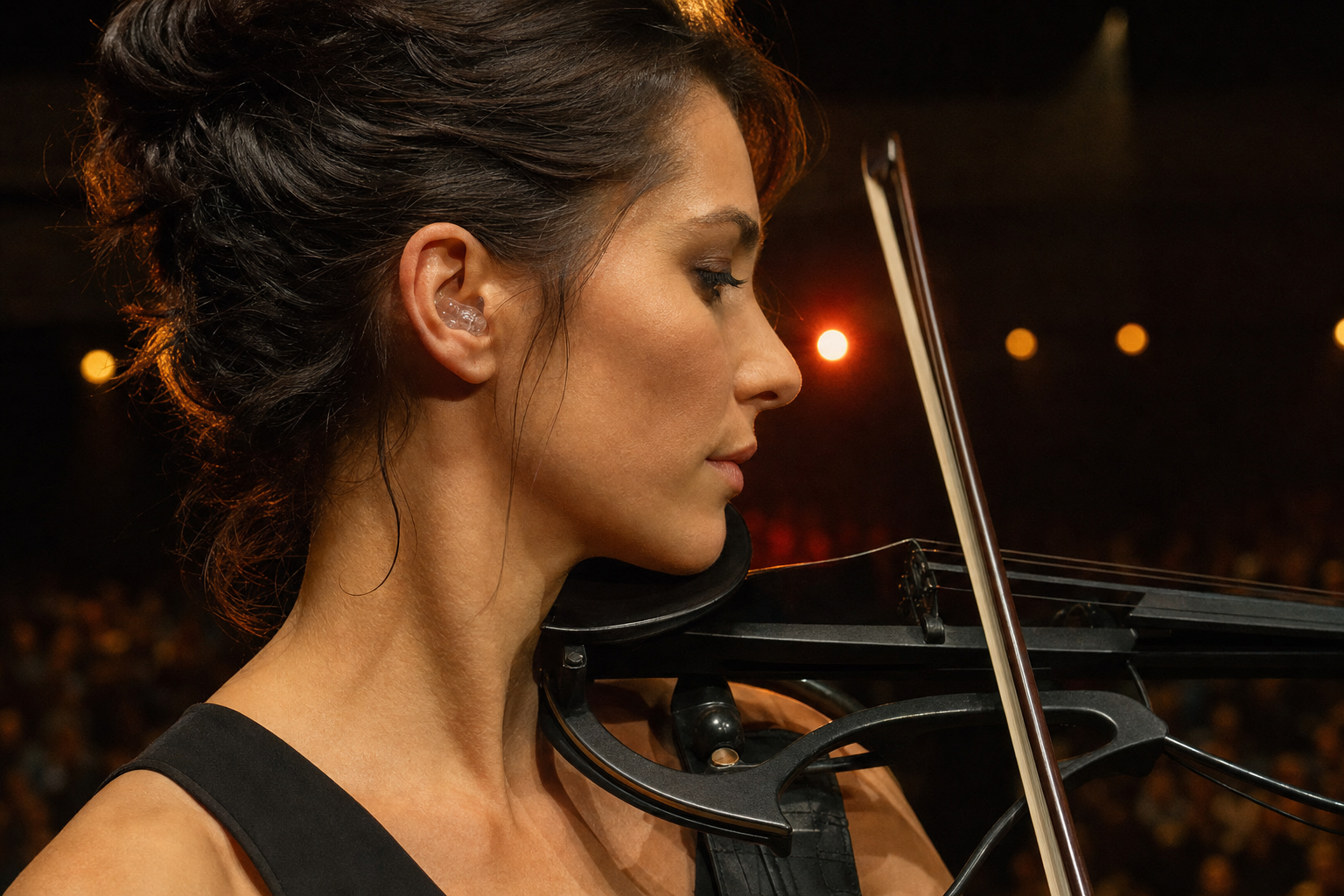
How much attenuation do electric violinists actually need on loud stages?
Less than panic-buying suggests, and sometimes more than optimism admits. The answer depends on how loud the stage really is, whether you are on wedges or on a clean in-ear monitor setup, and how much cymbal or side-fill exposure you are taking from the band around you.
My quick venue guide:
- 16dB to 17dB: smaller rooms, lighter rehearsals, acoustic crossover sets, and players who want to stay connected to the room without feeling shut off.
- 19dB to 20dB: the safest all-around zone for many working electric violinists in clubs, weddings, outdoor stages, and mixed live calendars.
- 22dB to 24dB: loud indoor bands, aggressive cymbal wash, side fills, festival stages, and any room where you are already bracing physically against the volume.
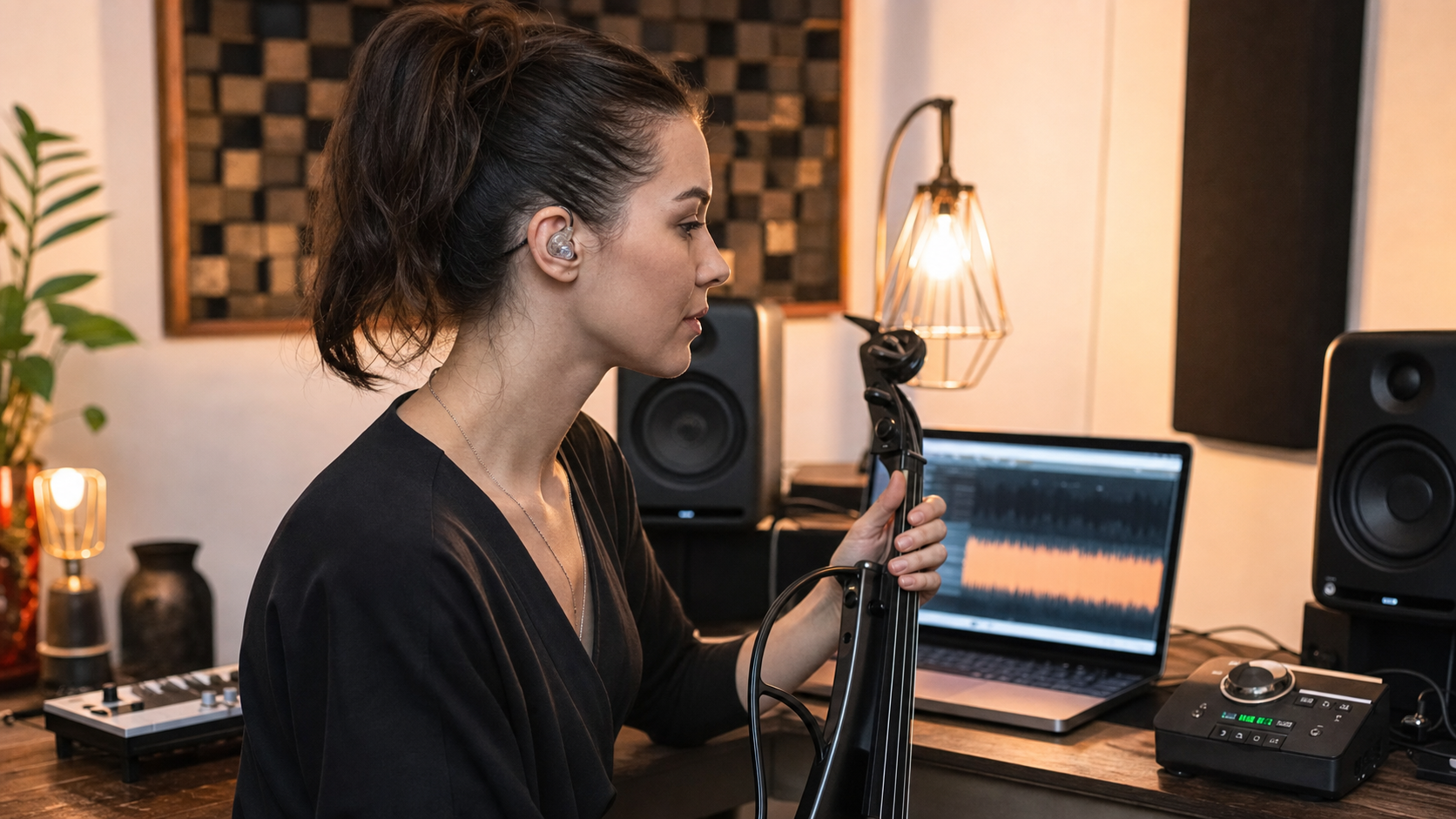
One performer detail matters here: if you are already using properly fitted IEMs, you usually do not also need musician earplugs during the actual set. Earplugs make more sense when you are still on wedges, in side-stage chaos, walking the festival grounds, or dealing with soundcheck volume before the in-ear mix is stable.
How should performers buy musician earplugs without wasting money?
Buy around fit discipline, not fear. Hearing protection only works when you actually wear it.
My buying checklist:
- Start by deciding whether the real problem is raw loudness, poor fit, or the plugged-up feeling that makes you stop using earplugs.
- Match the attenuation to your calendar. A chamber crossover wedding set does not need the same answer as a drummer-heavy festival stage.
- Keep one pair in the main case at all times, just like a spare cable or backup rosin.
- Use earplugs for loud wedges, side fills, and festival walk-throughs, not as a substitute for fixing a bad monitor strategy.
- Revisit the whole rig too, because cleaner stage volume, better DI control, and smarter wireless placement can reduce how hard your ears are working in the first place.
FAQ
Are musician earplugs worth it for electric violin if you already play amplified instruments?
Yes. Amplification is exactly why they matter. Electric violinists often spend more time near wedges, side fills, drums, and loud festival PA than acoustic-only players do.
Should you buy the strongest filter available just to be safe?
Not automatically. Too much attenuation can make you feel disconnected and tempt you to stop wearing the plugs. Buy enough protection for your real rooms, then go stronger only if your calendar proves you need it.
What is the best backup earplug to leave in the violin case full-time?
Etymotic ER20XS is the cleanest backup answer in this list because it is low-profile, straightforward, and easy to justify even if you later upgrade your main pair.
When should electric violinists stop buying universal earplugs and move to a more custom-style fit?
Move when repeated long sets keep revealing comfort or seal problems, or when you already know that universal shapes shift too much during real performance movement.