Cables · 2026-07-23
Best Instrument Cables for Electric Violinists Who Need Quieter, More Reliable Stage Rigs
The best instrument cable for most electric violinists who need a quieter, more reliable stage rig is the D'Addario American Stage Instrument Cable because Tanya Strings gets low-capacitance clarity, dense noise rejection, and dependable straight or right-angle options that translate well from club wedges to DI-driven festival rigs. If silent swaps matter more, Ernie Ball Classic Silent is the better live buy. Fender Professional Series is the value pick, Fender Deluxe Series is the tougher premium straight cable, Ernie Ball Braided adds tangle resistance and stage personality, and D'Addario Coiled makes sense when movement matters more than total neutrality.
Follow Tanya Strings on Google
Add the site as a preferred source to see more new violin posts from Tanya Strings in Google.
Affiliate disclosure: Some links in this article are affiliate links. I may earn a commission if you make a purchase, at no extra cost to you.
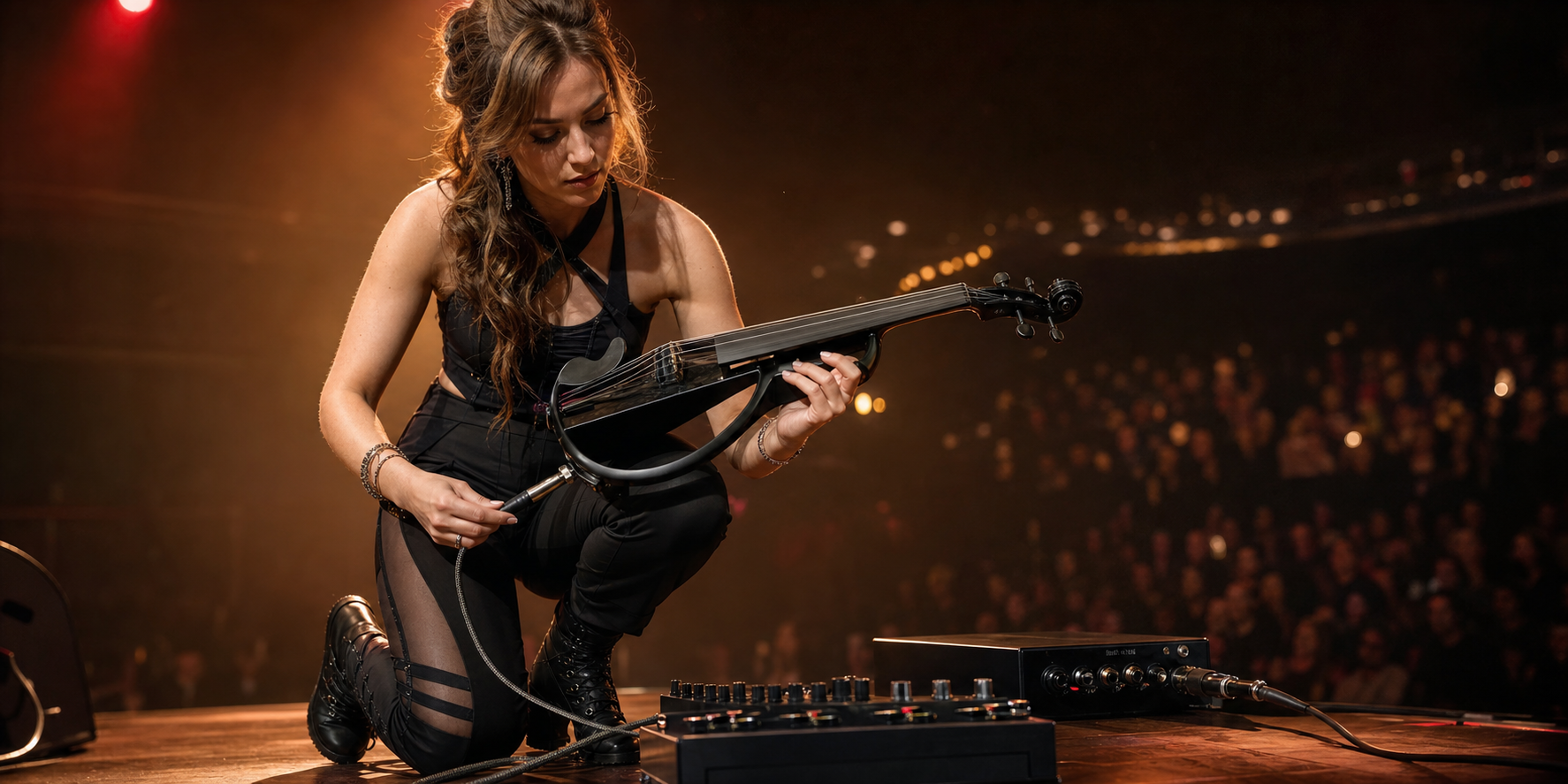
What are the best instrument cables for most electric violinists who need quieter, more reliable stage rigs?
For most working performers, I would start with the D'Addario American Stage Instrument Cable. D'Addario positions it around low 28 pF/ft capacitance, 22 AWG oxygen-free copper, and 95% tinned copper braiding, and that is a very sensible recipe for electric violin because it keeps the signal feeling clean without turning cable choice into mysticism. Tanya Strings does not buy cables to impress anyone. I buy them so the violin feels predictable through the same pedalboard, DI path, and stage setup night after night.
My performer rule: if your cable is unreliable enough that you think about it in the middle of a song, it is already the wrong cable for that gig.
Which instrument cables are worth buying right now?
This shortlist stays focused on real electric violin stage logic: low noise, useful plug options, reliable shielding, practical live lengths, and clear reasons to choose specialty features like silent swapping or coiled movement.
| Product | Best for | Why Tanya would use it | Watch out for | Links |
|---|---|---|---|---|
| D'Addario American Stage Instrument Cable | Most electric violinists who want the safest all-around stage cable | I trust it because the low-capacitance design, dense braiding, and straight or right-angle choices solve the everyday club, wedding, and festival jobs without drama. | It costs more than basic cables, so it makes the most sense when live reliability matters more than saving a little on the first purchase. | Official · Amazon |
| Ernie Ball Classic Silent Instrument Cable | Performers who hot-swap instruments or reconnect quickly between cues | I like it when the silent plug matters more than cosmetics because quiet changes save you from ugly pops through wedges, amps, or PA. | It is a feature-first buy. If you plug in once and never touch the cable again, you may not need to pay extra for the silent connector. | Official · Amazon |
| Fender Professional Series Instrument Cable | Players who want the best value standard cable for daily shows | I would use it when I want a straightforward cable with 22 AWG construction, 95% OFC spiral shielding, and a low-enough capacitance story without overspending. | It is practical rather than fancy, so buy it for dependable work instead of premium feel or silent-swap features. | Official · Amazon |
| Fender Deluxe Series Instrument Cable | Players who want a tougher premium straight cable with stronger hardware feel | I like it when the rig needs a sturdier jacket, 20 AWG build, 95% OFC braided shielding, and gold-plated connectors in a cable that still feels stage-ready. | The tweed-style jacket and thicker build feel bulkier than the plain black options, so it is not the most invisible cable in a cramped setup. | Official · Amazon |
| Ernie Ball Braided Instrument Cable | Performers who want tangle resistance and a more visual stage identity | I would choose it when I want a cable that coils more confidently, looks better on stage, and still uses a dual-conductor, dual-shielded low-noise build. | The braided jacket is part of the appeal, but some players will still prefer a plainer cable that feels slightly slimmer underfoot. | Official · Amazon |
| D'Addario Coiled Instrument Cable | Performers who move a lot but stay anchored to one pedalboard zone | I would use it when the set benefits from cleaner stage recoil and a slightly warmer response instead of the most neutral straight-cable sound. | Coiled designs are a taste-driven choice, not the default answer for everyone, and the extra capacitance is part of that personality. | Official · Amazon |
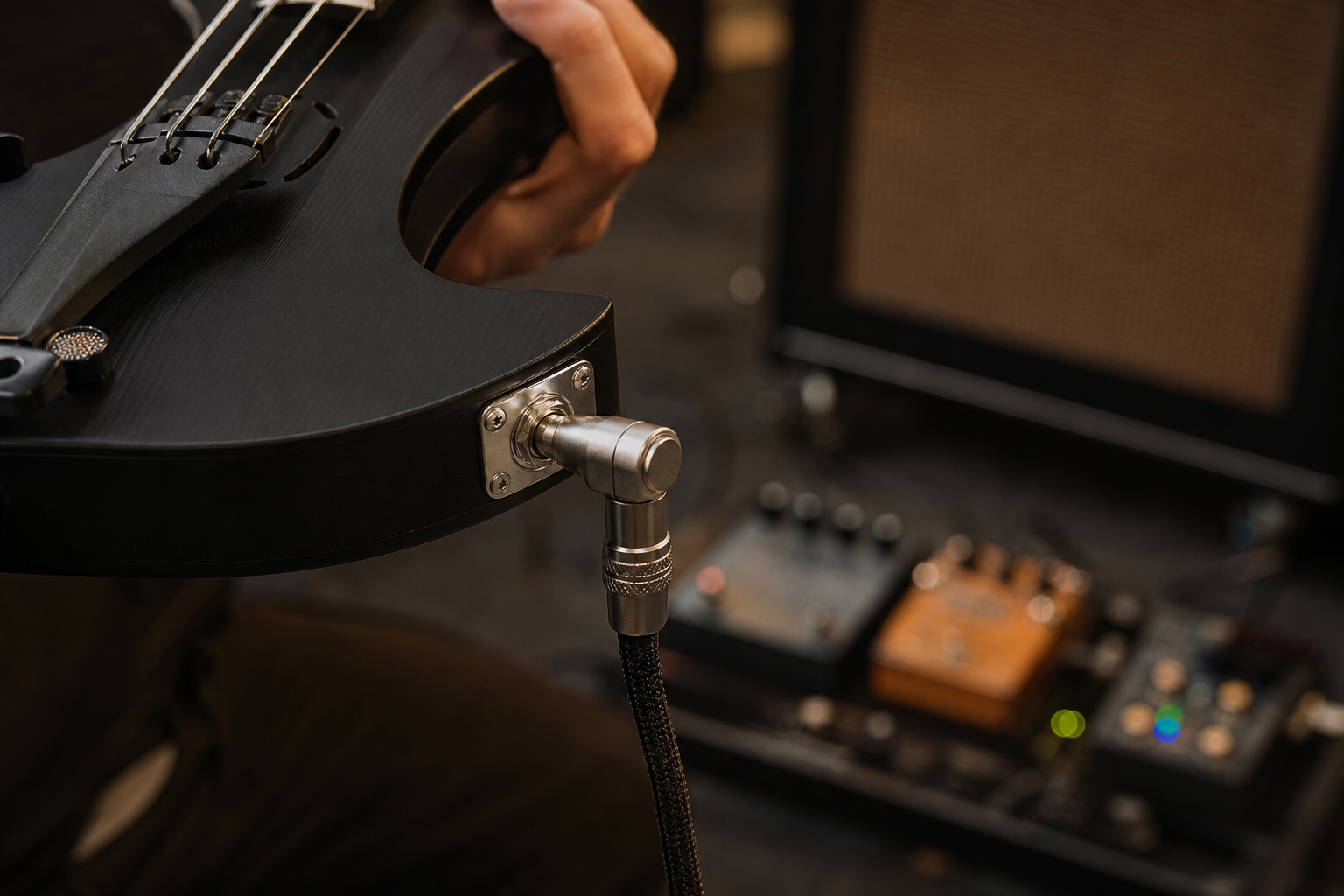
Why is D'Addario American Stage my best overall pick?
Because it solves the most common live problem without adding unnecessary complexity. D'Addario says American Stage uses low 28 pF/ft capacitance and 95% tinned copper braiding, and that combination makes sense for electric violin players who care about cleaner top end, lower handling noise, and a cable that does not feel like a compromise after you add pedals, wireless backups, or a direct rig. Tanya Strings wants the violin to hit the front of the signal chain with as little friction as possible. This is the kind of cable you buy once, label as your main line, and then stop thinking about.
Who should buy D'Addario American Stage first?
Buy it first if you play regularly, want one cable that covers rehearsals and paid gigs, and like the option of choosing a right-angle plug at the instrument without dropping into boutique-cable nonsense.
- Pros: low-capacitance clarity, strong shielding, reliable build, good connector options, and easy all-around stage logic.
- Cons: more expensive than basic house-brand cables and less specialized than silent or coiled designs.
See D'Addario American Stage · Find American Stage options on Amazon
When is Ernie Ball Classic Silent the smarter live buy?
It is the smarter buy when silent stage behavior matters more than tiny differences in cable mythology. Ernie Ball says the silent plug automatically cuts the signal while you plug and unplug, and that is extremely practical for electric violinists who switch instruments, reconnect after a fast reset, or work on stages where a loud pop through the wedge can make everyone stare at the wrong moment. Tanya Strings likes boring reliability. Silent reliability is even better.
Why does silent swapping matter on electric violin stages?
Because electric violin players often work inside more exposed setups than guitarists expect: quieter intros, violin stands between numbers, direct feeds into PA, and cue-sensitive transitions with less forgiveness for noise. A silent cable is not mandatory for every performer, but when it matches your workflow, it feels immediately useful.
- Pros: quieter instrument changes, clear live-purpose feature set, compact connector, and strong backup-cable logic.
- Cons: feature premium only pays off if you actually unplug during live workflow.
See Ernie Ball Classic Silent · Find Classic Silent options on Amazon
Which straight cable gives the best value for daily shows?
For most players, the answer is Fender Professional Series. Fender lists 22 AWG construction, 95% OFC spiral shielding, and 26.9 pF/ft capacitance, which is a very credible middle ground for electric violinists who want a cleaner signal without paying straight into the premium tier on day one.
Why is Fender Professional Series the strongest value pick?
I like it when the goal is simple: buy a dependable cable, keep one as the main line, keep one as the spare, and move on to the rest of the rig. Tanya Strings would rather overspend on something like monitoring or a better DI than overspend on cable cosmetics before the core live system is stable.
- Pros: strong value, low enough capacitance for live clarity, useful length options, and easy replacement logic.
- Cons: plain styling and no silent-swap or specialty movement angle.
See Fender Professional Series · Find Professional Series options on Amazon
When is Fender Deluxe Series worth spending more?
Fender Deluxe Series makes more sense when you want a heavier-duty feel, 20 AWG construction, 95% OFC braided shielding, and gold-plated connectors in a cable that still looks like a real stage tool. I would move here when the cable lives in the rig permanently and sees regular load-ins, travel, and repeated floor contact.
- Pros: sturdier premium feel, braided shielding, tougher jacket, cable tie included, and more polished hardware.
- Cons: bulkier footprint and a premium that matters less if you mostly play short rehearsals or home sessions.
See Fender Deluxe Series · Find Deluxe Series options on Amazon
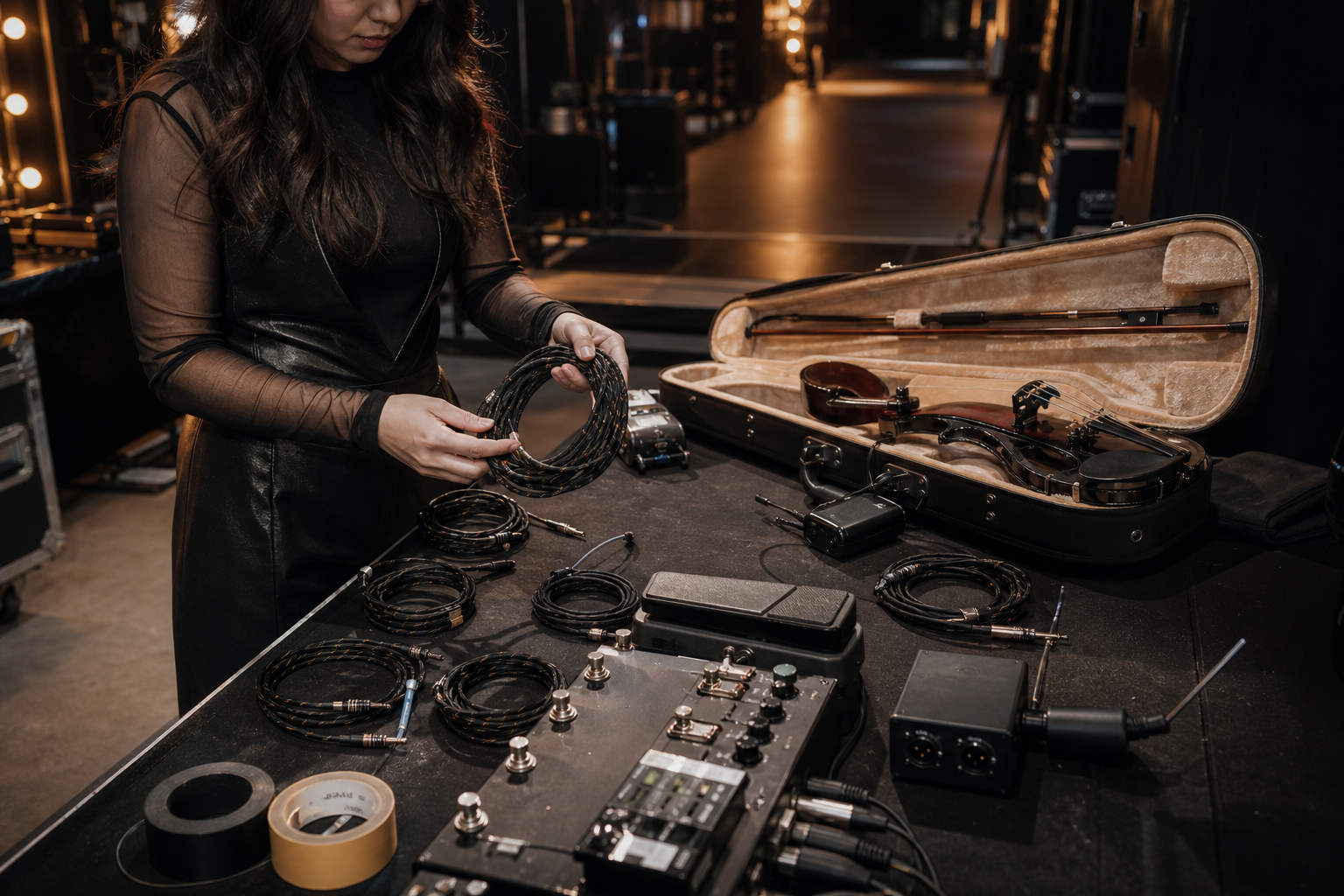
Who should choose Ernie Ball Braided or D'Addario Coiled instead?
Choose one of these when the job is more specific than “I need one normal cable.” Both are defensible buys. They simply solve more specialized stage problems.
Why would Tanya Strings choose Ernie Ball Braided?
Ernie Ball describes the braided line around a dual-conductor, dual-shielded design with lower handling noise and a tangle-resistant outer jacket. I would choose it when stage presentation matters, the cable gets handled constantly, and I want something that visually belongs next to a more intentional electric violin rig instead of disappearing into generic black rubber.
- Pros: tangle resistance, cleaner visual identity, low-noise build, and strong fit for artists who want gear that looks finished on stage.
- Cons: slightly more noticeable bulk and less “invisible” underfoot feel than some plainer cables.
See Ernie Ball Braided · Find Braided options on Amazon
When does a coiled cable actually make sense for electric violin?
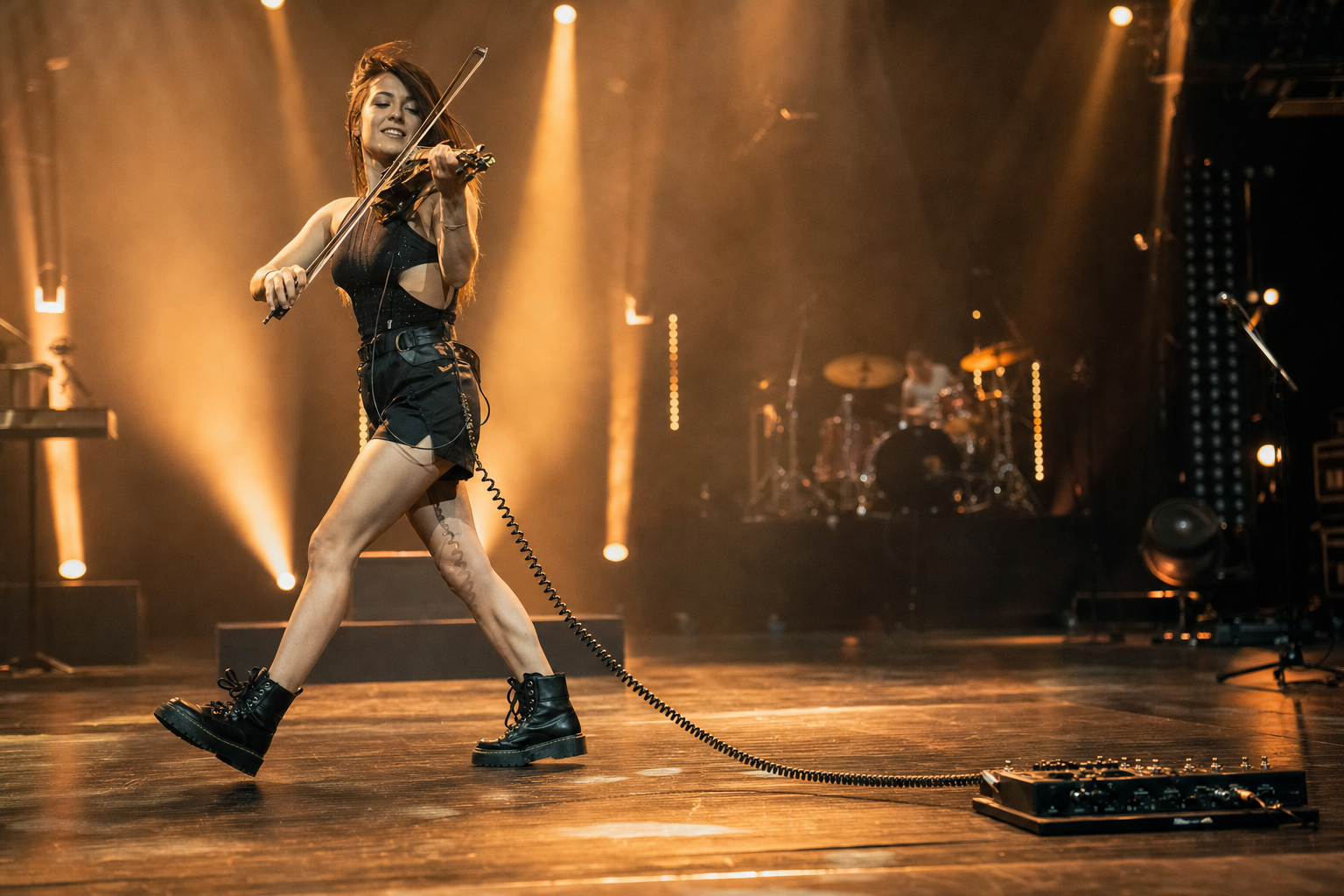
D'Addario is unusually clear that the extra length needed for the coiled format adds capacitance and creates a slightly warmer tone. That means the coiled cable is not pretending to be invisible. It is a deliberate flavor and workflow choice. I would buy it when the pedalboard lives in one predictable zone, I want visual stage movement without a long cable trail, and I can accept that the cable is part of the sound and feel.
- Pros: cleaner recoil, a movement-friendly stage look, warmer feel for brighter rigs, and less loose cable spread on smaller stages.
- Cons: more taste-driven tone change and less obvious value if your set already works perfectly with a straight cable.
See D'Addario Coiled · Find Coiled options on Amazon
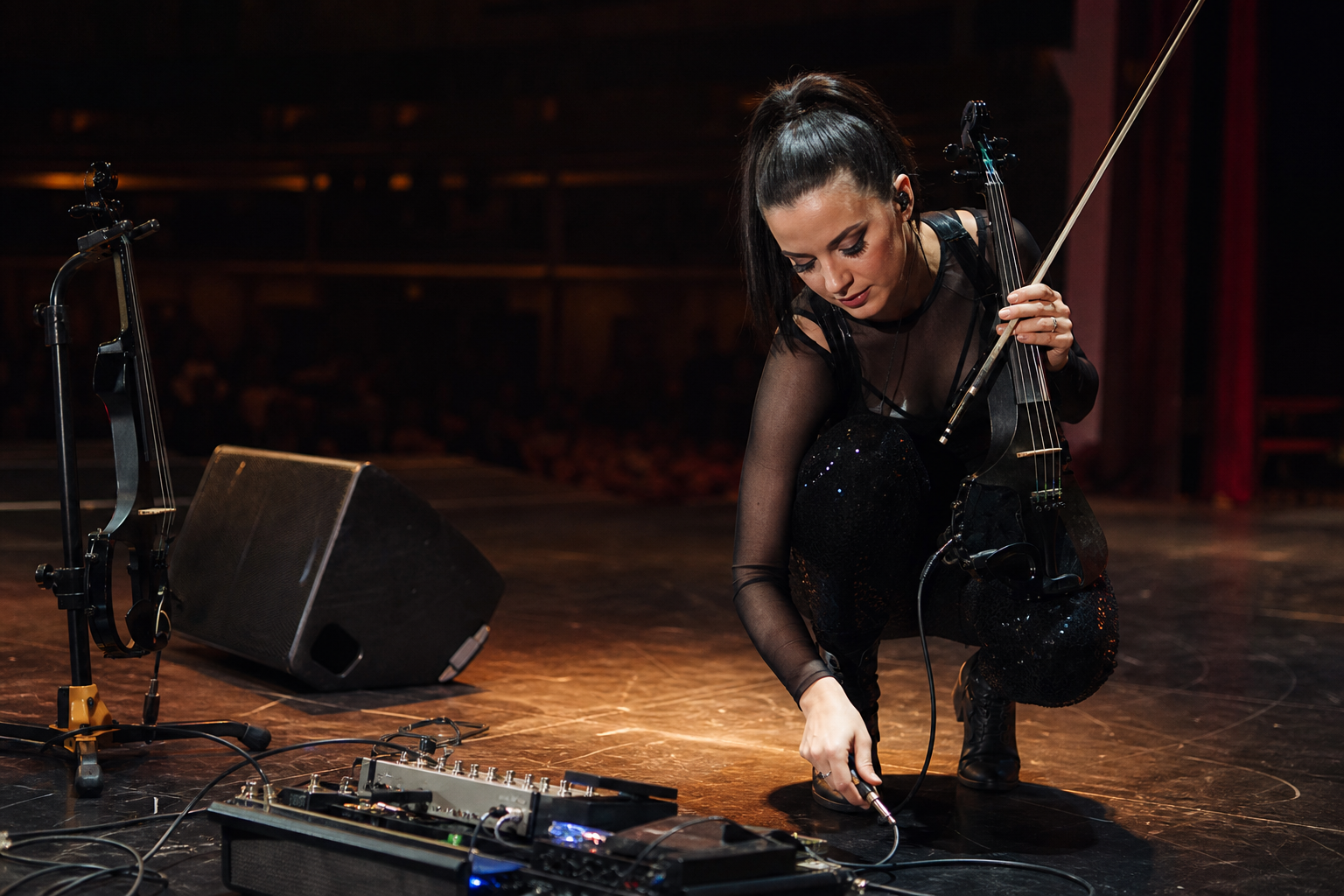
How should electric violinists choose cable length and plug orientation?
Start from the stage map, not from habit. Electric violin rigs fail when the cable is longer, heavier, or more awkward than the actual set demands. The right answer depends on whether you stand close to a pedalboard, run into a floor DI, or cross a wider stage before the signal reaches your main input.
My quick length guide:
- 10 feet: best for compact rigs where the pedalboard or preamp stays close to your body position.
- 15 feet: the safest all-around length for many club and event stages.
- 20 feet: better when the DI, amp, or mixer input sits farther away and you need more stage freedom.
- Coiled 30-foot formats: useful when you want stretch and recoil near one fixed pedalboard zone, not when you need a long straight run across the venue.
Should the instrument end be right-angle or straight?
Usually right-angle on the violin side if the jack sits close to your hip, ribs, or strap line. That is especially true on skeletal or modern electric violin shapes where a straight connector can stick out and become a leverage point. Straight plugs are often fine at the pedalboard, DI, or amp end when the destination jack is easy to reach from above.
When should Tanya Strings carry a silent cable instead of a normal spare?
Carry the silent cable when the spare is likely to become the active cable during the show, not only after it. If the set involves a second violin, quick swaps, or reconnection under lights, the silent line earns its place. If the spare is just insurance in the case, a strong standard cable is enough.
What buying mistakes waste money on instrument cables?
Most wasted cable money comes from buying by image instead of by job.
- Do not buy the longest cable by default. Extra length adds more cable to manage and only helps if the stage really needs it.
- Do not ignore connector angle. A great cable with the wrong plug geometry still becomes annoying on electric violin.
- Do not confuse premium looks with live usefulness. A braided or tweed jacket is only worth it if the feel and handling actually help you.
- Do not run one cable until it embarrasses you. Keep a clearly labeled spare in the case before your main line starts crackling.
How do I keep a cable reliable show after show?
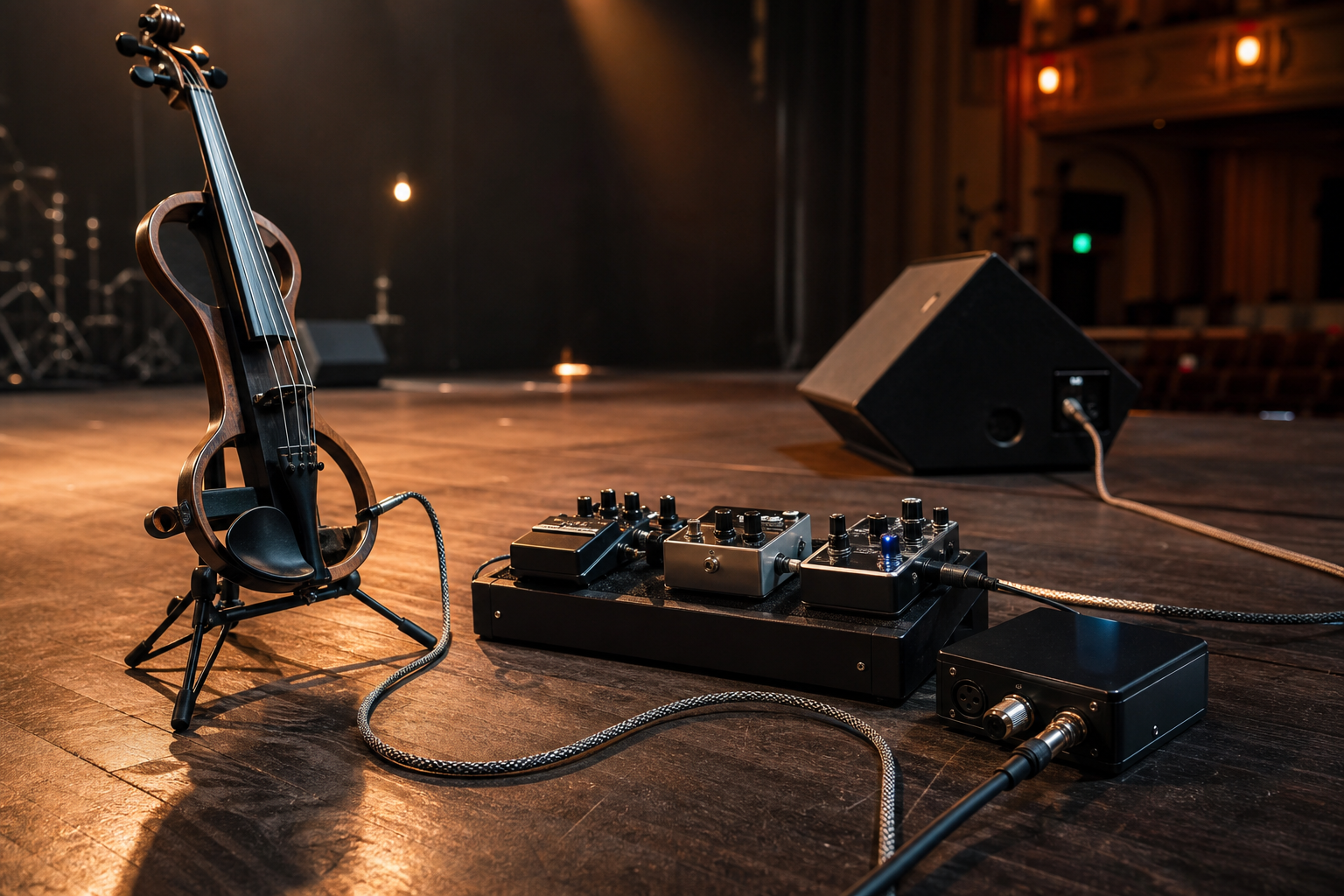
Treat the cable like part of the performance system, not like disposable glue between the “real” pieces of gear.
- Coil it properly after every show instead of wrapping it around your elbow.
- Keep it away from sharp case hinges, heavy power bricks, and crushed pedalboard lids.
- Use one main cable and one spare so each line has a clear role.
- Label the good lengths for your real rigs rather than guessing in the dark at load-in.
- Retire any cable that starts crackling at the jack or cuts out when you move.
That discipline matters just as much as choosing the right cable the first time. Tanya Strings would rather walk on stage with a proven cable than with a newer but untested one that has never survived a full set.
FAQ
What is the best instrument cable for most electric violinists?
The safest first buy is the D'Addario American Stage Instrument Cable because it balances clarity, shielding, and reliable stage-friendly connector choices without turning into a niche product.
Should electric violinists buy straight or right-angle instrument cables?
Usually buy right-angle on the violin side if the output jack is exposed near your body or movement path. Straight remains fine when the jack placement is protected and the cable falls naturally.
Is a silent instrument cable worth it for live shows?
Yes, when you unplug or swap instruments during the actual performance workflow. If you plug in once and stay connected all set, it is helpful but not essential.
How long should an electric violin cable be?
For most working electric violinists, 15 to 20 feet is the practical range. Go shorter for compact rigs and only go longer or coiled when the stage movement truly demands it.