News · 2026-07-23
Violin News Roundup: Artist Access, Sold-Out Rooms, and Sound-First Performance Culture
As of Thursday, July 23, 2026, one of the strongest violin signals is not just who is onstage, but how major players are packaging access around the artist. At the Verbier Festival, Joshua Bell's de Hartmann program appeared not only as a headline concert but as a public open rehearsal on July 23. The same festival already has Leonidas Kavakos and Mao Fujita sold out for July 24. In Aspen, Pekka Kuusisto and Nico Muhly are heading toward a July 26 recital built on identity, not safety. And outside classical halls, Sennheiser's expanded fabric London partnership shows that sound brands want a bigger role in music culture itself.
Follow Tanya Strings on Google
Add the site as a preferred source to see more new violin posts from Tanya Strings in Google.
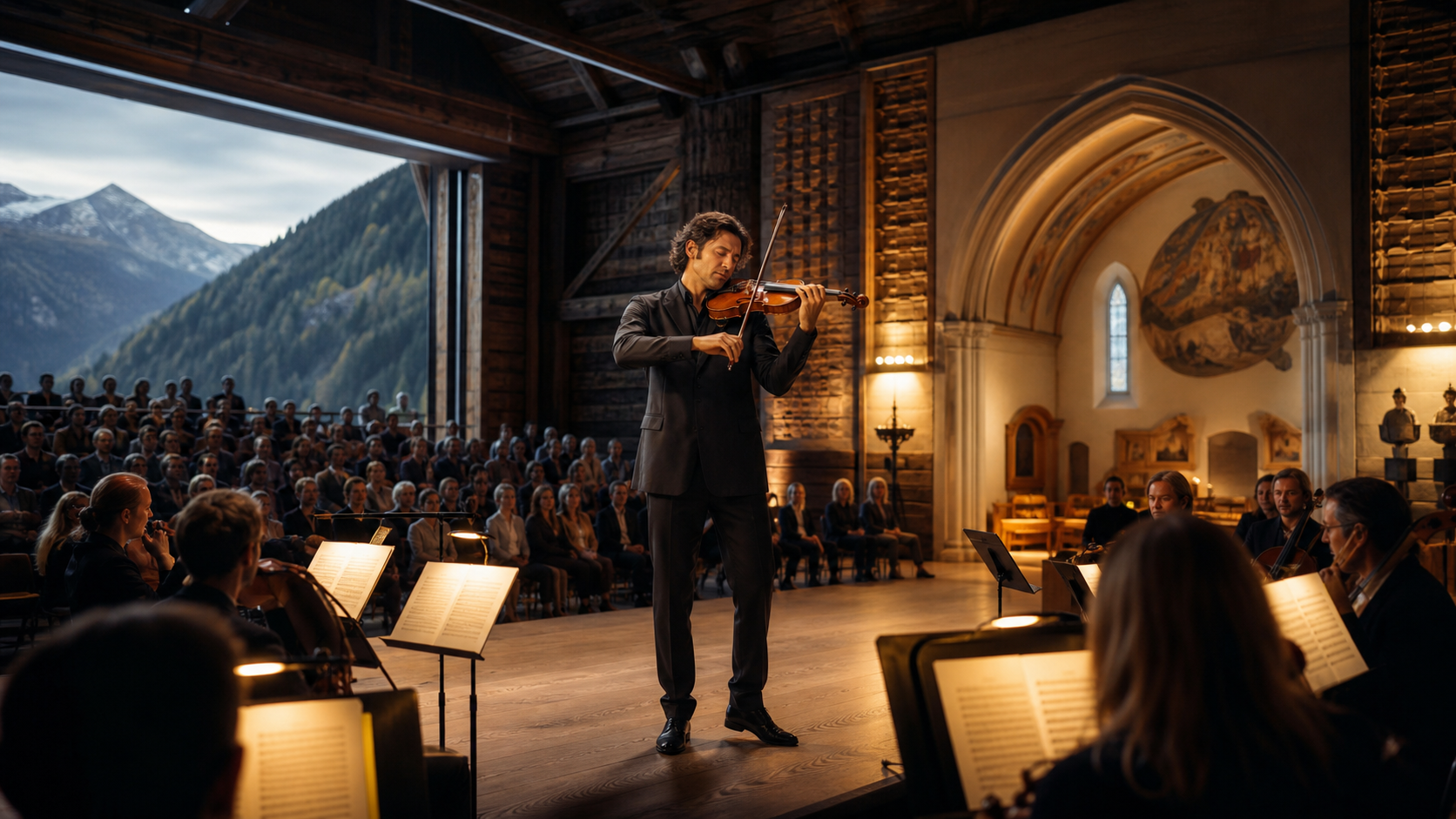
Why does Joshua Bell's open rehearsal matter as much as the evening billing?
Because it shows a top festival treating access itself as part of the artistic product. Verbier's official page for Thursday, July 23, 10:00 to 13:00 open rehearsal makes the Joshua Bell and Daniel Harding collaboration publicly visible before the polished concert moment. The repertoire is not lightweight either: Mussorgsky, Thomas de Hartmann's Violin Concerto, and Rachmaninoff's Second Symphony. That matters because rehearsals used to feel like insider territory. When a festival opens them up, it signals confidence in process, not just finish. For fans, that creates proximity. For presenters, it turns prestige into something more legible and shareable.
Tanya's performer take: when audiences are invited into rehearsal culture, violin playing stops looking like a sealed mystery and starts feeling like a living high-level craft. That builds stronger long-term loyalty than one glamorous night alone.
What does a sold-out Kavakos and Fujita room say about violin demand right now?
A lot. Verbier's official page for Leonidas Kavakos and Mao Fujita on Friday, July 24 already shows the recital as sold out with a waiting list. The room is not being sold on spectacle. It is Mozart's E minor Sonata, Brahms's First Sonata, and Schubert's C major Fantasy in the Eglise de Verbier. That is concentrated listening in a serious space, and people are still lining up for it. After years of assumptions that attention spans only reward giant visuals, this is a useful correction. A premium violin event can still win by promising depth, focus, and musical tension instead of extra decoration.
Tanya's performer take: sold-out chamber demand is a reminder that audiences still pay for intensity when the artistic identity is unmistakable. Small room does not mean small event.
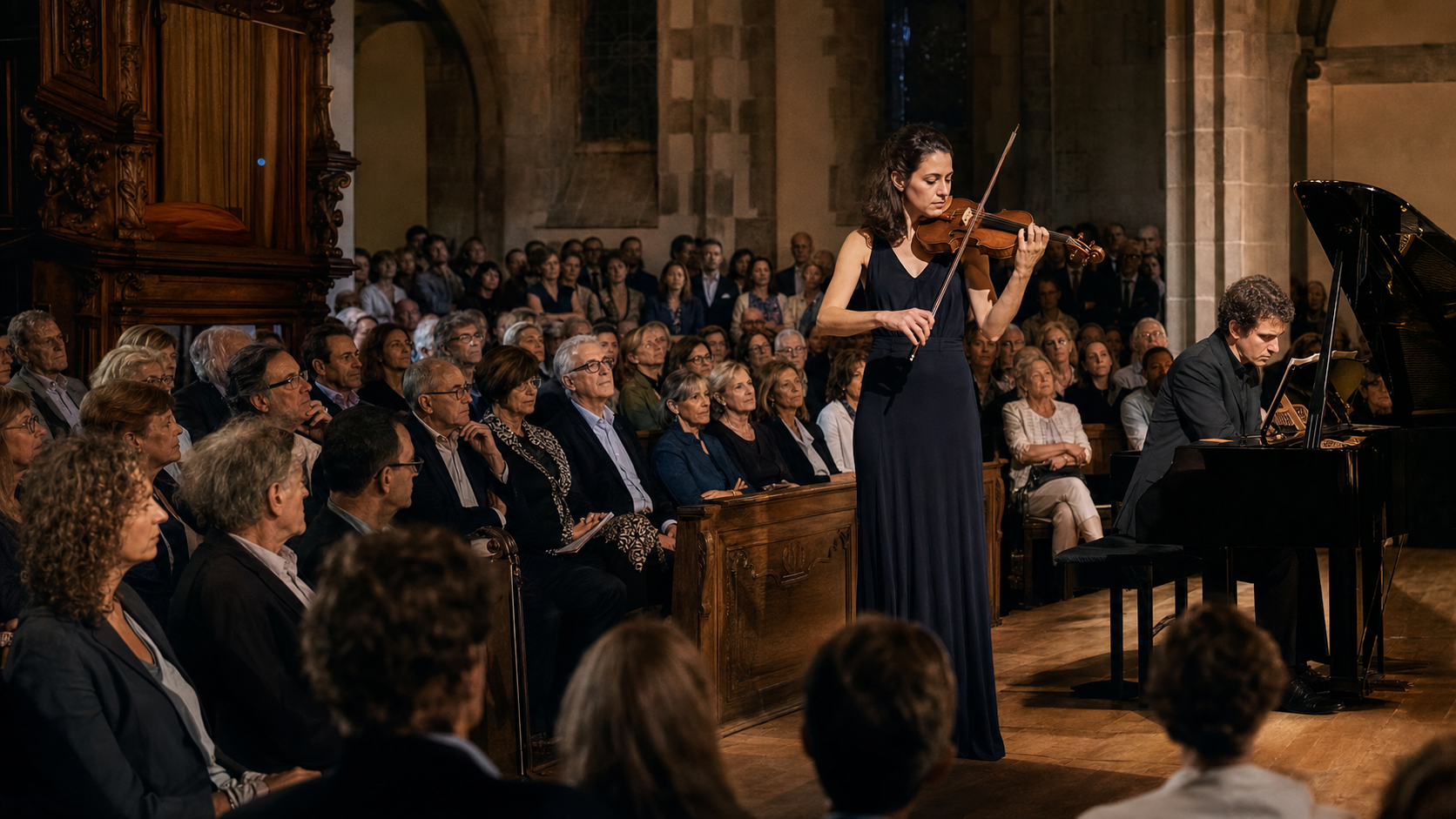
Why does Aspen's Kuusisto-Muhly recital feel like a stronger signal than a safe gala?
Because the official Aspen recitals page frames July 26 as an authored statement, not a generic prestige booking. The listed program for Pekka Kuusisto and Nico Muhly runs from Bach and Tippett through Ellen Reid, Muhly's Drones & Violin, a Kuusisto-Haarla Barcarole, Andrea Tarrodi, Philip Glass, and Muhly's Shrink. That is exactly the kind of set that tells you who the artist is before the first phrase is finished. For violinists, crossover performers, and content creators, this is a better model than random genre-mixing. The intelligence is in the sequencing, the authorship, and the nerve to let contemporary language stand inside a recital without apology.
Tanya's performer take: the strongest artist positioning comes from designing a musical arc that only you could convincingly own. That is as true for electric violin performance as it is for an Aspen recital stage.
Why should violinists care about a Sennheiser and fabric London partnership?
Because live-music culture is increasingly being shaped by the sound-experience layer, not only by repertoire. In its July 16 announcement, Sennheiser says the expanded collaboration with fabric London will include live events, consumer activations, and audio storytelling, with a first event on August 21 at The View from The Shard featuring Sven Vath. The release also stresses long-term educational content with fabric's sound and production teams. Even if the immediate platform is electronic music, the strategic lesson is broader. Brands know that audiences now care about how sound is built, how spaces feel, and what kind of listening identity surrounds a performance. That affects classical and electric violin too, especially for artists who also live on video, livestream, or short-form content.
Tanya's performer take: your sound story is part of your artist story now. Not as empty gear worship, but as proof that you know how to build a repeatable, high-trust live experience.
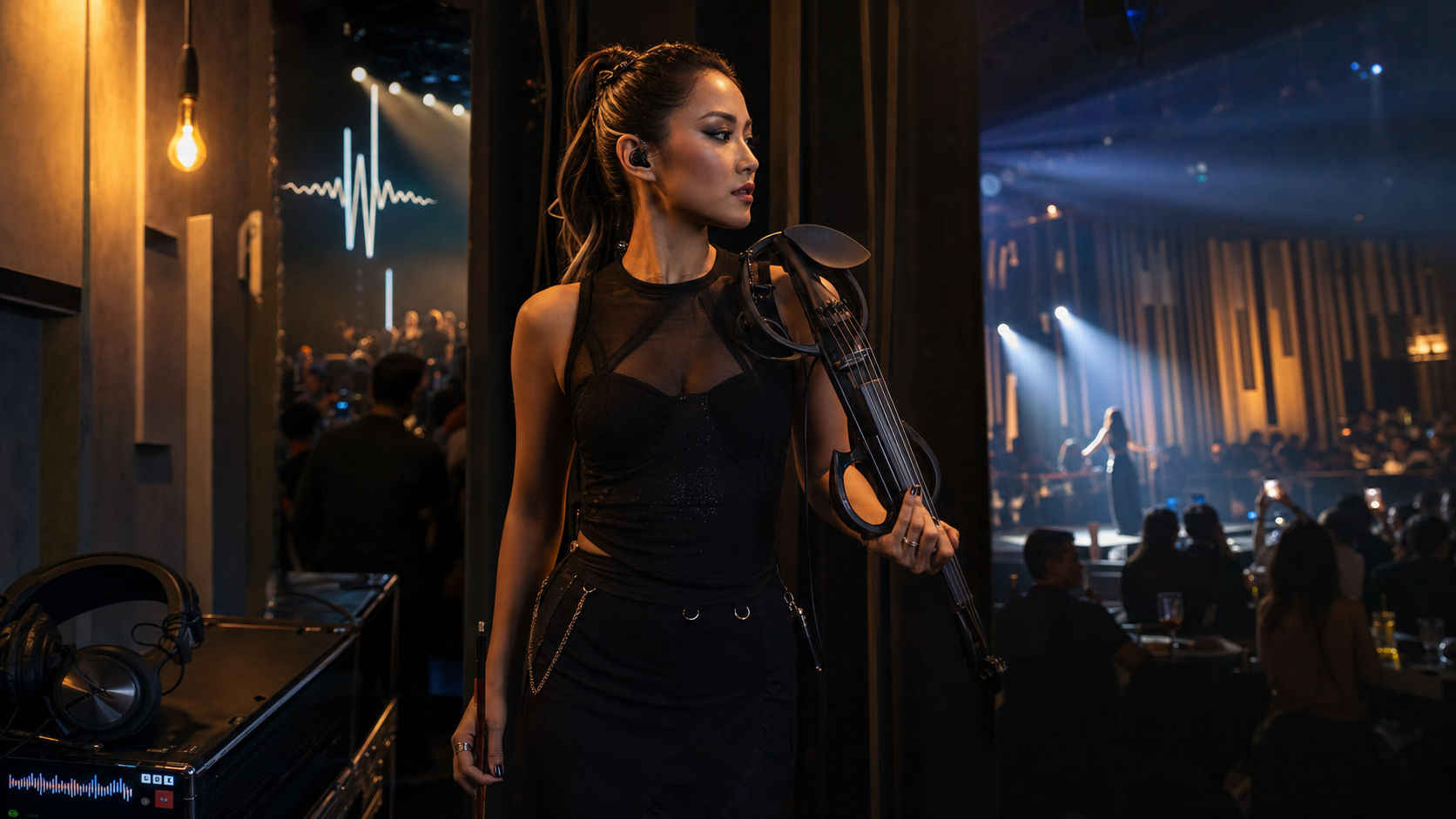
What should performers, planners, and fans watch next?
- Watch which festivals keep building public access around violin stars through rehearsals, waiting-list rooms, and more transparent audience pathways.
- Notice which recital programs feel authored from the inside rather than assembled as prestige wallpaper.
- Track whether sound and listening culture become more central to how violin events are sold, filmed, and remembered.
- Pay attention to small-room demand: when those rooms sell first, they often reveal the real heat around an artist.