Monitoring · 2026-07-24
Best Closed-Back Headphones for Electric Violinists Who Practice Silently and Edit Content
The best closed-back headphones for most electric violinists who practice silently and edit content are the Sony MDR-M1 because Tanya Strings gets high isolation, low fatigue, light weight, and a studio tuning that still feels useful from hotel rehearsal to late-night edits. If you want the classic cheaper workhorse, buy the Sony MDR-7506. If isolation matters most, choose the Sennheiser HD 280 Pro. Rode NTH-100 is the comfort pick, beyerdynamic DT 700 PRO X is the premium all-rounder, and Shure SRH840A is a strong warm-balanced option for creators who want long-session monitoring that still feels musical.
Follow Tanya Strings on Google
Add the site as a preferred source to see more new violin posts from Tanya Strings in Google.
Some links in this article are affiliate links. I may earn a commission if you make a purchase, at no extra cost to you.
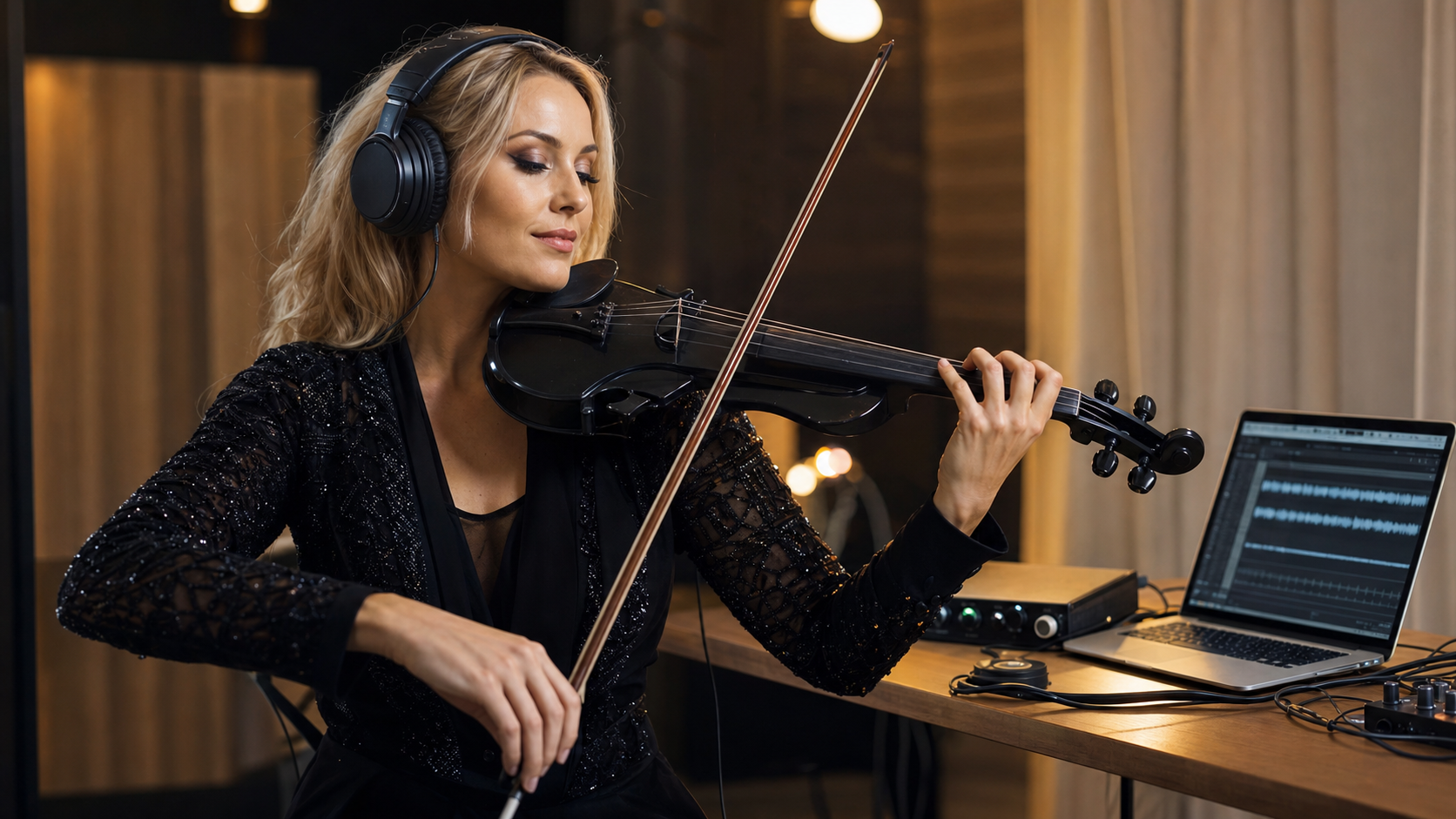
What are the best closed-back headphones for electric violinists who practice silently and edit content?
For most performers, I would buy the Sony MDR-M1 first. Sony positions it as a light closed monitor headphone with high isolation, detachable cables, and accurate wideband playback, and that combination makes practical sense for electric violin. I need to hear bow attack clearly, keep backing tracks honest, and finish edits without feeling like the headphones are fighting my ears after 40 minutes. That is different from buying a fun casual pair for playlists. Tanya Strings wants one dependable monitoring tool that works with a laptop, a compact interface, and a real performer schedule.
| Product | Best for | Why Tanya would use it | Watch out for | Links |
|---|---|---|---|---|
| Sony MDR-M1 | Most electric violinists who want one serious closed-back pair for silent practice, backing tracks, and editing | I like it because Sony built it around a light design, high isolation, detachable cables, and a monitoring voice that feels modern without becoming hyped or sloppy. | It costs more than the old studio standards, so the value is strongest when you really want one better all-around pair instead of a budget backup. | Official · Amazon |
| Sony MDR-7506 | Players who want the classic workhorse with the safest cost-to-performance ratio | I would still trust it because the 40 mm closed-ear design, folding build, and broadcast-studio heritage make it a predictable no-drama tool. | The fit and pads feel more old-school, and some players will want a softer clamp or a more modern detachable-cable workflow. | Official · Amazon |
| Sennheiser HD 280 Pro | Noisy rooms, strong click tracks, and players who need maximum isolation for the money | I would choose it when sealing out room spill matters more than luxury because Sennheiser positions it around accurate monitoring and up to 32 dB of ambient noise attenuation. | The stronger clamp and coiled cable are part of the deal, so comfort depends on your tolerance for a tighter fit. | Official · Amazon |
| Rode NTH-100 | Long creator sessions, all-day comfort, and performers who also edit a lot of content | I like the comfort story because Rode built it around Alcantara cushions, CoolTech gel, a locking cable, and a creator-first workflow that feels thought through. | If you want the most clinically dry studio presentation possible, you may still prefer a harsher reference-style pair. | Official · Amazon |
| beyerdynamic DT 700 PRO X | Premium buyers who want detail, passive isolation, and one pair that works across many devices | I would stretch here for the balanced studio signature, 48-ohm driver, strong build, and more premium overall feeling during serious monitoring sessions. | It is heavier and more expensive than the basic workhorses, so it only makes sense when you know you will use the extra refinement. | Official · Amazon |
| Shure SRH840A | Creators who want balanced mids, removable cable security, and a more musical long-session monitor | I like it because Shure built it for recording, content creation, and monitoring with a closed-back circumaural design and detachable locking cable. | It is not the lightest option here, so the headband feel matters more if you are very sensitive to weight. | Official · Amazon |
Why do closed-back headphones make more sense than open-back pairs for most electric violin workflows?
Because electric violin players are usually solving three problems at once: outside noise, track leakage, and pitch judgement. Open-back headphones can sound beautiful for pure listening, but they are usually the wrong answer when you are practicing silently in a shared space, rehearsing against a click, or editing while the room around you is still alive. Closed-back models keep more of the backing track inside the cups and more of the room outside your head. That makes intonation and timing decisions cleaner.
My performer rule: if the headphones leak enough that I turn the backing track louder and start bowing harder just to feel secure, they are the wrong headphones for violin practice.
That does not make them a replacement for in-ear monitors on stage. It means they are the stronger everyday tool for hotel rooms, dressing rooms, home edits, and small creator desks where you need a controlled, repeatable signal without immediately jumping into a full live-monitoring rig.
Why is Sony MDR-M1 my best overall pick?
Because it solves the whole job instead of one narrow part of it. Sony says the MDR-M1 uses a closed acoustic structure with high sound isolation, approximate 216 g weight, detachable cables, and wideband playback from 5 Hz to 80 kHz. The spec range alone is not the reason I care. The reason I care is that the product logic makes sense for electric violin: light enough for longer sessions, sealed enough for honest cue work, and serious enough to stay useful when you move from practice into real editing. Tanya Strings needs headphones that behave like a reliable tool, not like a fashion accessory with a music app story.
Who should buy Sony MDR-M1 first?
Buy it first if you want one primary closed-back pair and you do not want to split the job into separate practice headphones and editing headphones on day one.
- Pros: light build, high isolation, detachable cables, modern monitoring voice, and strong fit for all-around electric violin workflow.
- Cons: pricier than the classic workhorse options and less obviously “budget safe” for first-time buyers.
See Sony MDR-M1 · Find Sony MDR-M1 on Amazon
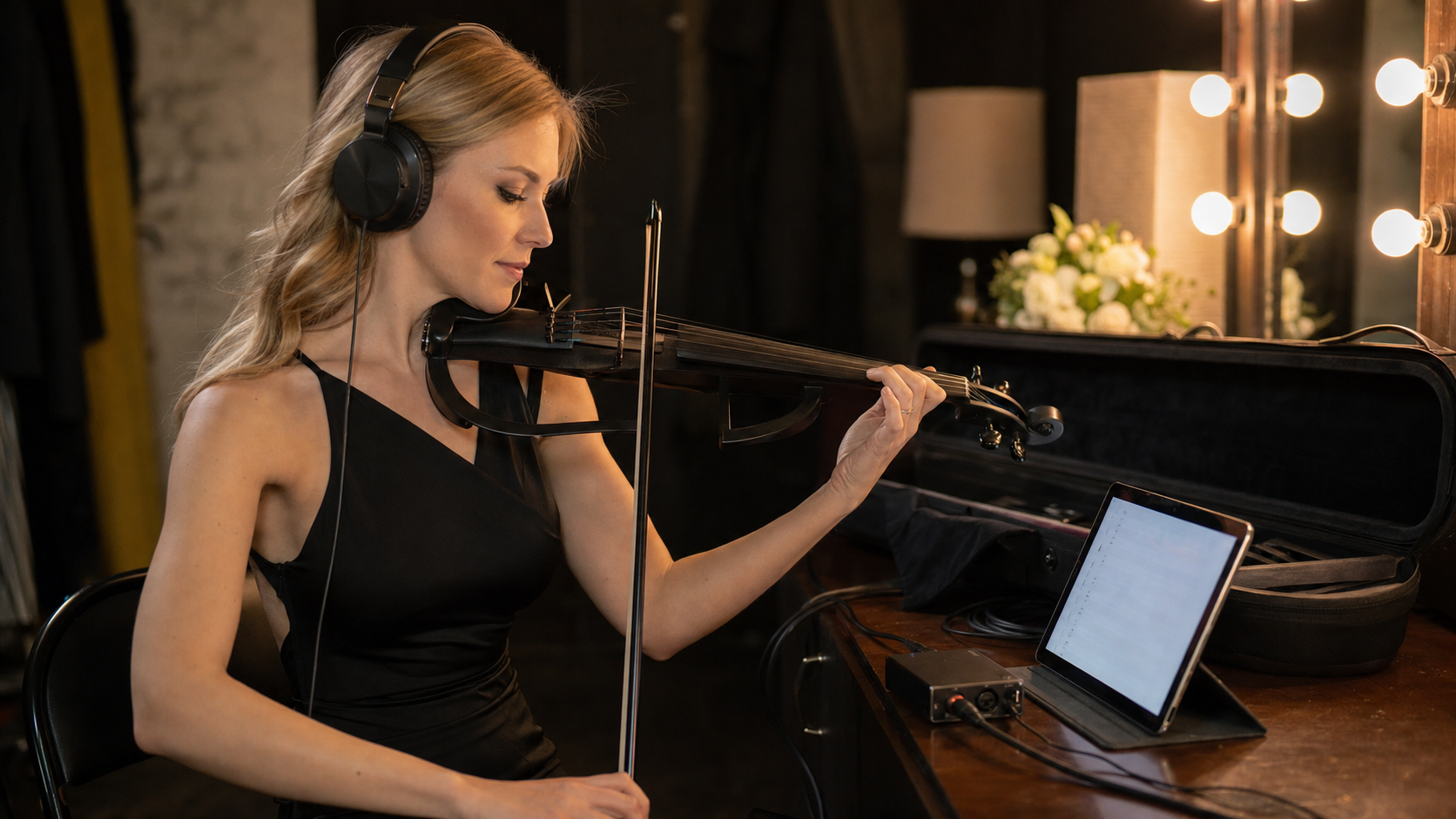
When is Sony MDR-7506 still the smartest value buy?
It is still the smartest value buy when you want a proven monitoring reference without spending into the newer premium tier. Sony still frames the MDR-7506 around a 40 mm driver unit, closed-ear design, folding construction, and daily use in broadcast and recording studios worldwide. That matters because it tells you exactly what the product is trying to be: a dependable workhorse, not a lifestyle headphone pretending to be professional. Tanya Strings would buy this when the goal is simple and practical: rehearse silently, hear edits clearly enough, keep one pair in the desk bag, and stop shopping.
Why does MDR-7506 still work so well for electric violin?
Because electric violin rewards predictable upper-mid detail. You need enough clarity to hear scratch, articulation, and pitch edges, but you do not need false bass glamour that makes your playback feel better than it really is.
- Pros: proven studio history, dependable detail, foldable form, and one of the safest workhorse buys in this category.
- Cons: older physical design, non-detachable cable workflow, and a fit that some people will upgrade from later.
See Sony MDR-7506 · Find Sony MDR-7506 on Amazon
Which headphones are best when isolation matters more than everything else?
For that specific job, I would move to the Sennheiser HD 280 Pro. Sennheiser positions it as a rugged closed-back monitoring headphone with accurate linear response and up to 32 dB of ambient noise attenuation. That is a serious number for violin players who practice in louder rooms, rehearse against busy tracks, or need to keep a click present without pushing the headphone level into stupid territory. Tanya Strings would rather accept a tighter clamp than keep compensating for weak isolation with more volume.
Who should choose HD 280 Pro first?
Choose it when your room is the enemy: shared apartments, backstage zones, event spaces, or any setup where track leakage and outside sound keep breaking concentration.
- Pros: strong isolation, honest monitoring, foldable build, and excellent value for noisy environments.
- Cons: stronger clamp, coiled cable, and less relaxed long-session feel than the best comfort-focused options.
See Sennheiser HD 280 Pro · Find HD 280 Pro on Amazon
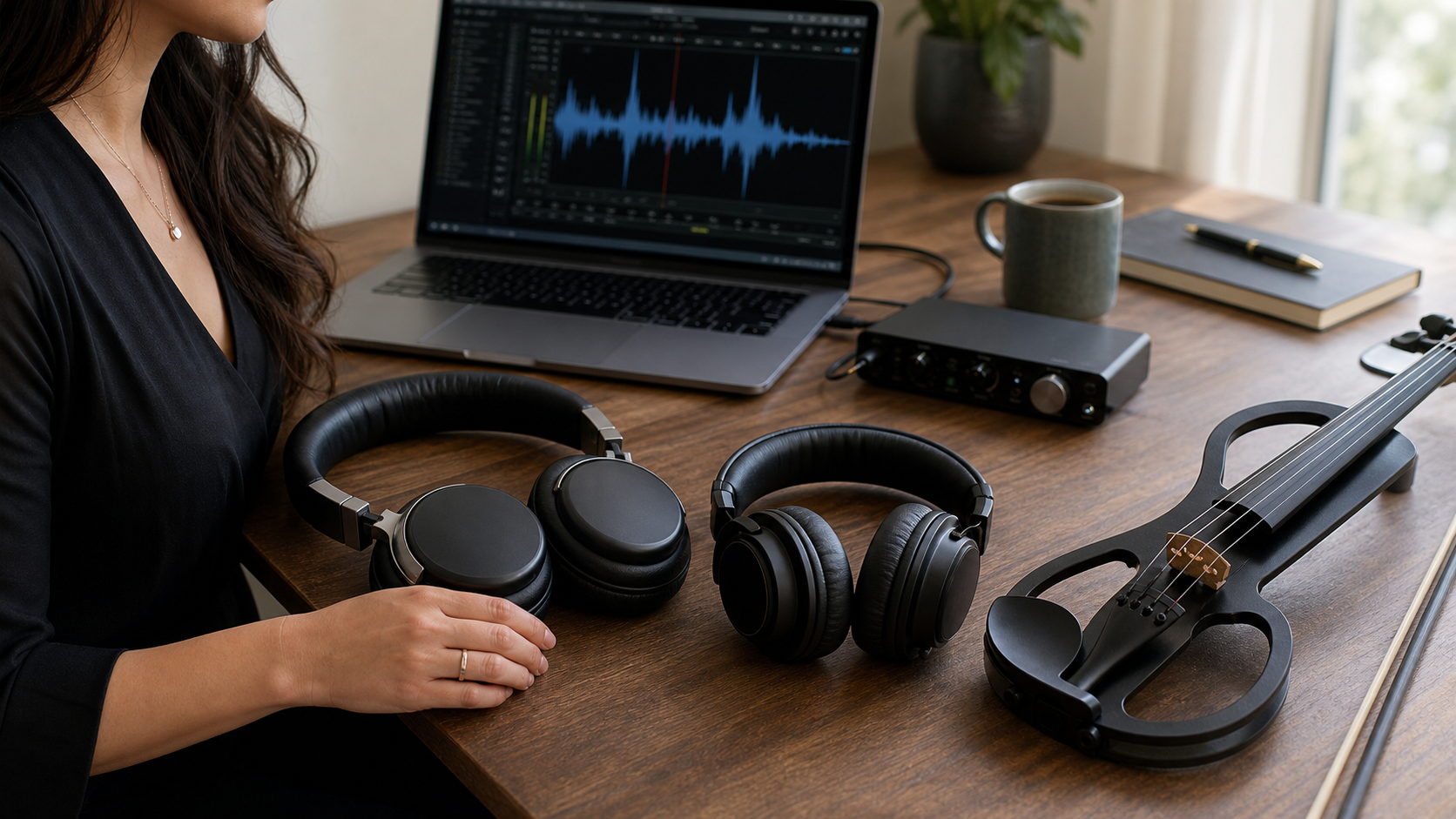
What should content creators buy for the longest editing sessions?
This is where comfort stops being a soft luxury and becomes a real productivity issue. If the fit is wrong, you listen louder, fidget more, and stop trusting your own judgement sooner. For performers who also cut short-form clips, YouTube performances, or promo edits, the comfort leader matters.
Why would Tanya Strings pick Rode NTH-100?
Rode built the NTH-100 directly around creator workflow: accurate frequency response, low distortion, locking removable cable, cable attachment on either earcup, memory foam isolation, Alcantara cushions, CoolTech gel, and a lifetime warranty. That is a very persuasive stack for electric violinists who record, edit, and publish. I like it because the product clearly understands that monitoring quality and wearing fatigue are part of the same problem.
- Pros: standout comfort, thoughtful cable system, strong passive isolation, creator-friendly design, and long-session appeal.
- Cons: not the cheapest option and not the most brutally clinical sound if that is your only priority.
See Rode NTH-100 · Find Rode NTH-100 on Amazon
When does Shure SRH840A make more sense?
Shure is the better move when you want a slightly more traditional studio-monitor proposition but still care about creator practicality. Shure says the SRH840A is aimed at recording, content creation, and monitoring, with a closed-back circumaural design, matched 40 mm dynamic neodymium drivers, and a detachable locking cable. I would buy it when I want solid midrange judgement for violin tone and vocals, plus a cable system that feels more secure than basic consumer-style plugs.
- Pros: balanced musical presentation, removable locking cable, good creator fit, and strong midrange usefulness for violin.
- Cons: heavier than the lightest options and less obviously isolation-first than the Sennheiser route.
See Shure SRH840A · Find SRH840A on Amazon
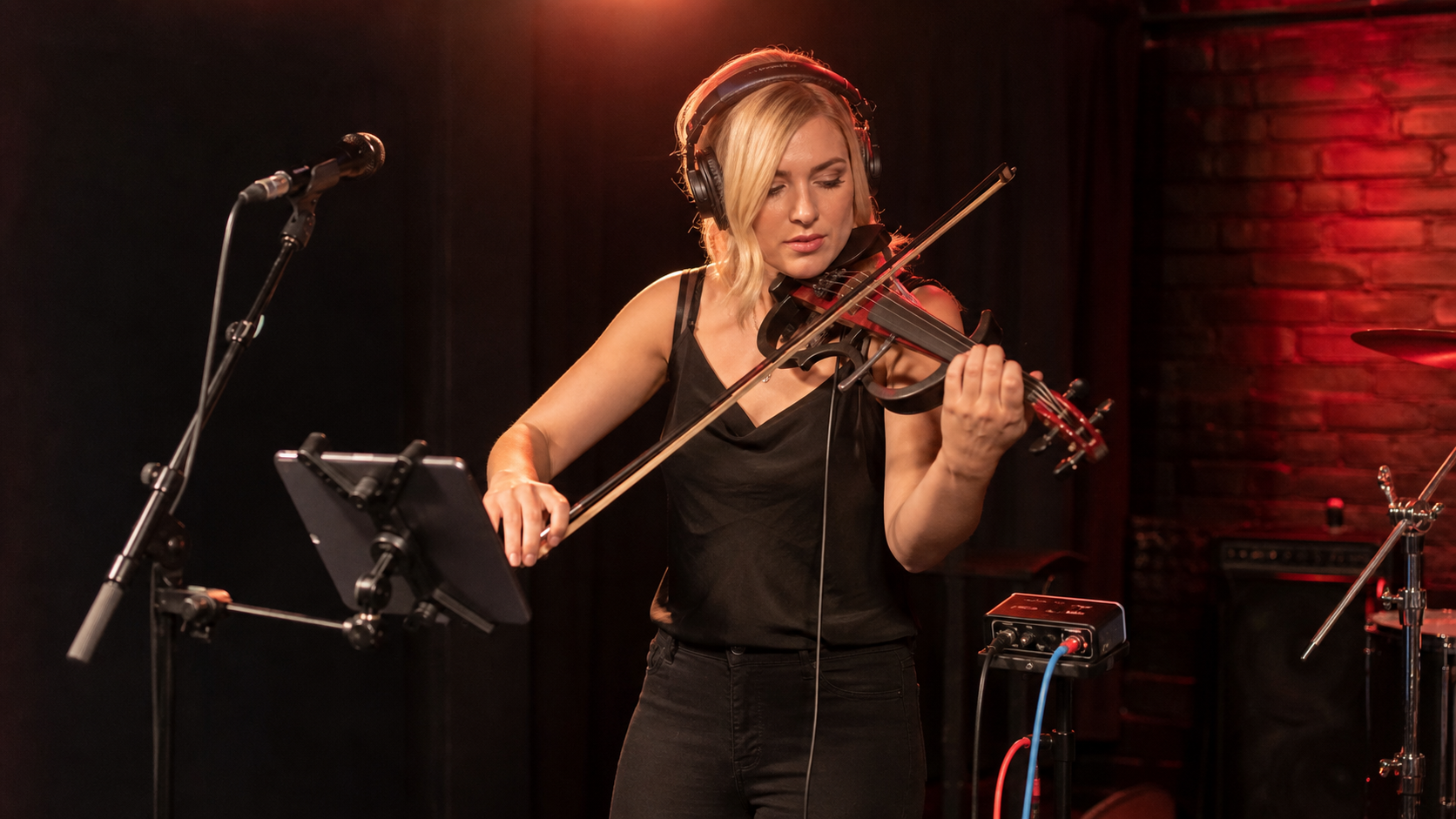
When is beyerdynamic DT 700 PRO X worth the premium?
It is worth the premium when you already know closed-back monitoring is part of your real weekly workflow and you want the stronger all-round technical package. beyerdynamic describes the DT 700 PRO X around a balanced studio signature, detailed punchy sound, 48-ohm STELLAR.45 driver, strong passive isolation, and a tougher everyday build. That makes it easier to justify for performers who move between laptops, interfaces, and portable setups without wanting a fragile or fussy headphone in the chain.
Who should stretch to DT 700 PRO X?
Stretch to it if you already create content regularly, care about cleaner detail on edits, and want one premium pair that does not feel compromised the moment you swap devices.
- Pros: premium detail, versatile 48-ohm design, strong passive isolation, sturdy day-to-day build, and mature all-around monitoring feel.
- Cons: higher cost and more weight than the basic workhorse choices.
See beyerdynamic DT 700 PRO X · Find DT 700 PRO X on Amazon
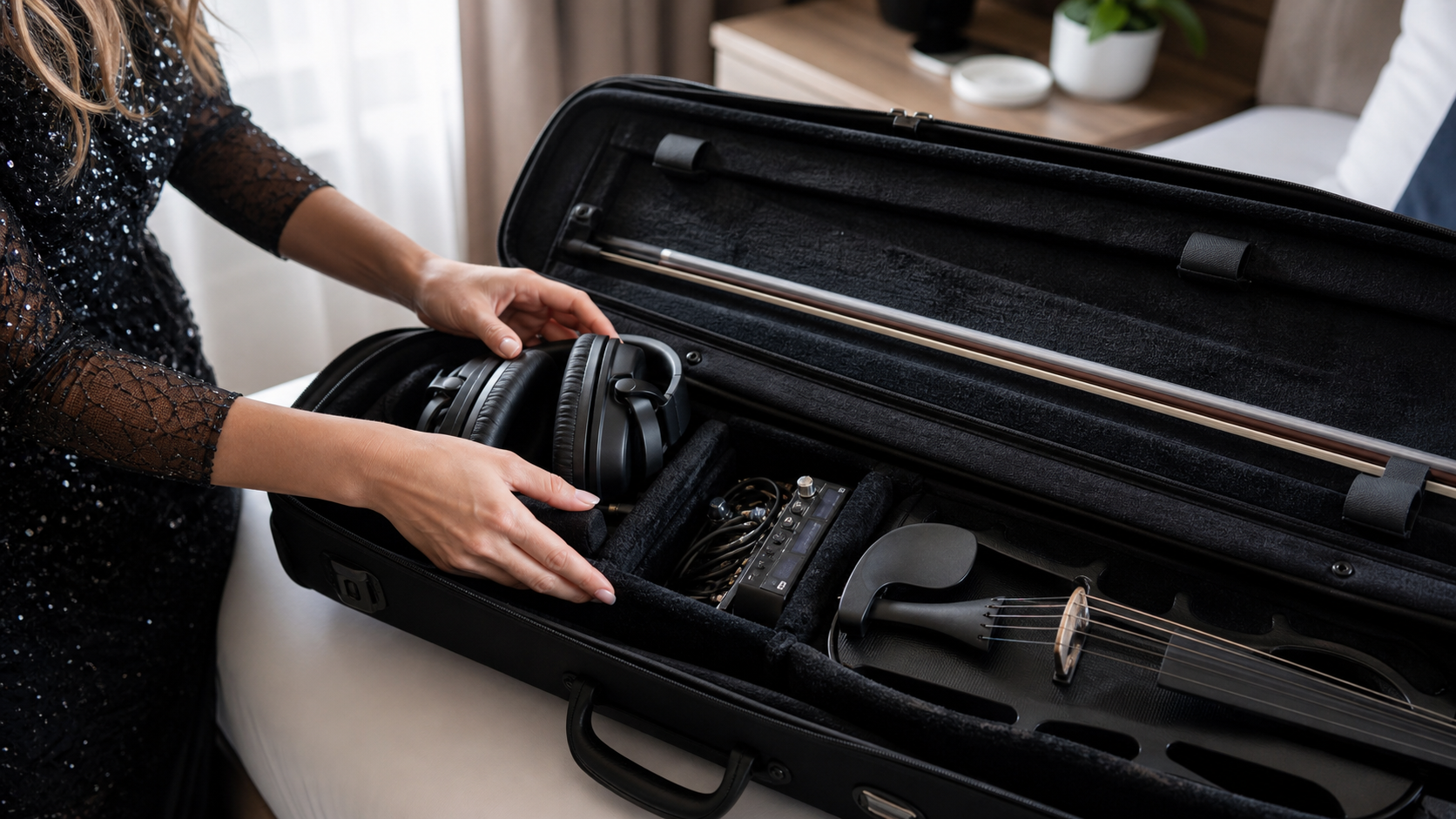
What should electric violinists actually prioritize before buying?
Start from workflow, not from brand myth. Headphones are useful only when the physical fit and monitoring behavior match the way you actually rehearse and edit.
My buying checklist:
- Seal first: if the cups do not isolate well enough, the rest of the spec sheet becomes less important.
- Comfort second: a pair you remove after 25 minutes is not a real work tool.
- Moderate drive requirement: headphones that stay practical from laptop to compact interface usually make the smartest first buy.
- Cable discipline: detachable or locking cables matter more if you travel, pack often, or keep one pair moving between setups.
- Honest tuning: do not buy a bass-hyped consumer sound if the goal is pitch, timing, and editing judgement.
Should one pair cover silent practice, backing tracks, and editing?
Yes, for most people. I would rather own one reliable pair that I understand deeply than juggle multiple half-right pairs. If the headphones seal well, stay comfortable for an hour, and keep the midrange honest, they can cover nearly all of the non-live-monitoring jobs around an electric violin career.
Do you still need in-ears if you already buy good closed-back headphones?
Probably yes for live monitoring. Closed-back headphones are the better rehearsal and editing choice, while in-ears still win when you need movement and stage isolation during a show. The point is not choosing one forever. The point is buying the right tool for the actual moment.
Which pair would Tanya Strings buy first for different workflows?
- One pair for almost everything: Sony MDR-M1.
- Classic workhorse with the safest value logic: Sony MDR-7506.
- Noisy rooms and stronger cue-track isolation: Sennheiser HD 280 Pro.
- Long creator sessions and comfort-first editing: Rode NTH-100.
- Premium detail across many devices: beyerdynamic DT 700 PRO X.
- Balanced creator monitor with secure removable cable: Shure SRH840A.
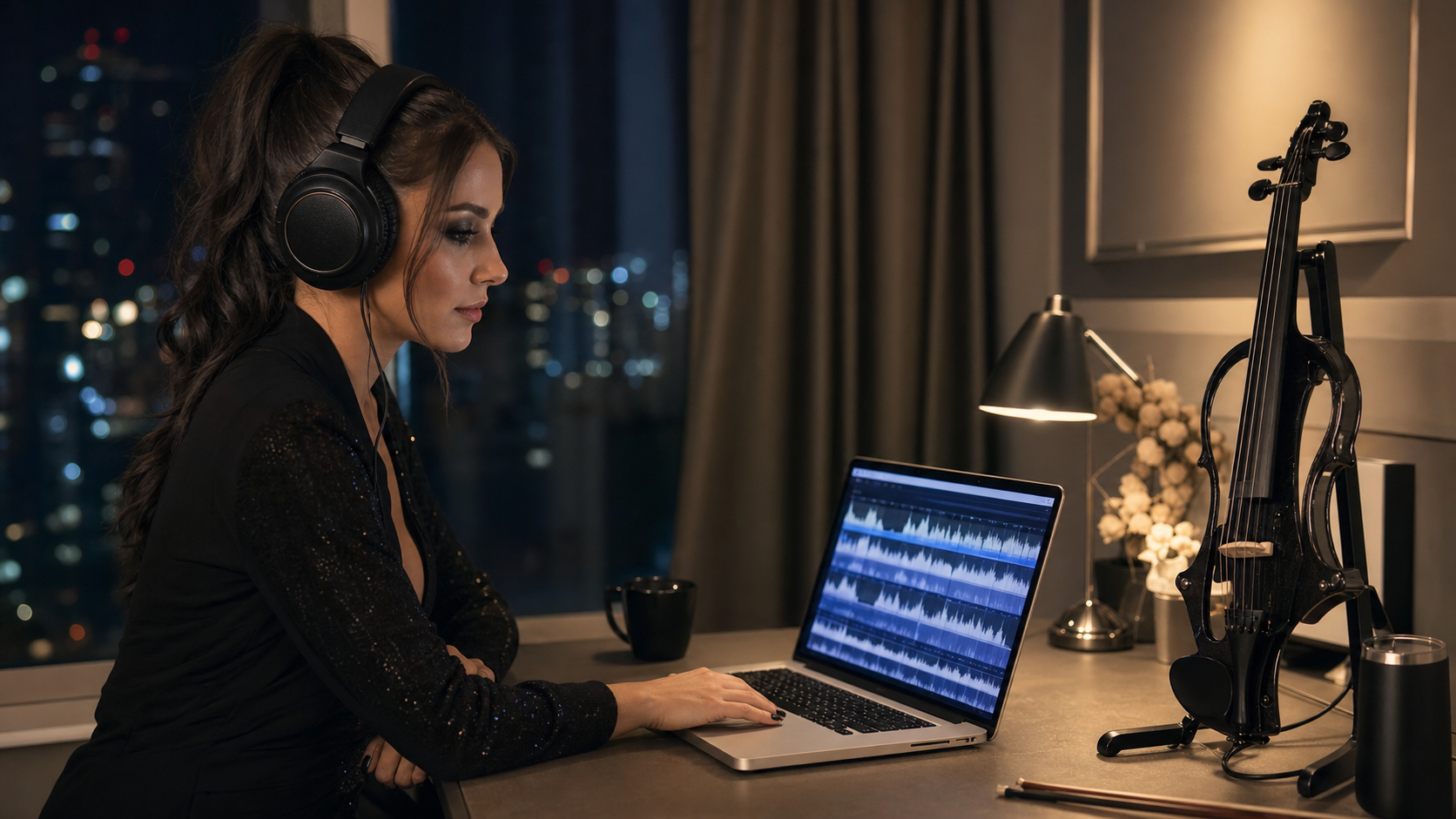
FAQ
What are the best closed-back headphones for most electric violinists?
For most players, Tanya Strings would start with the Sony MDR-M1 because the isolation, light weight, detachable cables, and more modern monitoring logic fit silent practice, cue tracks, and content edits unusually well in one product.
Are closed-back headphones better than open-back headphones for electric violin practice?
Usually yes. Closed-back models keep more outside noise away, leak less backing track, and make it easier to hear pitch center and bow noise without chasing volume.
Do electric violinists need low-impedance headphones?
Low or moderate impedance usually makes more sense when you rotate between laptops, tablets, portable recorders, and compact interfaces. It is not the only buying factor, but it helps keep the headphones easier to drive in real mixed workflows.
Can one pair handle silent practice, backing tracks, and content editing?
Yes, if the seal is strong, the fit stays comfortable for real sessions, and the sound is honest enough that you trust it. One predictable pair is usually smarter than multiple compromise pairs.