News · 2026-07-27
Violin News Roundup: Public Pathways, New Premieres, and Ticket Demand
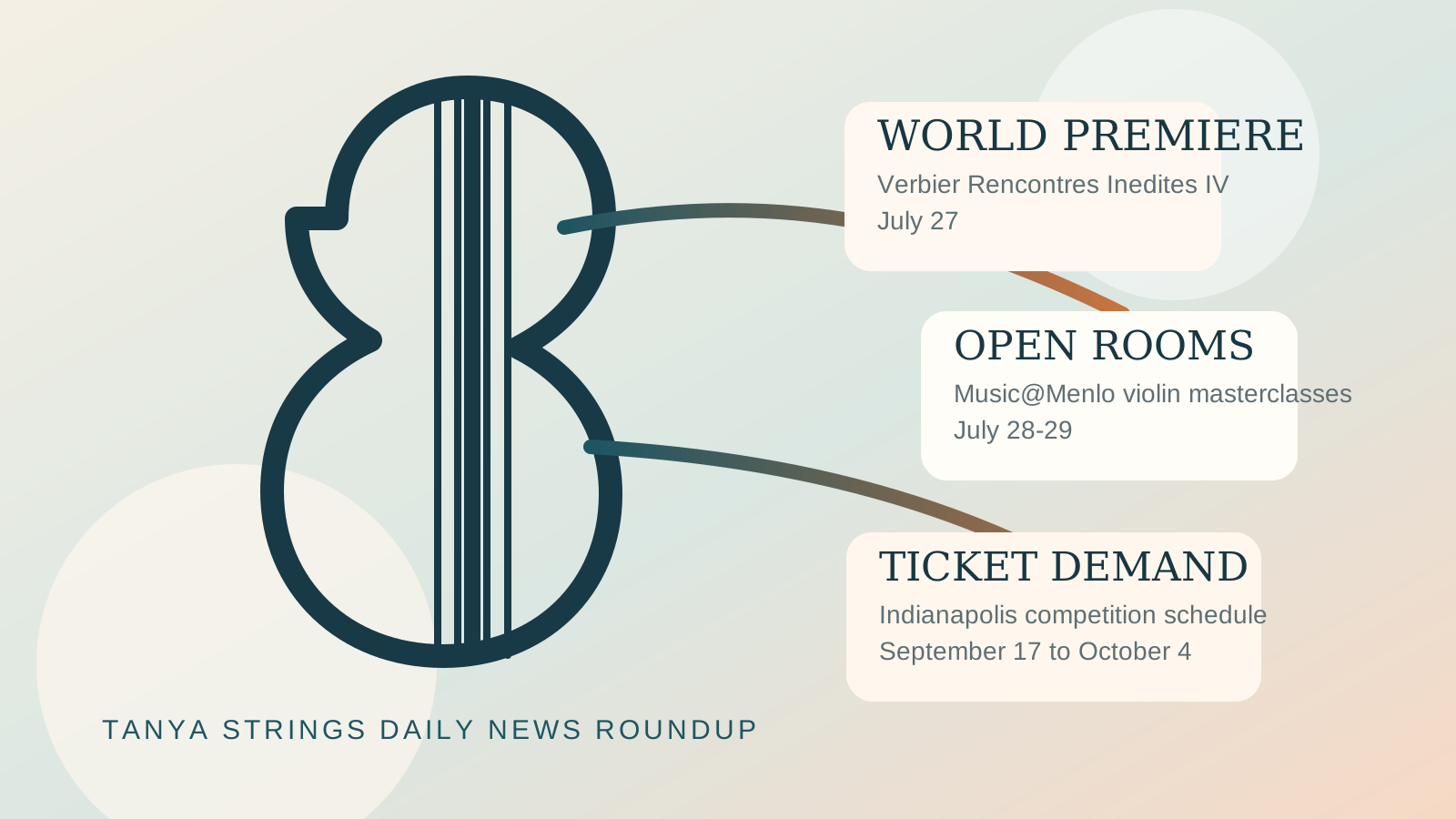
As of Monday, July 27, 2026, the most useful violin story is bigger than who played well last night. It is about how institutions are turning violin talent into public, ticketed, repeatable experiences. Verbier is giving 16-year-old Tsotne Zedginidze a July 27 world-premiere slot inside its Rencontres Inédites chamber series, while Music@Menlo follows with free July 28 and 29 violin masterclasses from Kristin Lee and Jessica Lee. In Indianapolis, the International Violin Competition of Indianapolis has a live September 17 to October 4 venue map in public view. Deutsche Grammophon is likewise packaging Anne-Sophie Mutter's My Lucerne release around a pre-release track and August Lucerne dates.
Follow Tanya Strings on Google
Add the site as a preferred source to see more new violin posts from Tanya Strings in Google.
Why is Verbier putting a 16-year-old's world premiere in a premium chamber slot?
Because that is how a talent pipeline starts to look real. Verbier's official page for Rencontres Inédites IV says that on July 27 the festival presents the world premiere of Tsotne Zedginidze's Piano Quintet, with Marc Bouchkov and Lir Vaginsky on violin alongside Sara Ferrández, Pablo Ferrández, and the composer at the piano. That matters for two reasons. First, Verbier is not hiding a young composer-performer inside a side event; it is placing him in one of the festival's prized church-room chamber formats. Second, the same festival keeps describing its Academy mission as a route from musical training to musicpreneurship. Put those two signals together and the message is clear: development is being staged as audience-facing work, not just internal pedagogy.
Tanya's performer take: world-class violin culture stays alive when young players and writer-performers get visible rooms, not just private approval. Event planners should notice how much stronger a festival brand feels when the next generation is programmed as part of the main story.
What do Music@Menlo's back-to-back violin masterclasses tell us about audience appetite?
The calendar is saying that process still sells, even when the ticket price is zero. Music@Menlo's official festival calendar lists a free July 28 masterclass with Kristin Lee and a free July 29 masterclass with Jessica Lee, both at 11:00 a.m. in Martin Family Hall. The framing matters as much as the names. These are not hidden conservatory hours. They sit in the public festival calendar beside paid concert programs, lectures, and prelude performances, which means the rehearsal layer is being treated as part of the actual product. For violinists, that is useful evidence that audiences still want access to decision-making, detail, and comparison, especially when the room is small and the presentation is clear.
Tanya's performer take: if you are building a serious performance brand, do not separate finished show and artistic process too aggressively. Fans, presenters, and collaborators trust a violinist more when they can occasionally see how choices get made under pressure and in real time.
Why does Indianapolis's ticket launch matter beyond one competition?
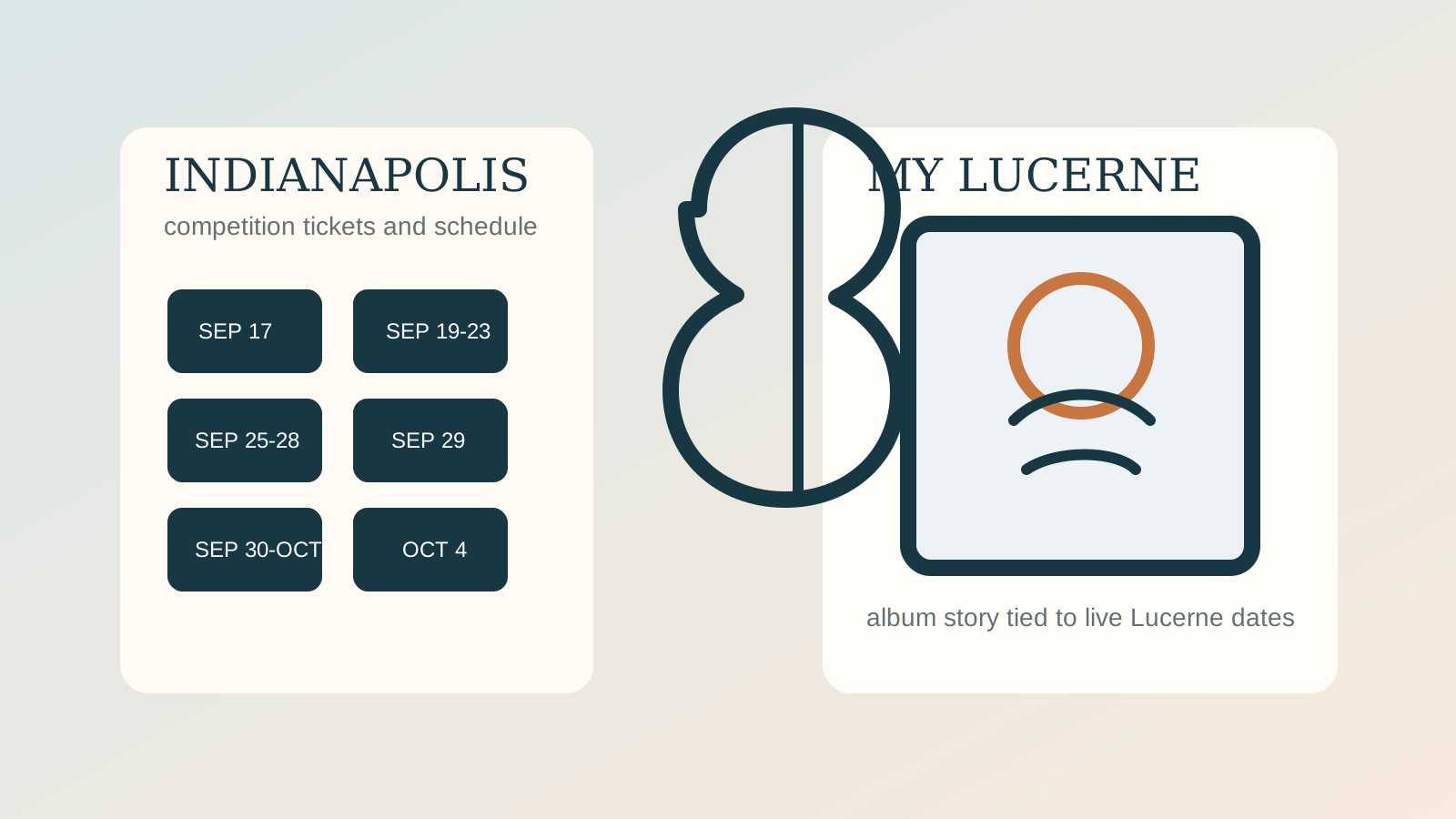
Because it shows how a violin competition becomes a city-scale public event instead of a niche insiders' ritual. On its press releases page, the International Violin Competition of Indianapolis lists July 15, 2026, as the date for its announcement that tickets are now on sale for the 12th quadrennial edition. The live ticket and schedule page maps the competition across multiple venues from September 17 through October 4, including Newfields, the Frank and Katrina Basile Theater, the Schrott Center for the Arts, and the Scottish Rite Cathedral Theater. That public schedule tells artists and managers something important: violin still has the capacity to anchor a multi-week cultural run when the event is packaged clearly and sold as a sequence rather than a closed jury exercise.
Tanya's performer take: competition news matters most when it creates actual audience traffic. For working violinists and crossover artists alike, the lesson is simple: present milestones as events people can follow date by date, not as abstract prestige.
What can performers learn from Anne-Sophie Mutter's Lucerne rollout?
That legacy artists still win by making recording, place, and touring feel like one narrative. Deutsche Grammophon's My Lucerne page sets an August 7, 2026 digital release date for the third album in Mutter's seven-part city series and points listeners to a pre-release Tchaikovsky track from Souvenir d'un lieu cher. Her official tour page then places her in Lucerne on August 25 and again on September 4. The point is not nostalgia. It is coherence. The album story, city identity, repertoire, and live dates all reinforce each other. For electric violinists, content creators, and planners, that is a sharp reminder that brand depth comes from linking releases to real-world stages, not from dropping disconnected assets into the feed.
Tanya's performer take: even at the highest level, violin branding works best when the audience can answer one question fast: why this repertoire, in this place, at this moment?
What should performers, planners, and fans watch next?
- Watch where violin development becomes public programming, because those rooms often reveal tomorrow's headliners first.
- Track festival calendars that place masterclasses and premieres beside premium concerts, since that structure builds stronger audience loyalty.
- Pay attention to competition ticket pages and venue maps, because they show whether violin institutions are thinking like live-event builders.
- For electric violin and crossover projects, borrow Mutter's coherence: connect the release, the city, the repertoire, and the stage.