News · 2026-07-29
Violin News Roundup: Public Masterclass Rooms, Sold-Out Chamber Demand, and Dual-Violin Momentum
As of Wednesday, July 29, 2026, the violin story worth watching is how top festivals are turning access, scarcity, and star programming into one public narrative. Music@Menlo is pairing its July 28 paid livestream of Concert Program IV with a free July 29 Jessica Lee violin master class and open prelude performance. Verbier is showing premium chamber demand in real time with a sold-out, waiting-list-only July 29 Rencontres inédites. Aspen, meanwhile, puts Gil Shaham and Adele Anthony on its July 29 recital page with Arvo Pärt, Bach, and an Avner Dorman co-commission. For performers, planners, and fans, that mix says plenty.
Follow Tanya Strings on Google
Add the site as a preferred source to see more new violin posts from Tanya Strings in Google.
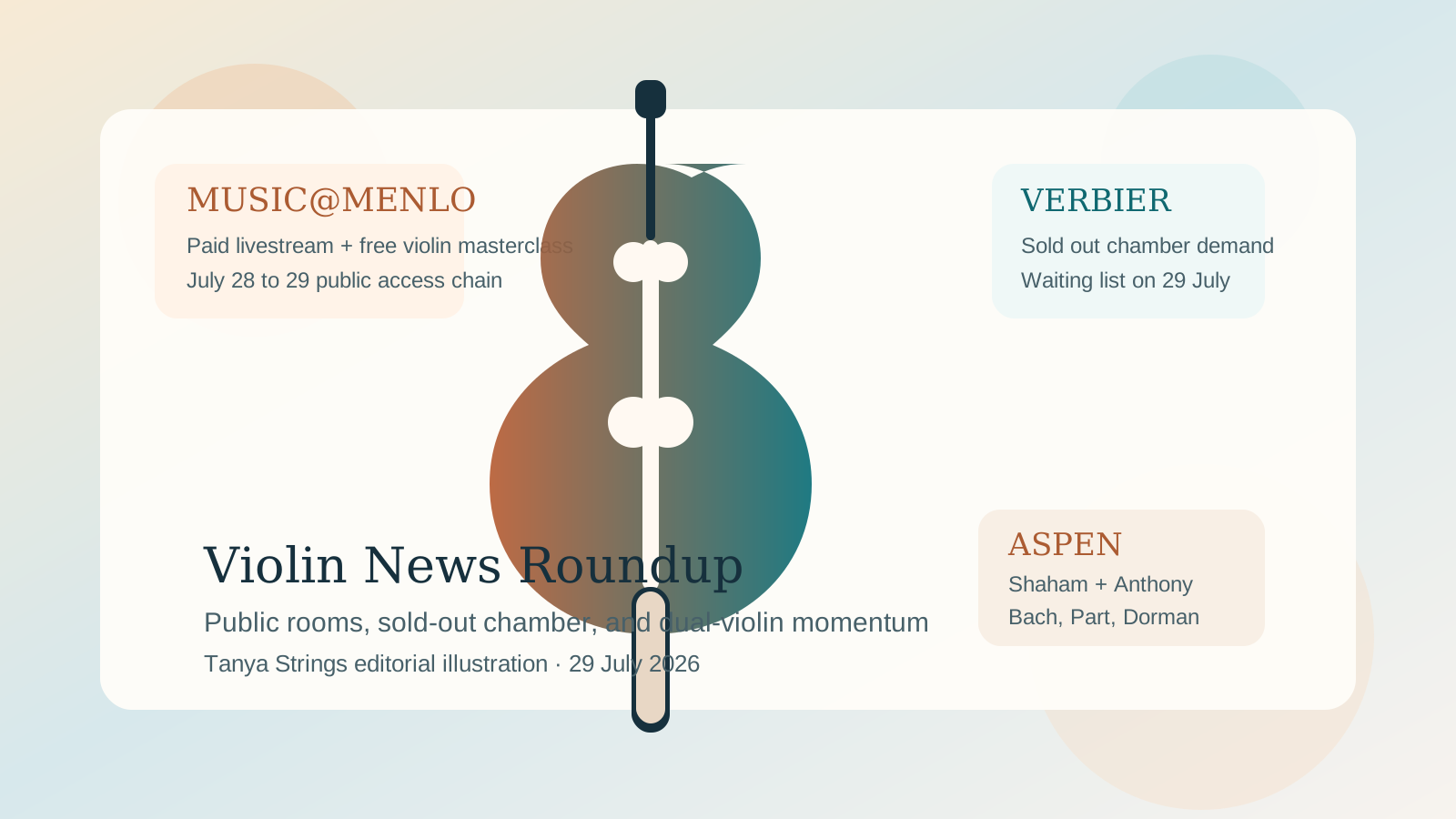
What does Music@Menlo's July 28 to 29 access chain show?
It shows a festival that understands violin culture as both premium event and open room. On the official page for Concert Program IV: The Unfolding of Music, Music@Menlo frames the July 28 program as a chronological journey from Telemann to the West Coast premiere of Sir Stephen Hough's Piano Quintet, Les Noces Rouges, then adds a paid livestream for the same concert. The very next morning, the official page for Jessica Lee's July 29 violin master class lists the session as free, no reservation required, and explicitly presents it as a behind-the-scenes view of artistry and craft. That combination matters. It gives one audience a polished ticketed performance and gives another audience a public process room where interpretation gets built in front of them.
Tanya's performer take: world-class violin branding gets stronger when the concert, the camera, and the learning room support one another. Electric violinists, crossover acts, and event planners should notice how cleanly this model turns artistic depth into repeatable public access.
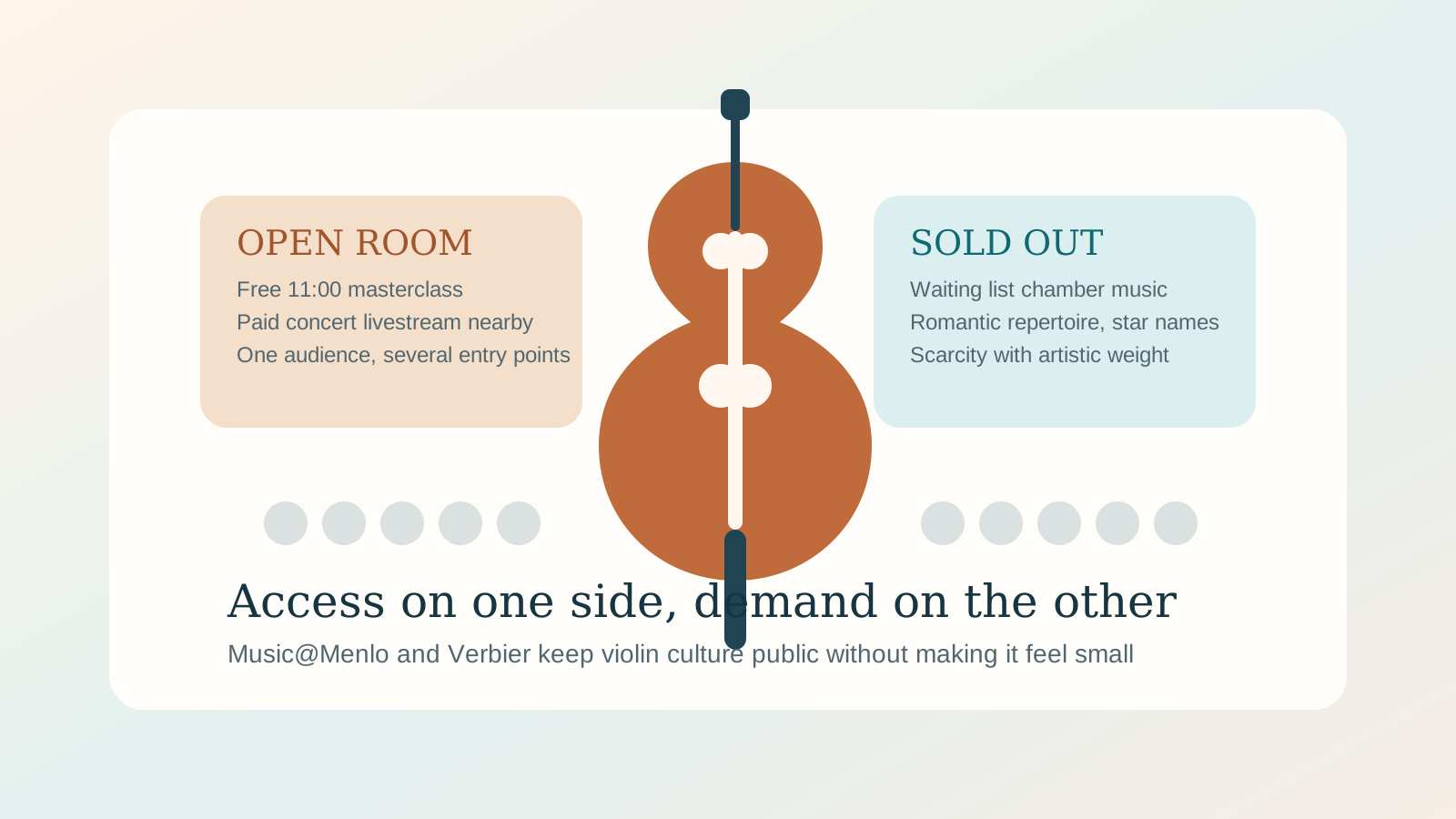
Why does Verbier's sold-out July 29 chamber page matter?
Because it is hard proof that serious chamber programming can still create visible urgency. On its official programme page, Verbier labels the 11:00 a.m. July 29 Rencontres inédites with Augustin Dumay, Amira Abouzahra, Mischa Maisky, and Bruce Liu as sold out with a waiting list, while describing a Schubert and Schumann program in which major soloists step into chamber-music roles. That is not the only violin signal on the page. The same date also includes an afternoon Academy chamber event and another evening Rencontres inédites built around Clara-Jumi Kang, Timothy Ridout, and Minsoo Sohn. The larger message is that chamber music is being sold not as filler between orchestral highlights, but as a main attraction with scarcity, identity, and status.
Tanya's performer take: this matters for presenters as much as players. If the artistic offer is specific enough and the casting is strong enough, violin-led chamber programming does not need to apologize for being intimate. It can sell out on its own terms.
What is Aspen signaling with Gil Shaham and Adele Anthony on July 29?
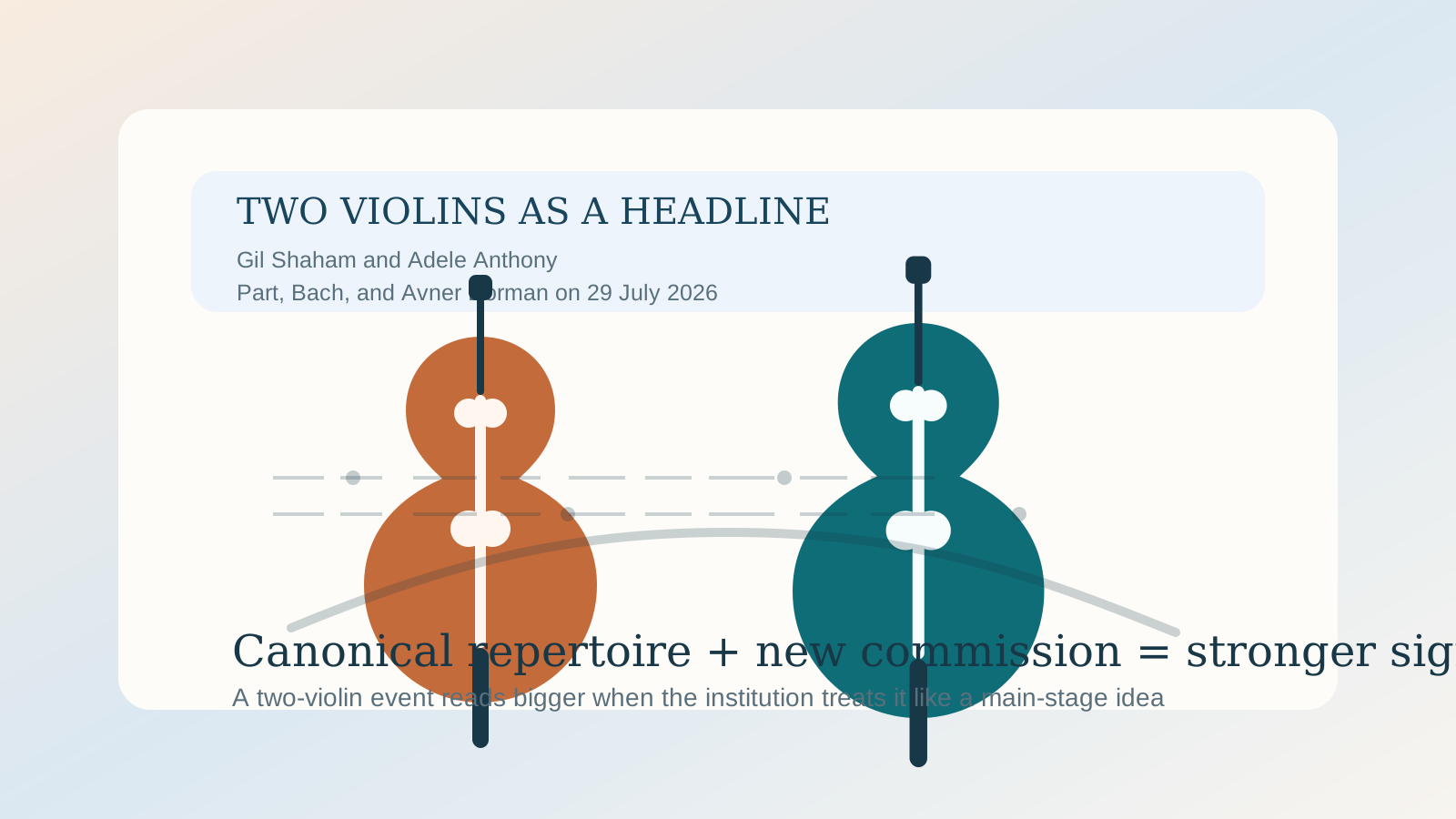
It is signaling that a two-violin event can read like a headline, not a side recital. Aspen's official recitals page lists a July 29 program with Gil Shaham and Adele Anthony built around Arvo Pärt's Fratres, Bach's Double Concerto, and Avner Dorman's A Time to Mourn and a Time to Dance. In the festival's 2026 season announcement, that Dorman work is framed as an AMFS co-commission. Put those pieces together and the signal is clear: canonical repertoire stays in the room, but the institution still wants the violin event to say something new. For fans, that makes the evening easier to follow. For artists, it is a reminder that familiar names gain fresh energy when the program architecture includes a living work with a clear institutional stake.
Tanya's performer take: violinists should pay attention to this programming logic. A strong event is not just famous players plus famous music. It is a recognizable anchor, one contemporary reason to care now, and enough clarity that the audience can retell the idea after the show.
What should violinists, electric violinists, planners, and fans watch next?
- Watch the festivals that combine paid concerts with free learning rooms, because that is where long-term audience trust is being built.
- Track chamber events that create real scarcity without shrinking the artistic ambition, because that is a strong model for violin-led programming.
- Notice how institutions use new commissions inside familiar repertoire, because that is one of the cleanest ways to keep violin culture current.
- For electric violin and crossover artists, study the packaging as closely as the repertoire. Access design, timing, and clarity matter almost as much as the notes.