News · 2026-08-12
Violin News Roundup: Lucerne's August Violin Strategy, Hadelich's Four-Stop Arc, Ray Chen's Korngold Night, and Mutter at 50
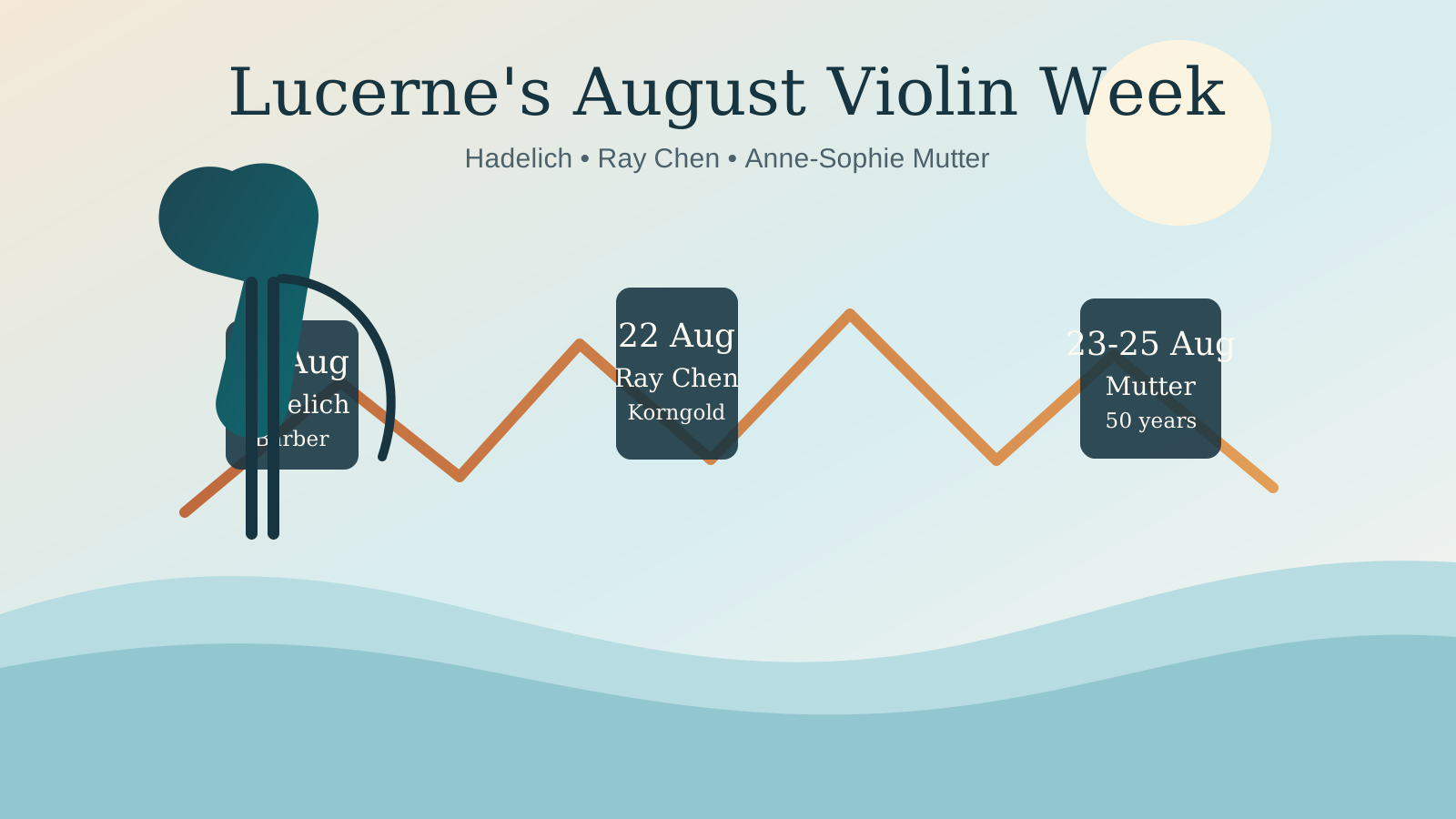
As of Wednesday, August 12, 2026, the sharpest violin signal in Europe is not a single star booking but the way Lucerne Festival is building an entire late-August story around the instrument. Its official pages line up Augustin Hadelich's four-stop artiste etoile arc starting August 15, Ray Chen in Korngold on August 22, and Anne-Sophie Mutter's 50-year Lucerne anniversary across a sold-out August 23 conversation and a high-risk August 25 concert she leads herself. For Tanya Strings, that matters because it shows how top festivals now keep violin visible through format, repertoire, personality, and audience design rather than one prestige headline alone.
Follow Tanya Strings on Google
Add the site as a preferred source to see more new violin posts from Tanya Strings in Google.
Why does Hadelich's four-stop Lucerne arc matter more than one solo date?
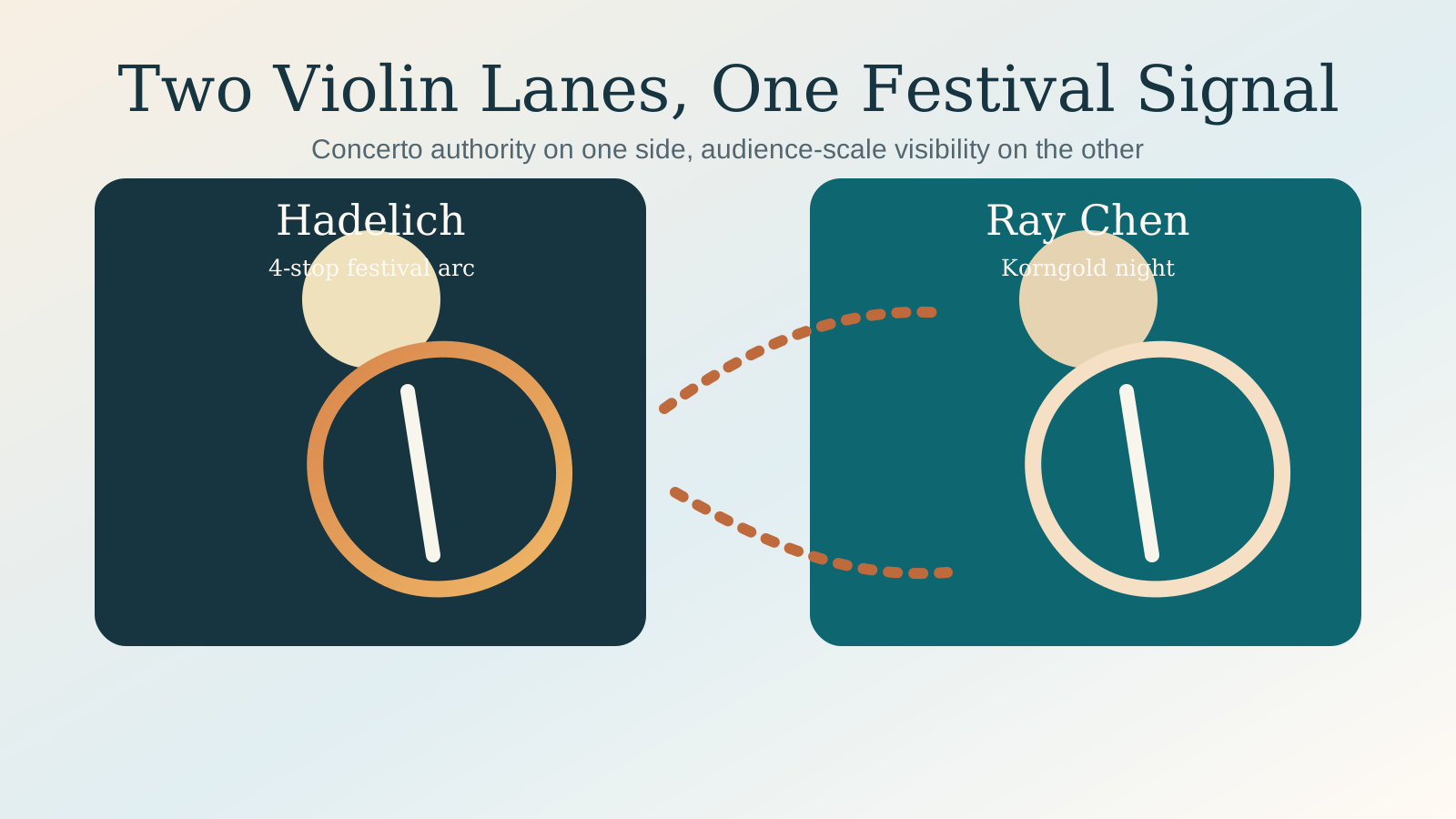
Because Lucerne is treating him like a season-long violin narrative, not a one-night guest. On the festival's artiste etoile page, Augustin Hadelich is not just attached to one concerto. He opens the arc on August 15 in Barber's Violin Concerto with Klaus Makela and the Lucerne Festival Orchestra, returns on August 24 for a first duo appearance with Seong-Jin Cho, appears again on August 27 in Beethoven with the Berliner Philharmoniker and Kirill Petrenko, and closes his Lucerne run on September 5 with a fiddle night alongside Mark O'Connor and Maggie O'Connor. The August 15 event page adds that Hadelich chose Barber from his adopted American homeland and will stay for a post-concert talk. That is smart programming. It lets one violinist represent concerto authority, recital intelligence, orchestra prestige, and vernacular crossover without looking scattered.
Tanya's performer take: electric violinists and crossover artists should study this kind of sequencing. One strong identity becomes much more believable when audiences meet it in several formats over ten days instead of one isolated slot.
What does Ray Chen's Korngold night tell us about creator-era violin stardom?
It says major festivals are still willing to give violinists a glamorous, audience-friendly entry point if the repertoire choice feels intentional. Lucerne's August 22 page places Ray Chen in Korngold's Violin Concerto next to Strauss's An Alpine Symphony with Jakub Hrusa and the Lucerne Festival Orchestra. The same description explicitly connects Korngold's concerto to the composer's exile in America and later return to the classical repertoire after film music. That makes the booking useful beyond celebrity. Korngold is lush, cinematic, and instantly legible for listeners, but it is still a serious violin statement that needs tone control, line, and charisma. For Tanya Strings as a performer and content creator, this is the practical middle lane many artists are chasing: visible enough to travel across audience segments, but musically strong enough that the violin does not become pure branding.
Tanya's performer take: if you want broader reach, choose repertoire that opens the door quickly but still proves authority once the audience is inside. Korngold is a better lesson than empty crossover because the violin still has to carry the room honestly.
Why is Anne-Sophie Mutter's Lucerne week bigger than a tribute?
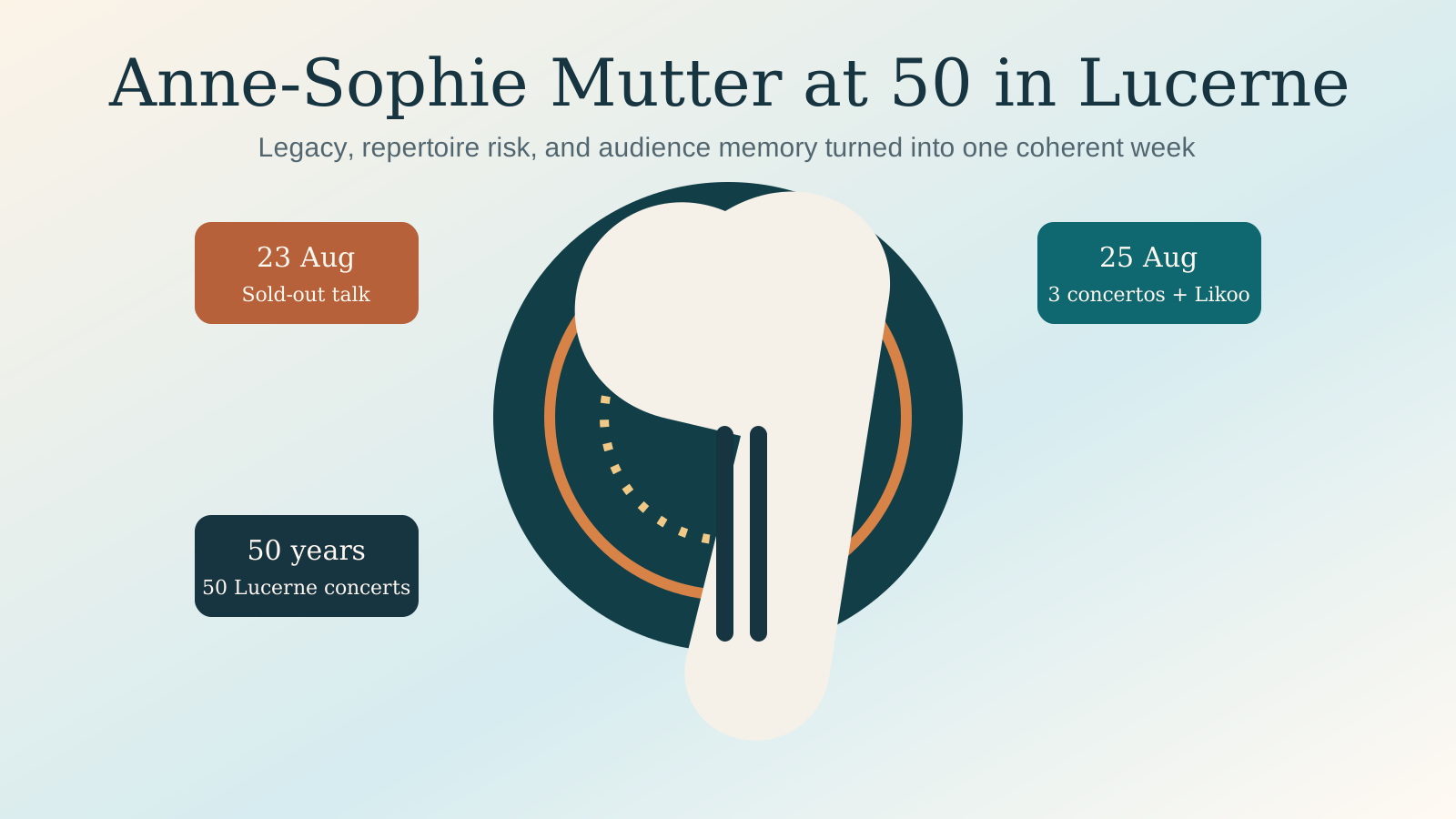
Because Lucerne is turning biography into active programming, not museum nostalgia. The festival's official page for August 23 shows that her conversation at St. Charles Hall Meggen, on the exact site of her 1976 Lucerne debut, is already sold out. The page also notes that she has given 50 Lucerne concerts across 50 years and will speak not only about the past but about the future of classical music and young talent. Then the August 25 concert page raises the stakes further: Mutter takes musical direction herself and performs three violin concertos or concerto-scale works in one evening, including Previn's Second Violin Concerto, Mozart concertos, and Aftab Darvishi's Likoo in a Swiss premiere. That is a very modern legacy move. Instead of protecting the anniversary with safe symbolism, Lucerne makes her do real artistic work in public.
Tanya's performer take: this is exactly how an established artist stays current. Anniversary storytelling only matters when it leads back to live risk, repertoire conviction, and a program that still asks something demanding of the performer.
What should violinists, planners, and music fans watch next?
- Watch festivals that give one violin artist several clearly different jobs in the same run, because that is how an instrument stays visible without feeling repetitive.
- Pay attention to how repertoire frames audience access. Barber, Korngold, Mozart, Previn, and Darvishi are not random titles here; they map different doors into the same violin week.
- For event planners, Lucerne is a reminder that violin programming works best when legacy, discovery, and broad audience appeal are designed together instead of sold as separate products.
- For performers and fans, the headline is simple: the strongest August violin story right now is not just who is playing, but how intelligently the festival is shaping the whole sequence.