News · 2026-08-17
Violin News Roundup: Arran's Borderless Opening, Orcas' Stream Window, Spreckels' Civic Stage, and Mutter's New Lucerne
As of Monday, August 17, 2026, the most useful violin story is not one single star turn. It is how presenters and artists are keeping the instrument visible across very different formats at the same time. The Arran International Festival opens today with a cross-border identity and an August 18 violin premiere for Magdalena Filipczak. The Orcas Island Chamber Music Festival keeps its August 7-22 season legible by recording second performances for next-day streaming. Spreckels Organ Society puts violin into civic space tonight, and Anne-Sophie Mutter shows how archival thinking can still feel current.
Follow Tanya Strings on Google
Add the site as a preferred source to see more new violin posts from Tanya Strings in Google.
What makes Arran's opening violin story worth tracking this week?
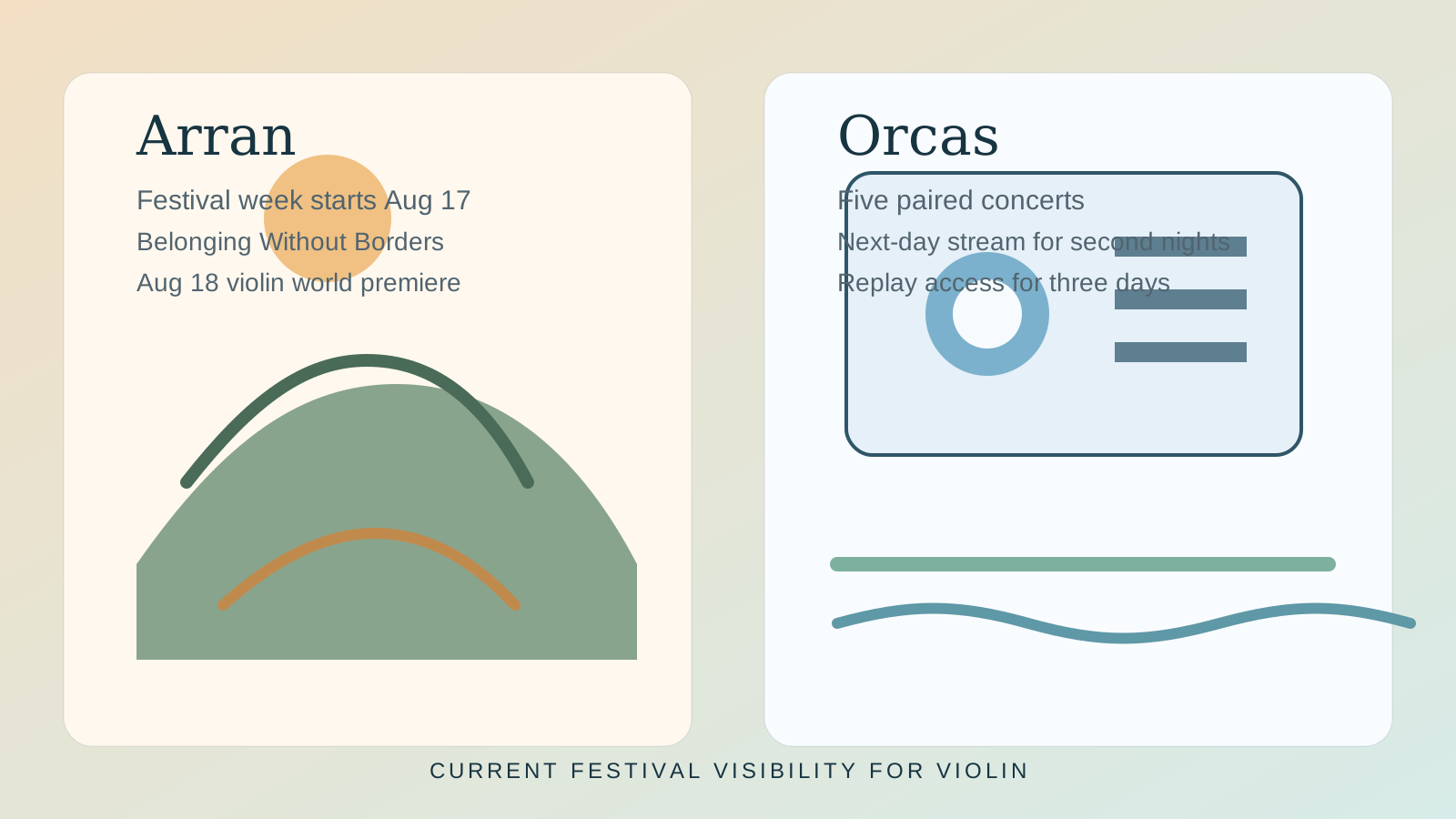
Because Arran is giving the violin a clear role inside a broader festival identity instead of leaving it as implied prestige. The festival runs from August 17 to August 23 under the theme Belonging Without Borders, and its composer-in-residence Electra Perivolaris says she has written a new piece for internationally acclaimed violinist Magdalena Filipczak. The first violin-centered date lands tomorrow, August 18, when Filipczak and pianist Agnieszka Kozło play Inspired by Song and Dance with Schubert's Fantasia in C major, Wieniawski's Faust fantasy, and the world premiere of Perivolaris's new work. The official page also makes the access policy explicit with tickets at £20 and free entry for under-18s. That combination matters. It ties new music, named repertoire, and audience access into one readable signal.
Tanya's performer take: when a festival names the violin repertoire, the new work, and the access route in the same breath, the event feels easier to trust and easier to market.
Why is Orcas' stream window more than a convenience feature?
Because it treats chamber music like something that can keep moving after the room clears without pretending the live event no longer matters. Orcas says its August 7-22 season includes 11 concerts, with five concert pairs performed twice. The crucial detail is that the second concert of each pair is recorded for online streaming the next day, and that stream remains available for three days. The festival also keeps the surrounding frame generous: free pre-concert talks, a children's concert, and an open rehearsal for seniors on August 21. For violinists and presenters, that is a practical audience model. The replay window is short enough to protect urgency, yet long enough to widen reach. For fans, it lowers the penalty for geography or scheduling.
Tanya's performer take: a smart replay window does not weaken live music; it gives strong programming a second life while the concert is still current.
What does tonight's Spreckels concert prove about violin visibility?
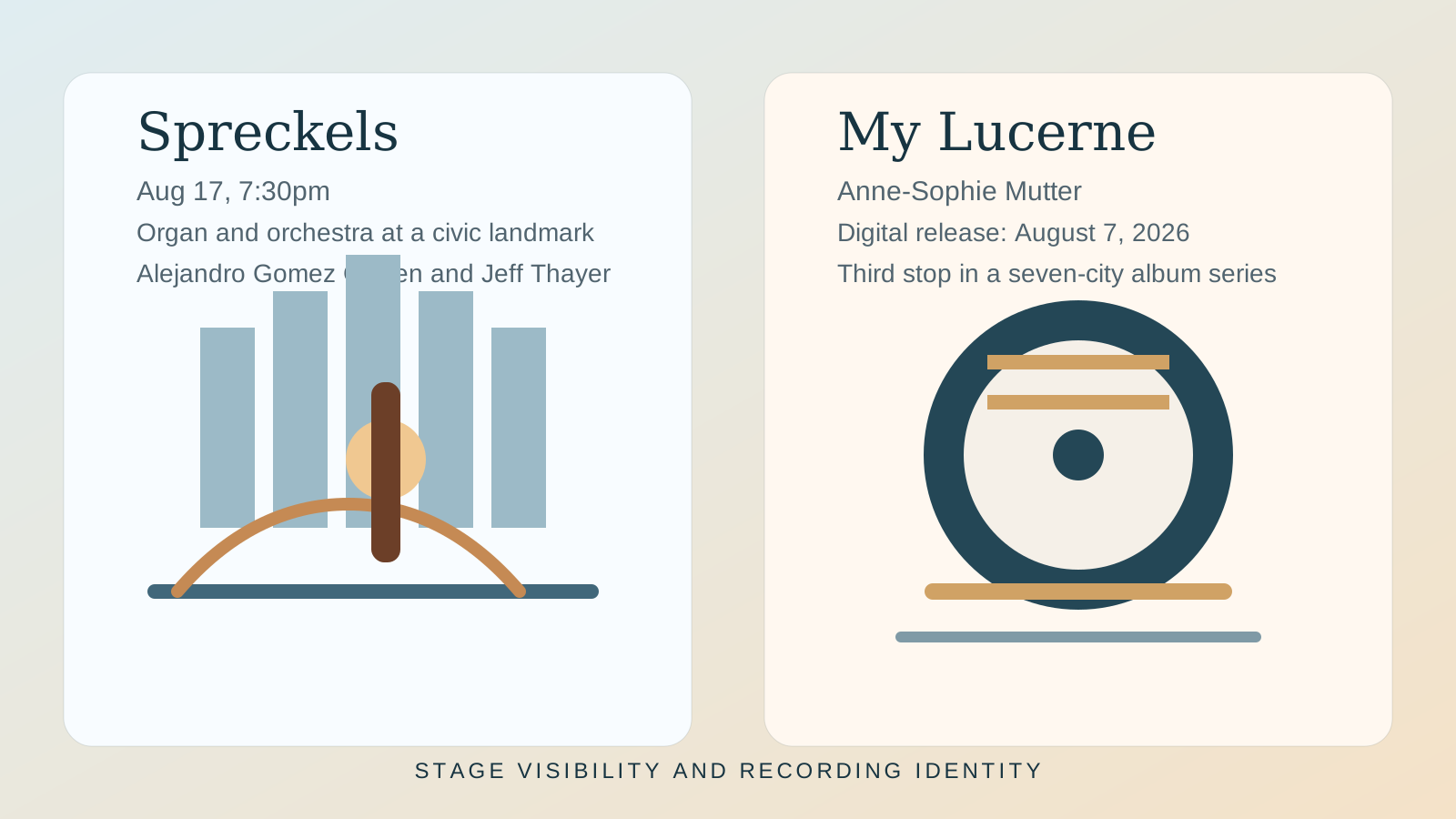
It shows that violin authority still lands when it appears inside a civic landmark with a sharply defined program. Tonight, August 17 at 7:30 p.m., the Spreckels Organ Pavilion hosts An Organ and Orchestra Celebration! The artist page centers conductor and violinist Alejandro Gómez Guillén, then places San Diego Symphony concertmaster Jeff Thayer alongside him. The listed repertoire is unapologetically specific: Parker's Organ Concerto, Haydn's Organ Concerto in F, Boëllmann's Dialogue Fantasia, and Guilmant's Symphony No. 1 for organ and orchestra. This is not crossover branding, yet it still carries a useful lesson for crossover artists and event planners. Public context matters. When violin leadership shows up in a recognizable civic setting, it strengthens the instrument's status beyond the specialist room.
Tanya's performer take: performers grow faster when they learn how to read the room, the landmark, and the program frame, not just the notes.
Why does Anne-Sophie Mutter's new Lucerne release matter in a festival-heavy week?
Because it is a reminder that recording strategy can still behave like programming. Deutsche Grammophon lists My Lucerne as a digital release dated August 7, 2026, and frames it as the third entry in a seven-part city series rolling out across 2026 and 2027. The repertoire line is tight and legible, moving through Sarasate, Tartini, J.S. Bach, Previn, Wieniawski, Penderecki, and Tchaikovsky. The label's description matters too: these are "new albums from recordings that are important to her," designed to function like small concerts linked to musical capitals. In a week full of live events, that is still relevant violin news. It shows how a major artist can repackage decades of authority without sounding frozen in the past.
Tanya's performer take: content creators and soloists should pay attention when catalog work feels curated rather than recycled, because that is the difference between archive and story.
What should violinists, planners, and fans watch next?
- Watch whether Arran's violin premiere and under-18 access model turn its "Belonging Without Borders" slogan into real audience memory this week.
- Watch how many chamber presenters adopt Orcas-style short streaming windows, because that balance between urgency and access is getting harder to ignore.
- Watch which civic presenters keep putting violin leadership in visible public settings, because place still changes how a performance is perceived.
- Watch whether more artists borrow Mutter's city-series logic and turn catalog releases into coherent editorial narratives instead of loose compilation drops.