Power Protection · 2026-08-26
Best Power Conditioners and Surge Protectors for Electric Violinists Running Stage and Creator Rigs
For most electric violinists, the best power conditioner or surge protector is the Furman SS-6B-PRO because it gives Tanya Strings the most useful mix of metal-housed durability, six properly spaced outlets, a 15-foot cord, EMI/RFI filtering, and Extreme Voltage Shutdown when venue power turns ugly. If your whole violin rig already lives in a rack, buy the Furman M-8x2 or M-8Lx instead. If the laptop, camera, and digital playback side of the setup needs stronger filtering, step up to the Furman PST-8D or Panamax M8-AV-PRO.
Follow Tanya Strings on Google
Add the site as a preferred source to see more new violin posts from Tanya Strings in Google.
Affiliate disclosure: Some links in this article are affiliate links. I may earn a commission if you make a purchase, at no extra cost to you.
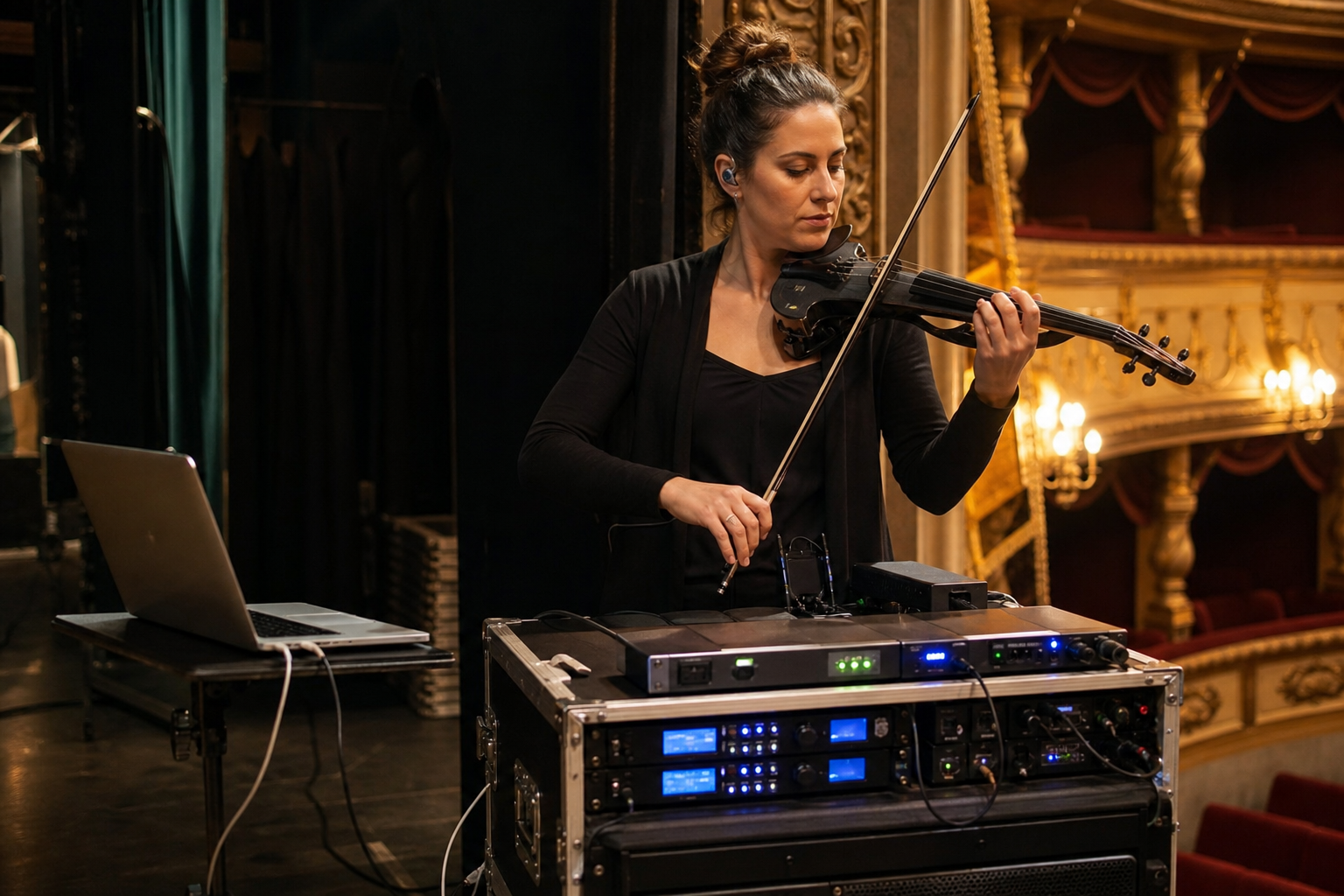
What are the best power conditioners and surge protectors for most electric violinists?
The shortlist depends on whether your rig lives in a rack, on a floor next to the pedalboard, or on a creator desk beside a laptop and camera light. This article is about AC protection at the wall, not about low-voltage pedal power. If you still need dedicated DC for stompboxes, read my guide to pedalboard power supplies. If you are trying to run outdoor shows from batteries, read my guide to portable power stations instead. For mixed stage and creator use, I would start with the Furman SS-6B-PRO, then separate the rack users toward the Furman M-8x2 or M-8Lx and the more digital desks toward the PST-8D or Panamax.
My performer rule: once a laptop, wireless receivers, and playback interface become part of the show, I stop trusting random plastic outlet strips from the venue drawer.
Which power protection models are worth buying right now?
I kept this list focused on units that solve real electric violin problems: unstable venue power, noisy AC, awkward cable runs, and hybrid stage-and-content workflows. If your bigger problem is ground-loop noise after the wall connection is already protected, pair this with my guide to hum eliminators and line isolators. If the laptop is the weak point in your stage lane, also read my guide to laptop stands.
| Product | Best for | Why Tanya would use it | Watch out for | Links |
|---|---|---|---|---|
| Furman M-8x2 | Rack-based electric violin rigs that need a basic dependable power lane | I trust it because nine outlets and simple rackmount behavior are enough for many wireless, interface, and playback cases without overcomplicating the rig. | It gives standard surge protection and filtering, but not the more advanced shutdown logic of the pricier models. | Official · Amazon |
| Furman M-8Lx | Rack players who work dark stages and want pull-out lamps | I like it because it keeps the same simple power workflow as the M-8x2 but adds rack lights that actually help during quick resets and backstage patching. | You are paying extra for convenience lighting, not for a higher protection tier. | Official · Amazon |
| Furman SS-6B-PRO | Most violinists who need a flexible floor, side-table, or desk solution | I would buy it first because the steel housing, 15-foot cable, EMI/RFI filtering, and Extreme Voltage Shutdown fit real stage life better than a cheap strip. | Only six outlets, so very large creator desks may outgrow it. | Official · Amazon |
| Furman PST-8D | Hybrid digital rigs with laptop playback, camera gear, and sensitive electronics | I respect it because the advanced protection, EVS shutoff, and separate digital filtering banks make more sense once the rig starts looking like a small control room. | It is more expensive and more desk-oriented than the basic stage solutions. | Official · Amazon |
| Panamax M8-AV-PRO | Creator desks and fixed rigs that want voltage monitoring plus high-current outlets | I would use it when one station feeds laptop, monitors, camera tools, and support gear, and I want visible voltage behavior instead of blind trust. | Its home-A/V identity makes it feel less stage-native than Furman or CyberPower rack tools. | Official · Amazon |
| CyberPower RKBS15S2F8R | Racks or under-table installs that need more outlets and tougher metal-strip logic | I like it because ten outlets, 3600 joules, and flexible rack or under-counter mounting cover big utility jobs without pretending to be boutique audio jewelry. | It does not offer the same explicit over-voltage shutdown story as the Furman EVS models. | Official · Amazon |
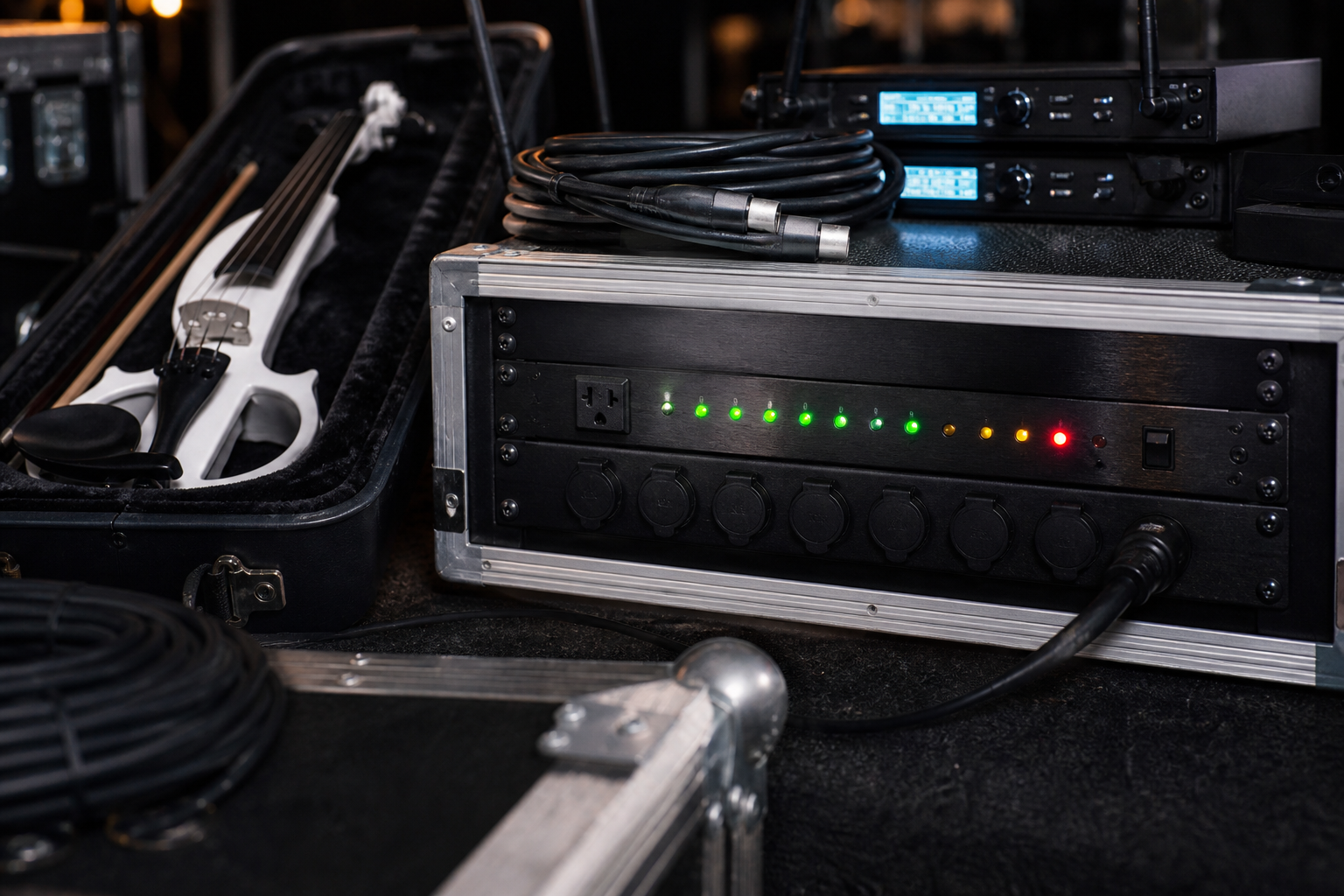
Why is the Furman SS-6B-PRO my best overall pick?
The Furman SS-6B-PRO wins because it fits the largest number of real electric violin setups without forcing you into a rack. Furman says it gives you six outlets, steel construction, a 15-foot cord, EMI/RFI noise attenuation, circuit breaker protection, and Extreme Voltage Shutdown that trips on dangerous over-voltage and under-voltage conditions. That combination matters to Tanya Strings more than luxury branding. I want something that can sit by a rack case, under a laptop stand, beside a pedalboard table, or in a home creator corner and still feel like working hardware.
Who should buy the SS-6B-PRO first?
Buy it first if your electric violin rig moves between venues, rehearsals, content days, and temporary setups where outlet quality is uncertain and layout flexibility matters more than rack cosmetics.
- Pros: metal housing, long cable, EVS shutdown, useful filtering, and easy placement around real stage furniture.
- Cons: only six outlets, no rack ears, and less elegant cable presentation than a fixed rack unit.
See the Furman SS-6B-PRO · Check SS-6B-PRO on Amazon
When does the Furman M-8x2 or M-8Lx make more sense than a floor strip?
Choose one of the Merit rack units when your power story is already organized around a rack case with wireless receivers, a small interface, or playback hardware. Furman positions both the M-8x2 and M-8Lx as 15-amp rackmount units with nine total outlets, standard surge protection, and standard RFI/EMI filtration. The M-8Lx adds two pull-out lamps with a dimmer, which is not a glamorous feature until you are patching backstage in low light.
Why would I start with the M-8x2?
The M-8x2 is the clean answer when the rack itself is already the center of gravity. Furman lists nine filtered and surge-protected outlets, a front convenience outlet, a protection indicator, and a 15-amp rating. That is enough for many electric violin touring racks without paying for extras you will not use.
- Pros: simple rack fit, nine outlets, dependable brand trust, and enough protection for many practical rigs.
- Cons: standard rather than advanced protection, no lamps, and no voltage regulation.
See the Furman M-8x2 · Check M-8x2 on Amazon
When is the M-8Lx worth the extra money?
Buy the M-8Lx when you are working theater wings, dark clubs, backstage reset zones, or any rack situation where seeing the controls fast is part of staying calm. Furman says it carries the same nine outlets, 15-amp capacity, and standard filtration as the M-8x2, but adds two pull-out incandescent lamps and a front-panel dimmer. Tanya Strings values that because load-in friction costs attention that should stay on performance.
- Pros: all the useful M-8x2 basics plus rack lighting that helps during real show conditions.
- Cons: more expensive than the M-8x2 and still not the right buy if your rig is not rack-based.
See the Furman M-8Lx · Check M-8Lx on Amazon
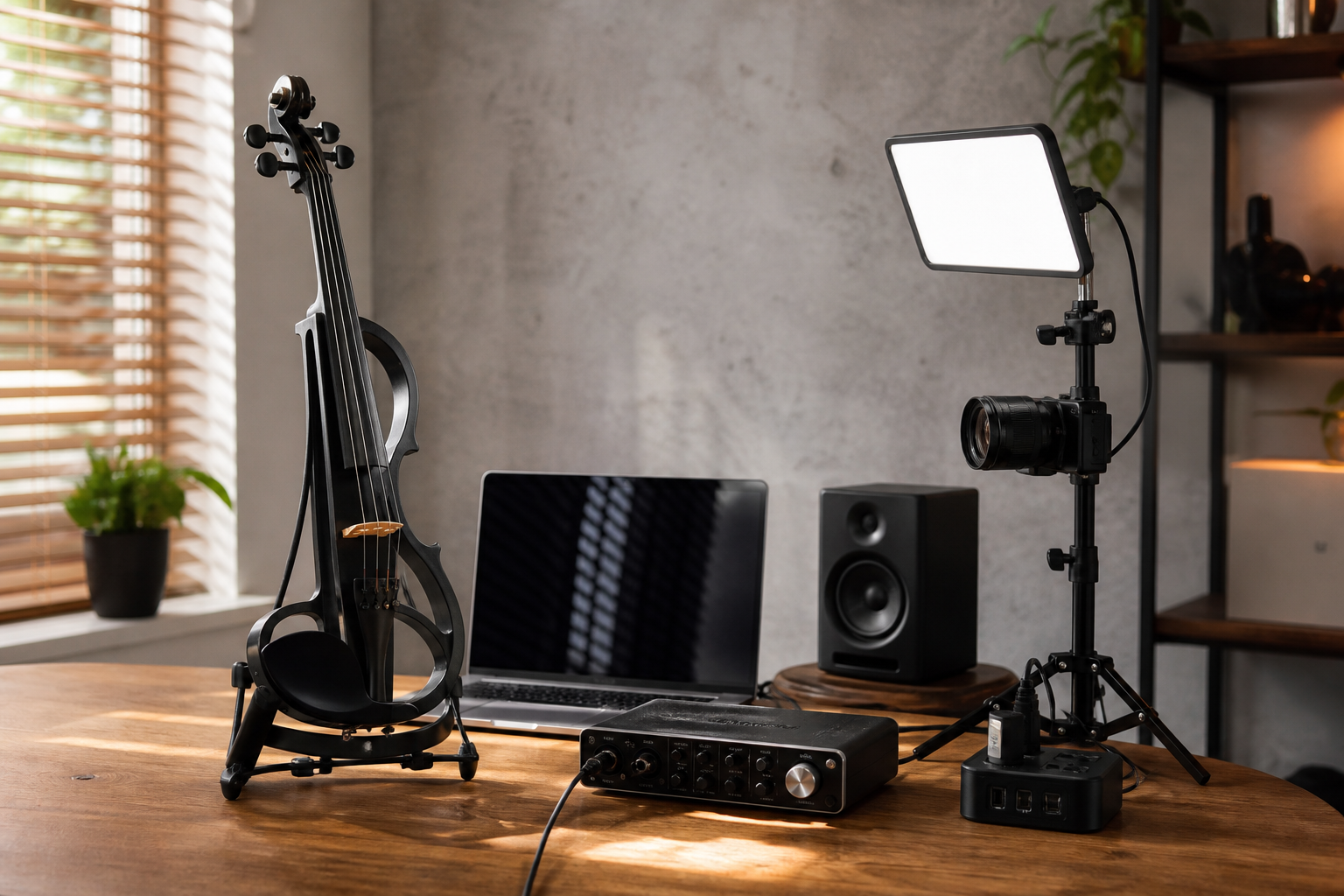
Should you pay more for the Furman PST-8D or Panamax M8-AV-PRO?
Yes, but only when the rig genuinely includes more fragile digital gear and more reasons to care about voltage behavior. This is the lane for electric violinists who film, edit, run playback, feed studio monitors, or keep a semi-permanent creator desk alive between shows.
Why would the Furman PST-8D be the smarter digital-rig buy?
Furman says the PST-8D gives you eight outlets, SMP+ protection, LiFT filtering, EVS shutoff at 135 VAC, and separate banks with four digital-ultrasonic filtered outlets plus four linearly filtered outlets. That is useful when one desk holds a laptop, interface, camera power, and other sensitive electronics that should not all be treated like a simple amp rig. Tanya Strings would reach for the PST-8D when the room behaves more like a compact control position than a loose rehearsal corner.
- Pros: stronger protection story, filtered outlet banks, EVS shutoff, and better fit for sensitive hybrid rigs.
- Cons: higher cost and less obvious value if your needs are still simple and portable.
See the Furman PST-8D · Check PST-8D on Amazon
When is the Panamax M8-AV-PRO the better move?
The Panamax M8-AV-PRO makes more sense when you want visible Automatic Voltage Monitoring and a fixed creator or streaming lane. Panamax lists eight outlets, 1875 joules of energy dissipation, 65,000 amps of peak impulse current, four filtered outlets, four high-current outlets, over-voltage and under-voltage shutoff, and signal-line protection for coax, tel, and LAN. I would not buy it first for a messy club floor. I would buy it when the violin desk also carries monitors, internet-dependent tools, or more permanent support gear.
- Pros: voltage monitoring, strong protection numbers, mixed outlet banks, and useful fixed-desk logic.
- Cons: less stage-native feel and more at home in a settled creator station than in constant touring chaos.
See the Panamax M8-AV-PRO · Check M8-AV-PRO on Amazon
Who should buy the CyberPower RKBS15S2F8R instead?
The CyberPower RKBS15S2F8R is the practical pick when you need a metal strip with more outlets, a high joule rating, and flexible mounting before you need a boutique audio narrative. CyberPower says it offers ten outlets, 3600 joules of surge suppression, 15-amp capacity, a 15-foot cord, 50 dB attenuation, metal housing, and both 1U rackmount and under-counter installation options. Tanya Strings would use it for utility-heavy setups: laptop, monitors, chargers, wireless, camera battery gear, and a desk or rack that simply needs more protected sockets.
- Pros: lots of outlets, strong joule rating, flexible mounting, long cable, and a very practical price-to-capacity balance.
- Cons: less refined audio-brand language and no clear EVS-style shutdown pitch in the product story.
See the CyberPower RKBS15S2F8R · Check RKBS15S2F8R on Amazon
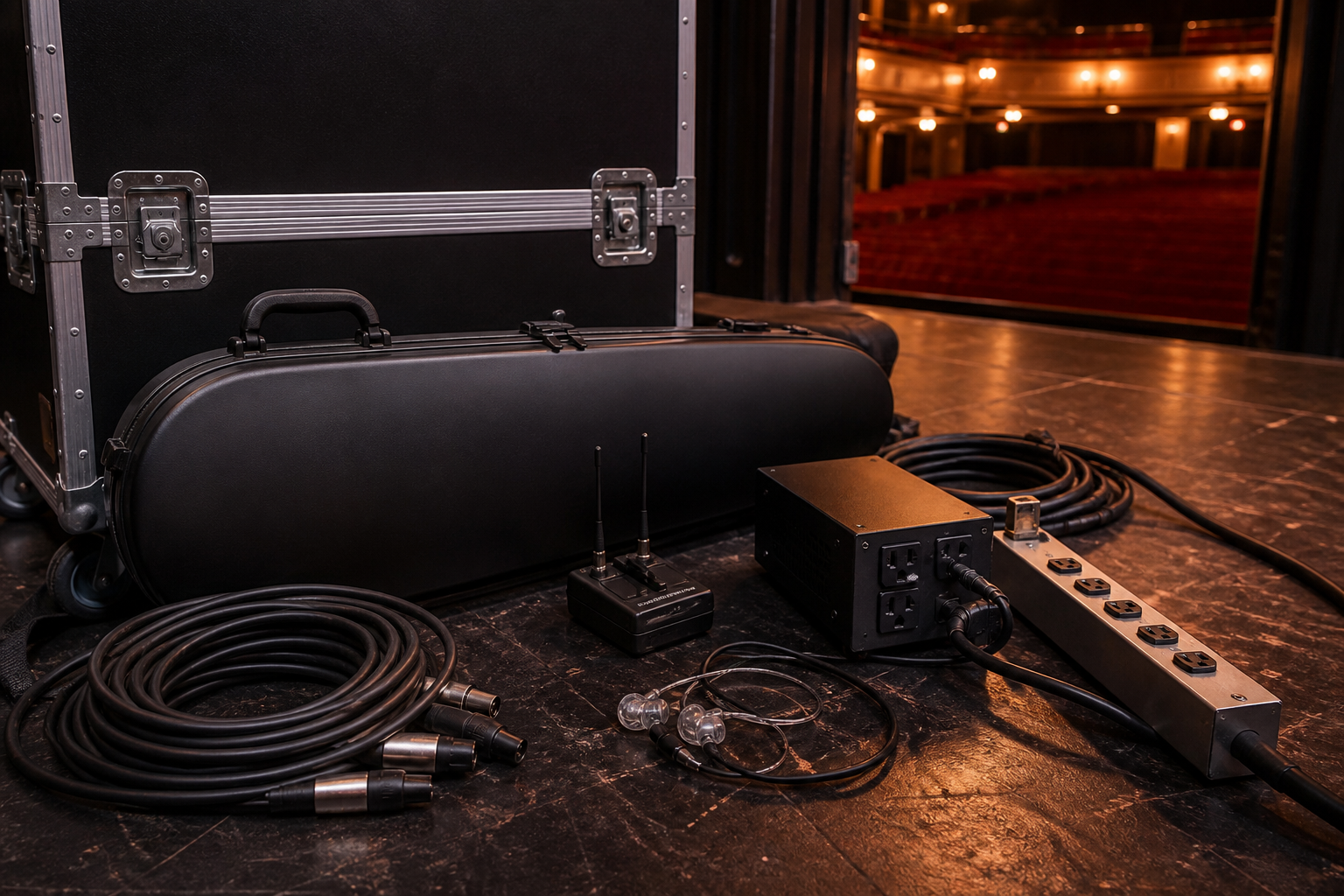
How should electric violinists buy power protection?
Buy around the real shape of your rig, not around generic studio mythology.
My buying checklist:
- Choose the form first: rackmount, floor block, or desk strip depends on where your laptop, wireless, and playback devices actually live.
- Respect expensive electronics: for sensitive gear, I prefer stronger surge ratings and visible protection status over vague promises.
- Count outlets honestly: laptop charger, interface, wireless receiver, powered speaker support gear, stand light, and camera battery charger add up fast.
- Prefer metal housing for touring: stage floors, rehearsal rooms, and load-ins punish fragile plastic strips.
- Value shutdown logic: if the show depends on a laptop or wireless rig, I put real weight on over-voltage or auto-disconnect behavior.
- Separate AC and DC thinking: the wall protector guards incoming AC; your pedalboard supply still handles pedal voltage and isolation.
What mistakes make power protection disappoint on stage or at the creator desk?
Most disappointment comes from buying the wrong category, not from the idea of power conditioning itself.
- Confusing a surge protector with a pedal power supply: one protects the wall connection, the other powers pedals correctly.
- Expecting a conditioner to solve every hum: if the issue is a ground loop in the signal chain, you may still need a line isolator.
- Hiding the unit where you never see its status lights: protection indicators only help if you can actually monitor them.
- Daisy-chaining cheap strips: that is exactly the kind of chaos I try to remove from a professional electric violin setup.
- Overbuying desk gear for a simple floor rig: a fixed creator station and a traveling stage kit do not always need the same solution.
- Ignoring cable length and layout: a perfect spec sheet still fails if the unit forces awkward cable paths across the performance lane.

FAQ
Do power conditioners actually improve electric violin tone?
They do not replace EQ, effects, or better monitoring, but they can lower line noise and keep the rig calmer. Tanya Strings thinks of power conditioning as reliability infrastructure, not as a magic tone pedal.
Should I buy rackmount or floor-style power protection?
Buy rackmount if your receivers, interface, or playback devices already live in a rack case. Buy floor or block style if the rig is more modular and moves between pedalboard tables, creator desks, and side-stage positions.
Is a normal surge strip enough for a laptop and wireless violin rig?
Sometimes, but I would rather trust a metal-housed unit with visible status lights and better protection logic. Once the rig includes a laptop and wireless receivers, the cheapest outlet strip stops feeling like a serious answer.
Can I plug a pedalboard power supply and laptop into the same conditioner?
Yes, if the total load stays within the unit rating and the cable management remains clean. The conditioner protects the incoming AC, while the pedalboard supply still does the pedal-specific power work.