News · 2026-08-31
Violin News Roundup: Indianapolis Opens the Door, Lucerne Backs Faust, Lindsey Stirling Brings Back Snow Waltz, and Shure Eyes the Next Broadcast Stage
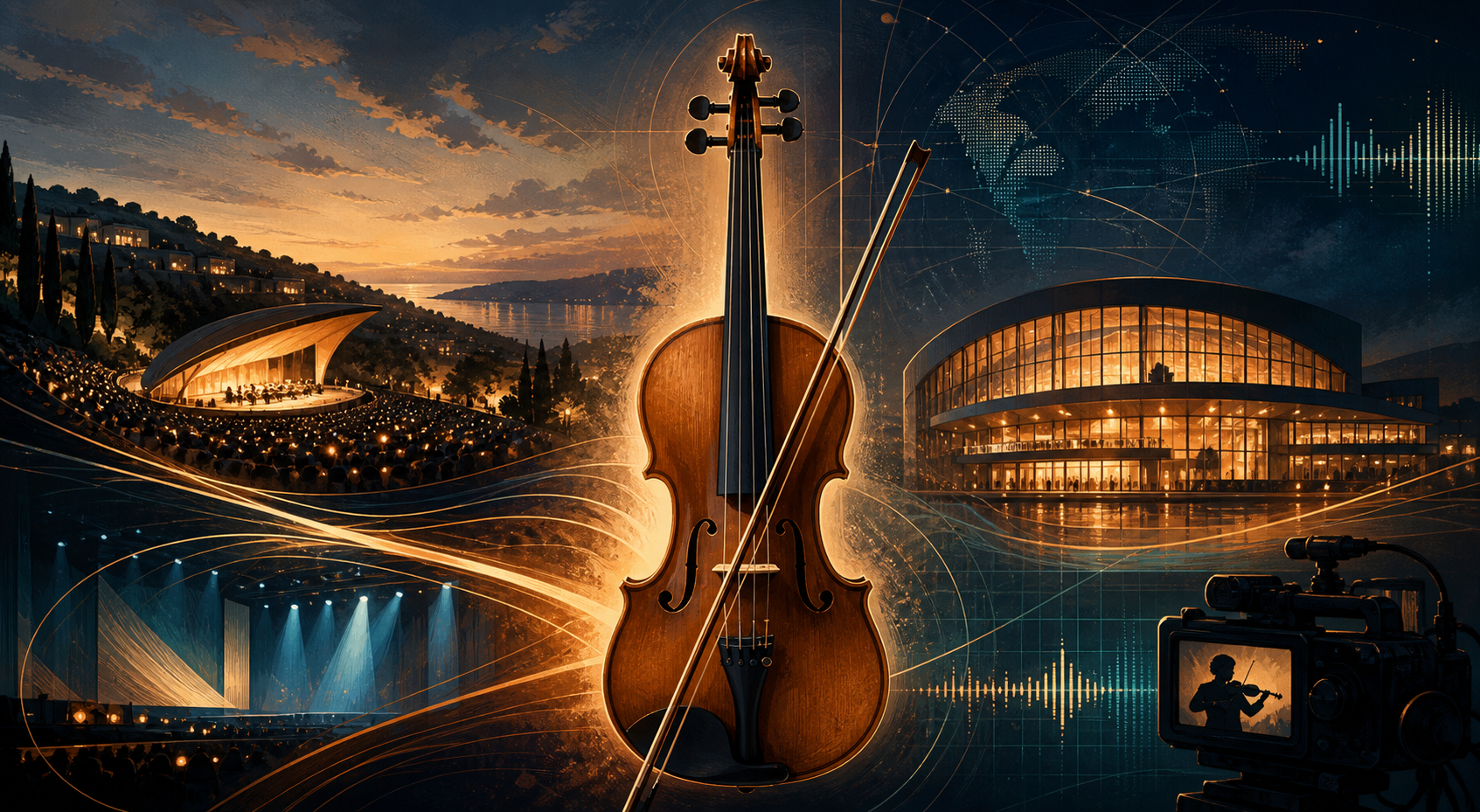
As of Monday, August 31, 2026, the strongest violin story is not a single superstar headline. It is the way violin keeps showing up in four different public lanes at once. The International Violin Competition of Indianapolis is turning its September 17 opening into a civic event with Time for Three after the parade of nations. Lucerne Festival is giving Isabelle Faust and Sir Simon Rattle a prime September 2 Schumann evening with a post-concert talk. Lindsey Stirling has already pushed crossover violin back into the on-sale cycle with Snow Waltz Tour 2026. And Shure's IBC 2026 push shows how tomorrow's streamed concert experience will depend on smarter audio workflows.
Follow Tanya Strings on Google
Add the site as a preferred source to see more new violin posts from Tanya Strings in Google.
Why does Indianapolis opening night matter before a single competition round is played?
Because the International Violin Competition of Indianapolis is framing violin as a public event before it becomes a jury event. The official opening page says the 12th Quadrennial Competition runs from September 17 through October 4, and that the public ceremony at Newfields will include the participants' parade of nations, jury introductions, and a follow-on concert by Time for Three. That detail matters. TF3 brings a crossover language that makes a major competition feel open rather than sealed off. The page also keeps pricing readable at $15 for concert patrons, with clear timing and practical access notes. That is a smart signal for event planners: world-class violin culture grows faster when entry points feel welcoming instead of ceremonial first and human second.
Tanya's performer take: if you want violin to feel relevant outside the conservatory bubble, open the doors early. A competition earns more attention when the first invitation feels civic, social, and alive.
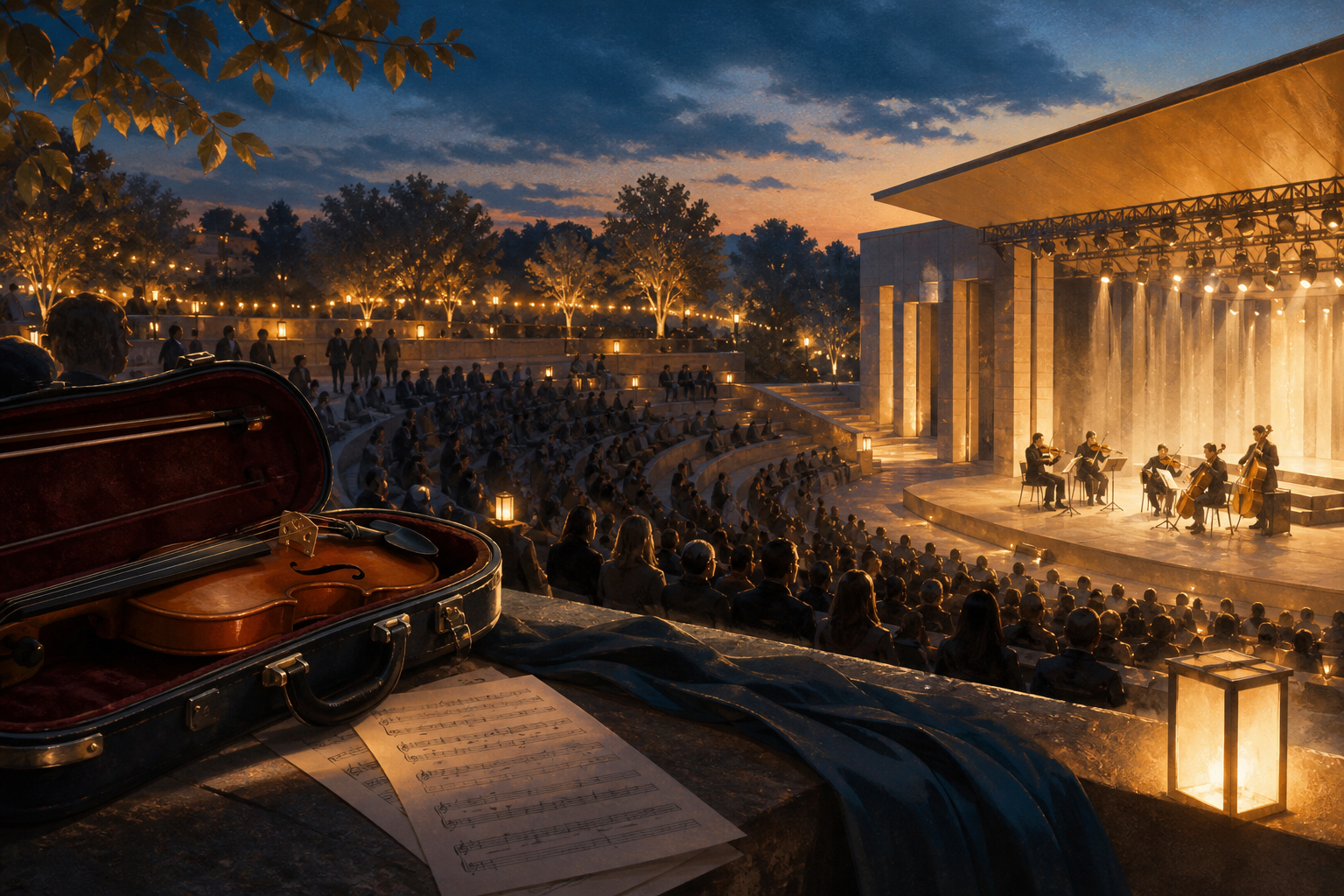
What is Lucerne Festival saying by giving Isabelle Faust and Sir Simon Rattle this Schumann night?
It is saying that serious violin programming still wins when it is curated with confidence. Lucerne's official September 2 event page puts Faust with the Freiburger Barockorchester and Sir Simon Rattle in an all-Schumann program: the Genoveva overture, the D minor Violin Concerto, and the Second Symphony, followed by a post-concert talk with Faust. The page also highlights a useful historical detail: Schumann wrote the concerto shortly before his mental collapse, and the work was not premiered until 81 years after his death. That gives the night real shape. This is not violin as polite decoration inside an orchestral program. This is violin placed at the center of a clearly authored concert argument, with conversation built in after the applause.
Tanya's performer take: the best festival slots do more than book a great soloist. They give the violinist a real narrative frame, then let the audience stay in the room long enough to process it.
What does Lindsey Stirling's Snow Waltz return say about crossover violin right now?
It says violin-led spectacle is still commercially confident enough to move early and move loudly. Stirling's official homepage now leads with the Snow Waltz Tour 2026 announcement, and venue pages are already turning that announcement into real inventory. For example, SCHEELS Arena lists a December 7 stop in Fargo, says tickets went on sale on August 28, and frames the show around Stirling's mix of music, dance, aerial work, and theatrical production. That matters well beyond holiday branding. It shows that violin remains viable as a headlining live format when the presentation is visual, physical, and easy for audiences to understand in one glance. For content creators, it is a reminder that identity travels faster than genre labels.
Tanya's performer take: crossover does not work because it is softer or easier. It works when the show concept is sharp enough that fans, venues, and social clips all tell the same story immediately.
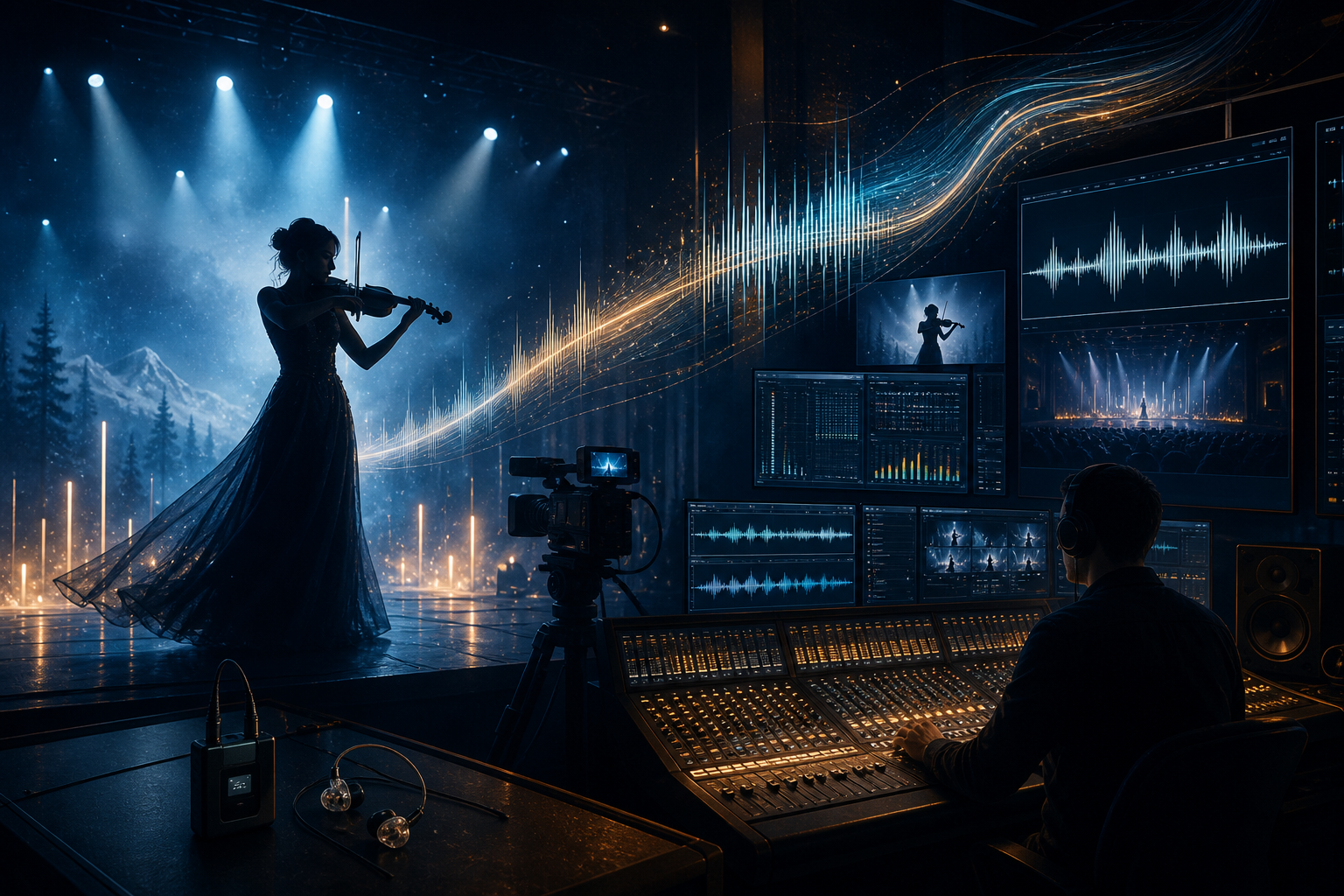
Why should performers care about Shure's IBC 2026 announcement?
Because it points to the next version of live music visibility. In its August 26 press release, Shure says it is returning to IBC 2026 with five Accelerator projects touching immersive festival experiences, personalized broadcasts, agent-assisted workflows, decision twins for remote production, and clearer speech delivery. The violin angle is obvious even if the release never names violin specifically: more string performances now live twice, once in the room and once on the screen. Shure's language around intelligent capture, cloud-connected processing, and adaptable audio foundations is really about whether nuanced instruments survive translation when the audience is remote. For violinists, planners, and fans, that is practical news. Better broadcast audio does not only help sports or news. It changes how a bow attack, hall bloom, and live atmosphere reach people who may meet the artist online first.
Tanya's performer take: world-class performance now includes the screen version of the show. If the audio workflow is weak, the artistry gets flattened before new listeners ever hear what makes the playing special.
What should violinists, presenters, and music fans watch next?
- Watch which competitions keep building public rituals around violin instead of hiding everything behind application language and jury mystery.
- Watch which festivals give violinists authored programs, post-concert talks, and narrative weight instead of one prestige slot and a fast exit.
- Watch crossover tours that make the violin visually legible from the first poster, reel, or ticket page.
- Watch audio companies closely, because broadcast capture and remote listening are now part of the artist's real stage footprint.