News · 2026-09-02
Violin News Roundup: Jerusalem Opens September, Hadelich Plans a Fiddle Night, Garrett Splits Classical and Crossover, and Spectera Moves Closer
As of Wednesday, September 2, 2026, the most useful violin story is how many live lanes are active at once. The Jerusalem International Chamber Music Festival is already in progress through September 5 with violin-heavy chamber programming tonight and later this week. Lucerne Festival is about to let Augustin Hadelich turn a major classical stage into a fiddle room. David Garrett’s live calendar is splitting classical charity work from crossover arena dates. And Sennheiser’s latest PLASA update shows that the next jump in live string presence is technical as well as artistic.
Follow Tanya Strings on Google
Add the site as a preferred source to see more new violin posts from Tanya Strings in Google.

Why does Jerusalem feel like one of the clearest violin signals of the week?
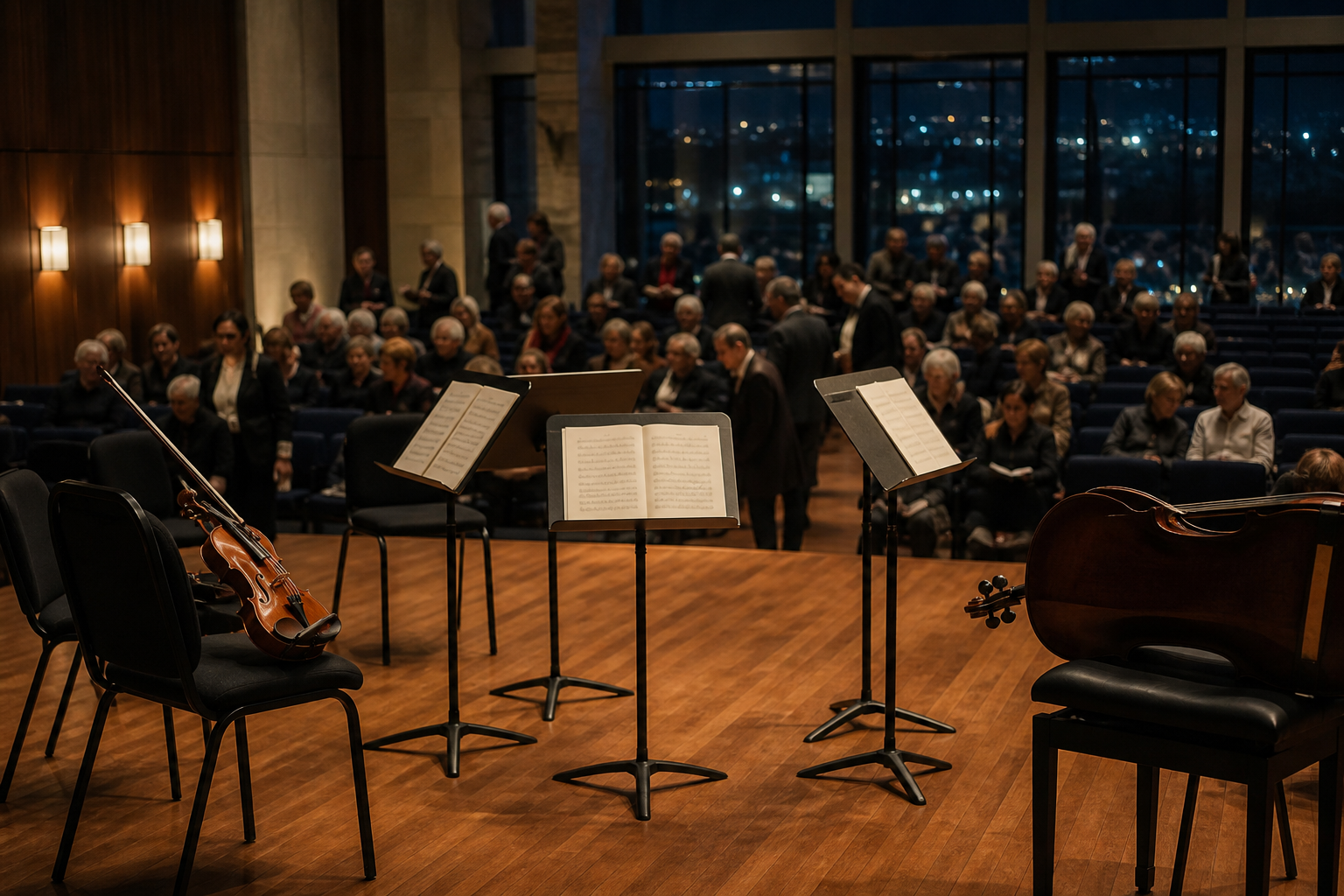
Because it is happening in public. The official Jerusalem International Chamber Music Festival page says the 28th edition runs from September 1 to 5 at the Jerusalem International YMCA. In Artistic Director Elena Bashkirova’s welcome note, the festival frames the week around familiar masterpieces, new discoveries, and the Israeli premiere of a piano quartet by Juri Reinvere. The practical violin headline for today is the September 2 program itself: a Respighi Double String Quartet with Fedor Rudin, Tatiana Samouil, Latica Honda-Rosenberg, and Vera Panitch among the violinists, followed by Mozart’s Gran Partita. That matters because it turns serious string programming into a live civic offer that audiences can still enter this week.
Tanya’s performer take: the strongest chamber festivals do not hide behind prestige language. They tell the audience what is happening now, why it is special, and exactly where violin sits inside the week.
What is Augustin Hadelich really doing with Lucerne’s Fiddle Night?
He is using a top-tier festival to erase the false wall between conservatory authority and roots-driven stage energy. Lucerne’s official September 5 Fiddle Night page says Hadelich will join Mark O’Connor and Maggie O’Connor for solos, duos, and trios built from American fiddle music including hoedowns, blues, bluegrass, Texas swing, spirituals, ragtime, and original pieces. The same page says this will be the first time the O’Connors appear on stage with Hadelich. Violin is still most interesting when elite presenters trust it to move between repertoire cultures without apology or gimmick.
Tanya’s performer take: this is the kind of move that keeps violin alive for broader audiences. A world-class player becomes more visible when the musical identity is flexible but the artistic standard stays high.
Why does David Garrett’s September calendar still matter after the summer run?
Because it shows how a violin brand can hold two live languages at the same time. On the official David Garrett live page, September opens with a September 12 charity concert in Salzburg at the Mozarteum Großer Saal, centered on Brahms’s Violin Sonata No. 3 and supporting Austrian Childhood Cancer Aid. Three days later, the page turns back to the Millennium Symphony crossover lane with September 15 in Astana, September 16 in Almaty, and September 18 in Bucharest. That split is the useful part. It tells presenters and fans that violin-led careers do not need to choose between recital credibility and large-format entertainment when the identity is coherent enough.
Tanya’s performer take: range is only valuable when the audience can still recognize the artist. The lesson is not to do everything. It is to make different formats point back to one unmistakable stage persona.
What should electric violinists and event planners notice in Sennheiser’s September runway?
They should notice that better stage movement now depends on better system logic. In its August 27 PLASA Show London announcement, Sennheiser says the Spectera SKM handheld will start shipping from mid-September, while SoundBase will show Remote View for sharing wireless telemetry without duplicate software sessions. In its August 24 IBC 2026 update, the company says the new SKM handheld completes the core Spectera ecosystem, bringing microphones, in-ear monitors, remote control, and monitoring into one integrated workflow for live performance and broadcast, with the Base Station ZMAN expected from October. For violin and electric violin performers, that matters because cleaner RF planning and faster monitoring solve movement, talkback, troubleshooting, and repeatability under pressure.
Tanya’s performer take: audiences hear confidence before they understand why it is there. Strong wireless and monitoring systems are part of the performance, even when the crowd never sees the rack.
What should violinists, presenters, and music fans watch next this week?
- Watch festivals that make chamber music feel current by keeping the program specific, public, and easy to enter.
- Watch crossover-ready violin artists who can move between folk, classical, and arena language without sounding diluted.
- Watch live calendars that separate formats clearly but keep one strong artist identity across them.
- Watch stage-tech updates closely, because smarter wireless and monitoring systems are becoming part of violin’s public edge.