News · 2026-09-03
Violin News Roundup: Banff Opens, Interlochen Keeps the Pipeline Public, Kronberg Expands the String World, and Montreux Shows the Production Scale
As of Thursday, September 3, 2026, the strongest violin story is not one single star booking. It is the way serious institutions are making the instrument easier to enter from multiple angles at once. Banff opens tonight with a new-work signal, Interlochen is keeping a free strings access point visible for later this month, Kronberg is linking performance, improvisation, and violin making inside one September frame, and Shure’s Montreux recap is a blunt reminder that large-stage string confidence now depends on production systems as much as artistry.
Follow Tanya Strings on Google
Add the site as a preferred source to see more new violin posts from Tanya Strings in Google.
Why does Banff feel like the clearest chamber signal today?
Because it opens right now with a program that refuses to treat quartet culture as a museum object. Banff Centre’s official opening-night page says the Banff International String Quartet Festival starts tonight, September 3, with the Afiara Quartet, Jeanie Chung, Livia Sohn, Hao Zhou, Barry Shiffman, and Krisztina Szabó, built around Brahms, Dvořák, Mark Applebaum, and the Canadian premiere of Gavin Bryars’s Harpsichord Quintet. Banff’s August 19 festival story makes the bigger point even clearer: BISQFest runs from September 3 to 6 while stretching the classic quartet model toward choreography, dance, and orchestral sound. Chamber music grows when presenters give audiences contrast.
Tanya’s performer take: world-class string programming gets stronger when it sounds confident enough to place tradition, new work, and interdisciplinary risk in the same room.
What makes Interlochen more than a student notice?
Its value is the public entry point. Interlochen’s official Instrument and Voice Festivals page says the Strings Festival lands on September 26, is free, and can be joined in person or live online. The school also says the event includes observed master classes, clinics, and performances by current students and guest artists, with Chicago Symphony Orchestra concertmaster Robert Chen featured as the violin guest artist. It shows a useful September model: elite string credibility, clear registration, and low-friction audience access in one place. Violin visibility does not only come from headline solo careers. It also comes from institutions that make the next generation visible early.
Tanya’s performer take: if you want a healthier violin scene, build more public on-ramps. Free, watchable, well-framed events create future performers, future bookers, and future fans at the same time.
What is Kronberg actually expanding this September?
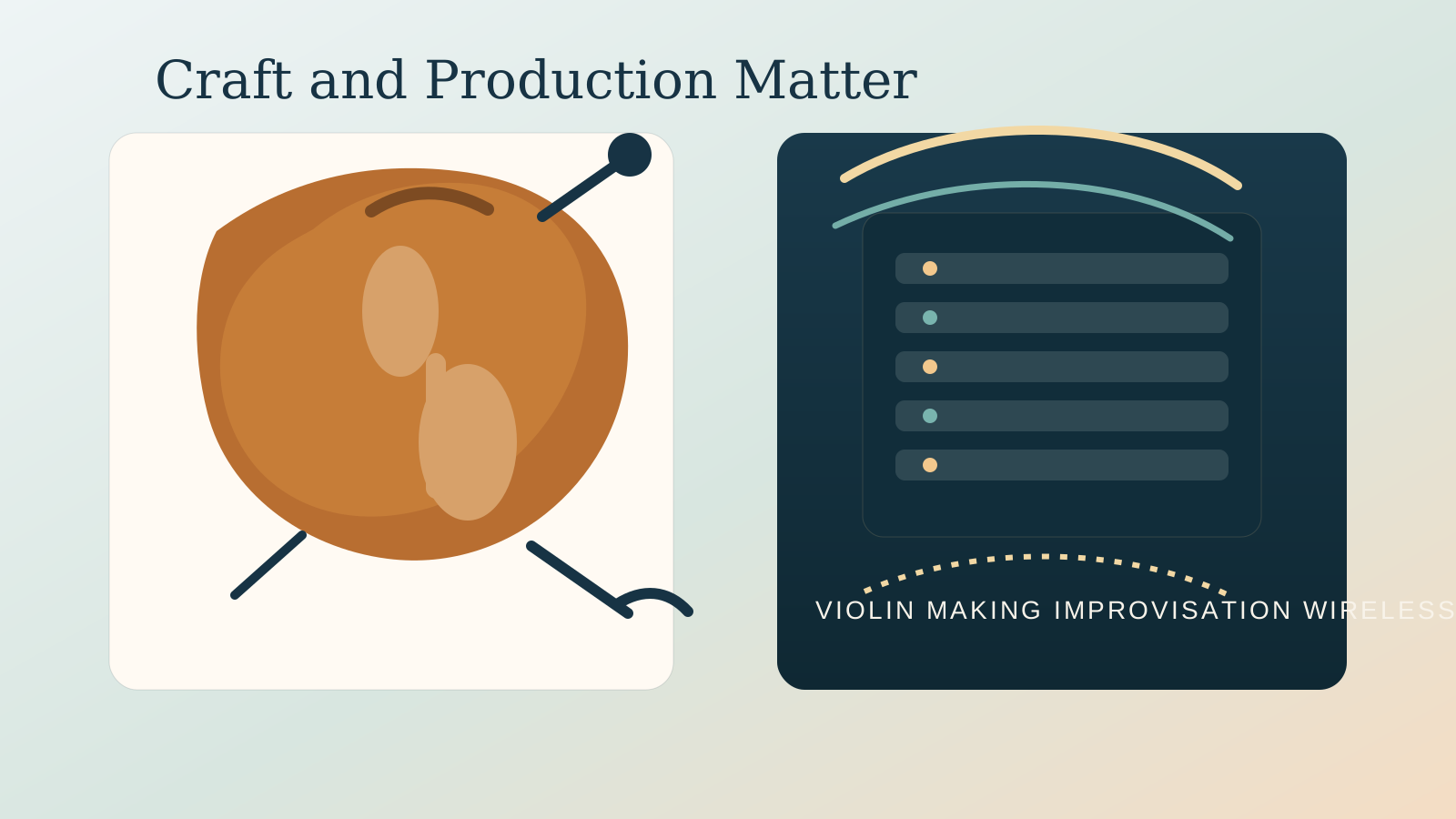
Not just a concert calendar. The official Kronberg Festival page frames Courage! from September 22 to October 4 as roughly thirty concerts that connect major artists, young talent, and public workshops. The part I would watch most closely is how Kronberg refuses to separate performance from making and experimentation. The official Geigenbau Biennale page says the Violin Making Biennale runs September 29 to October 2 alongside the festival and brings together international violin makers, bow makers, and string manufacturers for both professionals and music lovers. On the festival page itself, the September 26 workshop What would I be without sheet music? puts violin-and-mandola duo BartolomeyBittmann inside an improvisation format built around risk, listening, and getting outside the written page. That is a serious signal. A high-end string institution is telling its audience that violin culture now includes instrument craft, spontaneity, and public curiosity, not just polished repertoire delivery.
Tanya’s performer take: this is the kind of ecosystem thinking electric violinists and crossover artists understand immediately. Your instrument, your setup, and your freedom on stage are all part of the same artistic identity.
Why should performers care about Shure’s Montreux recap?
Because it translates stage confidence into hard numbers. In its August 20 press release, Shure says its Montreux Jazz Festival support covered more than 300 concerts and festival activities, more than 2,000 audio components across 10 stages, 156 channels of Axient Digital Wireless, 40 channels of Axient Digital PSM, and 756 wired microphones. That is not violin-specific on the surface, but it matters to violinists, electric violinists, and event planners. When a festival scale gets that dense, reliability stops being an invisible backend detail and becomes part of what artists can actually deliver. If a player wants freedom to move, talk, switch instruments, or trust in-ear monitoring under pressure, the production architecture has to be serious long before the first note.
Tanya’s performer take: great live moments still sound human, but they are supported by disciplined technical systems. The audience may remember the phrasing first, yet the calm behind that phrasing is often built in the wireless rack and monitor plan.
What should violinists, presenters, and music fans watch next?
- Watch festivals that widen the string conversation without diluting standards.
- Watch public access formats that make elite violin culture easier to enter and easier to follow.
- Watch institutions that treat making, improvisation, and performance as one connected ecosystem.
- Watch production stories closely, because stage infrastructure is now part of violin visibility.