Stage Comfort · 2026-09-06
Best Anti-Fatigue Stage Mats for Electric Violinists Playing Long Standing Sets
For most electric violinists, the best anti-fatigue stage mat is the Gorilla Grip 3/4-inch comfort mat in black: it offers supportive cushioning, multiple sizes, beveled edges, and a discreet look for long indoor sets. Choose a WellnessMats Original when premium construction and polished presentation matter most, ComfiLife for a compact value option, FEATOL for a roomier workstation, Sky Solutions for creator-studio use, or Rubber-Cal Diamond-Plate when grip and outdoor-ready durability matter more than plush comfort. The right mat should stay flat, preserve a stable bowing stance, and stop before the pedalboard so every footswitch remains predictable.
Some links in this article are affiliate links. I may earn a commission if you make a purchase, at no extra cost to you.

What is the best anti-fatigue stage mat for most electric violinists?
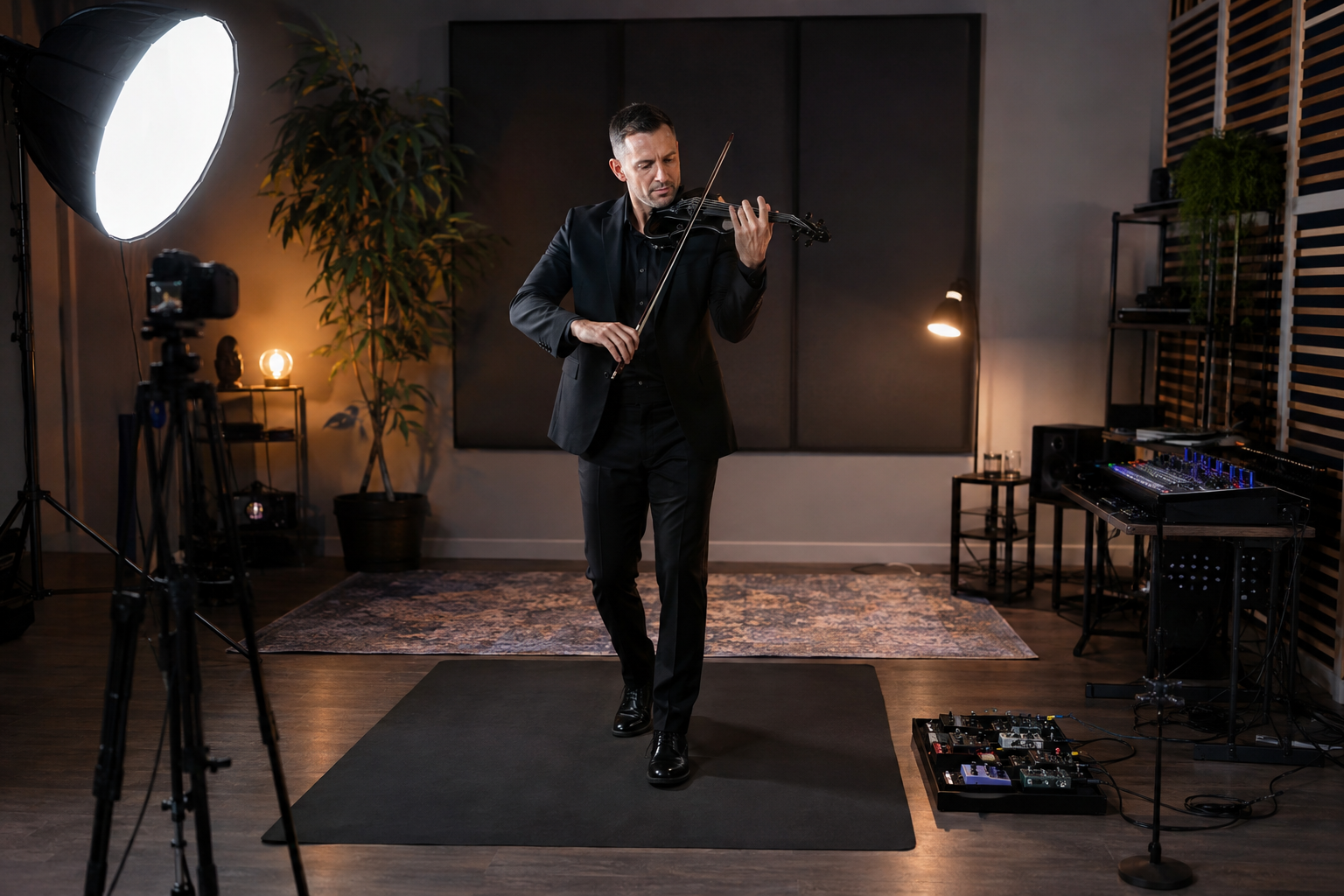
The Gorilla Grip is my best overall pick for indoor gigs. The manufacturer describes 3/4-inch foam with supportive rebound, and the black version is easy to integrate into a professional stage. I want enough give to reduce the harsh feeling of concrete or riser decking, but not so much that my ankles keep correcting for an unstable surface. As Tanya Strings, I also judge comfort gear on camera: a simple dark rectangle reads far better than a bright kitchen pattern beneath an electric violin performance.
Which anti-fatigue mats are worth buying?
| Mat | Best for | Performer advantage | Tradeoff | Buy |
|---|---|---|---|---|
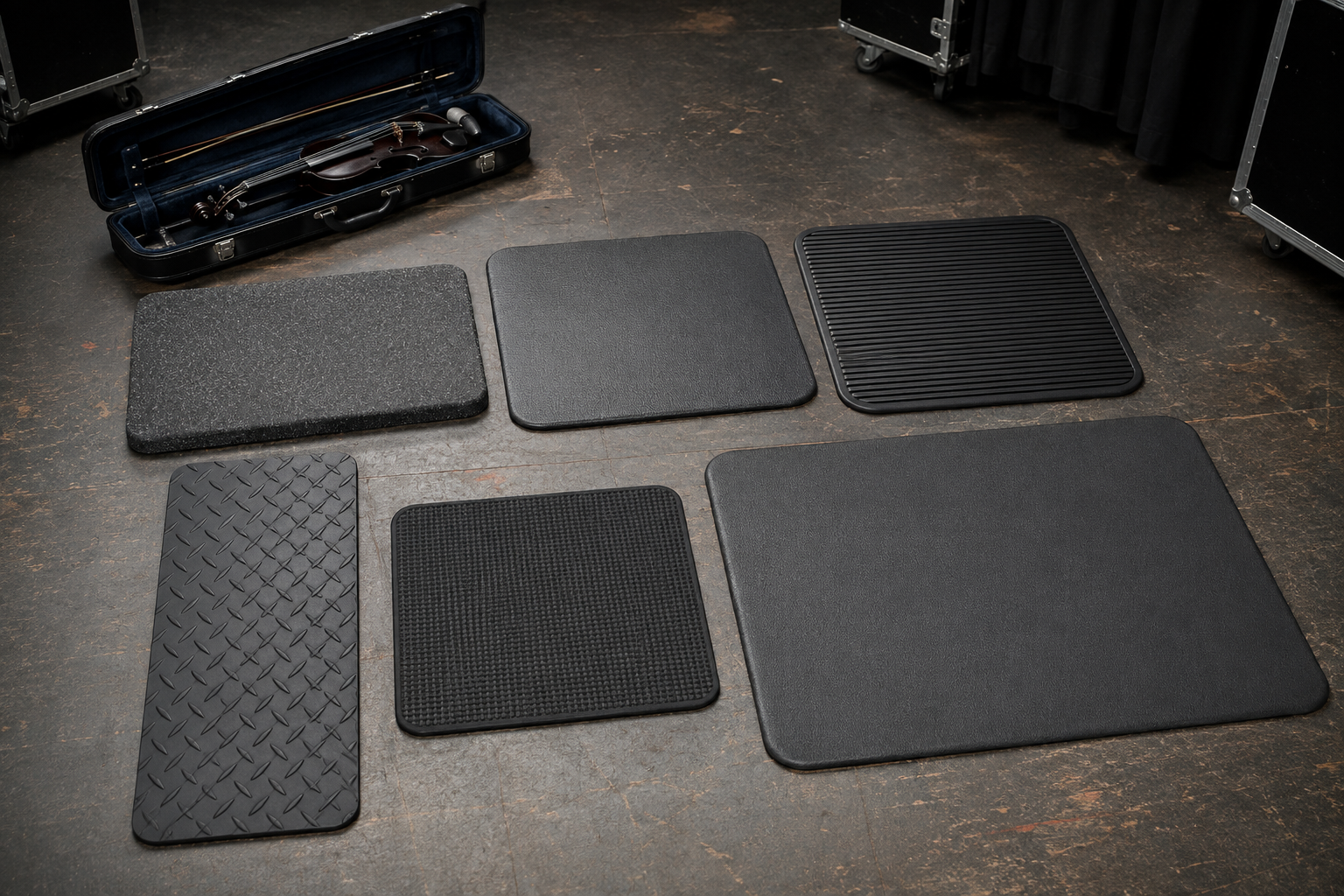
| Gorilla Grip Anti-Fatigue Mat | Best overall indoor choice | 3/4-inch foam, dark colors, many sizes | Foam is not my first choice for damp outdoor decks | Amazon |
| ComfiLife Anti-Fatigue Mat | Best compact value | Easy to pack for rehearsals and short stages | Smaller sizes limit lateral movement | Amazon |
| WellnessMats Original | Premium formal stages | One-piece polyurethane construction and beveled edges | Higher price and more weight | Amazon |
| FEATOL Anti-Fatigue Mat | Wide performance station | Room for stance changes during long sets | Larger footprint needs more stage planning | Amazon |
| Sky Solutions Anti-Fatigue Mat | Creator studio | Comfort for repeated standing takes | Check edge flatness before every shoot | Amazon |
| Rubber-Cal Diamond-Plate | Grip and hard-use stages | Low-profile textured TPE and weather resistance | Less cushioning than foam comfort mats | Amazon |
When should you choose Gorilla Grip or ComfiLife?
Choose Gorilla Grip when you need one dependable black mat for wedding venues, theaters, hotel ballrooms, and rehearsals. Choose ComfiLife when cost, compact dimensions, and easy transport matter more than maximum roaming space. In both cases, measure in your actual performance stance—not with your feet together—and include the sideways shift you use when moving from lyrical playing to a stronger crossover section.
What are the pros and cons?
- Gorilla Grip pros: substantial cushioning, broad size range, simple stage appearance. Cons: thicker foam creates a more noticeable boundary and needs dry, level flooring.
- ComfiLife pros: accessible price, compact footprint, easy creator-room placement. Cons: a small model can make active performance feel boxed in.
Is WellnessMats Original worth the premium?
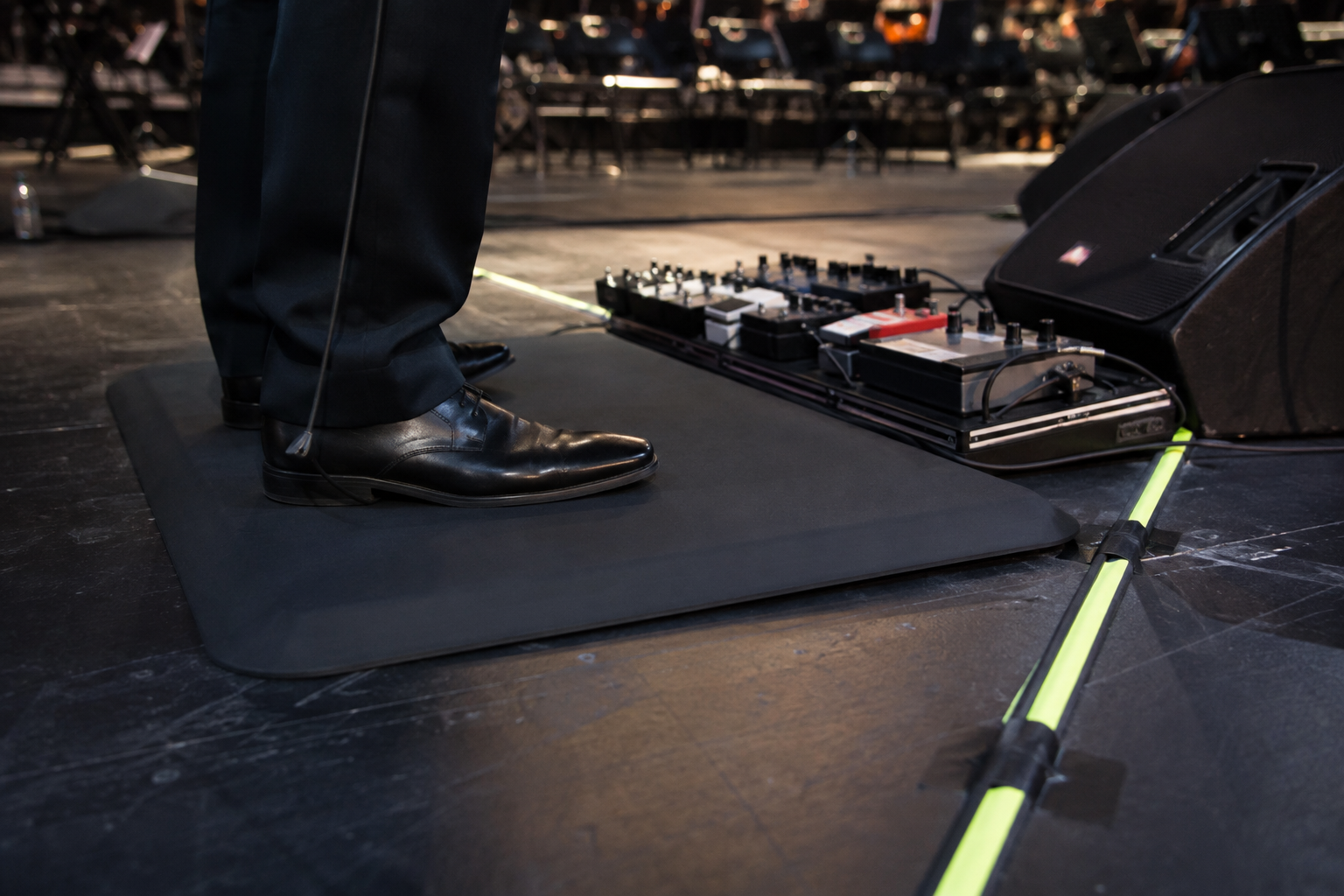
It can be for a polished residency, creator room, or frequently repeated corporate setup. WellnessMats lists one-piece polyurethane construction, non-slip surfaces, and beveled edges designed not to curl. Those details address the failure modes I care about more than decorative styling. The drawback is practical: a premium mat costs more, occupies case space, and still needs inspection. No warranty replaces a pre-show hand check around every edge.
What are the premium-mat tradeoffs?
The strongest advantages are a refined surface, supportive consistency, and a construction intended to resist delamination. The disadvantages are price and transport weight. If the venue supplies safe sprung flooring, carrying a premium mat may add more logistics than comfort; on concrete event floors, the calculation changes quickly.
When does a wide FEATOL mat make more sense?
A wider FEATOL model suits a performer who changes stance, turns toward multiple audience zones, or works between violin, microphone, and loop controls. More floor area can feel natural, but it must not invade another musician’s route or conceal a cable crossing. Mark the exact footprint on the stage plot. A mat is personal performance equipment, not permission to expand into an emergency lane.
Should outdoor electric violinists choose textured rubber?
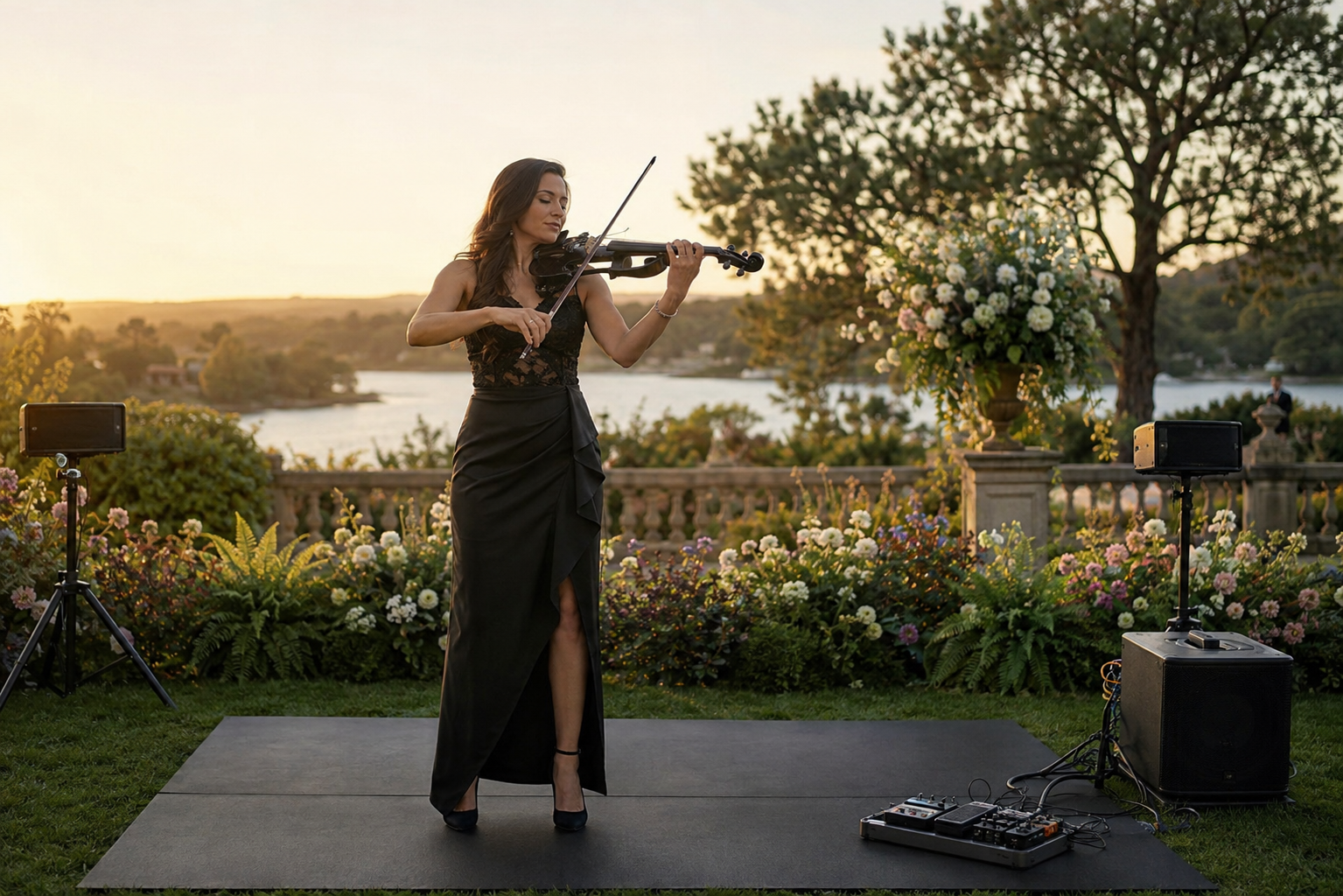
For dry but hard-use stages, Rubber-Cal Diamond-Plate is the more production-minded option. The current TPE version is 3.5 mm thick, textured for surface grip, and described as weather resistant. It will not feel as plush as a 3/4-inch foam mat, but it is easier to justify when traction, cleanup, and a low edge are the priorities. Never use a mat to hide water, a broken deck, or a cable hazard; fix the stage condition first.
What are the rubber-mat pros and cons?
Pros: low profile, durable texture, straightforward cleaning, and better suitability for hard-use environments. Cons: less fatigue relief, more industrial appearance, and rolls that may need time or safe edge treatment to lie fully flat.
What should an electric violin performer check before buying?
- Support: favor firm rebound over a surface that lets the heels sink deeply.
- Dimensions: test your widest natural stance plus one deliberate stance change.
- Edges: choose bevels, inspect for curling, and never improvise loose tape over foam.
- Pedal access: place switches beyond the front edge and rehearse in show shoes.
- Surface grip: test both the top under shoes and the underside on the venue floor.
- Transport: confirm the mat fits the cart, vehicle, and load-in plan without being sharply folded.
- Appearance: black or charcoal normally disappears best on stage and camera.
Which stage-mat mistakes should you avoid?
Do not buy purely by thickness: softness can become instability. Do not place a pedalboard half on and half off a compressible edge. Do not run power or instrument cables under a thick mat, where a hidden ridge can form. Do not assume “non-slip” means safe on every dusty, polished, painted, or damp floor. Finally, do not debut the mat at the gig. Run a full recorded rehearsal with the same shoes, pedalboard, bowing movement, and stage turns.
FAQ
What is the best anti-fatigue mat for most electric violinists?
Gorilla Grip in black is my balanced indoor choice for cushioning, size options, beveled edges, and subdued presentation.
Can an anti-fatigue mat interfere with a pedalboard?
Yes. Keep the pedalboard beyond the front edge and rehearse every switch in performance shoes.
Should a stage mat be soft or firm?
Supportive and moderately firm is safer for stable stance changes than an excessively soft surface.
Can a foam comfort mat be used outdoors?
Only where the surface is dry, level, covered, and compatible with the maker’s instructions; textured rubber is usually the more practical outdoor choice.