News · 2026-09-07
Violin News Roundup: Enescu Selects 12, James Ehnes Marks 50, and Ljubljana Films Its Finale
As of Monday, September 7, 2026, the violin calendar is moving from announcements to visible career moments. The George Enescu International Competition has named the 12 players advancing to its free, livestreamed second round. On September 8, James Ehnes begins a 50th-birthday recital tour in Vancouver with a new Canadian work, Lana Trotovšek closes the Ljubljana Festival in a concert filmed for Mezzo and medici.tv, and Josef Špaček appears with the Tonhalle-Orchester Zürich at Dvořák Prague. The shared lesson is clear: world-class performance gains reach when artistic stakes, public access, and media planning arrive together.
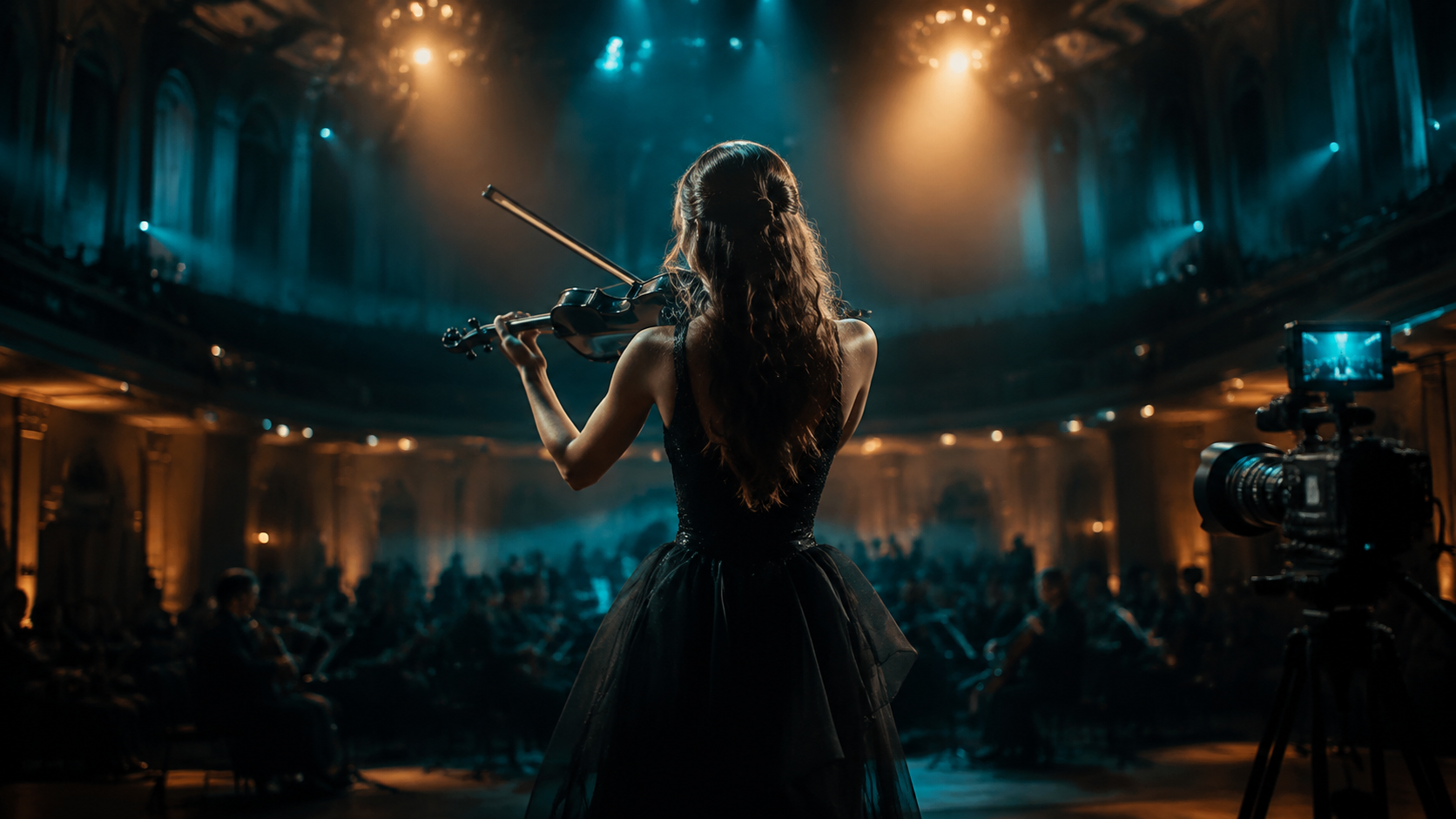
Who advanced at the Enescu violin competition?
The George Enescu International Competition has published the 12 violinists selected after the September 4–6 first round: Masaki Morishita, Jieon Park, Tiantian Lu, Eun Che Kim, Francesco Papa, Jayden King, I-Hao Cheng, Yumiko Yumiba, Andrej Roszyk, Mariam Abouzahra, Iohan Coman, and Seunghyun Kang. Round two runs September 8–9 at the National University of Music Bucharest. Admission is free, and the competition says every stage is streamed live on its website. That is meaningful career infrastructure: young artists receive jury scrutiny, a real room, and an international digital audience at the same time.
Tanya’s performer take: a livestreamed round is already a public performance, not merely an examination. Players have to project a musical identity that survives close microphones, cameras, and the stop-start pressure of competition scheduling.
How is James Ehnes turning a birthday into a creative statement?
The Vancouver Symphony Orchestra presents Ehnes with pianist Andrew Armstrong at the Chan Centre on September 8. The program places Sinding songs, Brahms’s Third Sonata, and Bartók’s First Rhapsody around a new work by Canadian composer Carmen Braden. A midday masterclass extends the event beyond the evening recital. The smart part is the framing: a milestone birthday becomes a platform for living repertoire, collaboration, and public artistic exchange rather than a backward-looking greatest-hits package.
Tanya’s performer take: anniversary programming works when it reveals the artist’s next chapter. A premiere beside core repertoire tells presenters and listeners that experience can sharpen curiosity instead of replacing it.
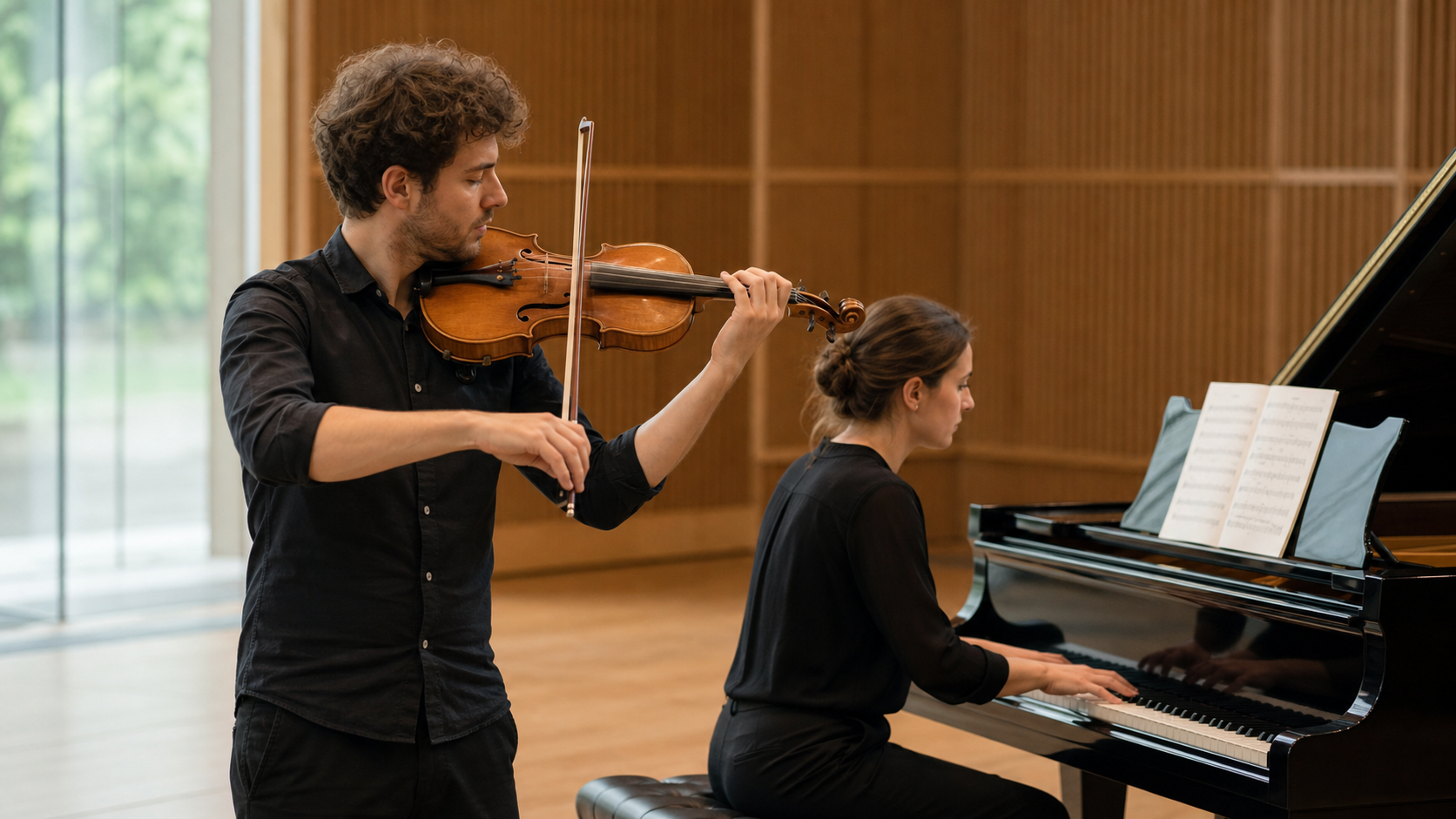
Why does Ljubljana’s filmed finale matter for violin visibility?
At the Ljubljana Festival on September 8, Slovenian violinist Lana Trotovšek plays Bruch’s First Violin Concerto with the Baltic Sea Philharmonic and conductor Robert Treviño. Rautavaara’s Cantus Arcticus and Sibelius’s Fifth Symphony complete the northern arc. The orchestra is known for performing most projects largely from memory, and the festival confirms that this grand finale will be filmed for Mezzo and medici.tv. Those details transform a concert into a visual proposition: memorized ensemble playing creates physical energy, while broadcast partners carry the national soloist and festival identity far beyond Cankarjev dom.
Tanya’s performer take: filmed concerts reward intention in every gesture. Soloists should rehearse entrances, stillness, communication with the conductor, and the seconds after a final note as carefully as the difficult passages.
What makes Josef Špaček’s Prague appearance a useful festival model?
The Dvořák Prague Festival lists Špaček with Paavo Järvi and the Tonhalle-Orchester Zürich at the Rudolfinum on September 8, in a program pairing Shostakovich and Beethoven. For a Czech violinist with an international profile, appearing at home with a major visiting orchestra creates a productive double signal: local recognition and global context. It also gives the festival a clear artistic ambassador without narrowing the program to national repertoire alone. Event planners can borrow that logic—connect a recognizable artist to place, then give the collaboration enough scale to travel in press, clips, and audience memory.
Tanya’s performer take: home-stage appearances are strongest when they feel like artistic meetings, not ceremonial bookings. The orchestra, conductor, repertoire, and room should all add a new sentence to the artist’s story.
What should performers and event planners carry forward?
- Treat every streamed competition round as a finished public performance.
- Use milestones to commission and introduce new work.
- Plan camera-aware movement without making the performance feel staged for video.
- Build festival identity through artist-place relationships that audiences can remember.