News · 2026-09-08
Violin News Roundup: ARD Streams the Quartets, Charlottesville Opens, and Mozart Returns in Full
As of Tuesday, September 8, 2026, string news is emphasizing access, concentrated festival design, and the long life of recorded partnerships. The ARD International Music Competition is streaming today’s second-round string quartets free from Munich. Charlottesville Chamber Music Festival opens a 12-day season built around unusual arrangements and close audience contact, while York prepares a three-day weekend spanning solo playing through quintets. On September 11, Hyperion releases Alina Ibragimova and Cédric Tiberghien’s complete Mozart violin-sonata cycle as one collection. For Tanya Strings, a world-class electric violin performer and content creator, the thread is practical: make ambitious playing easy to discover and worth returning to.
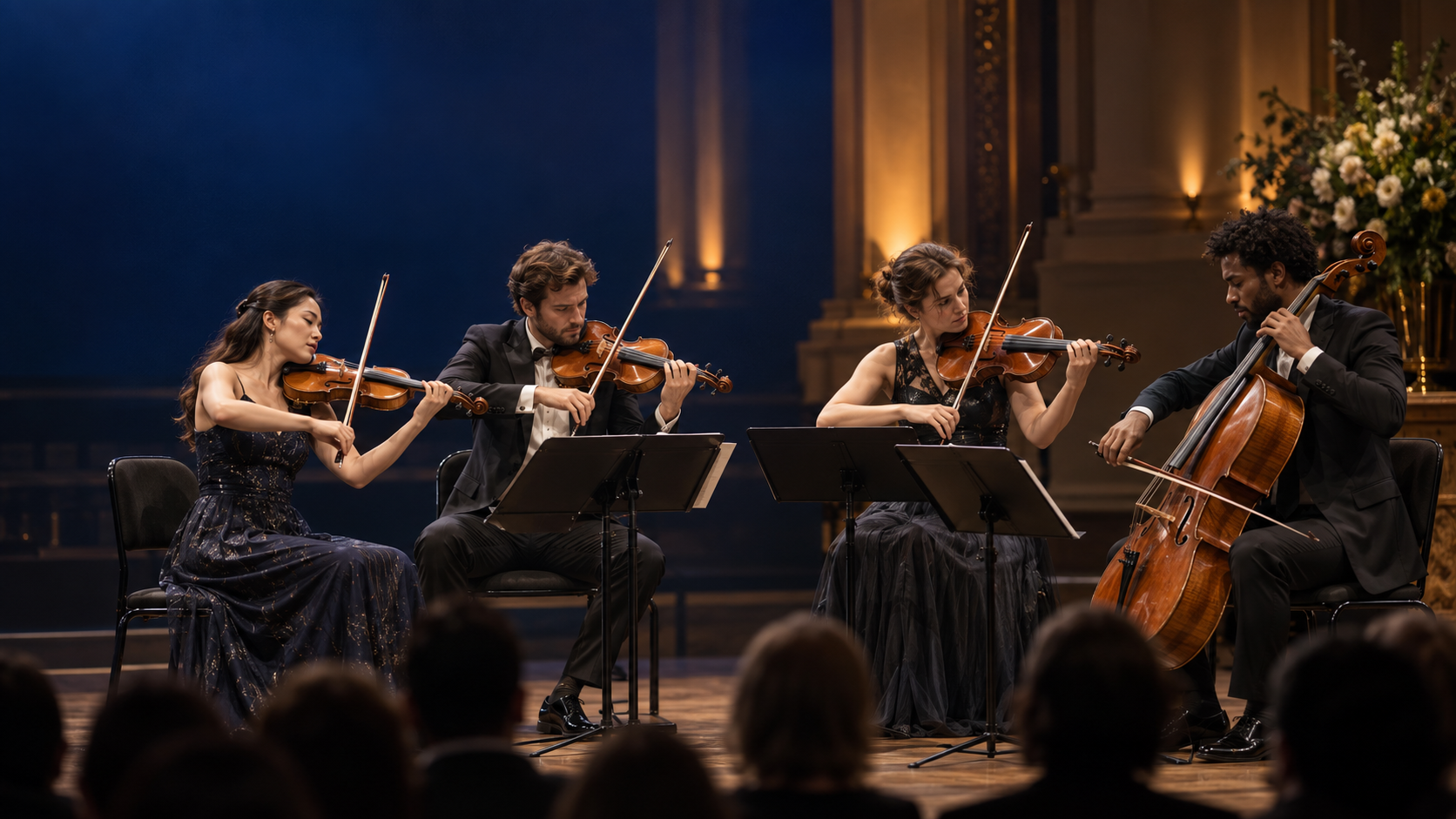
Why is today’s ARD quartet round worth watching?
The ARD International Music Competition lists eight quartets across two September 8 sessions at Munich’s Amerikahaus: Absalon, Viatores and Katarina in the morning, then Motus and Ast in the afternoon, following three ensembles heard on September 7. Admission is free and both sessions have live video. Semifinals move to the Prinzregententheater on September 10. That progression lets audiences hear how ensemble identity survives a change in room, pressure and repertoire rather than encountering only polished prize-night clips.
Tanya’s performer take: quartet livestreams expose collective craft: breathing, bow placement, cue size and recovery after risk. Electric ensembles can learn just as much here as acoustic groups—tight visual communication remains the best backup system on any stage.
What makes Charlottesville’s opening feel current?
The Charlottesville Chamber Music Festival opens September 8 at the Paramount Theater with Ruth Crawford Seeger, Beethoven’s Seventh Symphony in Hummel’s chamber arrangement, and Schubert’s Second Piano Trio. On September 9, Brooklyn Rider joins a vineyard program that places Colin Jacobsen beside Beethoven’s Pastoral in an arrangement for flute and strings. The festival runs through September 19 and combines formal halls, outdoor-context venues, talks and a free community concert. It treats setting and arrangement as editorial tools, not decoration.
Tanya’s performer take: changing scale can refresh familiar music. For event planners, an arrangement is strongest when the venue explains why it exists; for performers, a reduced ensemble demands sharper color and rhythmic ownership.
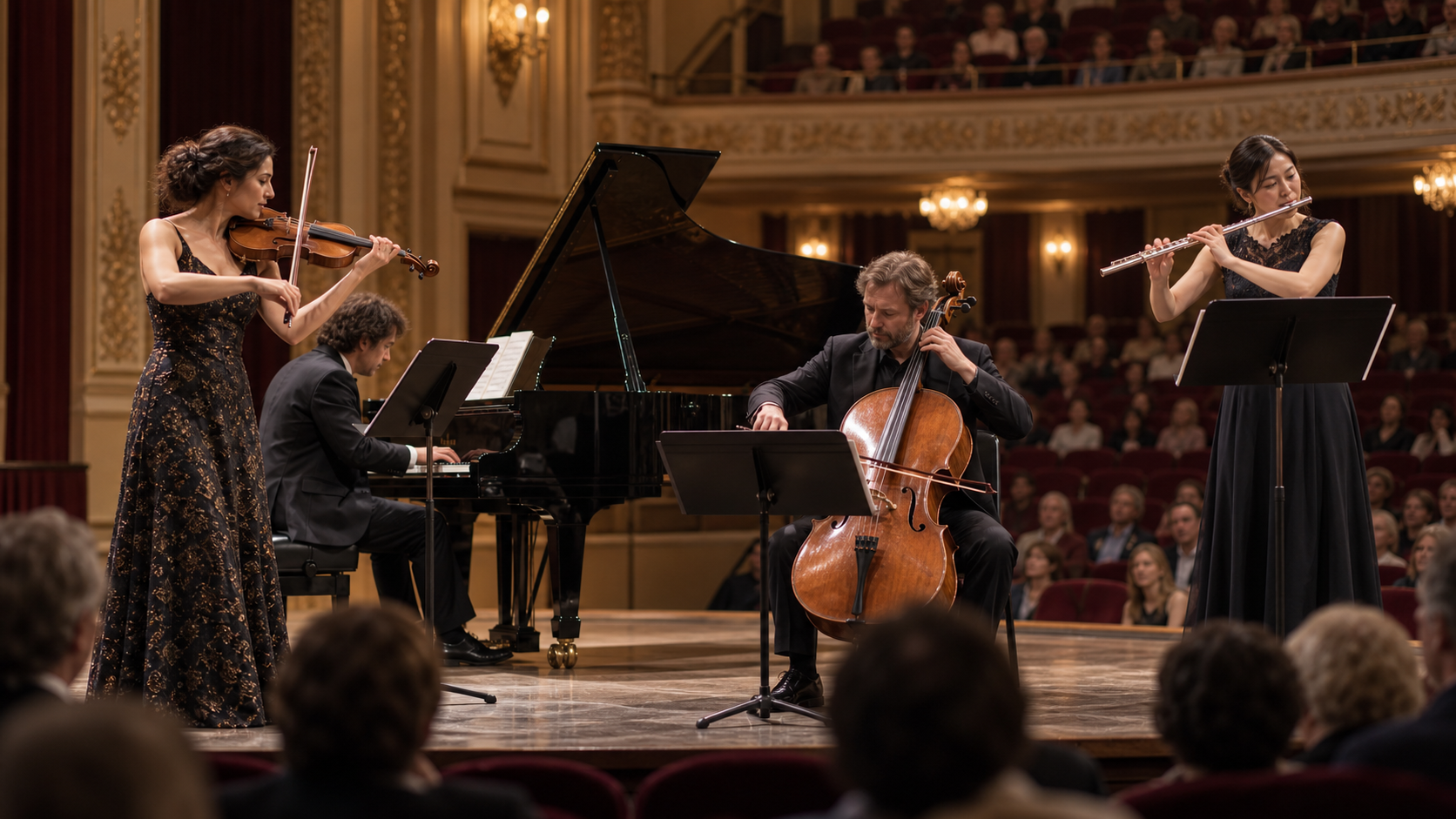
How does York build a useful three-day festival?
The York Chamber Music Festival runs September 11–13 with a deliberately compact promise: solo, duo, trio, quartet and quintet. Its Mendelssohn-and-Brahms focus includes both composers’ string quintets, Mendelssohn’s D-minor Piano Trio, a solo-cello lunchtime recital by Adrian Brendel, and violinist/artistic director Tim Lowe with pianist Katya Apekisheva. The concentrated format gives listeners a recognizable repertoire spine while changing the social geometry onstage from event to event.
Tanya’s performer take: short festivals need contrast more than volume. A clear theme plus changing ensemble sizes creates stronger memories—and more distinct material for trailers, reels and post-concert content.
Why collect the complete Mozart sonatas now?
Hyperion will issue Alina Ibragimova and Cédric Tiberghien’s complete Mozart violin sonatas on September 11 as a ten-CD set lasting more than nine hours. The recordings were made between 2014 and 2016, so this is not a new session but a new way to encounter an established collaboration. In a playlist culture built around single tracks, the set argues for continuity: listeners can follow changing balance, maturity and invention across Mozart’s full violin-and-piano landscape.
Tanya’s performer take: archives become new content when the framing gives audiences a route through them. Performers should preserve clean masters, session notes and visual assets; today’s project may become tomorrow’s definitive collection.
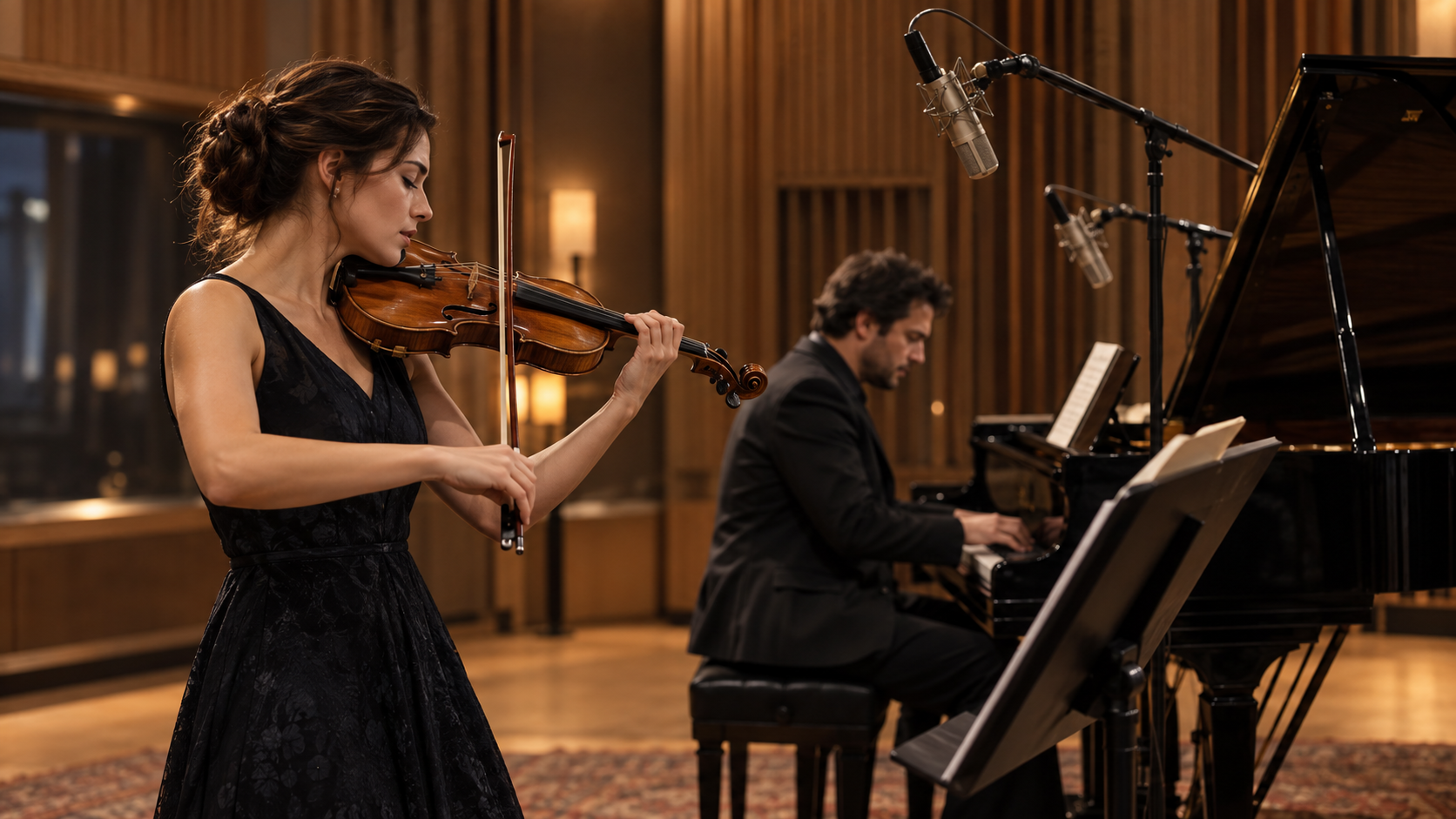
What should performers and presenters take forward?
- Pair free in-room access with a reliable livestream when discovery matters.
- Use venue and arrangement choices to tell one coherent festival story.
- Build compact programs around contrast in ensemble scale.
- Archive performances so strong collaborations can be rediscovered in new formats.