Effects & Stage Tone · 2026-09-09
Best Tremolo Pedals for Electric Violinists: Stage Pulse, Tap Tempo, and Stereo
Choose the BOSS TR-2 for straightforward electric violin tremolo, the JHS Kodiak when you need to tap the pulse between songs, or the Strymon Flint V2 when a programmed show needs MIDI clock synchronization. The MXR M305 covers several tremolo characters in one small pedal, while the Nano Pulsar and Super Pulsar suit stereo experiments at different levels of complexity. Start with the control your performance actually needs: a steady texture, a manually matched rhythm, or a clocked arrangement. Then check mono compatibility, output level, pickup buffering, and the space your feet need around the switches.
Some links in this article are affiliate links. I may earn a commission if you make a purchase, at no extra cost to you.
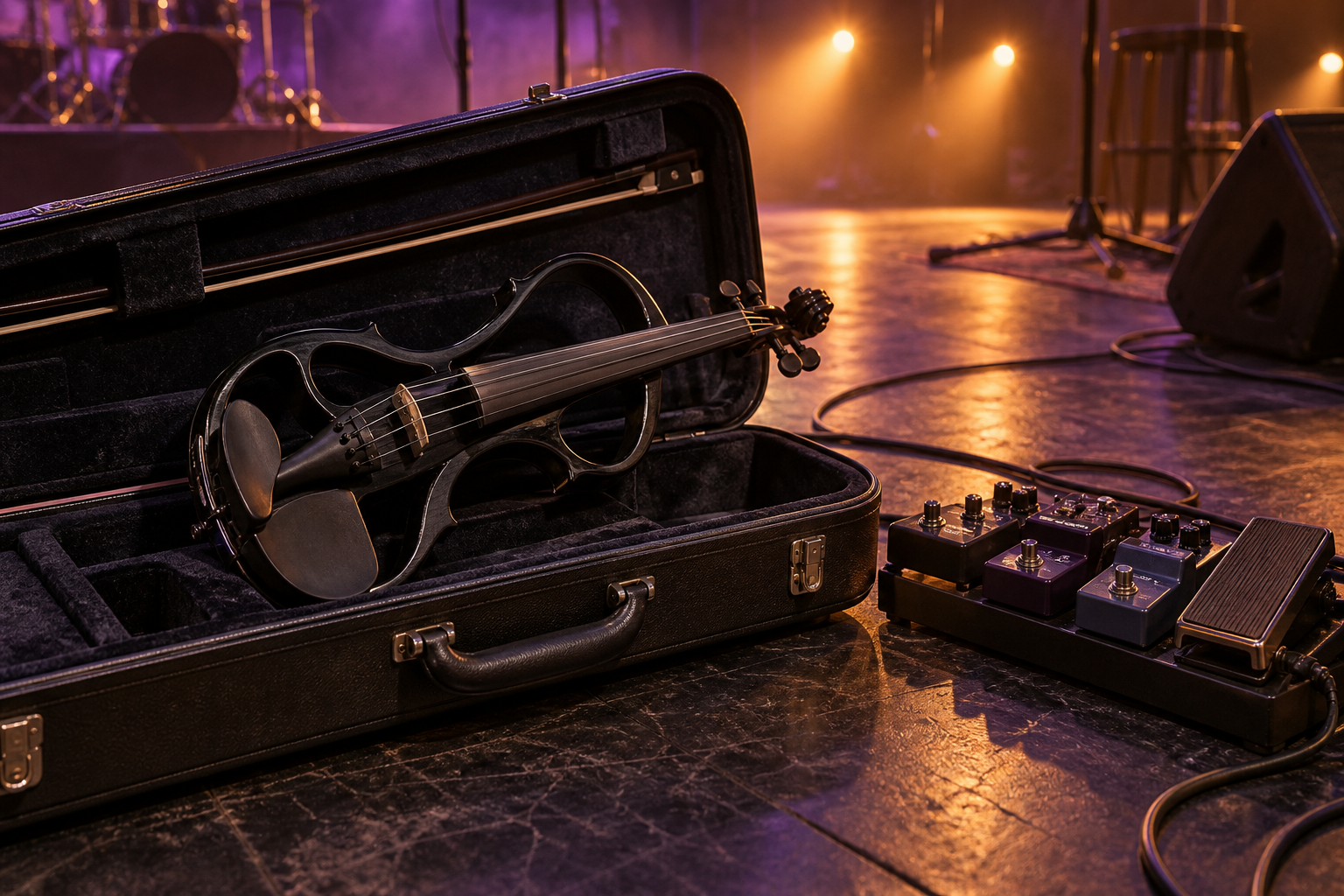
How does Tanya Strings choose a tremolo pedal for a show?
Tanya Strings brings a world-class electric violin performer and content creator perspective to this buying guide: the effect should serve the phrasing, stage movement, and finished recording. For a featured melody, favor a pulse that leaves enough of each note audible. For a rhythmic hook, prioritize repeatable timing and a clean way to leave the effect before the next section. These are editorial recommendations based on manufacturer documentation and performance requirements, not claims of hands-on testing or product endorsement.
What does a tremolo pedal change on electric violin?
Conventional pedal tremolo raises and lowers volume repeatedly. It does not reproduce the repeated bow strokes of orchestral tremolo, and it does not replace left-hand vibrato. Harmonic tremolo alternates emphasis between frequency bands for a different sense of movement. A sustained electric violin note makes the pulse easy to hear, but a very deep setting can hide note starts when the bow attack lands in a quiet part of the cycle.
Which tremolo pedal fits your stage workflow?
| Pedal | Best use | Useful feature | Tradeoff | Shop |
|---|---|---|---|---|
| BOSS TR-2 | Simple mono pulses | Rate, depth, variable wave | No tap tempo or level knob | Amazon |
| MXR M305 Tremolo | Several tremolo characters | Six modes; advanced control | Extra setup for stereo and tap | Amazon |
| Electro-Harmonix Nano Pulsar | Compact stereo panning | Stereo outputs; volume control | No tap tempo | Amazon |
| JHS Kodiak | Tempo changes on stage | Onboard tap and subdivisions | Mono; no MIDI clock workflow | Amazon |
| Strymon Flint V2 | Programmed backing-track sets | MIDI clock; tremolo and reverb | More setup and accessory cost | Amazon |
| Electro-Harmonix Super Pulsar | Rhythmic stereo arrangements | Patterns, presets, onboard tap | Large pedalboard footprint | Amazon |
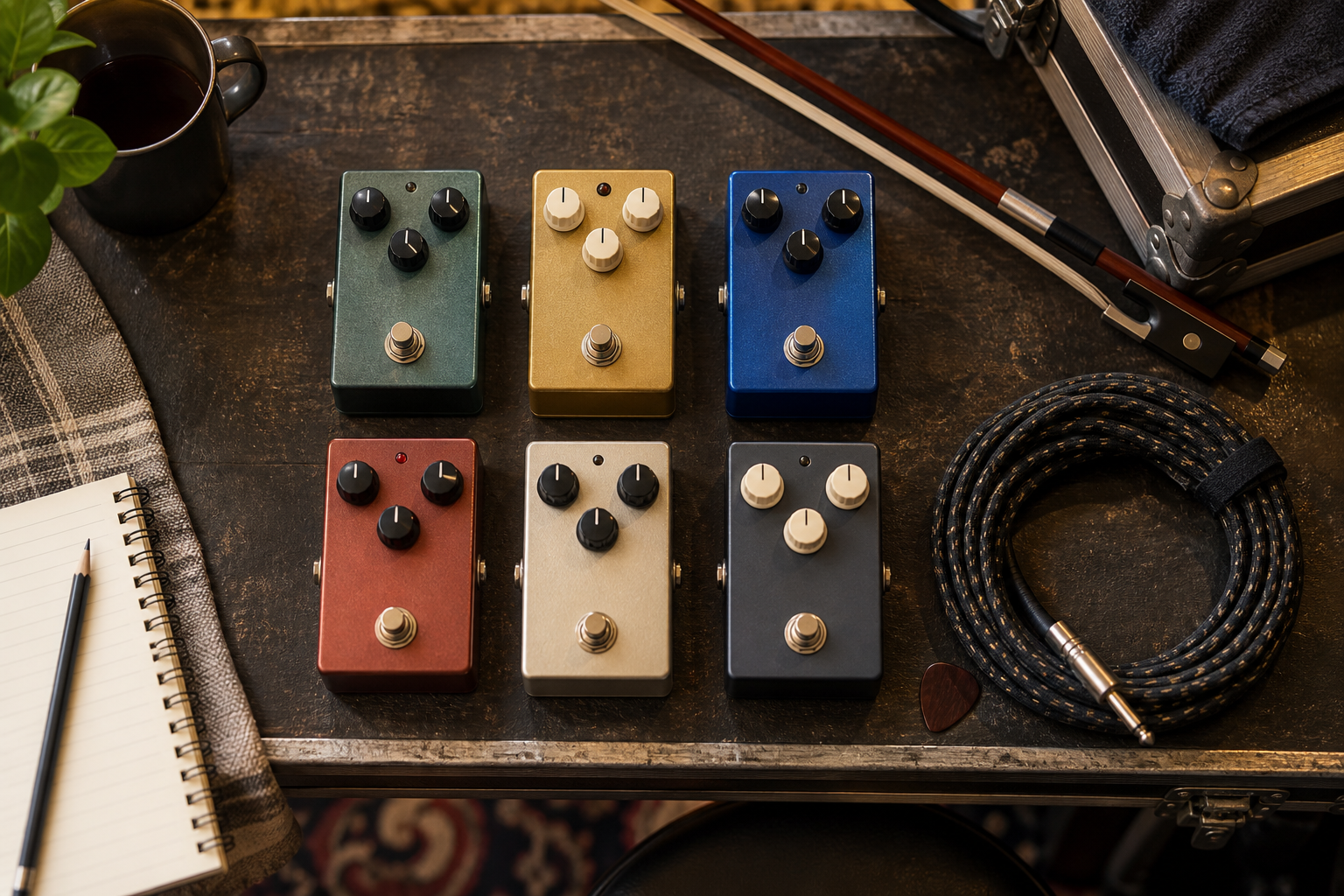
When should you choose BOSS TR-2?
The TR-2 offers a direct way to shape a sustained violin line with three knobs and a waveform that moves from triangle to square. Choose it for ballad textures when exact track synchronization is unnecessary. Its mono layout suits a single DI feed. Start with shallow depth so the melody stays audible throughout the pulse. Manufacturer details.
What are the pros and cons of BOSS TR-2?
- Pros: Fast adjustments; straightforward mono setup.
- Cons: No onboard tempo tapping or dedicated output-level control.
When should you choose MXR M305 Tremolo?
The M305 puts six tremolo voices, including harmonic and square-wave styles, in a compact enclosure. Gain control helps balance the engaged sound. It suits a performer exploring several textures without adding multiple pedals. Stereo, tap and expression features need the manual and appropriate connections; budget for those accessories. Power requires 9V at 180mA, with no battery operation. Manufacturer details.
What are the pros and cons of MXR M305 Tremolo?
- Pros: Broad palette without a large enclosure.
- Cons: Advanced routing is less immediate than dedicated switches.
When should you choose Electro-Harmonix Nano Pulsar?
The Nano Pulsar accepts mono audio and offers two outputs for tremolo and panning. Its volume knob is useful when a deep pulse makes the violin seem quieter. Choose it for creative stereo recordings or a PA with two confirmed channels. Depth beyond roughly one o’clock enters unusual modulation, so audition that range deliberately before using it in a melodic solo. Manufacturer details.
What are the pros and cons of Electro-Harmonix Nano Pulsar?
- Pros: Output-level adjustment and stereo possibilities.
- Cons: Manual rate setting; extreme depth can obscure phrasing.
When should you choose JHS Kodiak?
Kodiak is the practical shortlist leader for manually matching a pulse to a live band. A separate tap switch and rhythmic subdivisions reduce bending over during transitions. Four wave choices, Mix and Volume let you decide how strongly the pulse interrupts the line. Treat tapping as a performance control: it does not continuously follow a backing-track clock. Manufacturer details.
What are the pros and cons of JHS Kodiak?
- Pros: Accessible tempo changes and output balancing.
- Cons: Needs rehearsal of foot movements; no stereo image.

When should you choose Strymon Flint V2?
Flint V2 makes sense when a show already uses MIDI: its tremolo can follow MIDI clock and recall presets alongside reverb settings. Stereo routing supports a wider production rig. Verify the V2 generation when buying; do not assume an older Flint has the same control options. Its two main footswitches switch the effects, so plan external control for tapping. Manufacturer details.
What are the pros and cons of Strymon Flint V2?
- Pros: Song-level automation and two effects in one unit.
- Cons: More configuration than a basic pulse pedal.
When should you choose Electro-Harmonix Super Pulsar?
Super Pulsar is the specialist choice for arranging an electric violin part around rhythmic patterns. It offers stereo routing, onboard tap, editable patterns and eight stored presets. Buy it when those controls will be part of the arrangement, rather than an occasional decoration. Its wider enclosure needs a measured space on the board and clear access around the switches. Manufacturer details.
What are the pros and cons of Electro-Harmonix Super Pulsar?
- Pros: Deep rhythmic control for composed effect parts.
- Cons: More space and preparation than occasional tremolo needs.
What should you check before buying a tremolo pedal?
Do you need tap tempo or continuous clock sync?
A rate knob works for free-running atmosphere. Tap tempo helps match a drummer or a new song, but human taps can drift against a fixed track. For a tightly programmed pulse, choose a documented clock-sync option and test the exact clock source, transport behavior, and song transitions. A tap jack alone does not mean MIDI support.
Will the pickup and output levels suit the pedal?
A passive piezo violin may need a suitable high-impedance preamp before the effects chain. Use the pickup maker’s loading recommendation. An active violin or wireless receiver can send a hotter signal than a pedal expects, so check the loudest double stops at soundcheck and reduce the feeding level if they distort. A tremolo pedal is not a substitute for a balanced DI output.
Does stereo help the audience or only the headphones?
Buy stereo capability when the engineer can provide the required channels and routing. A panning effect may change substantially when summed to mono; test the sum and each side separately. For a one-channel wedding PA, use the manufacturer’s mono connection and judge the result there before buying extra cables.
What is the real cost beyond the pedal?
Include the correct power supply, required current capacity, tap or expression accessories, stereo adapters, and space for plugs. Check the exact model and generation in the listing, seller, returns, and delivery destination. Amazon links here open product searches, not guaranteed stock or a fixed price; compare the final delivered cost before ordering.

Where should tremolo go in the violin signal chain?
A useful starting point is violin → suitable buffer or preamp → drive → tremolo → delay/reverb → DI or the appropriate PA input. Reverb after tremolo can soften the gaps; tremolo after reverb chops the ambience as well. Try both at performance volume. If a compressor follows tremolo, it may change the apparent depth. Keep the dry level and the effect peaks controlled rather than compensating with a large boost.
How should you prepare a tremolo part before showtime?
- Use the actual backing track and choose a pulse that supports its subdivision. At 120 BPM, a quarter-note pulse is 2 Hz and an eighth-note pulse is 4 Hz; a pedal may express these through a subdivision control.
- Start with a rounded waveform and modest depth. Play sustained notes, short attacks, low strings, and double stops; listen for melody loss or unwanted clipping.
- Compare bypassed and engaged levels in the full arrangement. Recheck after changing depth; average loudness can change even when peak level does not.
- Rehearse entry and exit cues while holding the violin. Record a short performance take, listen in mono, and keep a bypassed version ready if the effect conflicts with the room.
FAQ
Can a guitar tremolo pedal work with electric violin?
Usually, if pickup loading, signal level, and power requirements are compatible. A passive piezo may need a suitable preamp before the pedal.
Is tremolo the same as violin vibrato?
No. Conventional pedal tremolo changes volume; left-hand vibrato changes pitch. Harmonic tremolo changes the balance of frequency bands.
Which choice is simplest for a mono setup?
The BOSS TR-2 is the straightforward choice in this shortlist when rate, depth, and waveform control are enough and tap tempo is unnecessary.
Does tap tempo keep a pedal locked to backing tracks?
No. It sets a rate from your taps; it does not continuously follow the track clock. Use documented clock synchronization for arrangements that require it.
Should tremolo go before or after reverb?
Before reverb gives the pulse an ambient tail. After reverb also modulates the tail. Choose by listening to the entire arrangement.