News · 2026-09-09
Violin News: Midori’s Spring Cadenzas, Prometheus in Light, and Nathan’s New Concerto
Wednesday, September 9, 2026 brings three useful stories about how new music reaches an audience. Midori’s recent recording of Derek Bermel’s Spring Cadenzas is receiving fresh September coverage. Kansas City Symphony presents Prometheus tonight, joining orchestral sound with film and theatrical lighting. Looking ahead, Yevgeny Kutik will premiere Eric Nathan’s new violin concerto in Rhode Island on September 19. These are a recent release, a scheduled event and an upcoming premiere, respectively. For Tanya Strings, a world-class electric violin performer and content creator, their shared value is clear: musical identity grows through thoughtful collaboration, a convincing presentation and a plan beyond opening night.
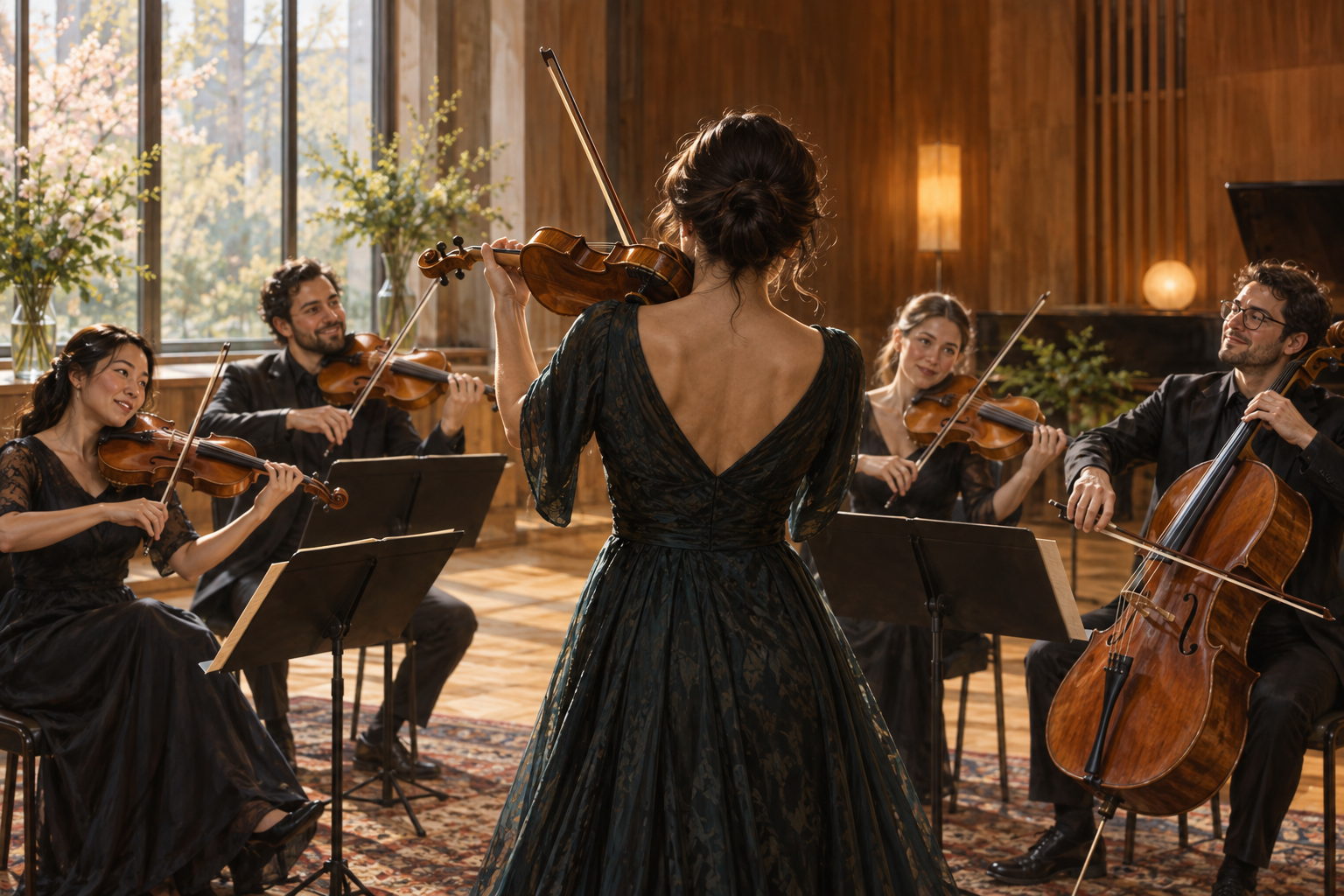
Why is Midori’s Spring Cadenzas back in the news?
WFMT’s September 8 spotlight draws attention to Bermel’s concerto with Midori, A Far Cry and Project STEP musicians under Earl Lee. Its connected cadenzas make the solo violin the thread through three continuous movements inspired by Bashō’s haiku. This is a listening recommendation from the broadcaster, rather than an announcement of a September recording session.
Midori’s official announcement dates the Orchid Classics release to August 28. The commission began in 2020 with remote ensemble playing in mind; the music later received fuller orchestration. That background gives listeners a concrete question: how does a piece built around separation become a shared performance?
Tanya’s performer take: a commission becomes more interesting when the audience understands the problem it answers. For an electric violin creator, a short introduction can explain one artistic choice before the first note. Let the performance demonstrate the result; a long technical explanation can wait for a separate behind-the-scenes clip.
What does tonight’s Prometheus offer live performers?
The Kansas City Symphony’s September 9 event page lists an 8 p.m. program led by Matthias Pintscher, with production design by Luke Kritzeck. Berio’s solo-trombone Sequenza V leads into Varèse’s Déserts, accompanied by Bill Viola’s film, and Scriabin’s Prometheus with pianist George Li. Light and color are part of the production’s musical conception. This is an orchestral event, with a clear connection to the visual planning behind amplified string shows.
Tanya’s performer take: lighting earns its place when it helps the audience hear structure. An electric violin entrance, a sustained phrase and a rhythmic drop need different visual treatment. Event planners should schedule a cue rehearsal alongside soundcheck so the operator and performer share the same musical landmarks.

Why follow Eric Nathan’s concerto before its premiere?
The Rhode Island Philharmonic announcement confirms September 19 for the world premiere with Yevgeny Kutik and conductor Ruth Reinhardt. It also begins Nathan’s three-year appointment as the orchestra’s composer in residence. The work is titled The Mountains We Climb; today’s roundup previews the engagement and makes no claim about how it has sounded in performance.
On Nathan’s own work page, the approximately 29-minute concerto is connected to a consortium of eight orchestras and three violinists: Kutik, Stefan Jackiw and Curtis Stewart. A chamber-orchestra version is planned for 2027. Multiple performers and orchestral scales give the piece several routes into concert life.
Tanya’s performer take: the strongest new projects have a second destination. For a crossover commission, that might mean a concert arrangement, a compact live version and a recording made with clear permissions. Plan those possibilities early, while the composer, performers and production team can still shape them together.
What can you take into your next performance?
These stories suggest three practical checks for a new set. None requires copying a symphony production or commissioning a concerto at the same scale. The useful decisions concern what audiences understand, how collaborators communicate and what survives after the show.
- Explain the musical reason: give listeners one memorable sentence about a new work or arrangement.
- Rehearse the visual timing: mark lighting changes against audible phrases, with clear fallback cues.
- Design the next use: agree how a performance can become a smaller show, a clean recording or a short film.
For music fans, the next steps are equally direct: explore Midori’s release, consult Kansas City’s official event information, and mark the Rhode Island premiere date. The linked pages provide the release and scheduling details; the performer observations here are Tanya Strings’ editorial perspective.