Tanya Strings · 14.09.2026
Best Wah Pedals for Electric Violinists: Expressive Sweeps and Stage Control
For electric violin, shortlist the Cry Baby Mini CBM95 when pedalboard space matters, the 535Q when you need adjustable sweep and resonance, and the Morley 20/20 Bad Horsie when automatic engagement suits your stage movement. The right wah should make sustained notes speak without turning the upper strings painfully sharp. Choose by foot feel, switching, and how the filter behaves through your actual pickup and PA. This guide compares six dedicated wah pedals for performers and content creators, with practical tradeoffs for live solos, rhythmic passages, and recorded hooks. Manufacturer features inform the shortlist; these are buying judgments, not claims of comparative hands-on testing.
Some links in this article are affiliate links. I may earn a commission if you make a purchase, at no extra cost to you.
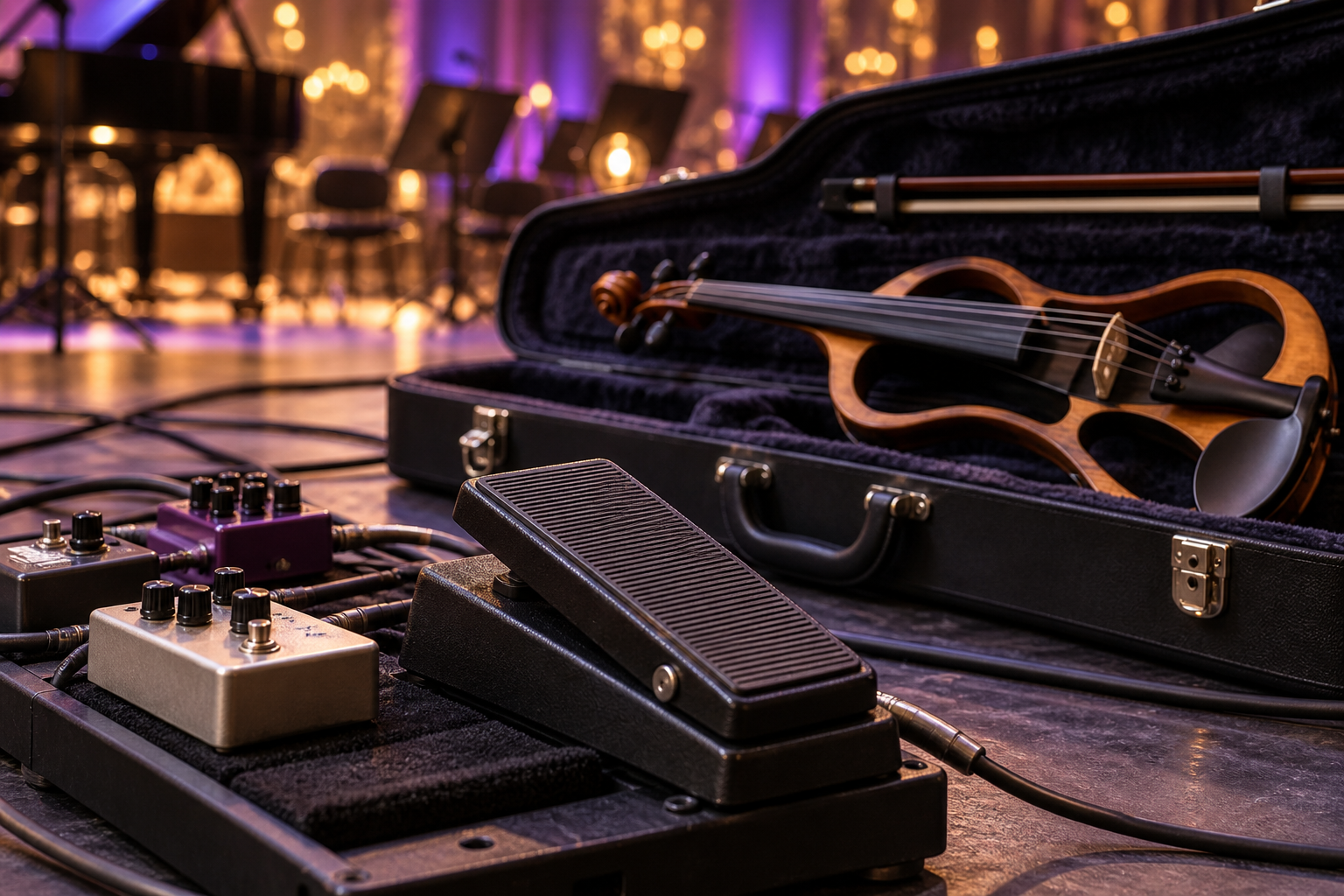
What matters for a Tanya Strings stage performance?
Tanya Strings is a world-class electric violin performer and content creator. The buying perspective here starts with the show: clear bow articulation, expressive phrasing, and confident movement in front of an audience. A dramatic filter sweep earns its place when it supports a musical hook. For filmed performances, a controlled phrase with a clean return to the main tone is more useful than constant pedal movement. Prioritize a treadle you can operate comfortably while maintaining the instrument and bow position.
Which wah pedal fits your electric violin rig?
| Pedal / Amazon search | Best fit | Useful feature | Main compromise |
|---|---|---|---|
| Dunlop Cry Baby Mini CBM95 | Small travel board | Three internal voicings; true bypass | Short platform needs a foot-feel test |
| Dunlop Cry Baby 535Q | Matching the filter to your violin | Six sweep ranges; variable Q; boost | More settings to balance |
| Dunlop Cry Baby 95Q | Quick effect entrances and exits | Auto-return; Q; volume boost | Foot-off bypass limits parked textures |
| VOX V847A | Simple traditional wah role | Classic voicing; buffered input | Few tone-shaping options |
| Morley 20/20 Bad Horsie MTBH2 | Switchless lead passages | Optical operation; two modes | Spring-return behavior needs rehearsal |
| Xotic XW-1 | Fine voicing adjustment | Bias, Q, bass and treble controls | Extra setup work and budget |
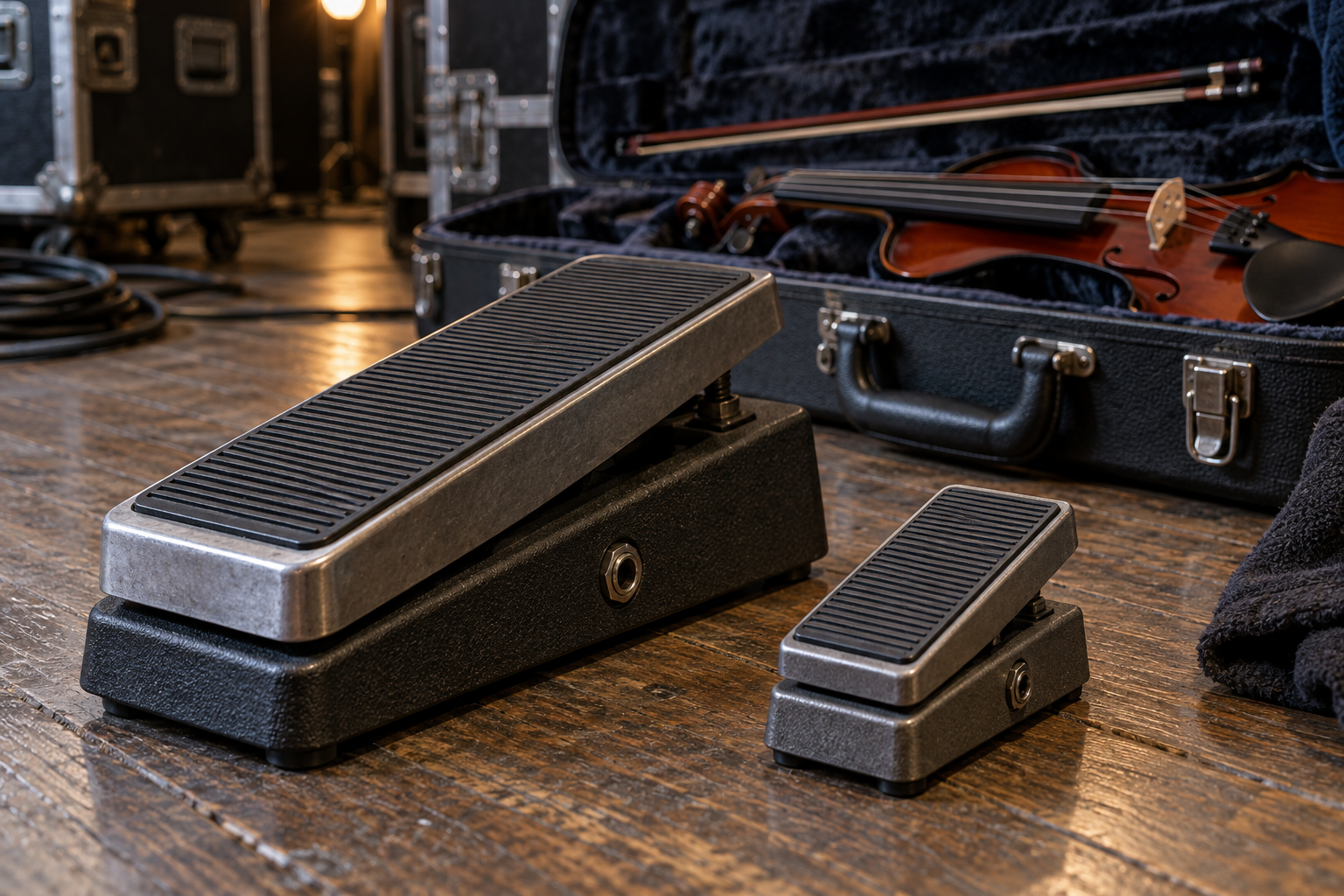
Which models deserve a closer look?
Why choose the Cry Baby Mini CBM95?
Dunlop gives the CBM95 three internal voices: Low, Vintage, and GCB95. It occupies about half a standard Cry Baby housing and uses true bypass. For a compact violin rig, audition the Low setting first if the upper register feels too pointed; this is a starting suggestion, not a guarantee of a darker result with every pickup. Set the internal switch before the show. Choose it when saving space matters more than making frequent adjustments between songs.
Pros: Small footprint; three starting voices.
Cons: Internal voicing switch; compact platform may not suit your stage footwear.
When is the Cry Baby 535Q worth the extra controls?
The 535Q has six selectable frequency ranges, variable Q, and a switchable boost. That gives a violin performer more ways to find a useful sweep when a fixed wah emphasizes too much bow noise. Start with a broad, modest peak and leave the boost off while matching levels. Select it for a rig that needs deliberate voicing adjustment; skip it if one familiar sound and minimal setup are the priority.
Pros: Adjustable sweep and emphasis; separate boost option.
Cons: More opportunities for an unwanted level jump; larger than a mini treadle.
Who should buy the Cry Baby 95Q?
The 95Q combines automatic return switching with Q and volume-boost controls. It suits short wah phrases where returning the foot to the floor should restore the main violin tone. Check the release behavior against the ends of sustained notes before committing it to a set. This is a different operating choice from leaving a traditional wah parked halfway through its travel for a static filtered sound.
Pros: Quick engagement; adjustable effect intensity.
Cons: Automatic return can end a texture earlier than intended; boost needs level matching.
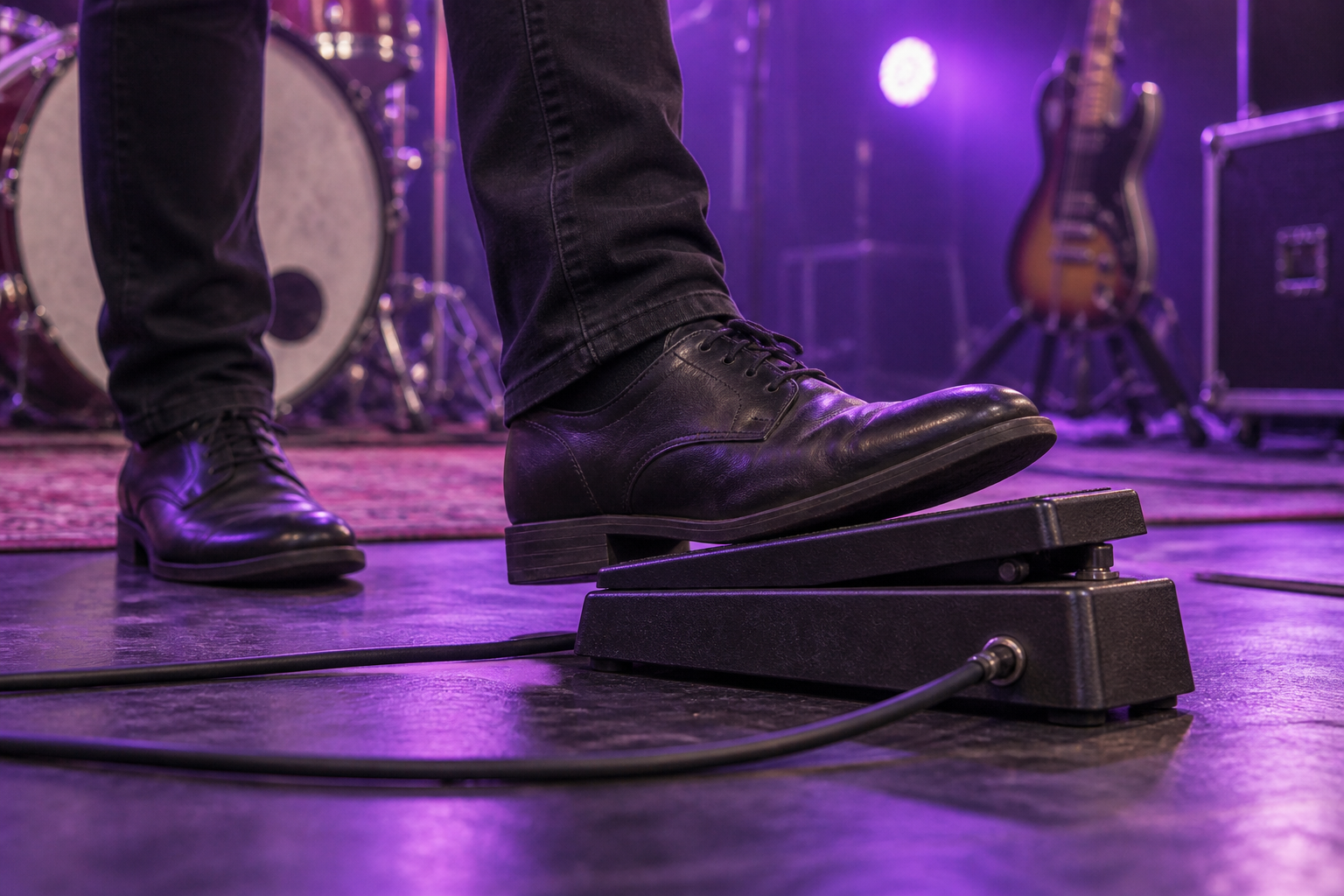
Does the VOX V847A suit a straightforward setup?
The V847A offers the traditional VOX wah approach with a buffered input and external power capability. It is a sensible audition for a performer who wants a straightforward rocker and a familiar filter character without a panel of shaping controls. Try full heel-to-toe movement on the E string through the show PA before buying. A fixed voice that works beautifully with one violin may be too insistent with another.
Pros: Simple operation; full-size treadle.
Cons: Limited voicing adjustment; substantial footprint in a travel rig.
Why consider the Morley 20/20 Bad Horsie?
The MTBH2 uses switchless optical operation, a buffer, and two modes. Its Contour mode offers tone and level adjustment. Choose it when stepping onto the treadle for a lead phrase fits your movement better than operating a toe switch. Check the exact 20/20 MTBH2 model: the larger Classic Bad Horsie is a different enclosure. For violin, try a slow sustained phrase and step off gently to judge how the effect exits.
Pros: Optical mechanism; switchless operation; contour adjustment.
Cons: Return behavior needs familiarity; wider platform requires board clearance.
When does the Xotic XW-1 justify a closer audition?
The XW-1 offers Bias, Wah-Q, bass and treble controls, plus adjustable treadle tension. It is a candidate when you need to shape the filter around a bright violin pickup and want control over the physical feel. Adjust one parameter at a time and record the same phrase for comparison. Xotic advises setting Bias while bypassed because turning that control can make a scratching noise. Select it for detailed setup work rather than a single fixed preset.
Pros: Extensive voicing controls; adjustable treadle feel.
Cons: More preparation; side controls need space and protection in the bag.
What should you check before buying a wah for violin?
Will the treadle fit your stance and shoes?
Measure the full pedal movement, plugs, and space for your foot, not only the enclosure. Rehearse a long bow stroke while operating the rocker. A miniature wah can save luggage space but feel less comfortable than a longer platform. Mount it securely and keep cables away from the moving treadle.
Do you want a toe switch or automatic return?
A traditional switching wah can support a parked filter texture; automatic-return designs favor brief phrases followed by bypass. Neither operation is universally better for a performer. Test the transition into and out of a sustained note, with the shoes you actually wear on stage.
Does your pickup need a preamp first?
For a passive piezo, start with the instrument maker’s recommended high-impedance input before the wah. An active violin or buffered receiver may already provide a suitable feed. A guitar wah is not automatically a piezo preamp. Keep the feed at an appropriate instrument level and reduce output if a preamp or receiver overloads the pedal.
What belongs in the total budget?
Compare the delivered price of the exact model, compatible power supply, mounting hardware, and two patch cables. Amazon links open model searches, so verify the seller and product code before ordering. Stock, bundles, shipping to Bulgaria, and import charges vary. Pay for adjustment you will use; a higher price does not establish better violin tone.
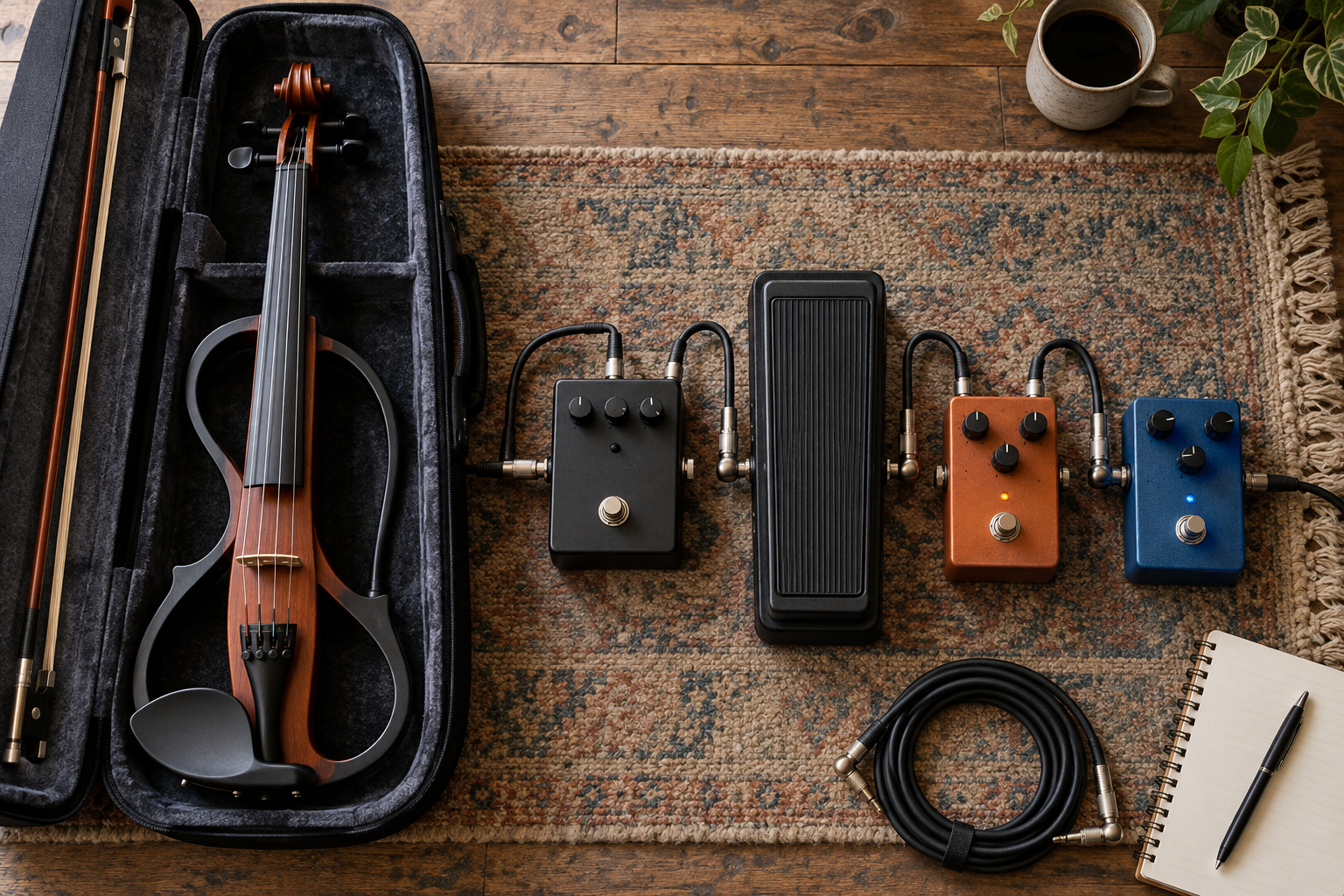
Where should the wah sit in the signal chain?
A useful audition order is violin → suitable buffer or preamp → wah → overdrive → delay/reverb → DI or PA input as required by the rig. Treat this as a starting point. Putting wah before drive lets the sweep change what hits the distortion; after drive it filters the distorted sound more directly. Keep time-based effects later initially so their tails are not swept with every foot movement. Compare both orders at matched loudness and check the strongest bow attack for clipping.
How should you soundcheck an expressive wah part?
First match bypass and effect loudness with boosts off. Play low and high strings through the entire sweep, then repeat with backing tracks. Reduce the peak or change range if the upper register becomes piercing. Next rehearse the entrance, phrase, and return to clean tone while standing in performance position. Record a short clip from the audience perspective as well as the direct feed. Mark the chosen settings and keep a simple bypass route ready for the set.
What else should electric violinists know about wah pedals?
FAQ
Can a guitar wah work with an electric violin?
Yes, with a suitable signal level and pickup interface. Passive piezo instruments may need a high-impedance preamp first; audition the full sweep through your actual amplification.
Is a wah the same as an expression pedal?
No. A dedicated wah processes audio with a foot-controlled filter. An expression pedal usually controls another device and needs a compatible expression input.
Will a wah follow the pitch of each violin note?
A standard treadle wah moves its filter according to foot position. It does not automatically track the pitch of the note you play.
Can I leave the wah halfway open?
A traditional switching design can allow a stationary filter texture. Automatic-return designs generally return toward bypass when you remove your foot; check the exact model behavior.
Should I buy an envelope filter instead?
Choose an envelope filter if you want the sweep to react to playing dynamics. Choose a treadle wah if you want foot control independent of bow attack. They demand different performance techniques.