News · 2026-09-14
Violin News: Gaudeamus Spotlight, Bechtler’s First Music Monday and Richmond’s Paris Connection
The September 14 violin roundup moves from a Dutch festival showcase to two American concerts scheduled for tonight. Gaudeamus placed young violin prizewinners in its September 12 programme; Charlotte’s Bechtler Museum launches Music Monday; and Richmond connects chamber music with the musical exchange between America and Paris. Together, the listings offer a useful look at how presenters introduce unfamiliar names and connect different styles. Tanya Strings, a world-class electric violin performer and content creator, considers the practical choices behind those programmes: how to frame a debut, build a coherent crossover set and give an audience a reason to keep listening.
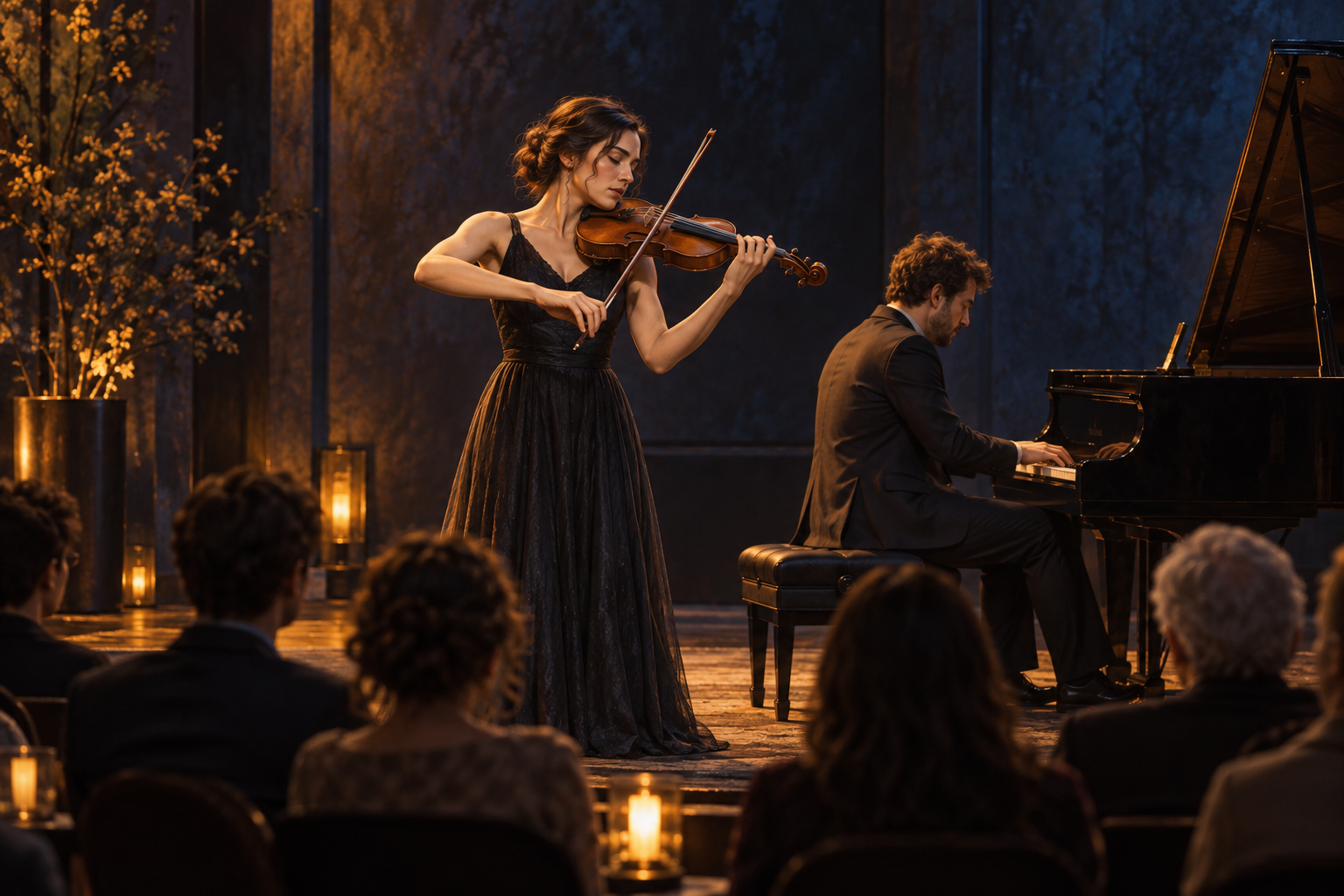
What did Gaudeamus offer young violin voices?
The official Gaudeamus listing scheduled Netherlands Violin Competition winners Raelene Pramana, Wendel de Bruijne and Anne Sophie van Lier at Theater Kikker on September 12. The free afternoon programme included music by Bianca Bongers, Aart Strootman and Karmit Fadael alongside Hindemith. This is a report of the festival’s published programme, rather than a review of the performances.
Tanya’s performer take: a young artist’s introduction can be much more specific than a list of prizes. A short explanation of why a particular piece belongs in the programme gives listeners something to recognise as the performance develops. For an electric violin creator, the equivalent might be introducing one distinctive texture before letting the music speak. The frame should create curiosity without telling the audience what to feel.
For presenters, that suggests an editorial question: what will a listener remember about the artist after the biography has disappeared from view? A carefully chosen opening piece, an audible contrast and a clear introduction can make an unfamiliar name easier to follow. The programme itself should carry that identity; promotional language can only point towards it.
Why does Bechtler’s first Music Monday stand out?
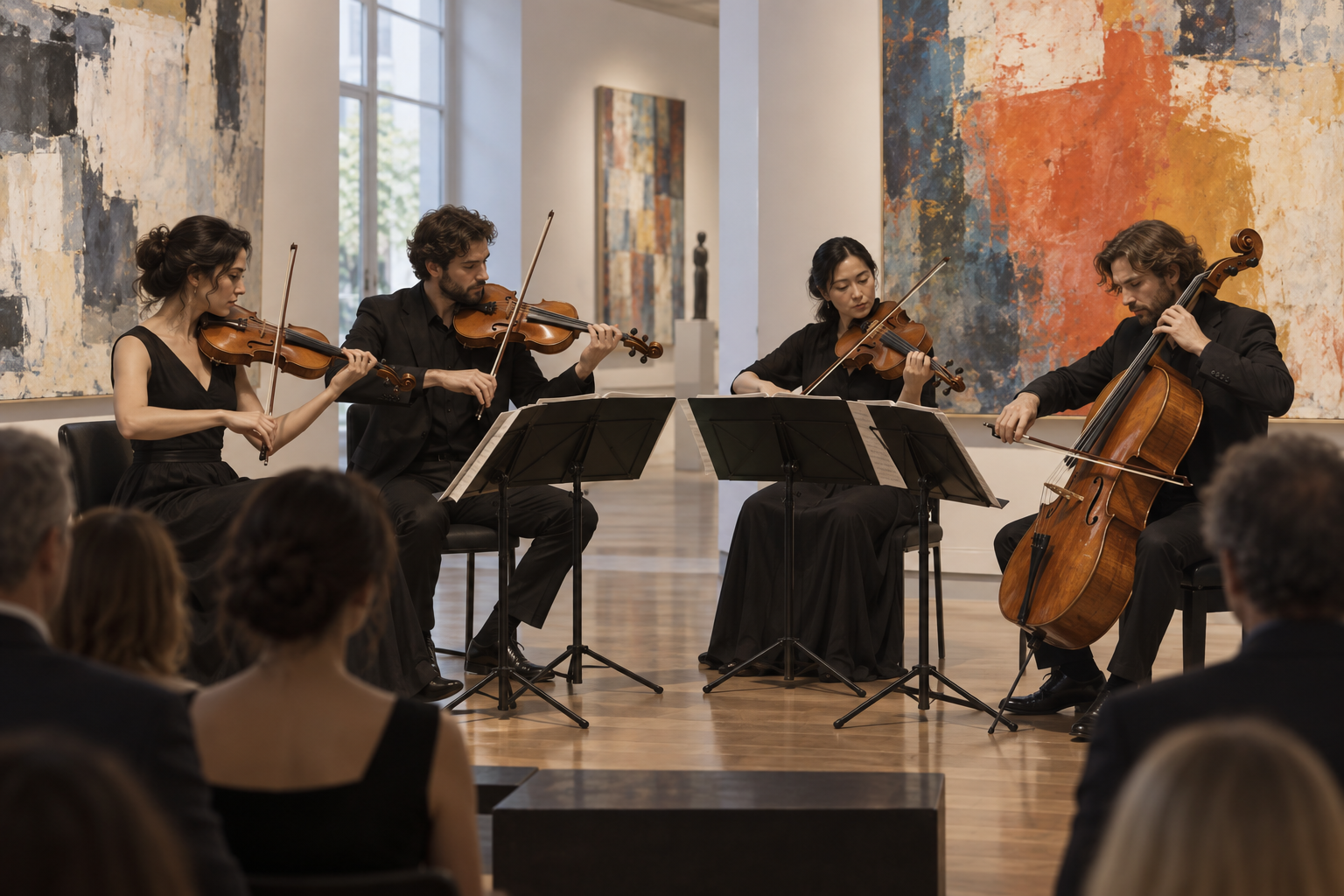
Bechtler’s official announcement lists American Rhythms for September 14 at 6 p.m. in Charlotte. The new series opens with a quartet programme combining Cole Porter songs and selections from Korngold and Dvořák. Violinists Tatiana Karpova and Cindy Burton join violist Vasily Gorkovoy and cellist Tanja Bechtler.
Tanya’s performer take: familiar melodies can open the door to longer listening. The challenge is to make a transition feel intentional: a change in rhythmic energy, instrumental colour or emotional temperature should help the next piece arrive. In an electric violin set, that means thinking beyond whether two tracks are popular. Their connection needs to survive when the titles are removed.
A museum setting also invites event planners to consider the whole arrival experience. Where does conversation end and focused listening begin? Can everyone see the players’ gestures? Is the introduction audible without becoming a separate presentation? These are planning questions inspired by the format, not claims about this particular venue’s production. Musical intimacy depends on those small decisions as much as the scale of the room.
How is Richmond connecting violin music with Paris?
The Chamber Music Society of Central Virginia schedules American in Paris for September 14 at 7 p.m. at Richmond’s First Unitarian Universalist Church. Its announced artists include violinists Grant Houston and Jesse Mills. The programme places Ravel’s Violin Sonata beside Valerie Coleman, Milhaud and Zachary Wadsworth’s arrangement of Gershwin’s An American in Paris.
Tanya’s performer take: crossover becomes more interesting when the musical relationship is audible. Rhythm, articulation and the way a phrase leans into a beat can connect pieces more persuasively than a broad genre label. An electric instrument offers additional colours, but the performer still has to make those relationships clear through phrasing. Effects should serve a musical decision that already has a purpose.
For content creators, this suggests a useful short-video format: demonstrate one contrast, then name the work and composer that prompted it. Credit the arrangement where relevant, and avoid making a historical claim merely because two passages sound alike. A brief performance can invite deeper listening without trying to compress an entire musical tradition into a caption.
What should fans and presenters check next?
- Use the linked organisers’ pages for current attendance details.
- Treat the American start times as local venue times.
- Explore the named repertoire as well as the headline artists.
The September 12 event is already past; the September 14 concerts are scheduled events at the time of writing. No audience reactions or performance outcomes are inferred from their listings. Tanya’s focus is the programming idea each one offers: give the listener a clear point of entry, then let the violin reveal something unexpected.