Tanya Strings · 16.09.2026
Best Freeze and Sustain Pedals for Electric Violin: Hold a Note, Build a Texture
For a simple held violin note beneath a live melody, start with the Electro-Harmonix Freeze; choose Pico Deep Freeze for compact layering and more control. MXR Layers fits ambient arrangements, while Superego+ adds deeper sound design. PLUS Pedal II deserves a look for piano-style foot interaction, with delivery timing checked carefully. The discontinued original Superego is a conditional used-market option. A freeze pedal captures a short sound and sustains it while you continue playing. Buy for reliable capture and a predictable exit from the held note, because clean harmonic changes matter more on stage than the longest possible drone.
Some links in this article are affiliate links. I may earn a commission if you make a purchase, at no extra cost to you.
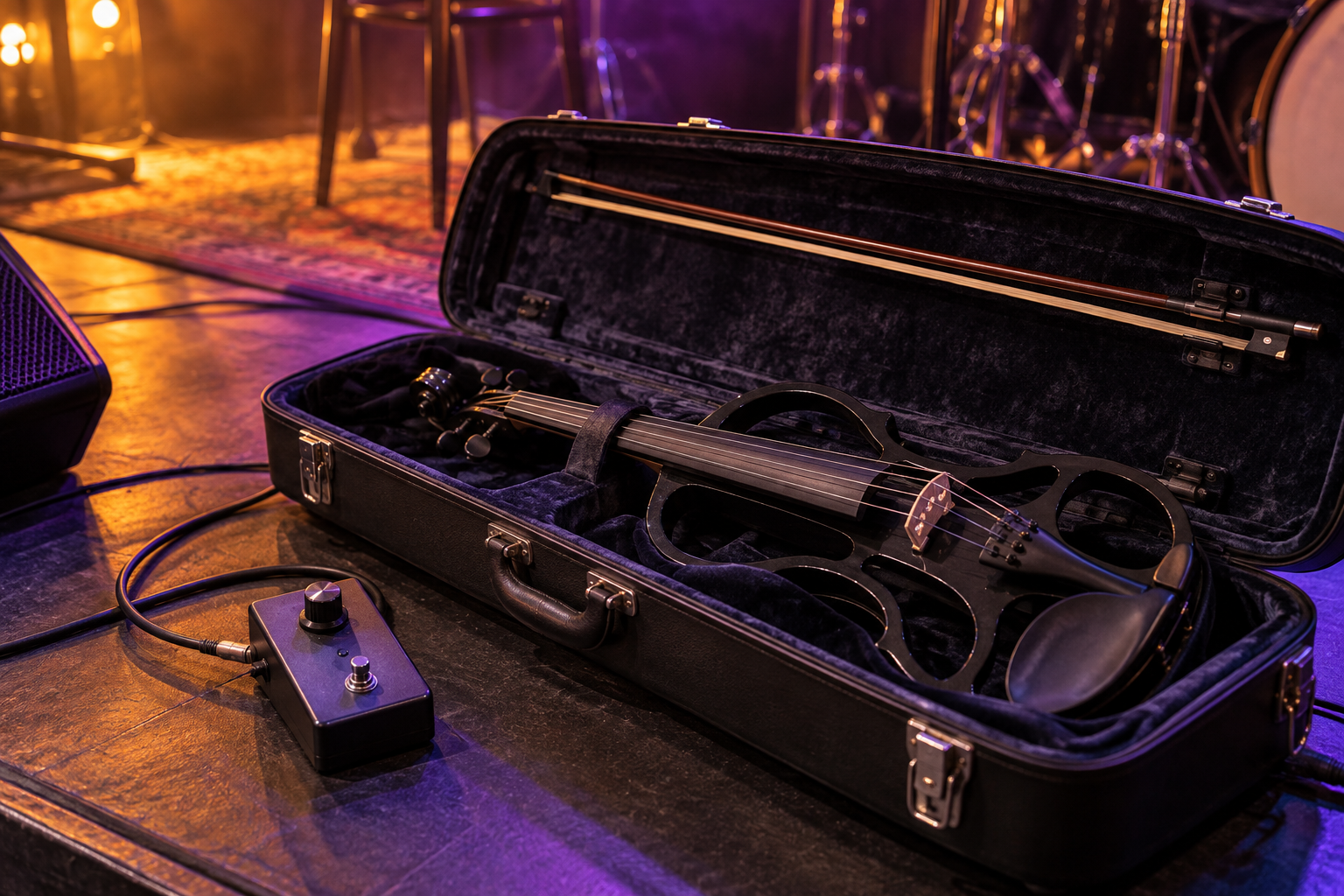
What should a performer listen for before buying?
Can the held note stay behind the melody?
Tanya Strings is a world-class electric violin performer and content creator. For that performance context, the musical test is whether the live phrase stays expressive over the sustained bed. Keep the dry violin clear and the held texture quieter. These recommendations apply manufacturer-documented features to stage needs; they are not a claim of hands-on testing or ownership of every model.
Does the pedal capture the right part of the bow stroke?
Settle into the note before capture. A scratchy attack, unstable pitch or large vibrato can become the permanent character of the drone. Try open strings, double stops and soft entrances at rehearsal volume. Listen to the captured result alone, then with the melody and backing track.
Which sustain pedal fits your electric violin set?
| Model | Best fit | Key distinction |
|---|---|---|
| Electro-Harmonix Freeze | Simple held notes | Fast, Slow, Latch; mono |
| Electro-Harmonix Pico Deep Freeze | Compact creative board | Moment, Latch, Auto; gliss |
| Electro-Harmonix Superego Plus | Sound-design arrangements | Four freeze modes; 11 effects |
| MXR Layers M307 | Layered ambient passages | Up to three layers; stereo modes |
| Gamechanger Audio PLUS Pedal II | Piano-style foot interaction | Auto Catch; expanded layering |
| Electro-Harmonix Superego | Conditional used-market option | Wet effects loop; discontinued |
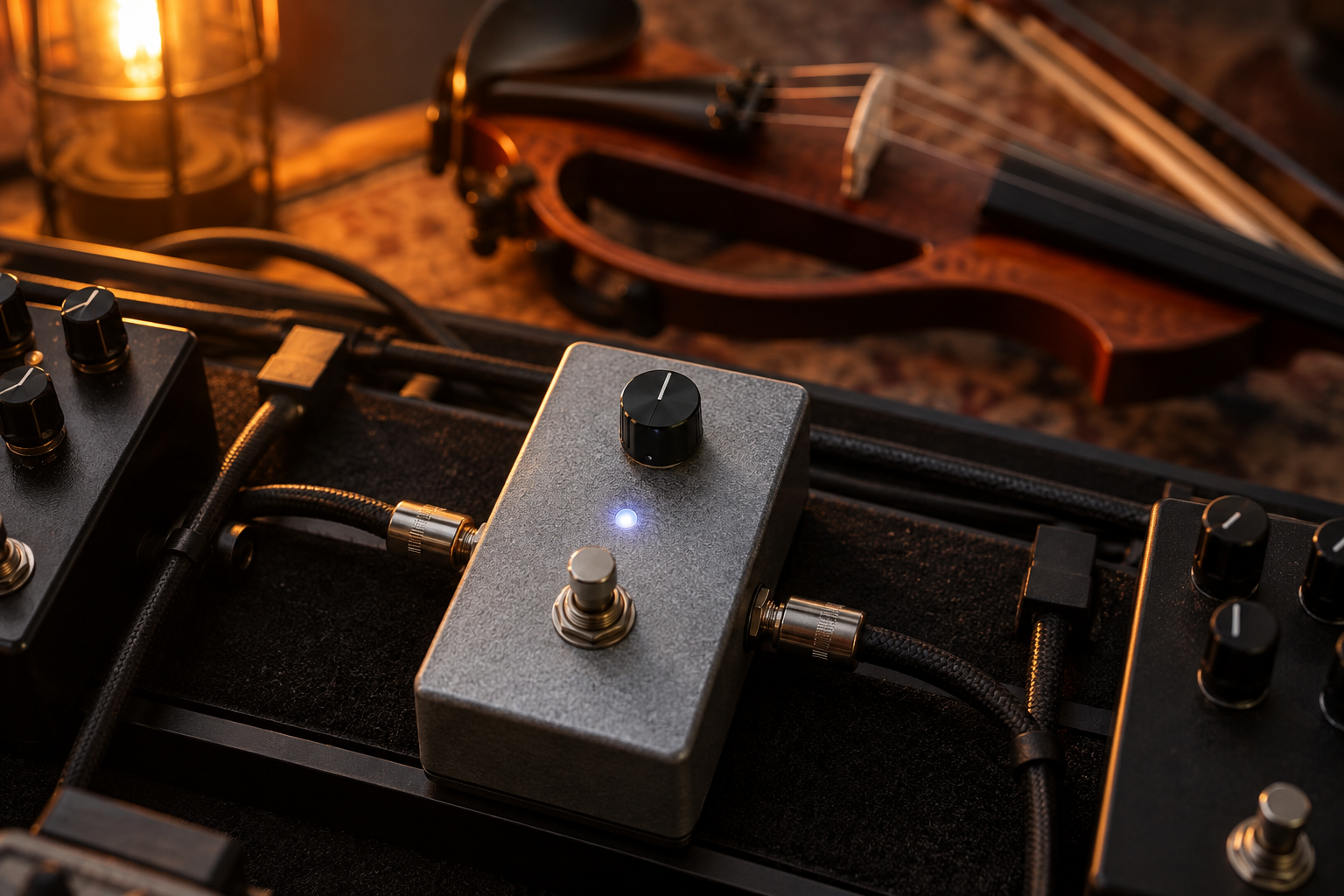
What are the strengths and compromises of each recommendation?
When should you choose Electro-Harmonix Freeze?
Choose Freeze when one sustained note under a melody is enough. Its level knob and three modes keep the decision simple. Capture the settled part of a bowed note, then play a contrasting line over it. The manufacturer documents fast and slow release options plus latch; this is the straightforward starting point for an occasional drone. Manufacturer details.
Pros: Few controls; easy role in an arrangement. Cons: Mono; limited shaping compared with newer designs.
Search Amazon for Electro-Harmonix Freeze
When should you choose Electro-Harmonix Pico Deep Freeze?
Deep Freeze is the compact recommendation when you want separate dry and held-sound levels, layering and gliding transitions. The same control changes function with the mode, so rehearse the exact setting used in each song. For violin, start with manual capture; automatic operation needs checking against soft entrances and noisy bow changes. Manufacturer details.
Pros: Small footprint; independent dry/effect balance. Cons: Shared controls demand familiarity; mono audio.
Search Amazon for Electro-Harmonix Pico Deep Freeze
When should you choose Electro-Harmonix Superego Plus?
Superego+ suits a set built around changing textures. Its onboard effects and expression control make a held violin tone a starting material for an arrangement. Choose it when you will actually use that depth. For a single pedal gesture in one chorus, its larger control surface is harder to justify than Freeze or Deep Freeze. Manufacturer details.
Pros: Broad shaping options; expressive parameter control. Cons: More setup time and board space.
Search Amazon for Electro-Harmonix Superego Plus
When should you choose MXR Layers M307?
Layers is the choice for building a small harmonic bed from separate notes. MXR documents manual and attack-triggered capture, with single-layer operation available. Its stereo routing deserves attention if your live sound and video mixes use two channels. Test automatic triggering with your bow articulation before making it part of a cue-critical entrance. Manufacturer details.
Pros: Layer indicators; flexible routing and fades. Cons: Advanced functions need manual study; power supply planning.
Search Amazon for MXR Layers M307
When should you choose Gamechanger Audio PLUS Pedal II?
Consider PLUS Pedal II when the pedal gesture itself is central to your performance. The new version adds Auto Catch and expanded layer control. On 16 September 2026 the manufacturer page still says shipping starts September: confirm an actual dispatch date before buying for a booked show. Check that a listing is specifically version II. Manufacturer details.
Pros: Performance-oriented pedal feel; extensive layering. Cons: New-release availability; larger stage footprint.
Search Amazon for Gamechanger Audio PLUS Pedal II
When should you choose Electro-Harmonix Superego?
The original Superego remains worth considering if you want its wet-signal effects loop and find a well-priced working unit. EHX marks it discontinued in 2025. Treat it as a used or remaining-stock purchase, not the default new-buy recommendation. Confirm the switch, jacks, power adapter and return terms; avoid paying a scarcity premium over a suitable current pedal. Manufacturer details.
Pros: Processes the held sound through external effects. Cons: Discontinued; condition and availability vary.
Search Amazon for Electro-Harmonix Superego
How should you choose the right freeze pedal?
Do you want momentary, latch or automatic operation?
Momentary control lets your foot define the hold. Latch frees the foot but needs a deliberate stop command. Automatic capture can follow playing dynamics, yet violin bow changes may trigger differently from guitar attacks. Rehearse with your concert shoes and normal stance: the best mode is the one you can control without disturbing the bow.
What should the complete purchase budget include?
Count the power supply, short audio cables, mounting space and any external controller you actually need. Read the exact model manual for voltage, polarity and current. Amazon links here open product searches, not guaranteed offers. Compare the model suffix, seller, warranty, return window, delivery to Bulgaria and total delivered cost. Do not schedule a debut around an unconfirmed shipment.
Do you really need multiple layers or stereo?
One stable root note can support a more convincing phrase than a crowded chord cloud. Add layers only when the arrangement leaves room for them. Choose stereo when the venue and recording route preserve it; also check a mono fold-down. A wide headphone impression does not guarantee useful coverage for the audience.
Where should a freeze pedal sit in an electric violin rig?
What is a sensible starting signal path?
Try violin → suitable pickup preamp or buffer → freeze pedal → reverb or delay → DI or appropriate amplifier input. This captures a relatively focused tone and places ambience around the result. Capturing after modulation or distortion is a creative alternative, but it also holds their noise and movement. Use the input levels specified for each device.
How do you stop the drone before the next harmony?
Write a release cue into the arrangement. Check whether the chosen mode fades, stops immediately or retains an old layer when you capture again. Put any emergency mute where it silences the complete chain, including effect tails. Start rehearsal with a quiet mix and verify both the musical release and the full mute before raising the level.
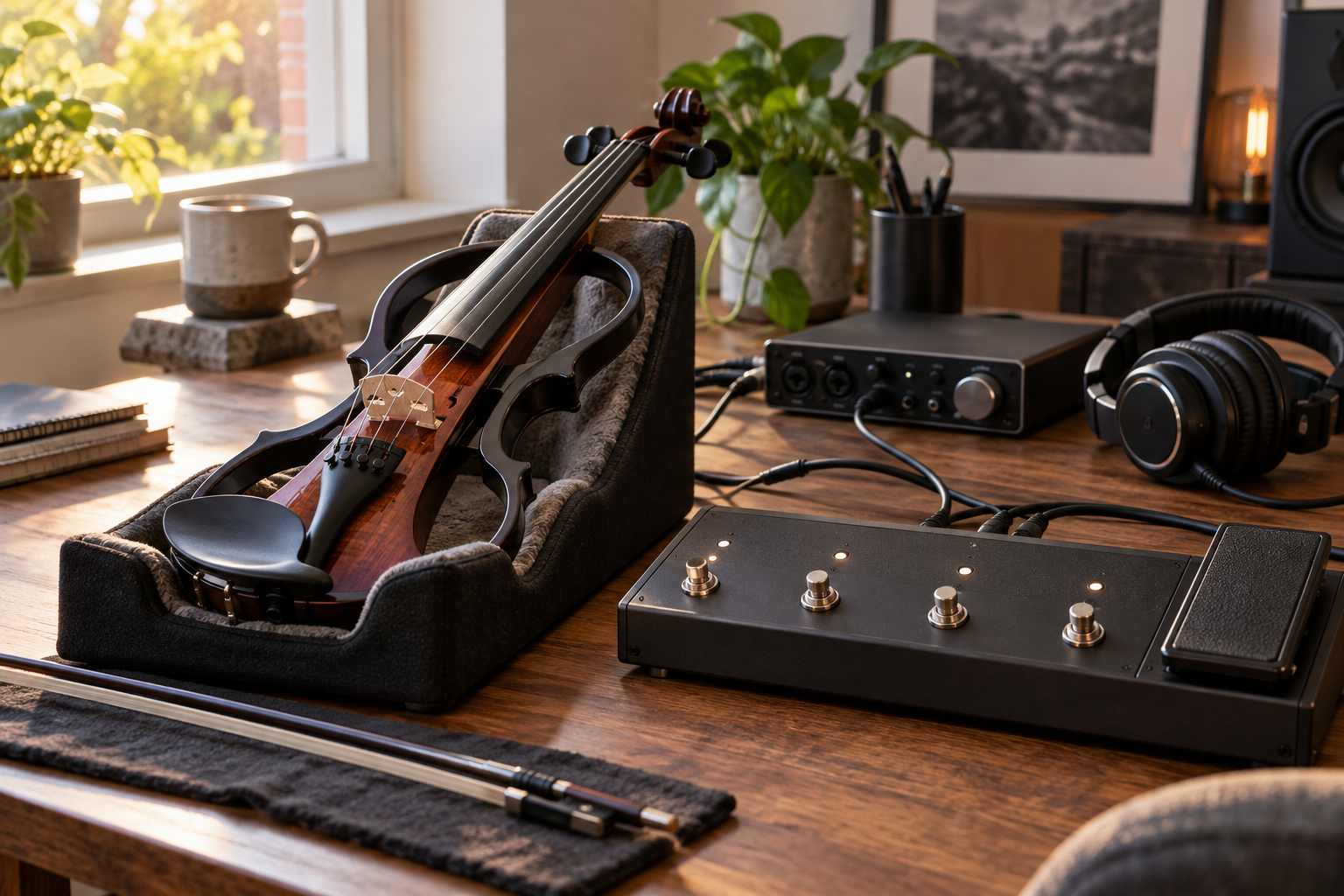
How can Tanya Strings turn one held tone into a performance moment?
Where does the texture help a live set?
For a cinematic entrance, hold a settled root or fifth, lower the layer beneath the live violin, and let the next phrase supply movement. Release it before the harmony changes. For a wedding transition, keep the texture brief enough that it does not cover the next announcement. The effect should support timing and presence, not demand constant attention.
What makes the same idea useful in a video?
Record a clean violin track alongside the effected sound when your rig supports it. That preserves edit choices if the sustained bed masks a later phrase. Film the foot gesture only when it explains the musical moment. Compare the final clip on headphones and a small speaker, checking that the melody remains clear at modest listening levels.
What else should you know about freeze pedals?
FAQ
Will a freeze pedal make my violin strings vibrate longer?
No. It sustains captured audio electronically. You can stop bowing while the held sound continues through the amplification system.
Is a freeze pedal the same as a looper?
No. A looper repeats a recorded phrase with its timing. A freeze pedal sustains a short captured texture; it is useful for drones and harmonic beds rather than a complete rhythmic accompaniment.
Can I use a keyboard sustain switch by itself?
An ordinary keyboard sustain switch does not process violin audio. It can control a compatible effects unit only when that unit supports the correct switch connection and behavior.
Will these pedals work with a passive piezo violin?
Use the input impedance and preamp arrangement recommended for your pickup. A suitable buffer or preamp before the pedal may be needed; the freeze function does not solve pickup-loading problems.
Should I buy a new pedal if my current processor already freezes sound?
Test the existing freeze function first. Buy a separate unit when it improves foot access, capture behavior or routing enough to justify the cost and extra setup.