News · 2026-09-16
Violin News: Tilif’s Bach Evening, Humphreys by Candlelight and Hahn in Chicago
September 16 puts unaccompanied violin in two very different settings: İmge Tilif Yalçınkaya’s Bach recital at Bilkent and Fenella Humphreys’s candlelit Whiddon Autumn Festival programme. In Chicago, Hilary Hahn is scheduled to play Mendelssohn with the Chicago Symphony Orchestra from September 17 to 19. These are current concert listings, with tonight’s recitals and this week’s orchestral dates checked against the presenters’ own pages. Tanya Strings, a world-class electric violin performer and content creator, follows the musical choices behind them: sustained solo storytelling, a close relationship with the room and the way a concerto sits within a complete evening.
What is Bilkent presenting tonight?
Bilkent University’s announcement lists İmge Tilif Yalçınkaya at Bilkent Concert Hall on September 16 at 8 p.m., with free admission. Her Bach programme combines the First Sonata and the Third and Second Partitas in an approximately 75-minute performance without an interval, ending with the Chaconne.
Tanya’s performer take: a continuous solo set makes pacing part of the performance. The audience needs to feel a direction even when the instrumentation stays constant. For an electric violinist, that can mean thinking about the relationship between the opening phrase, the quietest passage and the final release before deciding where to add a loop or change a sound.
This is also an interesting invitation for listeners who usually encounter violin music through short videos. Give a whole section your attention and notice how its character develops. A brief clip can introduce a player, but a longer stretch reveals decisions about tension, timing and silence that an isolated highlight may hide.
For creators documenting a solo programme, one practical editorial choice is to preserve the start and resolution of a musical idea. A caption can explain why that passage belongs in the larger journey. It does not have to describe the performance as a technical challenge to make it compelling.
How is Whiddon changing the solo recital’s setting?
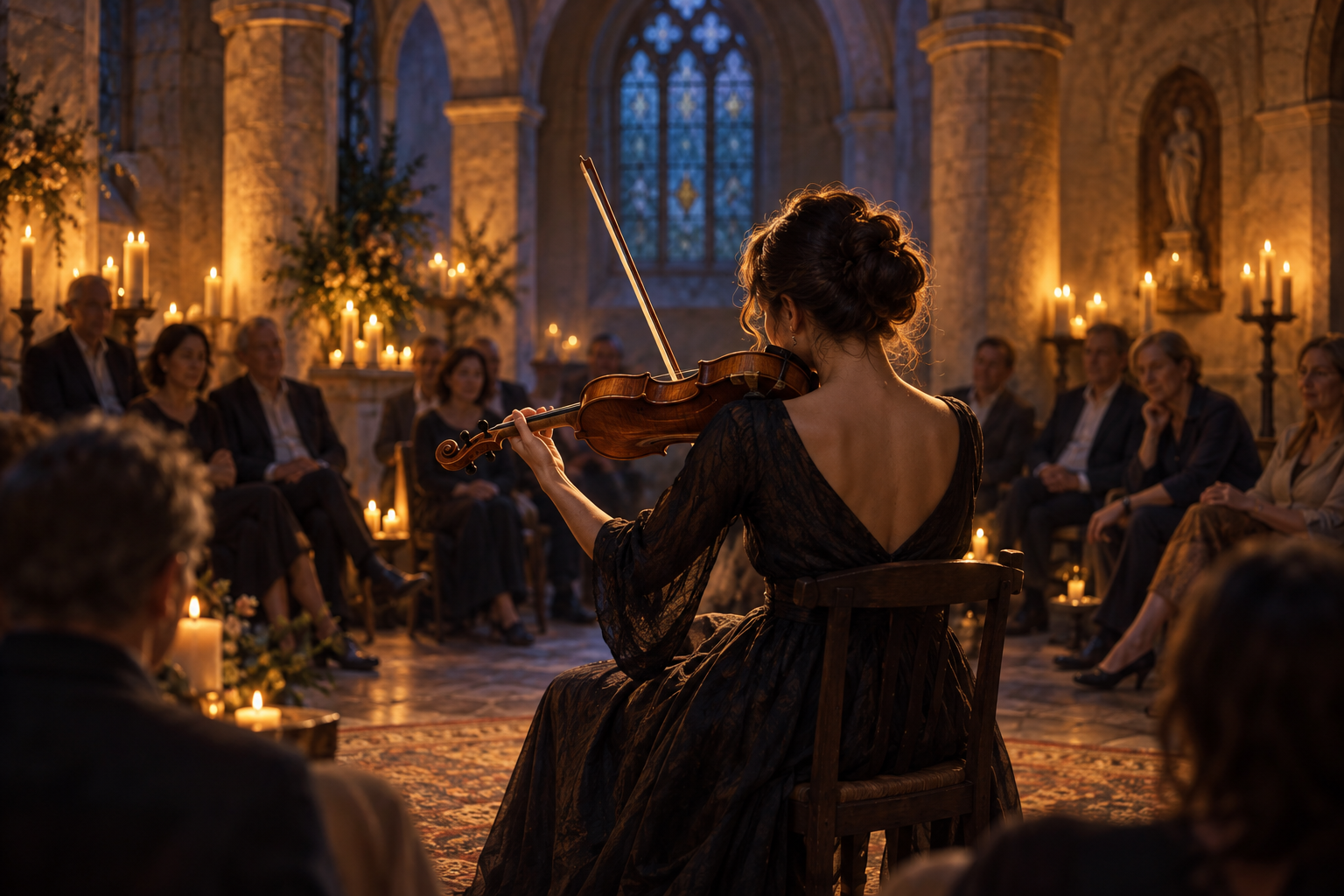
The Whiddon Autumn Festival’s Luminous Strings listing schedules Fenella Humphreys at Gidleigh Church on September 16, with performances at 6 p.m. and 7:30 p.m. The candlelit, in-the-round programme places Bach alongside composers including Sally Beamish, Anna Berg and Caroline Shaw. The festival says online booking closes at 9 a.m. on the event day; door availability is not guaranteed.
Tanya’s performer take: a room arrangement changes the way a performer connects with listeners. With an audience around the playing area, posture, entrances and the direction of an introduction become part of the experience. For electric violin events, the corresponding production question is whether each seating area can hear a clear, balanced sound without losing the intimacy that made the format attractive.
The useful idea for event planners is to choose the listening relationship early. A circular audience, a formal stage and a standing reception each ask something different of the artist. Lighting should let guests follow the musician’s gestures comfortably, while access routes and technical positions need to work with the layout.
Those are Tanya Strings’ editorial observations about the format, rather than a report on this evening’s execution. The announced programme is a reason to pay attention; audience response and performance detail will only be known afterwards.
What will Hilary Hahn play in Chicago this week?
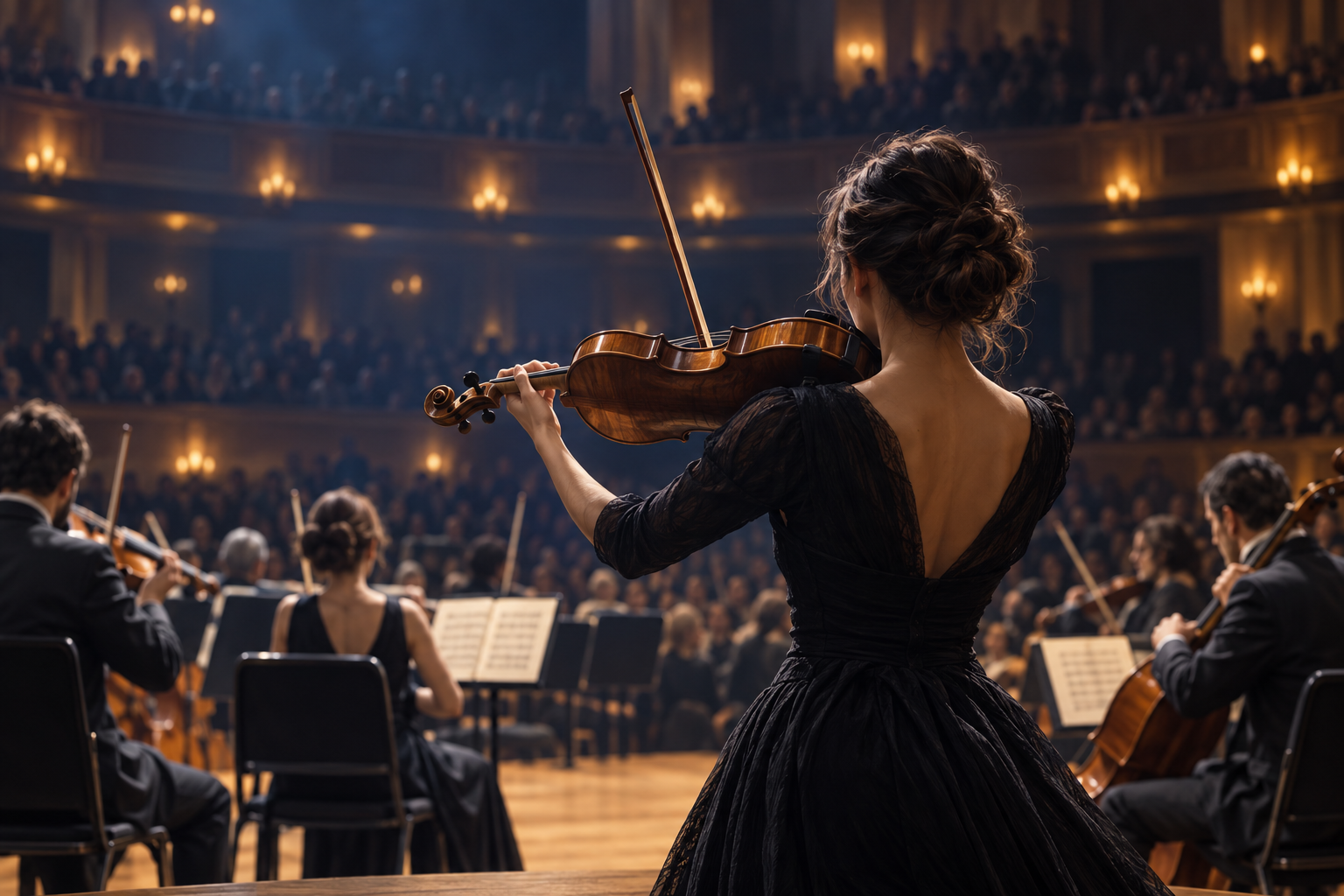
The Chicago Symphony Orchestra’s official page lists Hahn in Mendelssohn’s Violin Concerto on September 17–19, with Petr Popelka conducting. Schumann’s Manfred Overture and Dvořák’s Fifth Symphony complete the programme. A preconcert conversation with Kyle Dzapo is scheduled 75 minutes before each performance.
Tanya’s performer take: the surrounding programme helps shape how a solo feature lands. In a crossover show, the same attention belongs to the track before a violin solo and the transition afterwards. A memorable centrepiece benefits from a clear entrance, an uncluttered musical setting and enough time for its ending to register.
For music fans, the preconcert discussion offers an optional way into the evening. For performers and presenters, it raises a useful communication question: what small amount of context would help an unfamiliar listener follow the music? One well-chosen idea can invite attention without turning the introduction into a lecture.
What should you check before attending?
- Use each presenter’s current page for local times and any changes.
- Check admission arrangements rather than assuming an event listing means seats remain.
- Keep concert previews separate from reviews when sharing the news.
The week offers three ways to follow the violin: alone across a sustained programme, close to listeners in an intimate room, and within a full orchestral evening. Each gives performers and audiences a different relationship with musical time and space.