Tanya Strings · 17.09.2026
Best Flanger Pedals for Electric Violin: Sweeps, Bow Clarity and Stereo
For most electric violin stage rigs, start with the BOSS BF-3 if you need momentary effects and tempo control, or the MXR Micro Flanger if you want a simple analog sweep. Choose the Stereo Electric Mistress when your recording or PA actually preserves stereo. The best purchase is the pedal whose sweep leaves your bow attack and melody audible throughout the phrase. Before buying, check the available power, output routing and how quickly you can return to your dry sound. A dramatic jet-like effect is useful for a transition; it rarely needs to cover an entire violin solo.
Some links in this article are affiliate links. I may earn a commission if you make a purchase, at no extra cost to you.
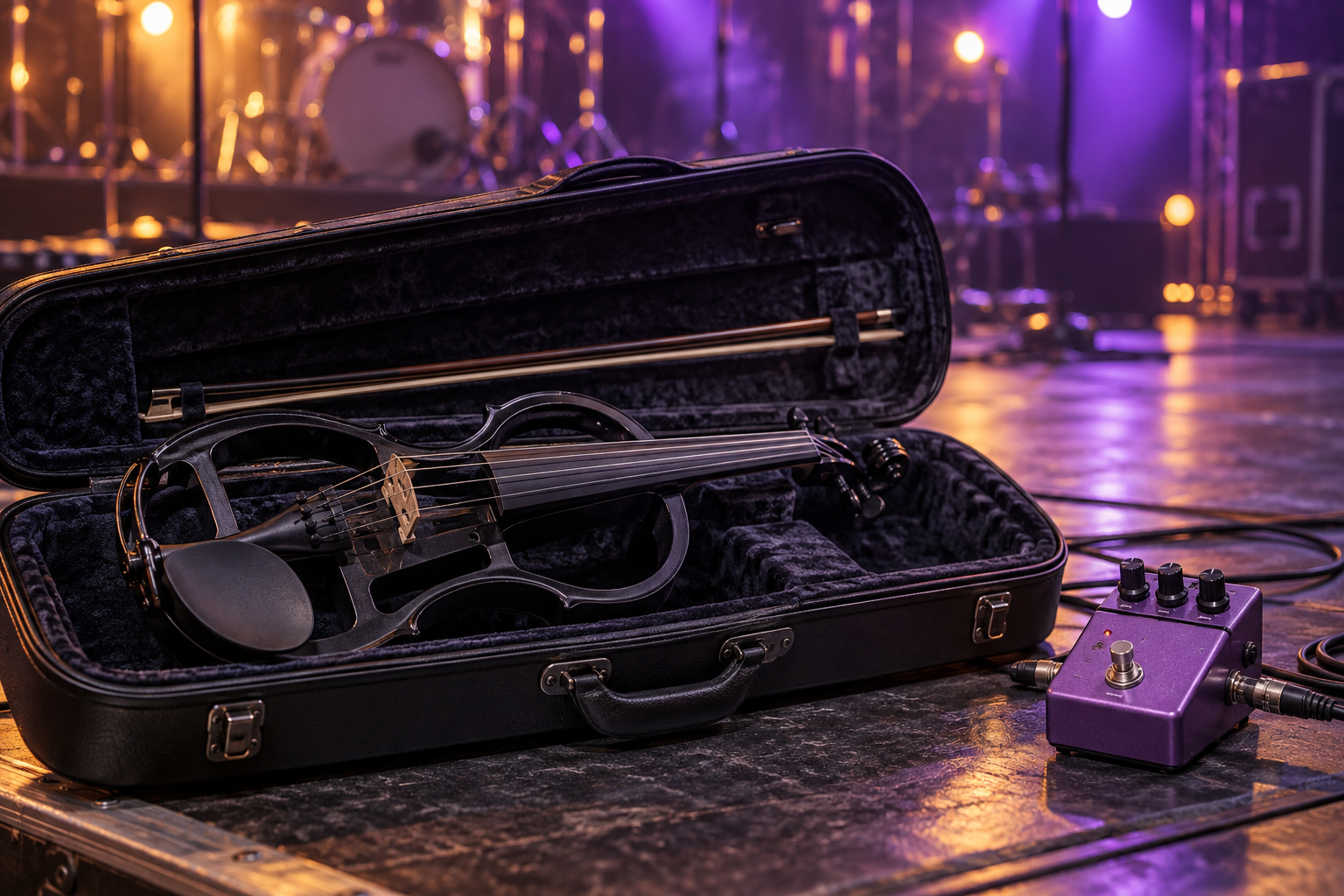
How does Tanya Strings choose a flanger for performance?
Tanya Strings is a world-class electric violin performer and content creator. My priority here is the audience-facing result: a recognizable melody, a controlled transition and a sound that translates to the finished video. These are research-based buying recommendations, not claims that I have personally tested or toured with every pedal. Manufacturer documentation establishes the features; the violin applications below are my selection criteria.
Which flanger matches your stage or recording job?
| Pedal | Best reason to shortlist | Main buying tradeoff |
|---|---|---|
| BOSS BF-3 | Momentary cues and tap tempo | Learn the pedal gestures |
| MXR M152 | Simple analog sweep | Only two main controls |
| EHX Neo Mistress | Compact fixed-filter textures | Mono output |
| MXR M117R | Detailed sweep shaping | 18V power planning |
| Stereo Electric Mistress | Stereo flanger plus chorus | Requires two-channel workflow |
| Walking On The Moon | Analog sweep with dry feed | Dry output is not stereo |
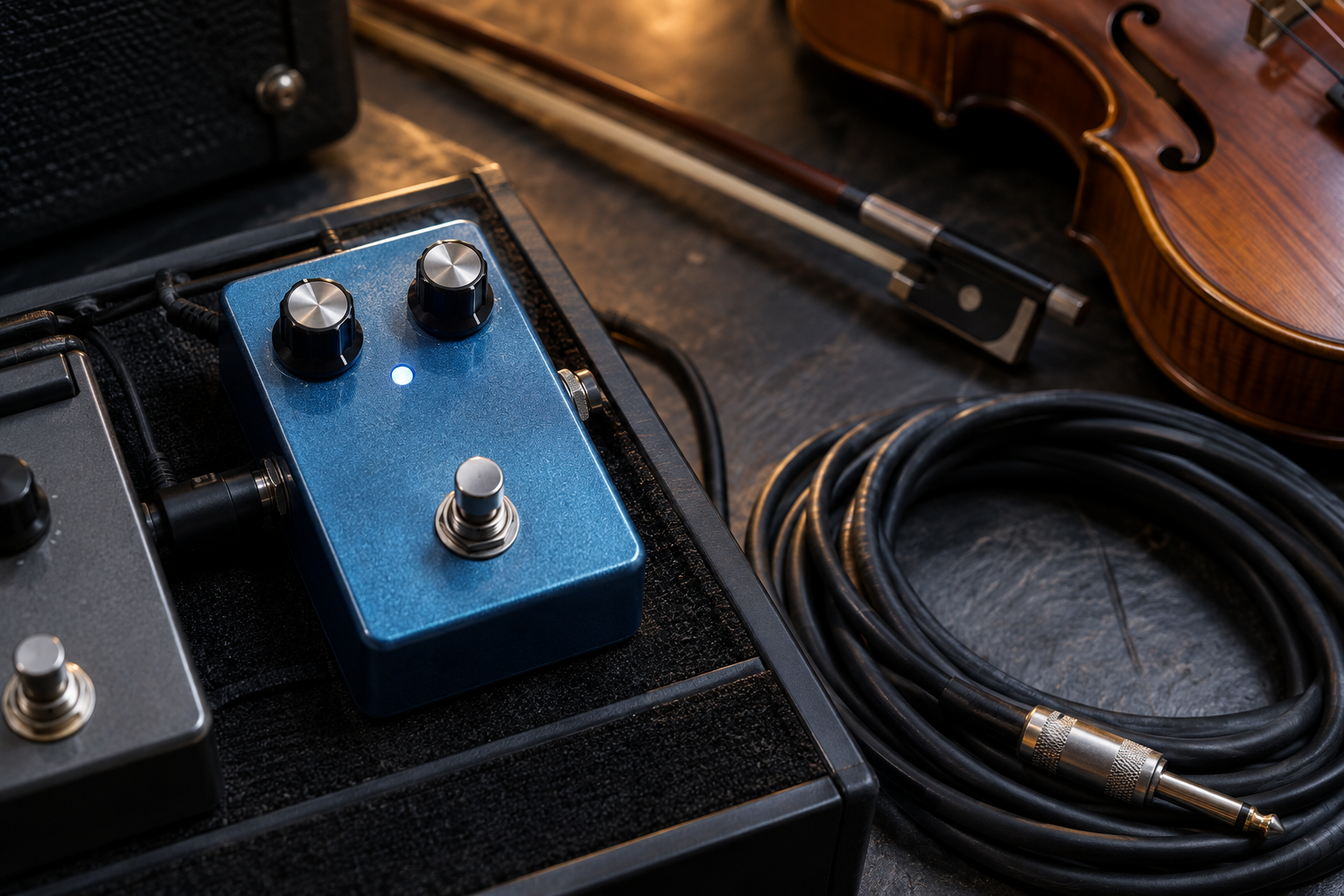
Which six flanger pedals are worth comparing?
Which pedal gives the most useful live switching options?
BOSS BF-3. BOSS lists momentary operation, pedal tap tempo and stereo outputs alongside Standard, Ultra and Gate/Pan sounds. That makes the BF-3 my first shortlist choice for an electric violin arrangement where one transition needs a dramatic sweep and the next phrase must return to a clear melody. Rehearse its switching gestures before the show; one treadle handles several jobs. Manufacturer details.
Pros: Flexible stage control; stereo output options. Cons: Shared pedal gestures take rehearsal; the more extreme modes need restraint.
Check BOSS BF-3 listings on Amazon
Which flanger keeps a small pedalboard simple?
MXR Micro Flanger M152. The M152 uses an analog bucket-brigade circuit with Rate and Regeneration controls and true bypass. Choose it when a repeatable, uncomplicated sweep matters more than elaborate routing. For violin, audition the full length of a held note: a setting that sounds attractive during the first second may become too resonant later in the cycle. Its simple panel also limits independent shaping of the sweep. Manufacturer details.
Pros: Two controls are quick to recall; compact analog design. Cons: No independent width control; less scope for tailoring difficult passages.
Check MXR Micro Flanger M152 listings on Amazon
Which compact option adds a stationary metallic texture?
EHX Neo Mistress. Neo Mistress is a digital mono flanger with Rate, Feedback and a Filter Matrix setting. The matrix stops the automatic sweep so you can choose a fixed coloration. I would shortlist it for a short, deliberately metallic hook in a performance video. This is a filter position, not a captured note: the sound still follows your playing. Check that the limited controls cover your required sweep before buying. Manufacturer details.
Pros: Compact layout; moving and stationary textures. Cons: Mono output; limited independent adjustment of the effect.
Check EHX Neo Mistress listings on Amazon
Which option gives more control over the sweep?
MXR Flanger M117R. The M117R offers Manual, Width, Speed and Regen controls. Dunlop explains that setting Width to zero stops the automatic sweep and lets Manual place the effect. This is worth considering when a two-knob pedal cannot keep the coloration in a useful part of your violin tone. Plan the power supply before ordering: this model uses 18V power or two 9V batteries, unlike many neighboring pedals. Manufacturer details.
Pros: More detailed sweep shaping; fixed-position option. Cons: Larger planning commitment; an appropriate 18V supply is required.
Check MXR Flanger M117R listings on Amazon
Which pedal suits stereo performance videos?
EHX Stereo Electric Mistress. This digital design combines flanger and chorus with separate depth controls and stereo outputs. It belongs on the shortlist when the final recording preserves two channels and the arrangement has room for both effects. For my content-creation priorities, the useful test is a matched-level stereo recording followed by a mono check. Do not assume the spatial effect will survive unchanged on a single venue speaker. Manufacturer details.
Pros: Flanger and chorus together; stereo output configuration. Cons: Extra texture can blur the melody; stereo needs a suitable downstream rig.
Check EHX Stereo Electric Mistress listings on Amazon
Which analog pedal offers a separate dry output?
EHX Andy Summers Walking On The Moon. Walking On The Moon combines Rate, Range and Color controls with Filter Matrix and a dedicated dry output. EHX specifies mono audio; the dry socket is not a second stereo effect channel. I would consider it for an arrangement that needs a separate clean feed alongside the flanged sound. Confirm the whole split-signal plan with your engineer, including level balance and what each destination receives. Manufacturer details.
Pros: Analog sweep and fixed filter; separate dry feed. Cons: Dry/effect routing adds setup; two sockets do not mean stereo modulation.
Check EHX Andy Summers Walking On The Moon listings on Amazon
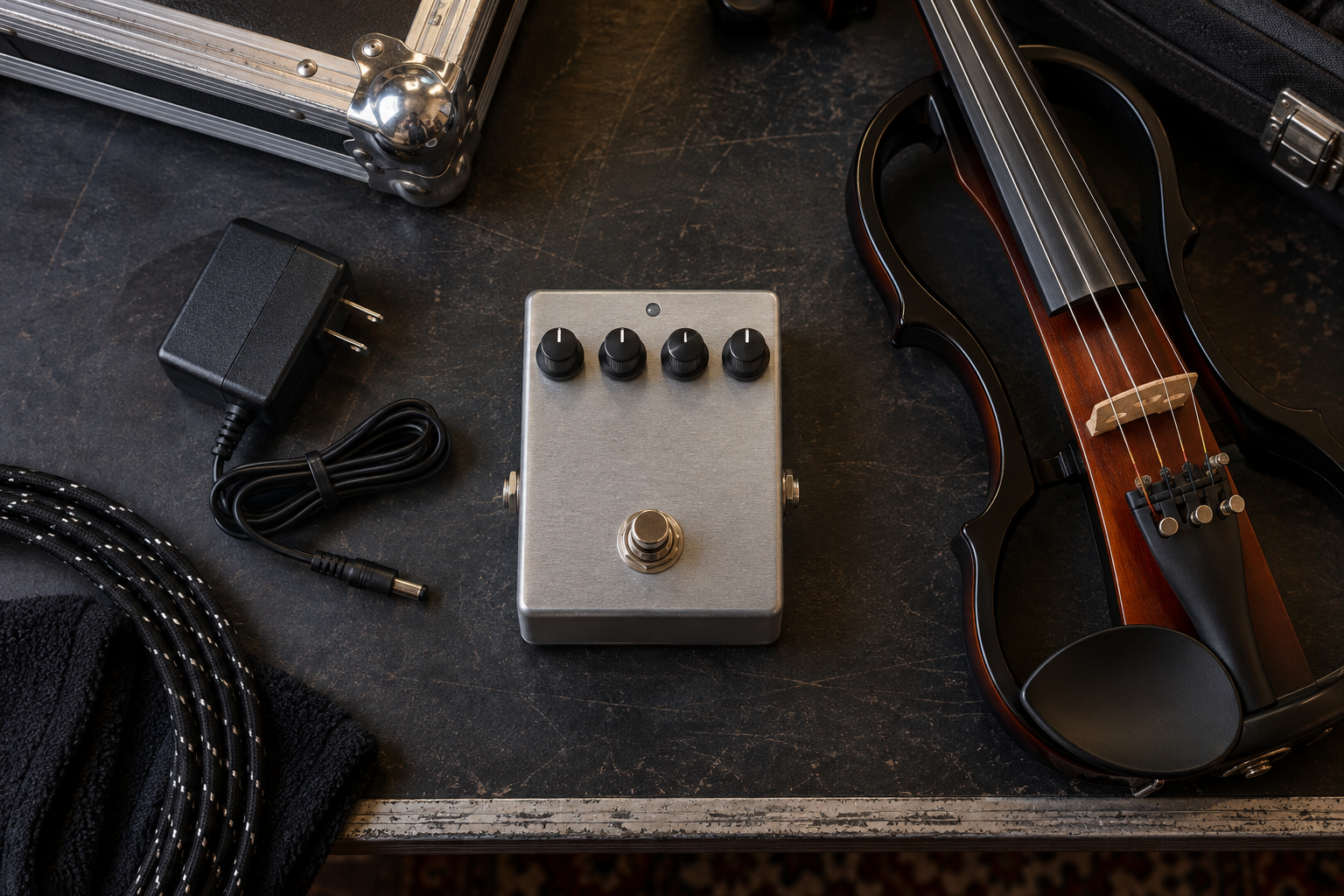
What should you check before buying a violin flanger?
Will the pedal accept your pickup and signal level?
A passive piezo pickup may need a suitable high-impedance buffer or preamp first. A flanger does not replace that matching stage. With an active violin or preamp, start with a moderate output and listen for unwanted clipping on your strongest bow strokes. Follow the input and power specifications for the exact model, including current and polarity; never feed 18V to a pedal designed only for 9V.
Do you need mono, stereo or a separate dry feed?
A single mono input at the venue makes a stereo feature less valuable. Two effect outputs, or one effect output plus a dry socket, are different arrangements. Confirm cables, DI channels and mixer inputs before paying for additional routing. Do not combine outputs with a simple Y cable. Use suitable mixer or summing equipment if the rig requires it.
How much control will you actually use?
Rate changes the speed of the sweep; feedback or regeneration changes its resonance. Independent range or width adjustment can help keep a long bowed note intelligible. A two-knob pedal is attractive for quick setup, while a more detailed panel suits arrangements that need a carefully limited sweep. Compare total cost including power, board space and return options, not just the pedal price. Amazon search results may mix versions, bundles and used units; confirm the exact model and seller before ordering.
How can you keep bow attack clear on stage?
Begin with a slow sweep and low feedback. Play a low sustained note, a high melody and a fast passage over the actual backing track. Listen through a complete modulation cycle. If the violin turns thin at one point or harsh at another, reduce the intensity or narrow the sweep where the pedal allows it.
A practical starting chain is pickup-compatible preamp or buffer, drive if used, flanger, then delay and reverb. Treat this as an audition order: moving modulation before drive changes the result. Start without long reverb tails so you can hear what the flanger itself changes. Match perceived volume between bypass and effect, and rehearse the exit cue as carefully as the entrance.
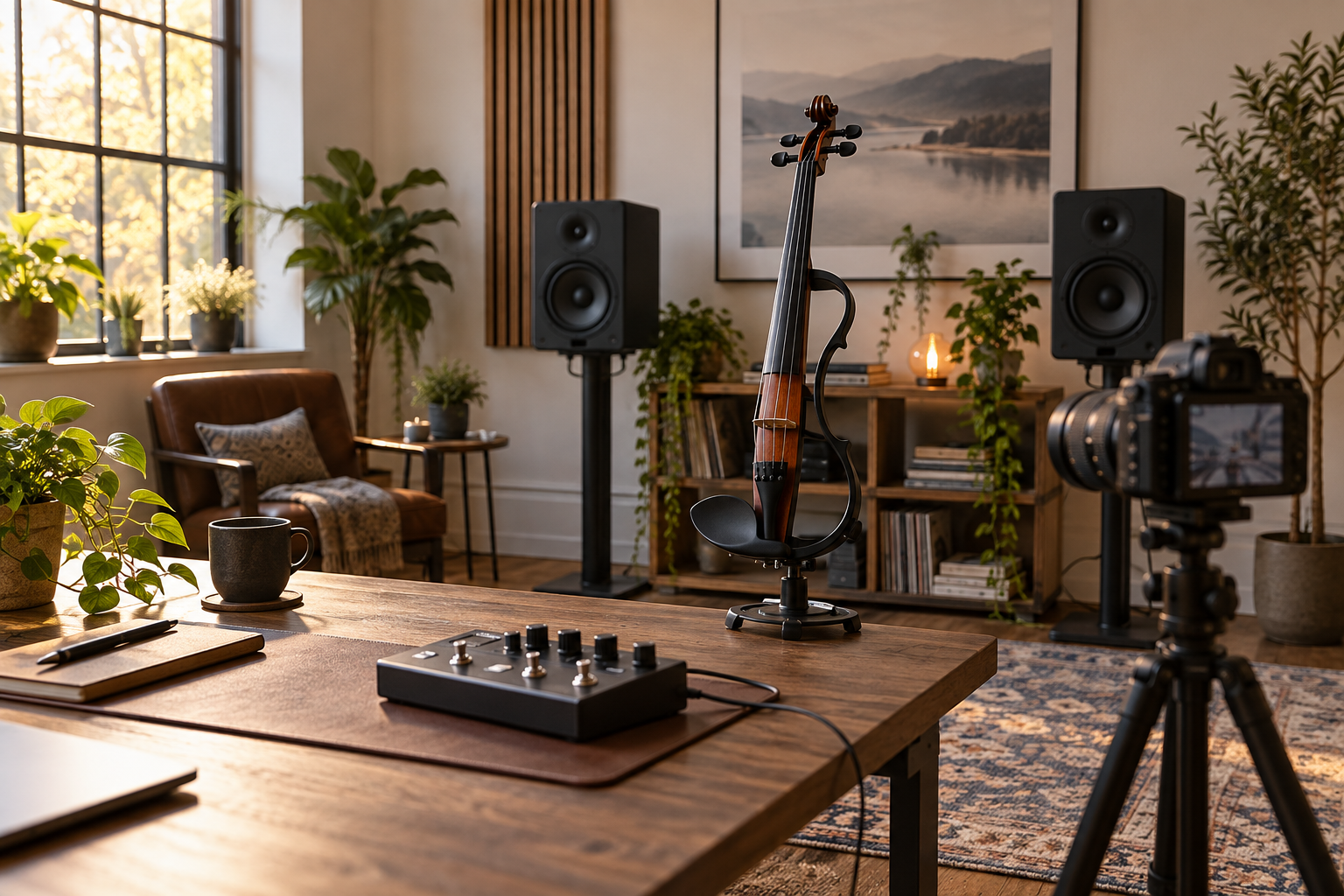
How should you audition a flanger for performance content?
Record the same short melody dry and with the effect, at comparable loudness. Include both sustained bowing and clear note changes. Check the result on headphones, small speakers and in mono. For Tanya Strings, the buying decision should serve a musical moment that also reads clearly on camera: one recognizable hook with an intentional change in texture. If an existing multi-effects unit already supplies that result with reliable foot access, keep using it before buying another box.
What else should you know about violin flangers?
FAQ
Is a flanger the same as a phaser?
No. A flanger mixes the signal with a very short, varying delay, producing a moving comb-filter effect. A phaser uses phase-shifting stages and produces a different pattern of notches.
Does Filter Matrix hold a note after I stop bowing?
No. It stops the movement of the filter. It does not capture and sustain your audio like a freeze pedal.
Can I use a guitar flanger with electric violin?
Often yes, provided pickup impedance, signal level and power requirements are compatible. Audition the full violin range because guitar demos do not establish how your pickup will respond.
Is a stereo pedal worth buying for mono shows?
Only if its other features justify the purchase. Audition its intended mono output and check the manual; do not assume a stereo demonstration predicts the mono result.
Should I leave the flanger on for the whole set?
That is an arrangement choice. For a melody-led show, using it for a selected hook or transition can preserve contrast and keep the effect purposeful.