Tanya Strings · 22.09.2026
Best Hygrometers for Violin Cases and Travel: Displays, Logging and Fit
For a violin case, I would start with Oasis OH-2+ when a readable display and simple minimum/maximum memory are enough, or SensorPush HT1 when a small sensor and time history matter more. SwitchBot Meter Plus makes more sense on a dressing-room shelf than in a tight fitted case. Choose by safe clearance, useful humidity range and how you will retrieve readings, not by the longest advertised wireless range. A hygrometer measures conditions; it does not regulate them. For wooden electric violins and acoustic instruments, follow the maker’s care guidance and use trends to plan storage between performances.
Some links in this article are affiliate links. I may earn a commission if you make a purchase, at no extra cost to you.

Which humidity monitor fits your performance routine?
A quick display suits an artist who checks the case before leaving home. A logger helps explain what happened overnight in a hotel or between two venues. The recommendations below apply published features to Tanya Strings’ performance and content workflow; they are not a hands-on accuracy ranking. Check the exact model and current app support before buying.
| Model | Best fit | Useful feature | Main tradeoff |
|---|---|---|---|
| Oasis OH-2+ | Case checks | Display; min/max; calibration adjustment | No phone history |
| SensorPush HT1 | Compact travel logging | 40 × 40 × 16.5 mm; stored readings | Phone needed; gateway for internet access |
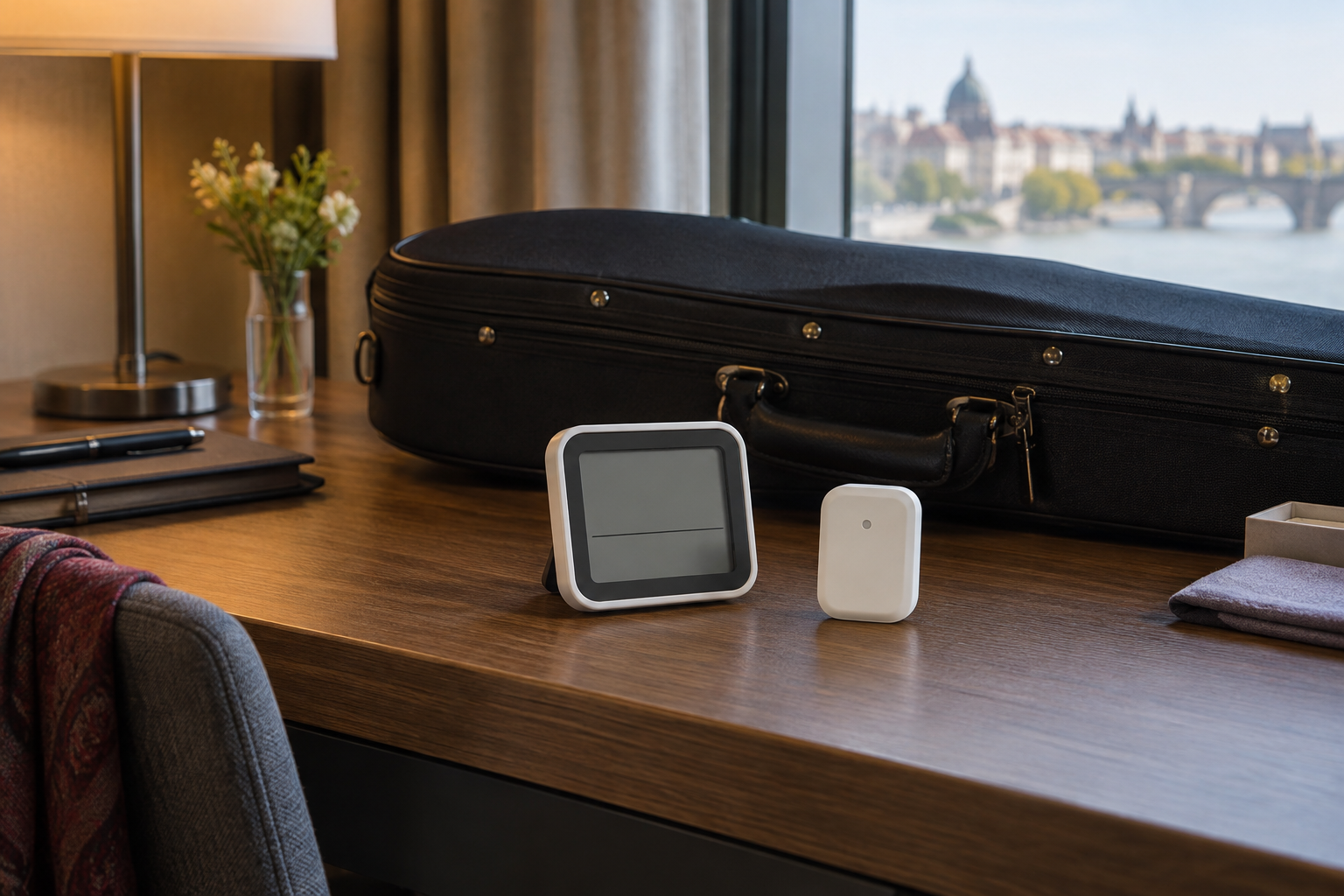
| SwitchBot Meter Plus | Room or roomy case | Large display; app history | 79 × 64.5 mm footprint; hub for remote alerts |
| ThermoPro TP357 | Display plus nearby phone | Bluetooth; one AAA battery | Not standalone Wi-Fi monitoring |
| D’Addario PW-HTS | Instrument-focused display | Set-point indicator; dated extremes | No continuous graph |
| INKBIRD ITH-10 | Simple slim display | Min/max; included mounting strips | Published humidity range starts at 30% |
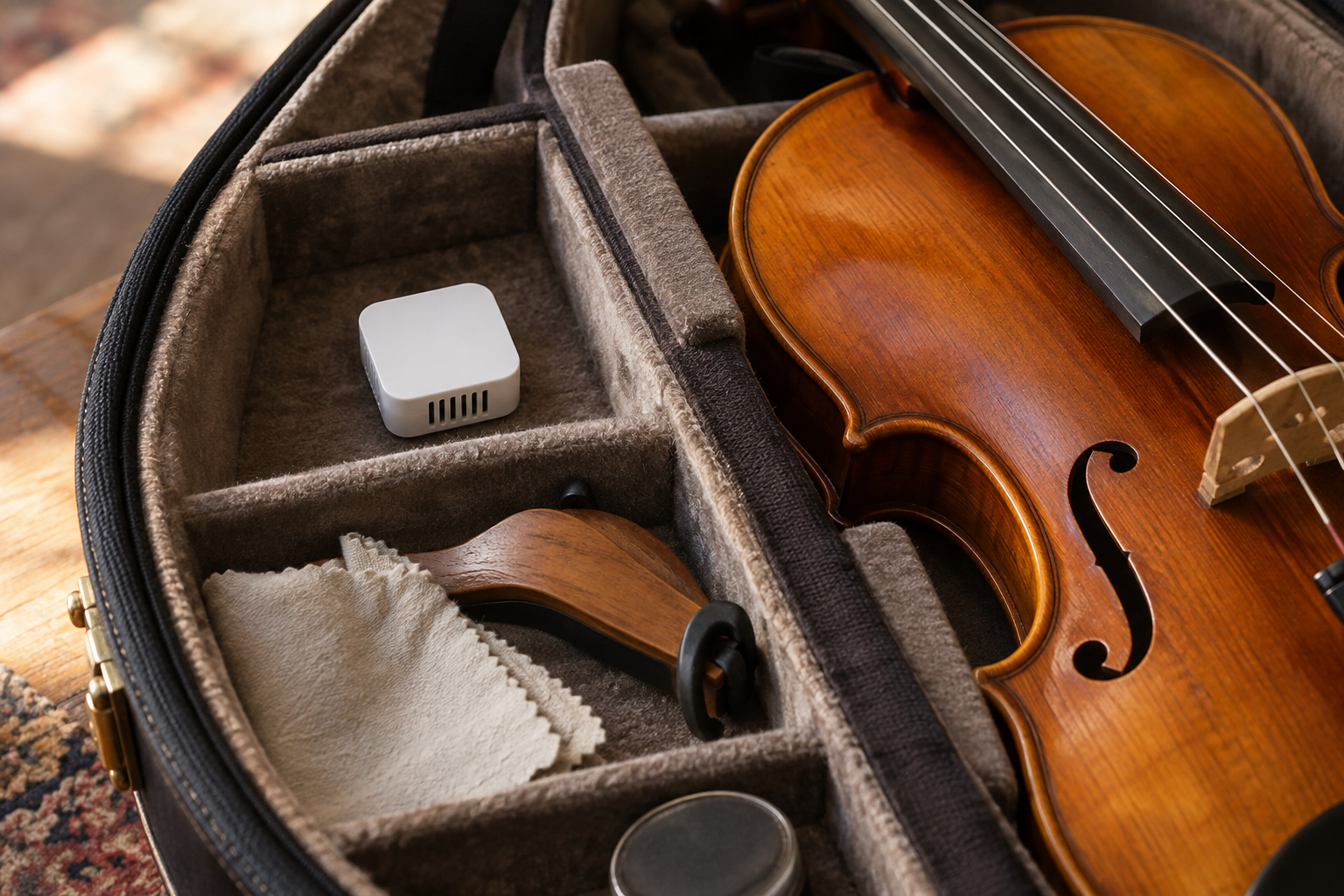
Which six hygrometers deserve a closer look?
Why choose Oasis OH-2+ for straightforward case checks?
The current OH-2+ combines a temperature/humidity display, min/max memory and a user calibration adjustment. Oasis lists humidity accuracy of ±3% between 20% and 80% RH on its product page. I would shortlist it for a quick pre-departure check without opening an app. Confirm the plus version in the listing: similar-looking older OH-2 models have different specifications. Fit and secure it in the case before trusting it on the road.
Pros: Readable without a phone; adjustable offset; instrument-oriented design. Cons: No continuous timeline; memory needs deliberate resetting.
Compare Amazon listings: Oasis OH-2+
When is SensorPush HT1 worth the extra setup?
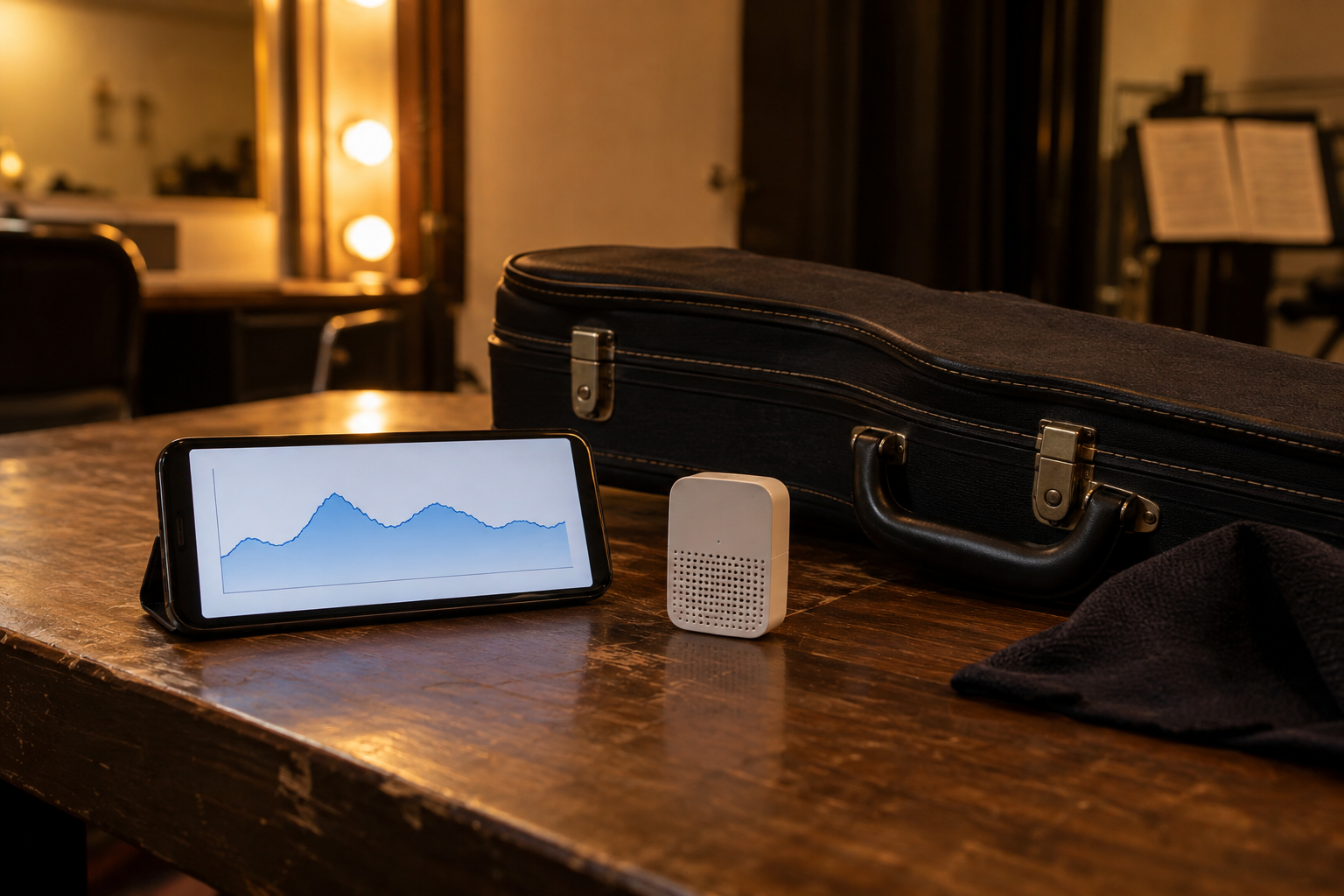
HT1 is a small screenless Bluetooth logger. Its manufacturer specifies one-minute samples and more than two weeks of onboard storage. I would use that history to compare a hotel night with the journey to the venue. The optional G1 gateway enables internet monitoring when it remains connected and within sensor range; the sensor alone is not a cellular tracker. A closed case and venue walls can reduce wireless reach.
Pros: Compact footprint; local logging; optional remote system. Cons: App required for readings; gateway adds cost and setup.
Compare Amazon listings: SensorPush HT1
Is SwitchBot Meter Plus better in the room than the case?
Meter Plus offers a large display and exportable history, but its 79 × 64.5 mm face is larger than the tiny screenless options. That makes it a useful dressing-room or storage-room monitor when case clearance is limited. Remote phone alerts require a compatible SwitchBot hub. I would buy it for readability and room comparisons, then only place it inside a case after checking the full depth and lid clearance.
Pros: Easy-to-read screen; history export; room-friendly placement. Cons: Bulky for fitted cases; remote alerts need extra hardware.
Compare Amazon listings: SwitchBot Meter Plus
Who should consider ThermoPro TP357?
TP357 pairs a local display with Bluetooth phone access and uses one AAA battery, according to the manufacturer’s manual. It suits an artist who wants a visible reading and occasional nearby app checks. Do not interpret its advertised open-space range as a guarantee through a dressing-room wall or closed case. Its comfort icons describe broad room conditions, not the care requirements of your individual violin.
Pros: Screen and app access; common battery format. Cons: Bluetooth is range-limited; generic comfort icons are not instrument targets.
Compare Amazon listings: ThermoPro TP357
What does D’Addario PW-HTS add for instrument owners?
D’Addario’s HTS includes a programmable humidity set point and memory that identifies the date and time of humidity and temperature extremes. I would compare it when a simple instrument-focused display is preferable to phone pairing. A recorded minimum with a timestamp can be more useful than an unexplained number. This is the PW-HTS display sensor, not the separate Humiditrak Bluetooth product; confirm the model in the seller’s photos and description.
Pros: Dated extremes; set-point indicator; no phone needed. Cons: No full time-series graph; similar brand product names can confuse listings.
Compare Amazon listings: D’Addario Humidity & Temperature Sensor PW-HTS
When is INKBIRD ITH-10 enough?
ITH-10 is a slim display with temperature and humidity min/max memory, supplied with a CR2032 battery and mounting strips. Its published humidity measurement range is 30–90% RH. I would consider it for ordinary storage checks, but choose a wider-range alternative if investigating very dry winter conditions is the main purpose. Thin does not mean safe anywhere: keep it away from the bridge, varnish and bow hardware.
Pros: Simple display; slim format; min/max readings. Cons: Limited low-humidity range; no app timeline or remote alerts.
Compare Amazon listings: INKBIRD ITH-10
What should you check before buying a case hygrometer?
Will it fit without touching the violin?
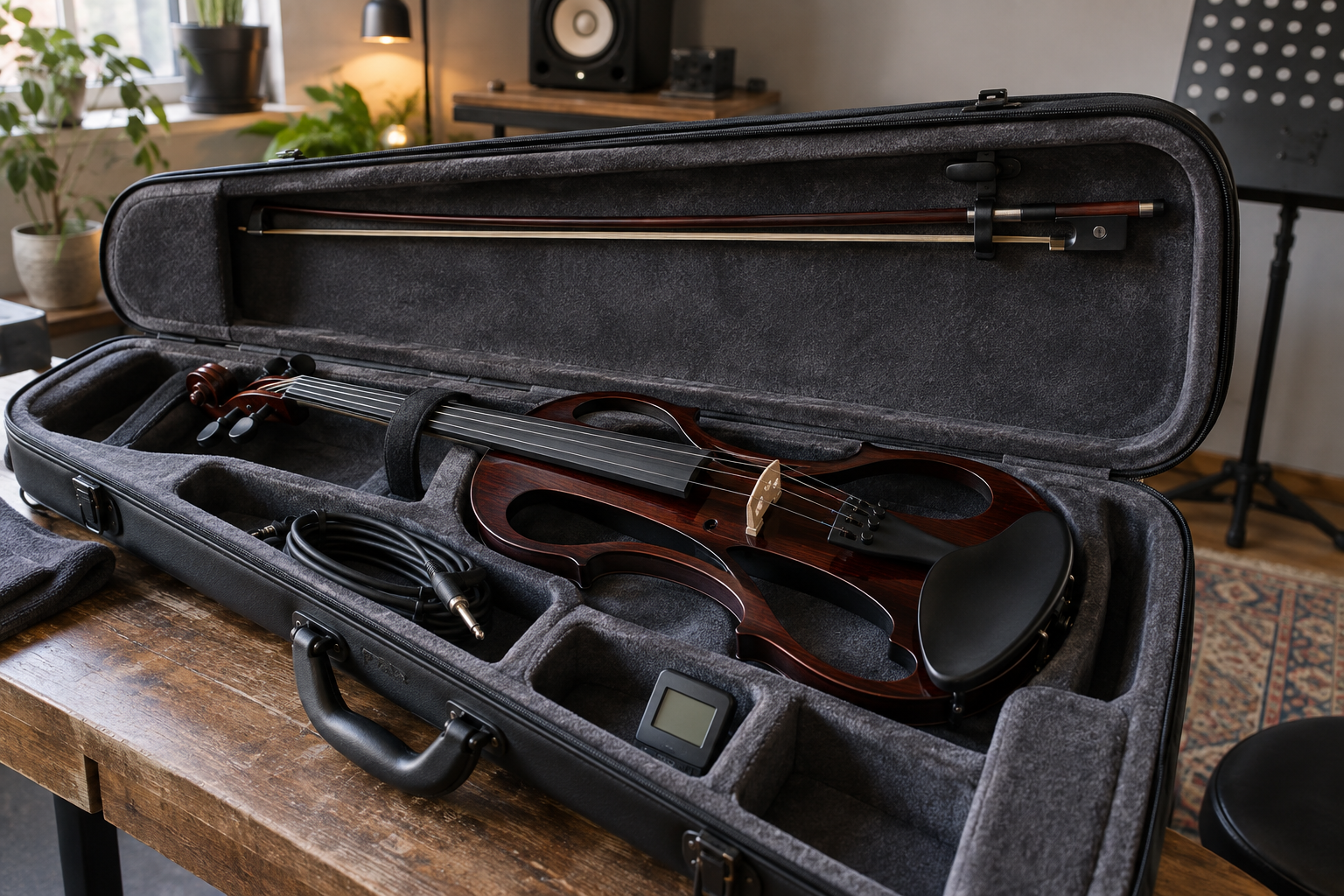
Measure an unused area with the instrument and bow secured, including the clearance under the closed lid. Never force the lid over a sensor. Use a case-approved attachment in a position with air exchange, not a sealed accessory pocket that measures a different microclimate. Keep vents clear and adhesive away from the instrument’s finish.
Do you need a number now or a history of the journey?
A display answers a quick backstage question; a logger can show whether a reading is a short transition or a long exposure. Before the first trip, pair the phone, check permissions and battery condition, and confirm that old samples download after reconnection. A Wi-Fi gateway left at home cannot follow a touring case.
How should you judge accuracy and calibration?
A one-percent display step is resolution, not proof of one-percent accuracy. Compare stated tolerances at the humidity you care about. If two meters disagree, let them settle together away from direct heat and use a reliable reference or the manufacturer’s calibration procedure. Do not adjust one merely to match another unverified meter.
What belongs in the total purchase cost?
Include batteries, a safe mounting method and any required hub. Amazon links here are searches, so results may include older revisions or accessories. Check model, seller, delivered price, return terms and phone compatibility. Manufacturer information was checked on September 22, 2026; no stock or price is guaranteed.
How does this support Tanya Strings’ stage preparation?
Tanya Strings is a world-class electric violin performer and content creator. My buying priority would be an instrument ready for the first note and a filming schedule that is not interrupted by avoidable storage problems. I would check a case before departure, after a major venue change and before a shoot, then investigate persistent changes rather than chase every percentage point. A useful meter makes that routine easier; it does not replace instrument care.
Does every electric violin need the same humidity target?
No. A wooden acoustic body, a wooden solid-body electric instrument and a composite design do not have identical construction. Follow your maker or luthier’s guidance. Yamaha’s acoustic-violin care guide emphasizes stable temperature and humidity and gives 50% humidity as an ideal; do not turn that into a universal electric-violin threshold. Its Silent Violin guidance also warns against excessive humidity and heat. A hygrometer never makes a hot car safe, and adding moisture without checking instrument guidance can create a different problem.
Yamaha acoustic violin care · Yamaha Silent Violin
What else should you know about violin case humidity monitors?
FAQ
Will a hygrometer humidify my violin case?
No. It measures temperature and humidity. Humidification or dehumidification requires a separate, instrument-appropriate solution and a suitable storage environment.
Can Bluetooth alert me while I am at another venue?
Not by itself. Remote access depends on the product’s supported gateway or hub, internet connection and radio range. Check the complete system before buying.
Is the built-in case gauge enough?
It may be enough if its readings are dependable and it gives the information you need. Compare it with a reliable reference before replacing it just to gain an app.
Where should I place the sensor?
Secure it where it samples the case air without touching the instrument or bow. Keep vents open and check lid clearance. Follow both case and sensor mounting instructions.
Should I leave a sensor loose beside the bridge?
No. A loose hard object can move during transport. Choose a secure location with clearance from delicate parts, or use a room monitor if the case has no safe space.