Violin News: Kreisler’s Final Weekend, Hadelich in Singapore and Bell’s Paganini
Today’s violin news moves between three versions of visibility: the Fritz Kreisler International Violin Competition is entering its final weekend in Vienna; Augustin Hadelich is playing Tchaikovsky with the Singapore Symphony Orchestra before a solo recital; and Joshua Bell has just released an all-Paganini album with the Academy of St Martin in the Fields. Competition pressure, a big concerto platform and a recording built around virtuoso repertoire might look separate, but all ask the same question: how does a violinist turn technical command into a clear public identity? Here is what matters on September 26, and what performers, presenters and fans can take from it.
What makes the Kreisler Competition’s final weekend worth following?
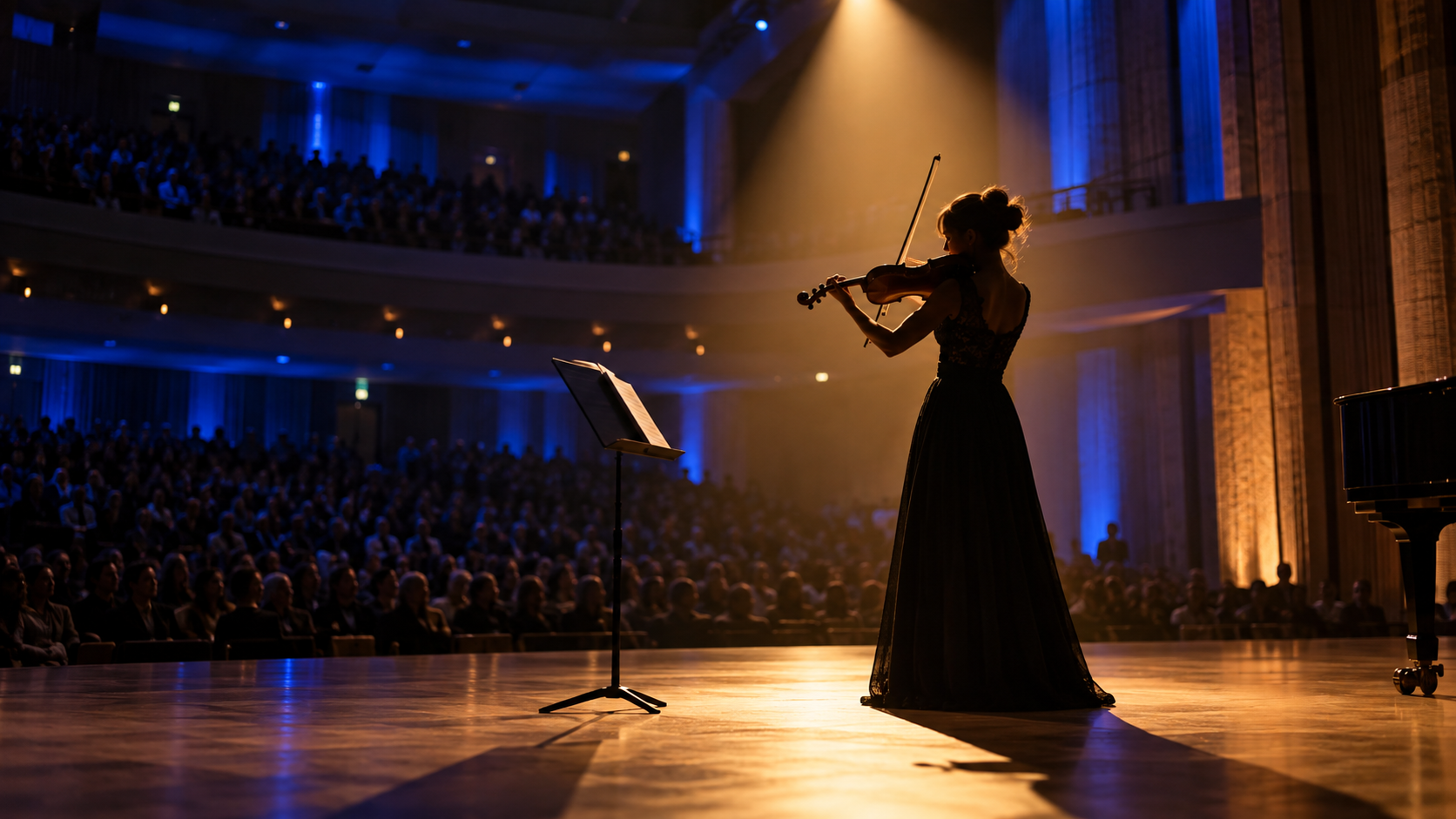
The 11th Fritz Kreisler International Violin Competition runs in Vienna through September 27, with the gala final at the Wiener Konzerthaus and the ORF Radio-Symphonieorchester Wien as its official orchestra. This is the point in a competition when interpretation becomes as visible as accuracy. A player must make a large hall feel immediate, communicate with an orchestra and committee, and keep a personal voice intact while the schedule becomes more exposed.
For listeners, the useful comparison is not simply who plays the fastest. Notice how finalists shape a first entrance, how they release tension before a cadence and whether the sound changes character rather than only volume. Those are the decisions that make a performance readable from the back of a hall and on a stream.
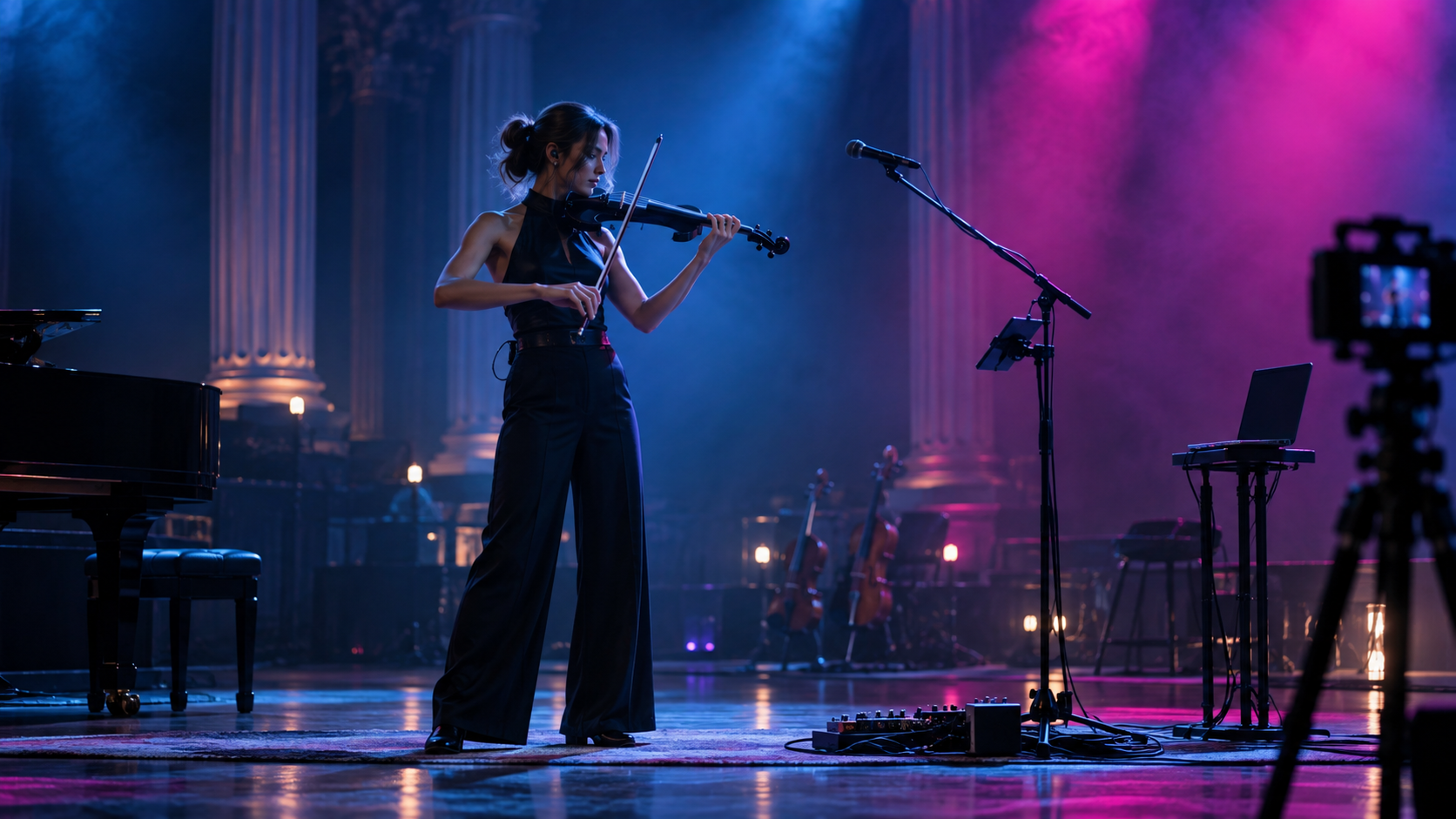
Tanya’s performer take: pressure does not reward a more complicated identity; it rewards a more legible one. Electric violinists face a parallel test when they step into a high-stakes festival slot: the patch changes, visuals and backing parts must support the musical idea, not distract from it. Build one memorable arc before adding another effect.
- For performers: rehearse the opening ten seconds as seriously as the most difficult page.
- For presenters: a final works best when the audience can understand the stakes, even without specialist knowledge.
- For fans: follow the final programme and orchestra collaboration, not only short highlight clips.
Why is Hadelich’s Singapore weekend a useful model for a solo career?
The Singapore Symphony Orchestra’s 2026–27 season announcement places Augustin Hadelich with the orchestra on September 25 and 26 for Tchaikovsky’s Violin Concerto, conducted by Pierre Bleuse. The same page lists his September 27 recital at Victoria Concert Hall, moving from Telemann and Perkinson through Ysaÿe, O’Connor, Paganini and Bach.
That sequence is elegant programming rather than mere diary filling. The concerto shows how a soloist leads a large shared machine; the recital shows the details of his own sound world. For an artist or content creator, the lesson is practical: let adjacent appearances reveal different facets of the same musical character. A polished performance video can lead to a more intimate live session, a short explanation of repertoire or a behind-the-scenes soundcheck without changing the artist’s core message.
What does Joshua Bell’s new Paganini project say about recording now?
On September 23, Joshua Bell’s official site announced the release of Paganini on Sony Classical, made with the Academy of St Martin in the Fields and paired with an Asian and European tour. The project centres on Paganini’s First Violin Concerto and Cantabile: repertoire that can easily become a display case, but here is framed as a coherent artist and ensemble statement.
The valuable part is the framing. Virtuosity lands more strongly when the listener knows why this repertoire belongs to this artist, this group and this moment. That applies directly to crossover releases too. A sharp live clip needs a title, visual language and a short story about the arrangement, not a pile of unrelated tricks.
Tanya’s performer take: the best contemporary violin content lets craft show without making the audience work to decode it. If your electric set includes fast passages, looping or an unusual tone, give the viewer one melodic hook and one visual focal point. Complexity can arrive after connection.
What should violin fans watch next?
The Kreisler Competition concludes on September 27, Hadelich’s Singapore recital follows the orchestral dates the same day, and Bell’s new recording begins its touring life across Asia and Europe in October. Together, these stories are a reminder that the violin remains most compelling when a clear musical personality can travel between a judged stage, a concert hall and a recording. That is the standard worth carrying into every show: technical preparation, yes, but also a reason for the audience to lean in.