Violin News: Vienna, Varna and the Next Competition Stage
This week’s violin news moves from a competition gala in Vienna to a vivid acoustic pairing in Varna, then forward to New York’s next public competition stage. The Fritz Kreisler International Violin Competition concluded its 2026 run on September 27 at the Wiener Konzerthaus; Varna marked a venue anniversary with violin and organ; and the Walter W. Naumburg Competition has published its October public-round plan. For performers and presenters, the connection is simple: make the musical idea visible before the first note, then give the audience a reason to follow it beyond the room.
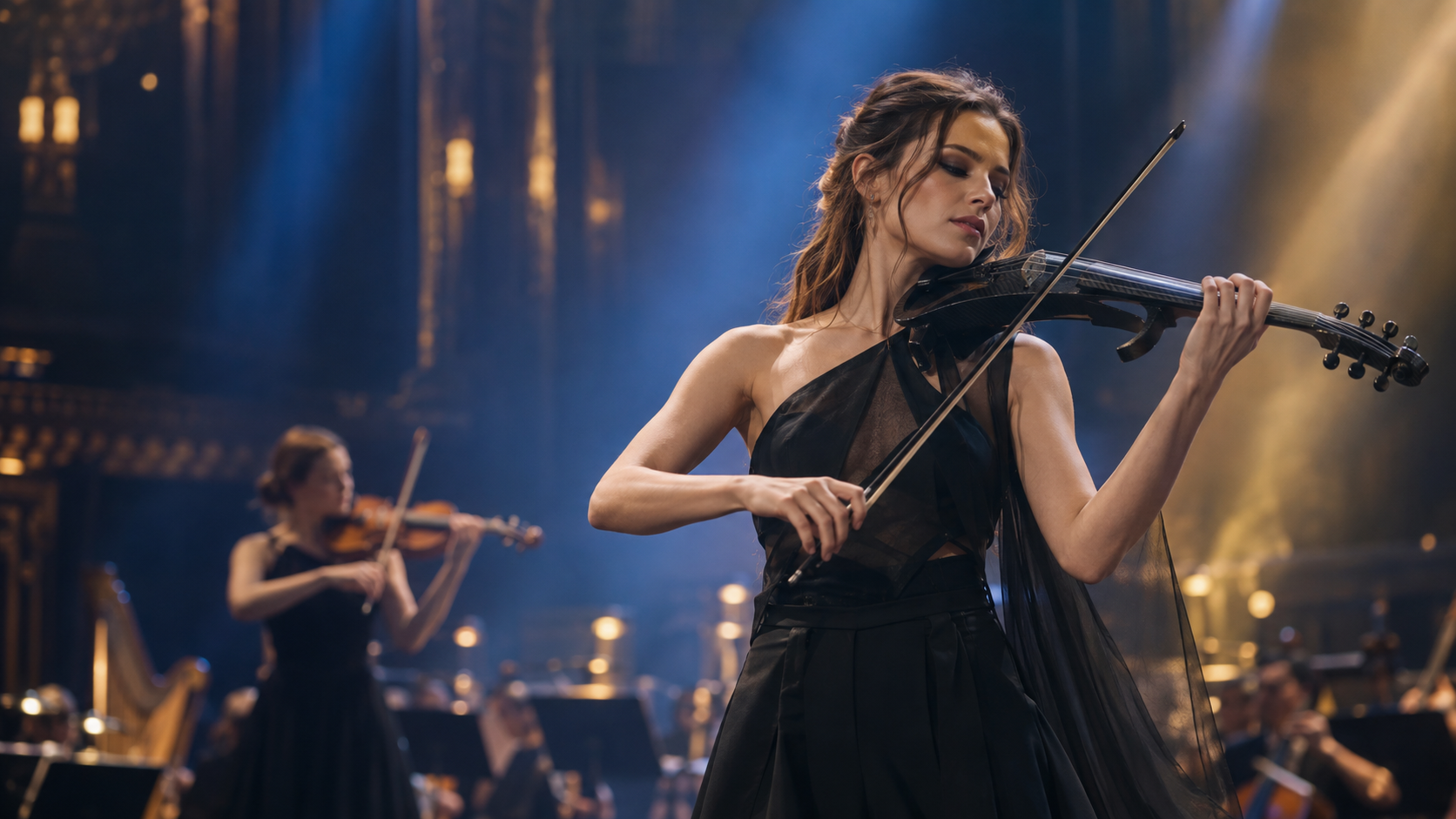
What does a competition finale teach about building an event?
The 11th Fritz Kreisler International Violin Competition ran from September 18 to 27, with its gala final at the Wiener Konzerthaus and the ORF Radio-Symphonieorchester Wien as its official orchestra. A finalist is not only presenting a concerto; they are walking into a hall with a narrative, an orchestra and an audience ready to compare artistic points of view.
That context changes how a performance lands. The memorable player is often the one whose sound has a clear centre from the opening phrase, whose pacing holds through quieter transitions, and whose collaboration with the conductor looks active. A competition concert is high-pressure, but it is still a concert. The public should leave with a musical memory, not merely a scoreboard.
Tanya’s performer take: an electric violin show needs the same distinction between skill and event design. A clear opening image, purposeful lighting cue and well-shaped final track make the set feel authored. For planners, build the artist’s entrance and exit into the run sheet.
- For performers: rehearse the first ten seconds of each set as carefully as the solo.
- For event teams: give the audience a concise programme hook before the lights go down.
- For fans: listen for how each artist manages silence and the return after a peak.
Why does the Varna violin-and-organ pairing matter?
On September 27, the Festival and Congress Centre in Varna presented Pavel Kohout and Vít Kohout in a violin-and-organ programme for the building’s 40th anniversary. The listed repertoire moved through Bach, Vitali, Paganini, Dvořák and Smetana. The idea is immediately legible: the violin can sing above the organ’s sustained mass, disappear into its colour, or cut through it with a sharply articulated line.
The combination asks both musicians to think about space. A violinist decides when to ride the organ’s resonance and when to leave a clean edge around the note; the organist has to make registration and release serve the line. The contrast is easy to hear, which makes the concert approachable without reducing its ambition.
Electric violin artists can borrow the principle without copying the instrumentation. Pair a dry direct tone against a broad pad, or a close bow sound against a long delay tail, and make the contrast part of the arrangement. A good soundcheck is where that story begins: establish the quietest playable texture first, then decide how much width the bigger moment needs.
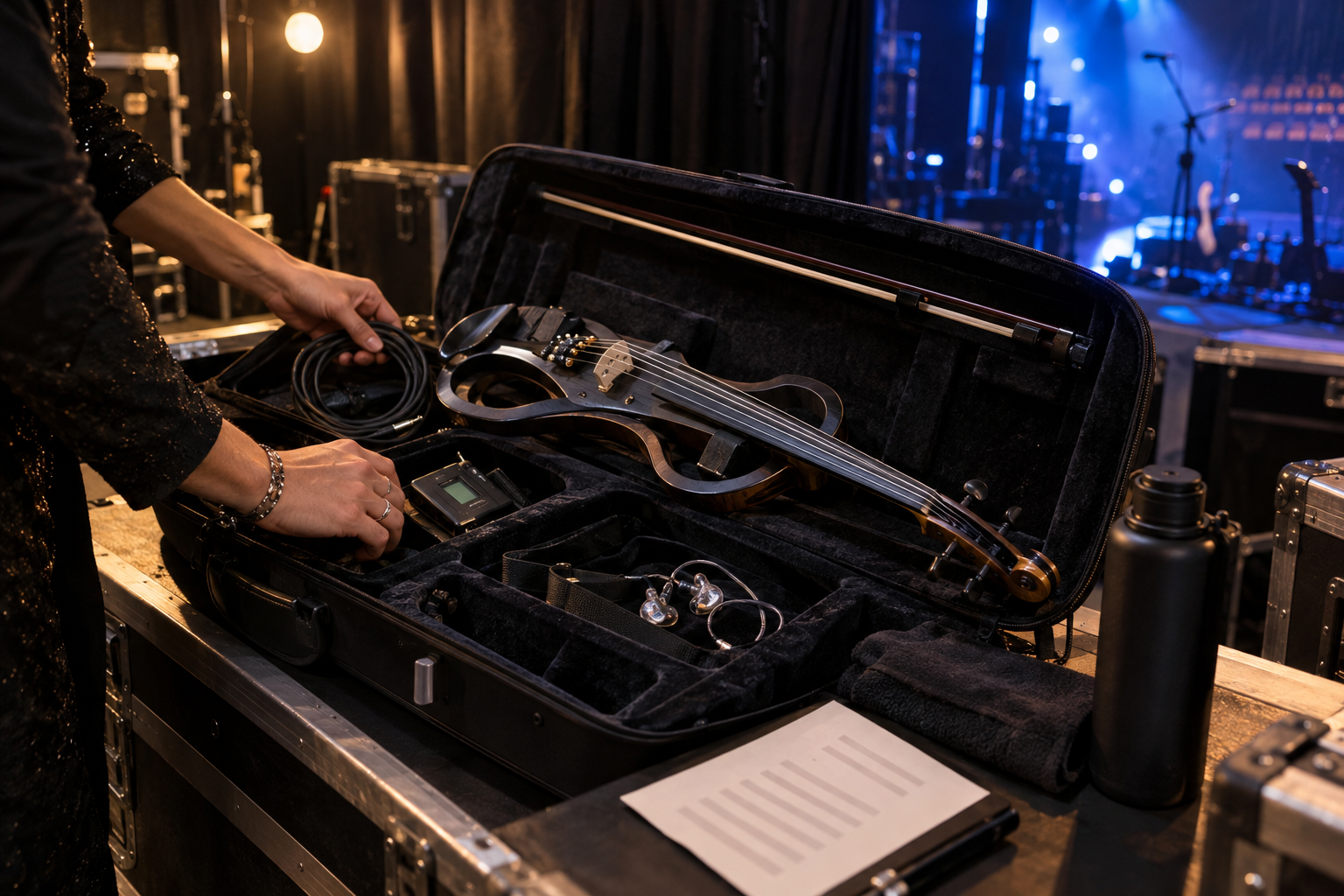
How is Naumburg turning a contest into a public journey?
The Walter W. Naumburg Foundation has set its 2026 violin competition for October 27 to November 1, with public, livestreamed semifinal and final rounds on October 31 and November 1. The semifinal is scheduled for Greenfield Hall at Manhattan School of Music; finalists move to Kaufmann Concert Hall at 92NY. The prize also includes New York recitals and a commissioned work, extending the story beyond one weekend.
A livestream provides access, but it works best when the event supplies a path: what is open, where it happens, what follows, and why the winner’s next project matters. Presenters can use the same thinking for a club date, crossover concert or festival appearance. Announce the live moment, show preparation, and offer one credible next destination.
What should we carry into the next show?
Vienna makes virtuosity part of an occasion. Varna shows how a distinctive pairing can turn familiar music into a fresh listening experience. Naumburg gives a competition an afterlife through access, recitals and a new work. The shared lesson is practical: define the sound world, protect the transitions, and let people know what comes next. That is how a violin performance becomes a story that continues after the applause.