Violin News: Wieniawski, Paganini and a Festival Signal
This week’s violin news points toward October with three different ways a public-facing string career can travel. Poznań’s 17th International Henryk Wieniawski Violin Competition opens on October 8 and begins its first stage the next day. Joshua Bell and the Academy of St Martin in the Fields have released their all-Paganini album, PAGANINI, before Asian and European dates. Meanwhile, Bratislava Music Festival has placed Gil Shaham in a large international programme. The direct Tanya Strings takeaway: repertoire, recording and event framing work best when they make one story people can follow from screen to stage.
Why is the Wieniawski Competition worth watching now?
The official Wieniawski schedule sets out a real public arc: an opening concert on October 8, Stage 1 from October 9–12, Stage 2 from October 13–15, chamber-orchestra Stage 3 on October 17–18, then orchestral semi-finals and a final from October 20–22. Prizewinner concerts follow in Poznań and Warsaw. A major competition is therefore not simply a final result; it is a sequence of changing rooms, partners and pressures.
The official programme makes that transition audible. It starts with Wieniawski caprices and required works, moves through sonata repertoire, then asks musicians to meet Polish twentieth-century writing with orchestra before large concerto rounds. Players have to hold onto a personal sound while changing scale, acoustic and collaborative responsibility. That is a useful test for anyone who performs a varied live set.
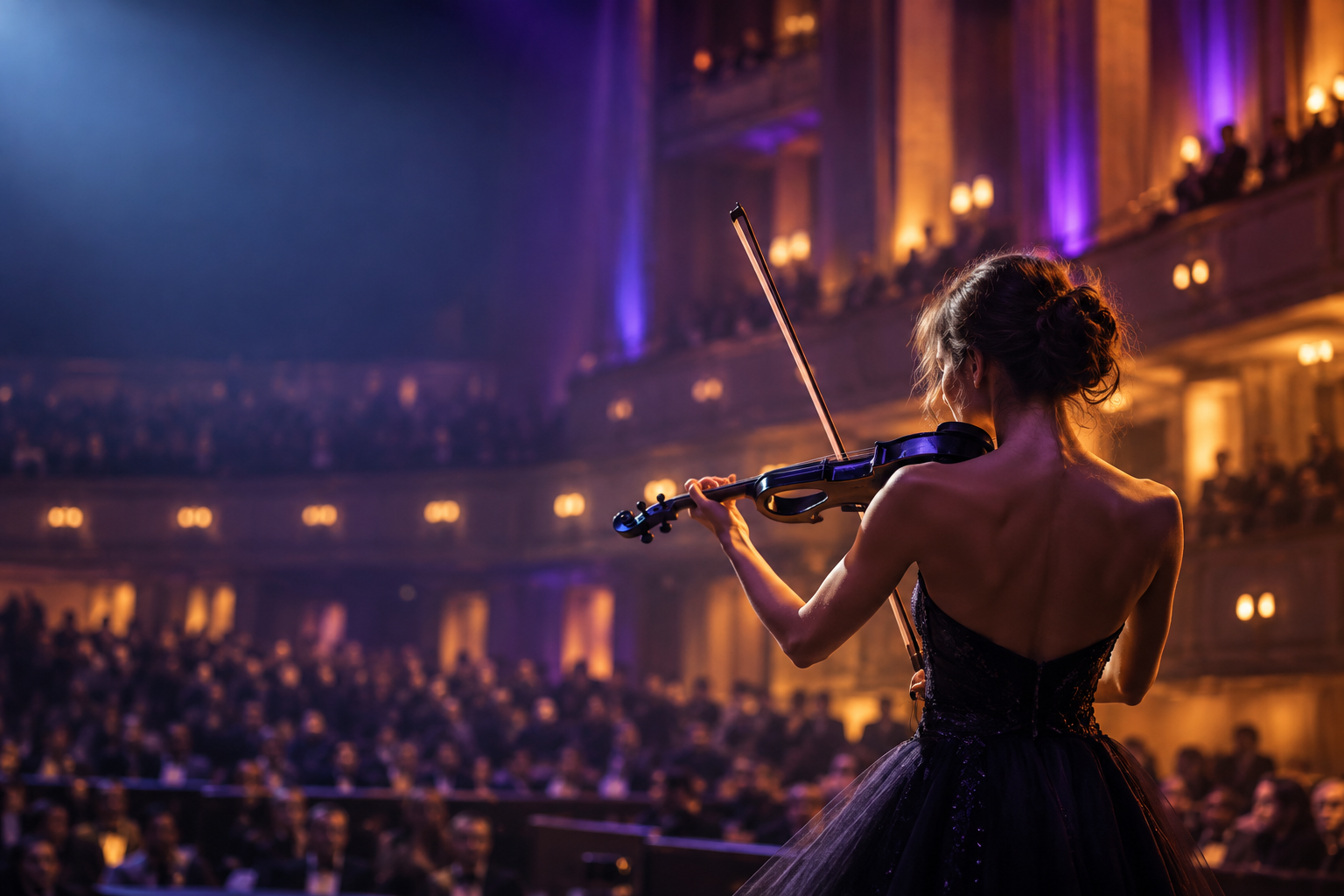
Tanya’s performer take: electric violin artists can borrow this architecture without copying the repertoire. Open with a focused solo statement, introduce a collaborative section, change the texture, then finish with a genuine lift. Event teams can support those turns with intentional lights, camera cues and movement, rather than treating every track as the same visual scene.
- For performers: give each section a new job, not merely more volume.
- For planners: publish a concise running-order hook before doors open.
- For fans: hear how a performer adapts when the ensemble grows around them.
What does Joshua Bell’s new Paganini project signal?
On September 23, Bell’s official site announced PAGANINI on Sony Classical with the Academy of St Martin in the Fields, where he is music director. The all-Paganini release includes Violin Concerto No. 1 and Cantabile; its announcement also connects the record to Asian and European touring. That route matters. Listeners get a clear path from an on-demand recording to a live occasion, while the artist has a coherent reason to keep the conversation moving.
Paganini carries spectacle, but it also asks for a singing line after the display. A project built around virtuosity becomes memorable when both elements receive room. Bell’s soloist-and-music-director role is part of the appeal too: it makes the ensemble relationship visible, rather than presenting the orchestra as a backdrop. For music fans, the valuable question is not only how difficult the passage is, but how the featured voice changes the group’s energy.
Tanya’s performer take: a content creator does not need an orchestra to use the same idea. A polished performance video can lead to a rehearsal clip, a short sound-design explanation and an announced date where the full concept exists live. Keep the visual language and title language consistent so the audience recognizes the thread immediately.
How does Bratislava make a festival programme feel current?
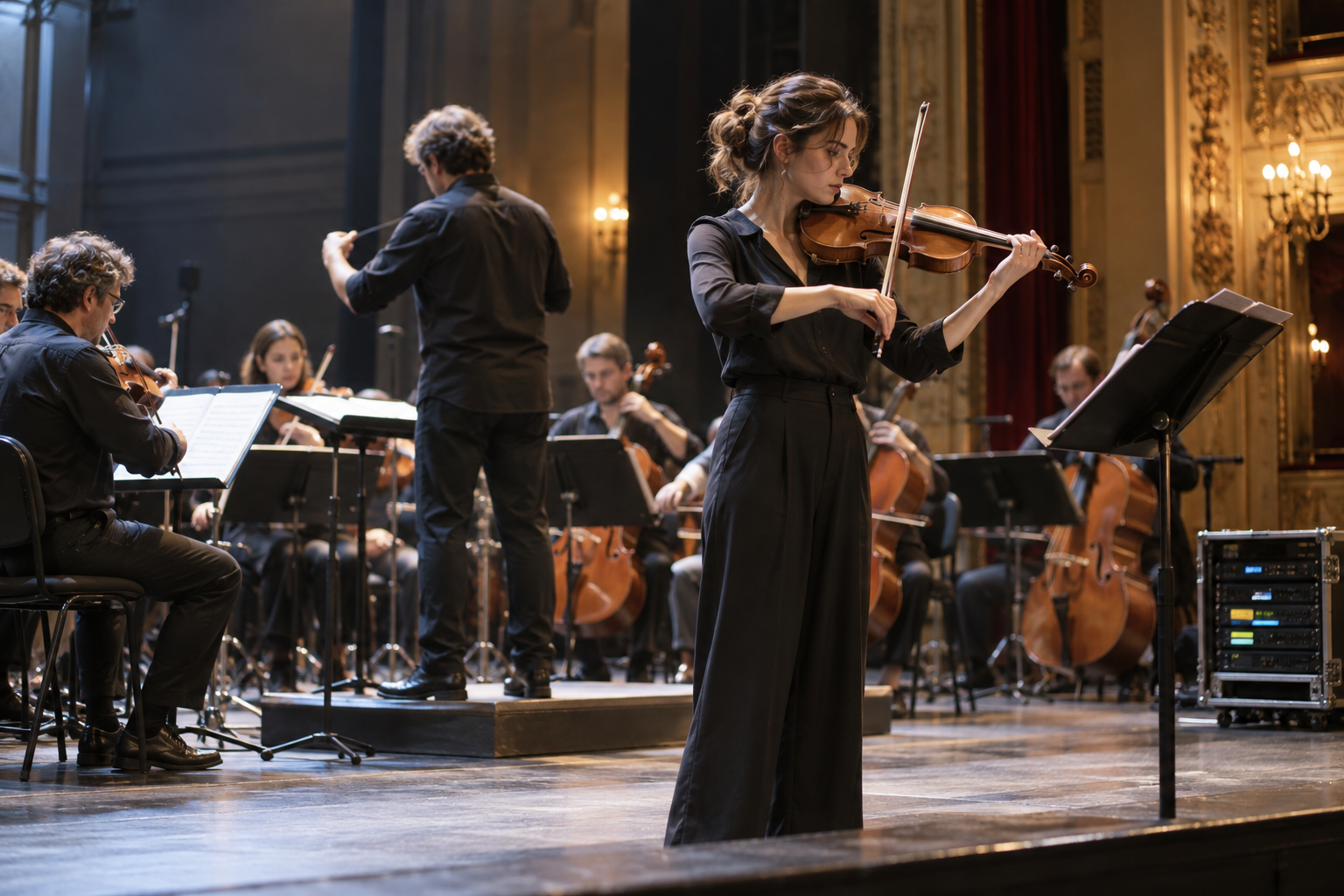
The 61st Bratislava Music Festival programme runs from September 23 to October 11 and includes the Czech Philharmonic, conductor Elim Chan and violinist Gil Shaham. It surrounds that familiar point of entry with Slovak musicians, international orchestras, chamber concerts and a broad repertoire frame. The calendar is not just a pile of distinguished names: it gives an audience several routes through an international festival.
That is a practical model for presenters. A recognizable artist can draw the first look, but clear curation tells audiences what they might discover next: a composer, a local scene, a different hall or an unexpected ensemble. Give that relationship a sentence in the announcement. A poster alone usually cannot carry the idea.
What should we carry into the next show?
Poznań shows how repertoire can build a day-by-day dramatic line. Bell’s release shows how a record and a tour can reinforce one another. Bratislava shows how a festival gains shape beyond its individual dates. The shared lesson is to decide what listeners should notice first, what they should discover next and where the experience continues. Tanya Strings approaches electric violin performance in exactly that performer-led frame: world-class playing, stage intention and creator-ready storytelling together.