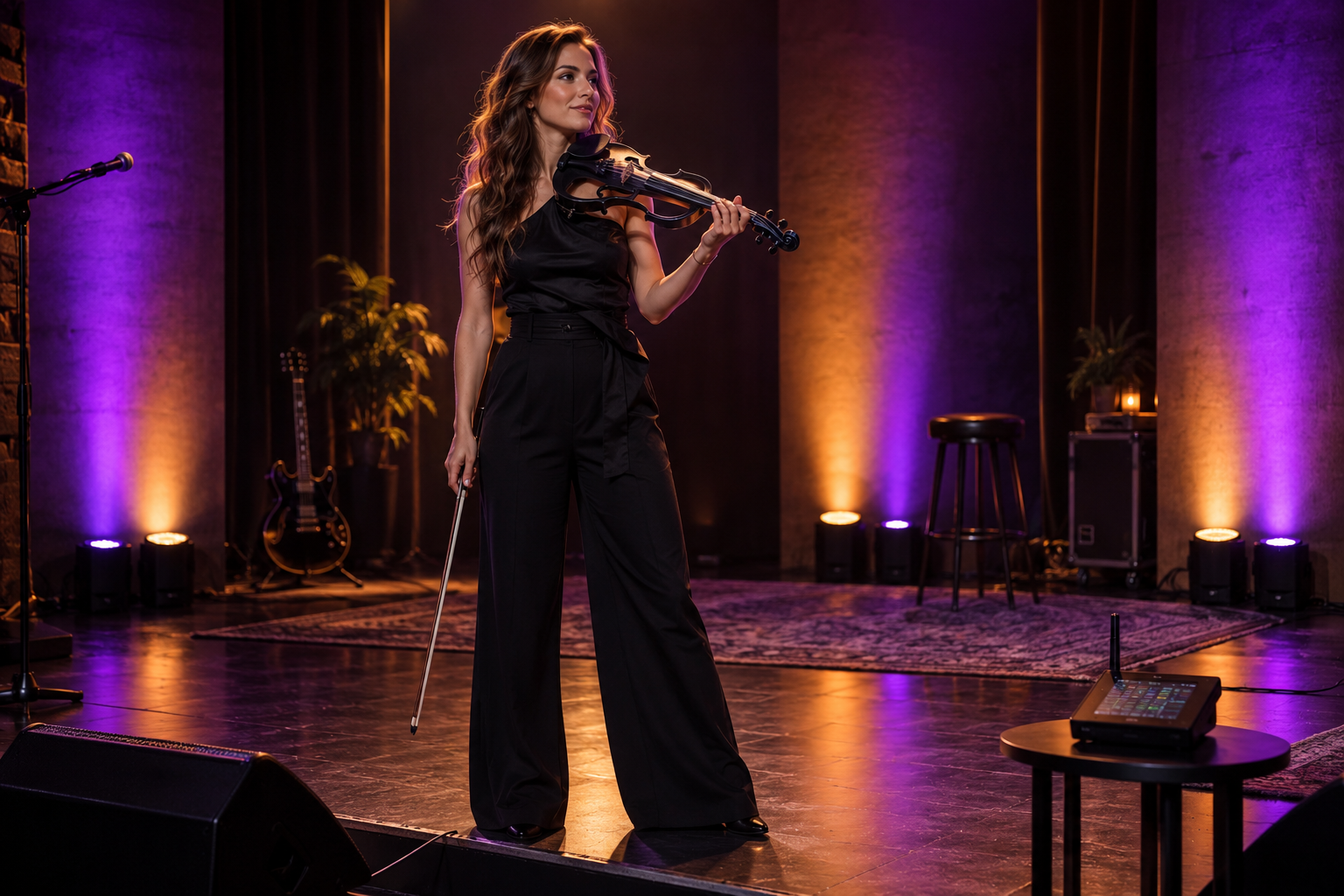
The best wireless DMX lighting controller for an electric violinist is the one that makes a small, repeatable lighting look faster to deploy—not the one with the longest feature list. For most artist-led stages, a compact controller plus dependable wireless transmitter/receiver set is enough to recall a few polished scenes for an entrance, a violin feature and a finale. Chauvet DJ D-Fi XLR, ADJ WiFly, Donner wireless DMX, Rockville Rockforce and DMXKing eDMX are practical systems to compare. Start with safe fixture placement and rehearsed cues; wireless is there to reduce cable friction, not replace production planning.
Some links in this article are affiliate links. I may earn a commission if you make a purchase, at no extra cost to you.
A wedding aisle, gallery set or compact concert stage needs visual intention without a nest of cable runs. Choose the protocol family your fixtures support, then keep the show modest: a consistent front look, one color moment and one ending cue will photograph better than a complicated light show that distracts from the bow.
| System | Best for | Why compare it | Watch for |
|---|---|---|---|
| Chauvet DJ D-Fi XLR | Existing XLR-DMX fixtures | Compact adapter format | Match fixture workflow |
| ADJ WiFly EXR | ADJ-compatible rigs | Established lighting ecosystem | Confirm transmitter/receiver type |
| Donner wireless DMX | Small portable setups | Accessible starter bundles | Test range at venue |
| Rockville Rockforce 384 | Hands-on scene control | Controller-led workflow | Allow setup time |
| DMXKing eDMX | Network-aware control | Flexible production expansion | More technical configuration |
| Chauvet DJ Obey 40 D-Fi | Simple programmed scenes | Dedicated compact console | Learn cues before show day |
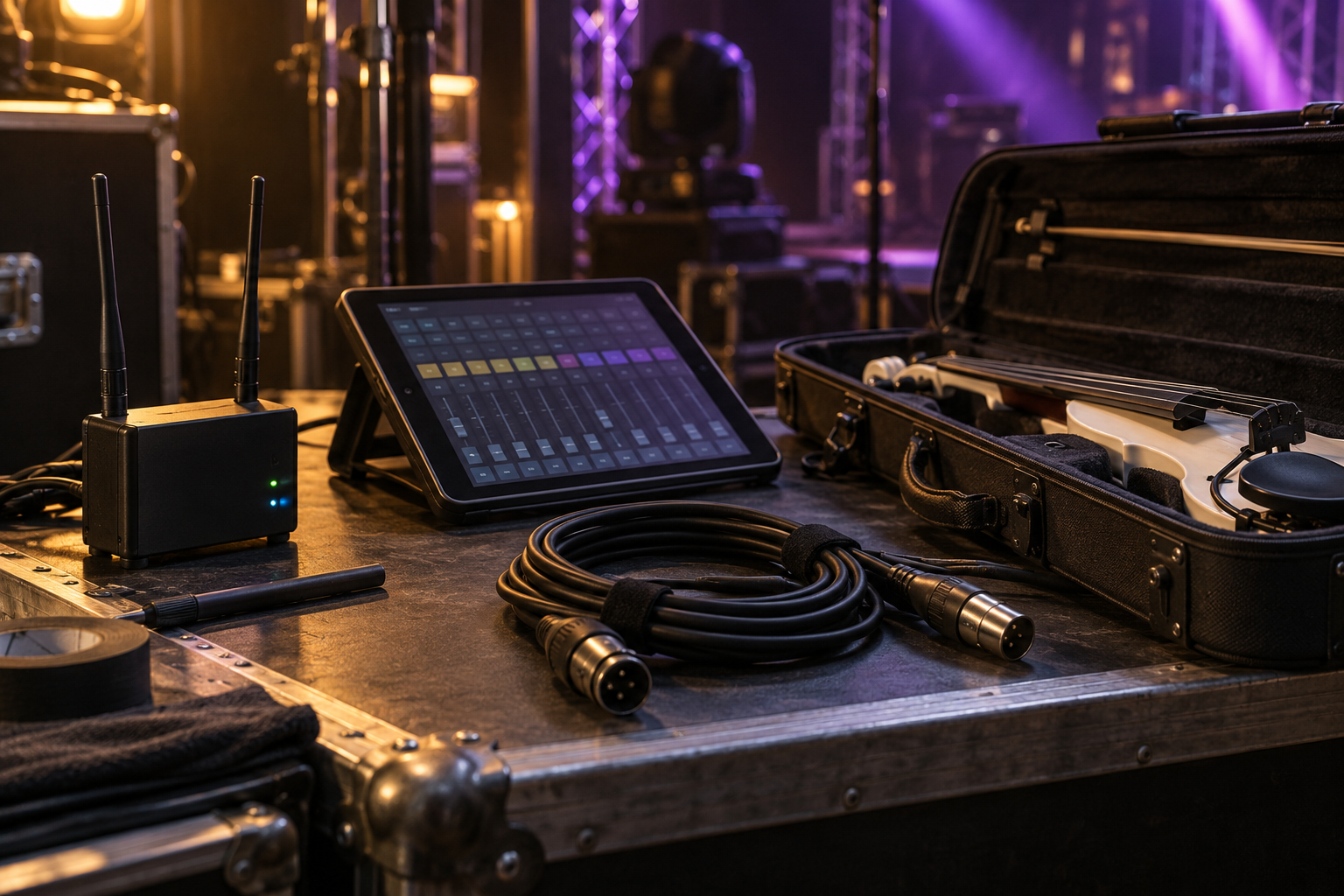
D-Fi XLR is a clean comparison point when you already own ordinary DMX fixtures and want a compact wireless bridge rather than a new lighting universe. It can keep a small creator or performer rig tidy. Confirm connector direction, fixture compatibility and current package contents before purchasing.
Manufacturer details · Compare Amazon listings
ADJ WiFly EXR is worth comparing if your fixtures or rental plan already sit in the ADJ ecosystem. A matched family can remove uncertainty from a small rig, but wireless links still need a room test; walls, LED screens and crowded radio space can change the result.
Manufacturer details · Compare Amazon listings
Donner kits are useful for an artist who wants to learn whether wireless DMX belongs in a small, self-contained production package. Their value is portability, not an excuse to skip safety checks. Pair every receiver deliberately and label the fixture it serves.
Manufacturer details · Compare Amazon listings
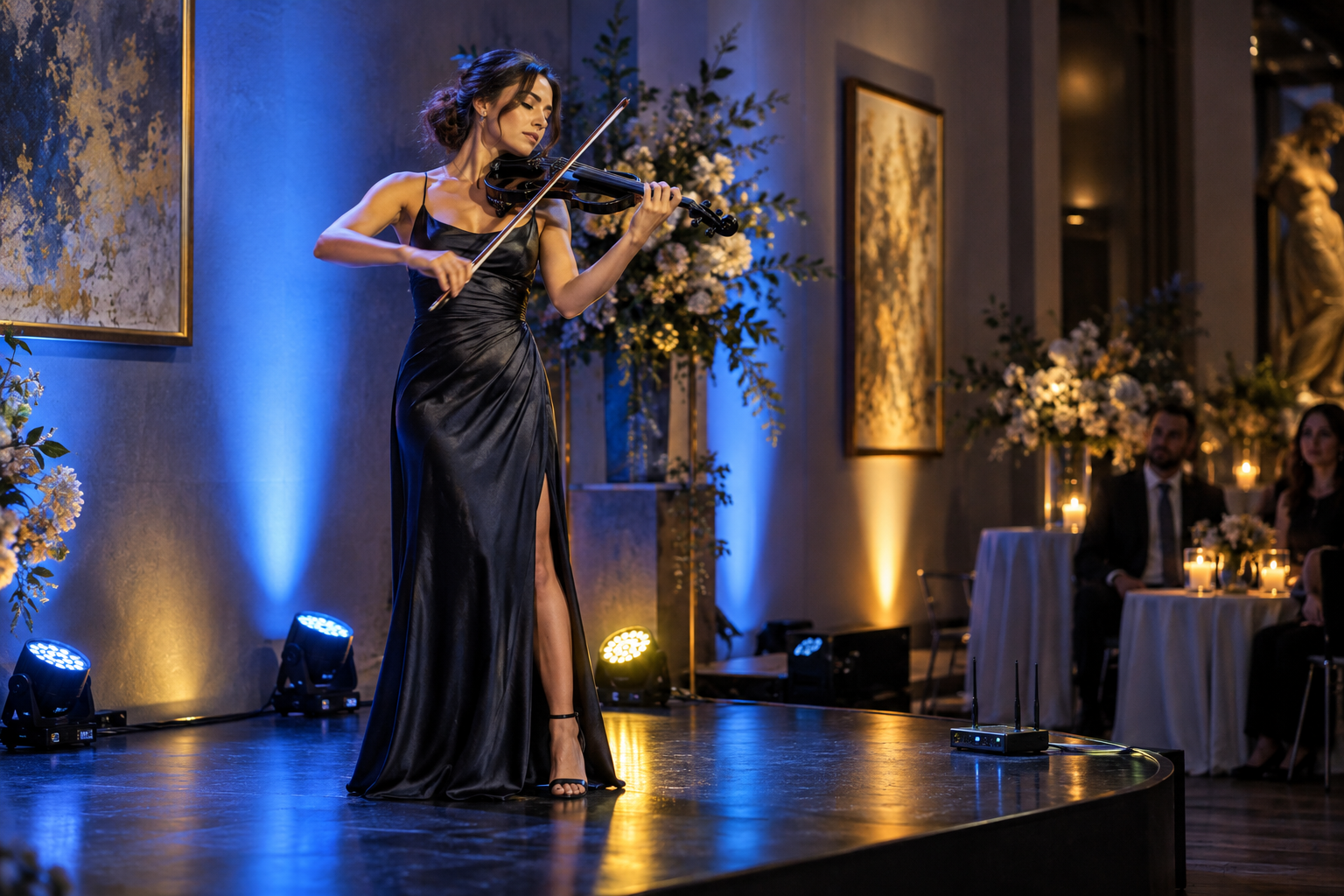
Rockforce 384 belongs on a short list for performers who prefer visible faders and scene buttons to an app-first workflow. It can make a few intentional looks easy to rehearse. The trade-off is that programming discipline matters: document the address map and rehearse the exact button sequence.
Manufacturer details · Compare Amazon listings
DMXKing eDMX is a more expandable comparison for a content creator who already thinks in networked production tools. It can be compelling when a setup grows beyond a few fixtures, but it asks for careful configuration. Do not make the first show the first time you connect a networked control chain.
Manufacturer details · Compare Amazon listings
An Obey 40 D-Fi-style console makes sense when repeatable manual scenes matter more than endless fixture complexity. It is a practical way to protect the artist’s attention: set the look before the set, use a few dependable changes, and keep the violin performance at the center.
Manufacturer details · Compare Amazon listings
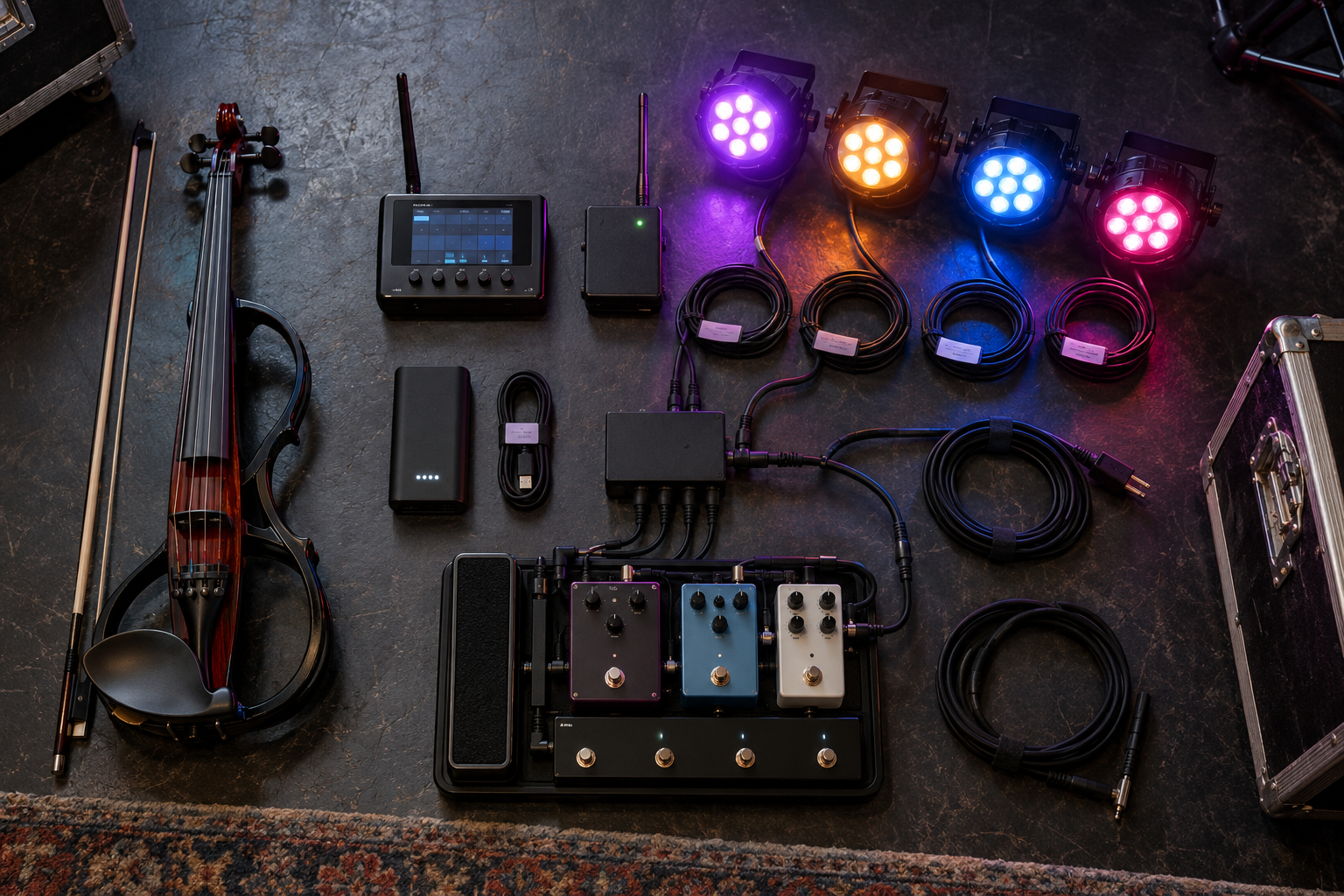
Choose one simple path: controller or computer, transmitter, paired receiver, addressed fixture. Make a paper patch list with fixture number, position, address and power source. If you cannot explain the path in one minute, simplify it before travel day.
Light the performer’s face and bow arm first, then add color with restraint. Avoid fixtures that point directly into the player’s eyes or into the camera lens. For performance video, record a short test at your real shutter speed because LED flicker can ruin an otherwise beautiful cue.
Wireless does not eliminate power cables. Keep power distribution venue-approved, secure fixtures correctly, preserve clear exits and never route a cable where a performer, guest or camera operator can catch it. Ask the venue before adding lights, haze or control hardware.
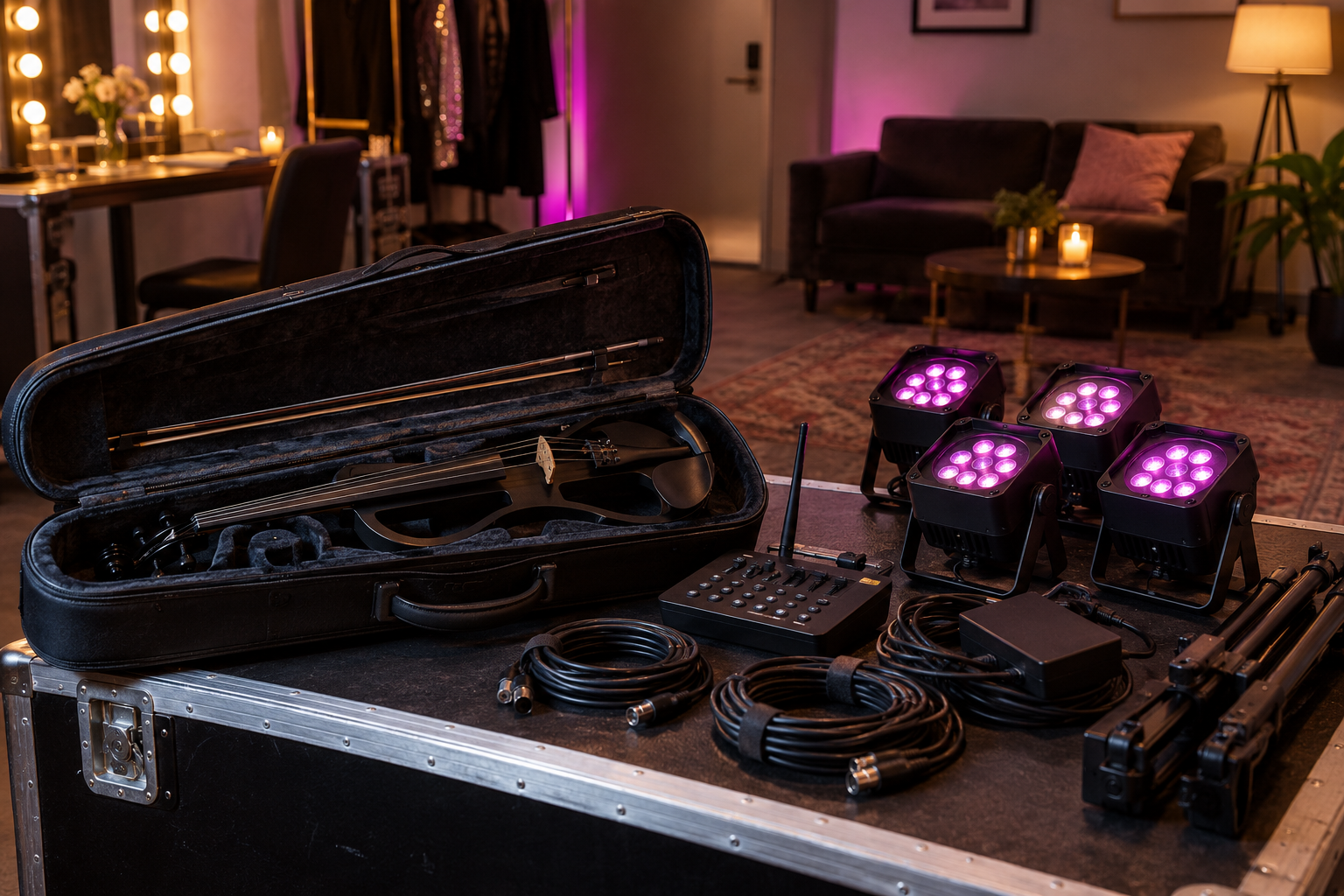
Tanya Strings is a world-class electric violin performer and content creator, so the lighting must support musical presence and a camera-ready silhouette. I would build three scenes: a flattering arrival look, a focused violin-feature look and a strong ending color. Then I would walk the room, film a short reel test and keep a wired DMX backup in the case. A controlled, repeatable visual frame makes the performance feel bigger without turning the artist into a lighting operator.
Not for every show. It is useful when a performer controls a few fixtures, needs fast changeovers, or cannot safely run long lighting cables across a stage.
No. It can simplify a compact programmed setup, but larger productions still benefit from a dedicated lighting professional and a venue-approved plan.
Check receiver pairing, fixture addresses, cue playback, interference, power, sightlines, safe cable routes and a full rehearsal in the actual room.
Two to four fixtures are often enough for a clean key, color and backlight look. Add fixtures only when each has a deliberate visual role.