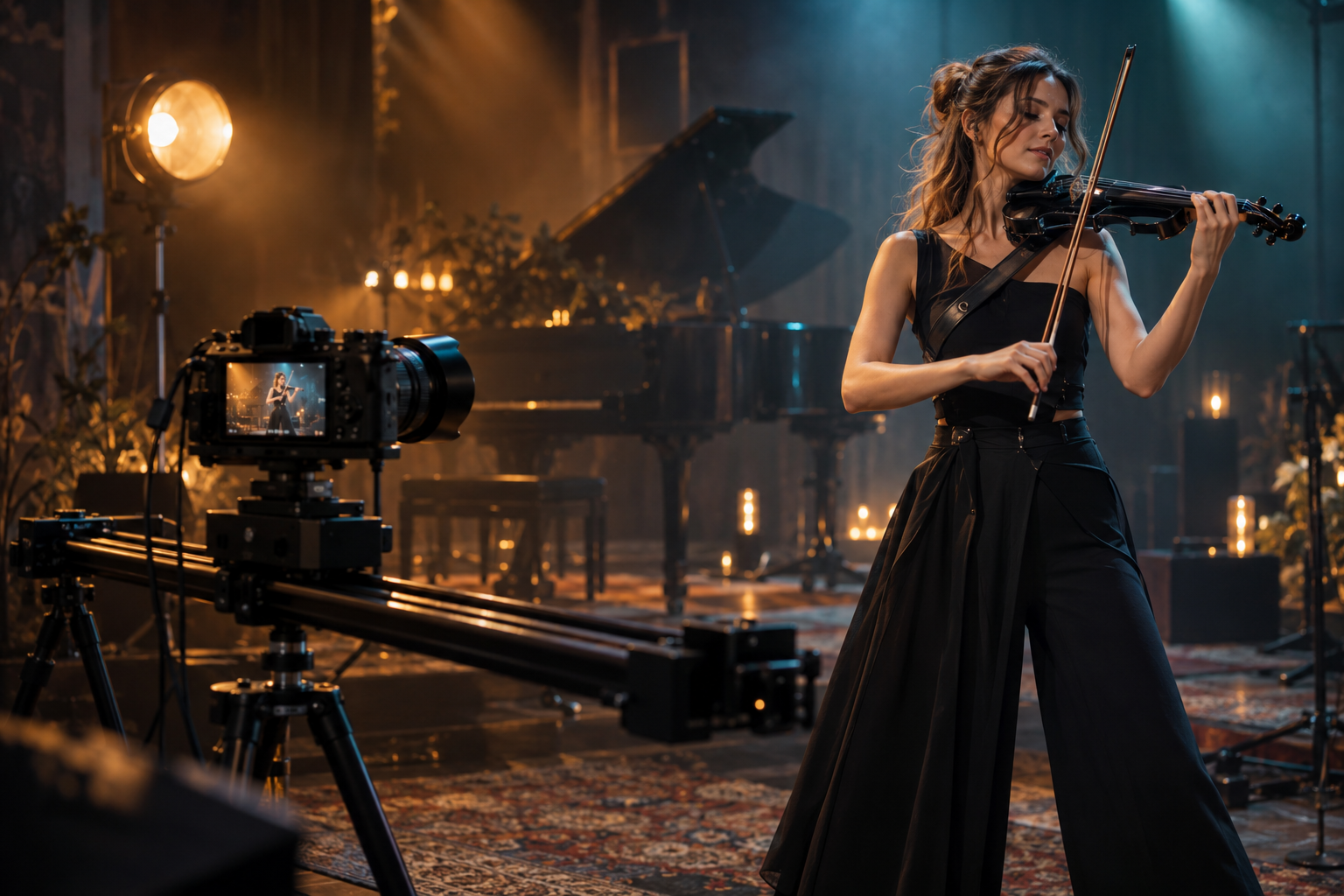
The best camera slider for an electric violin performance video is the one that creates slow, repeatable movement without taking attention away from the music or making a one-person shoot fragile. For travel clips, edelkrone SliderONE v3 is the compact benchmark; for a more visible studio move, NEEWER ER1-80, Zeapon Micro 3 E800, iFootage Shark Slider Nano II, GVM 80 cm Motorized Slider and the Rhino ROV Pro Traveler belong on the comparison list. Choose travel length, real camera payload, power, quiet operation and support requirements before buying. A slider makes the strongest difference when the performance is already framed, lit and recorded cleanly.
Some links in this article are affiliate links. I may earn a commission if you make a purchase, at no extra cost to you.
Buy for the move you can actually repeat. A slider is compelling for a quiet lateral reveal during a solo line, a slow push across a performance corner, or a looped B-roll pass between takes. It is less useful if the track blocks the bow arm, the motor reaches a close microphone, or the camera support wobbles. Tanya Strings treats it as a controlled second camera operator: set marks, rehearse the pass, then let the artist play.
| Slider | Best fit | Why compare it | Trade-off |
|---|---|---|---|
| edelkrone SliderONE v3 | Travel and tight rooms | Very short motorized travel | Limited move length |
| NEEWER ER1-80 | Studio and event video | 80 cm programmable track | Needs proper support |
| Zeapon Micro 3 E800 | Portable production kits | Compact rail-style option | Check payload configuration |
| iFootage Shark Slider Nano II | Polished creator shoots | Premium ecosystem comparison | Higher budget |
| GVM 80 cm Motorized Slider | Value long-track moves | Accessible 80 cm category | Test noise and stability |
| Rhino ROV Pro Traveler | Mobile video crews | Travel-oriented motion system | Confirm current accessories |
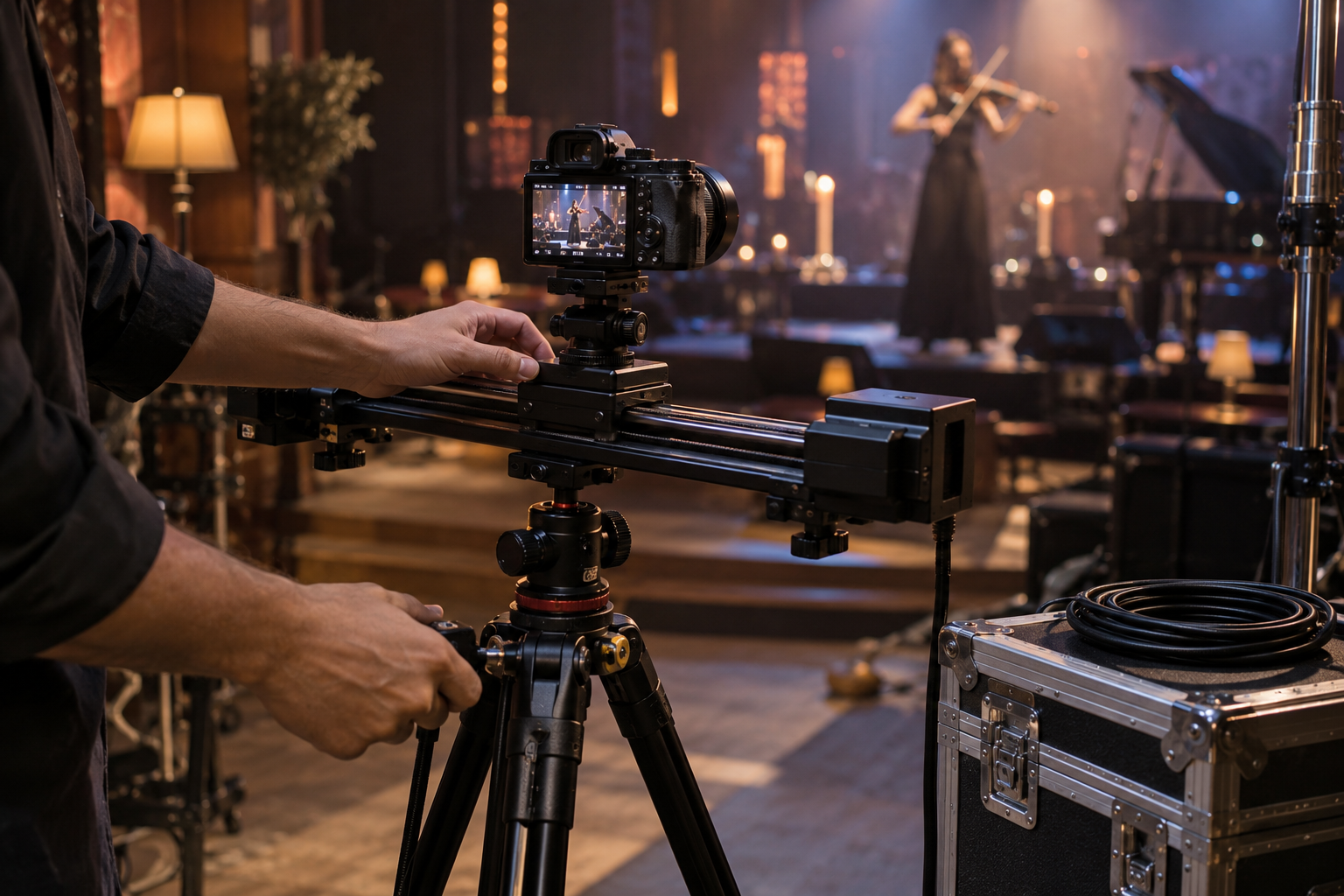
SliderONE v3 is the compact choice when the case needs to stay light and a short camera move is enough to make an electric violin reel feel intentional. edelkrone lists 20 cm camera travel and a 9 kg recommended load, while vertical work has a much lower stated limit. Pros: tiny footprint and a useful control ecosystem. Cons: it cannot create the long stage sweep of an 80 cm rail.
Manufacturer details · Compare Amazon listings
NEEWER ER1-80 makes sense when a studio or intimate venue has room for an 80 cm pass. NEEWER specifies an 80 cm track, app or remote control, A/B points and a 5 kg horizontal maximum load; its listed 45-degree limit is lower. Pros: meaningful motion and programmable options. Cons: its size, support and setup time are real parts of the job.
Manufacturer details · Compare Amazon listings
Zeapon Micro 3 E800 is for the creator who wants a compact rail-style motion tool in a deliberate video kit. Its appeal is portability without abandoning a more visible move than a pocket slider can make. Pros: space-conscious production direction. Cons: confirm the exact motor, head, payload and power bundle before treating a listing as equivalent.
Manufacturer details · Compare Amazon listings
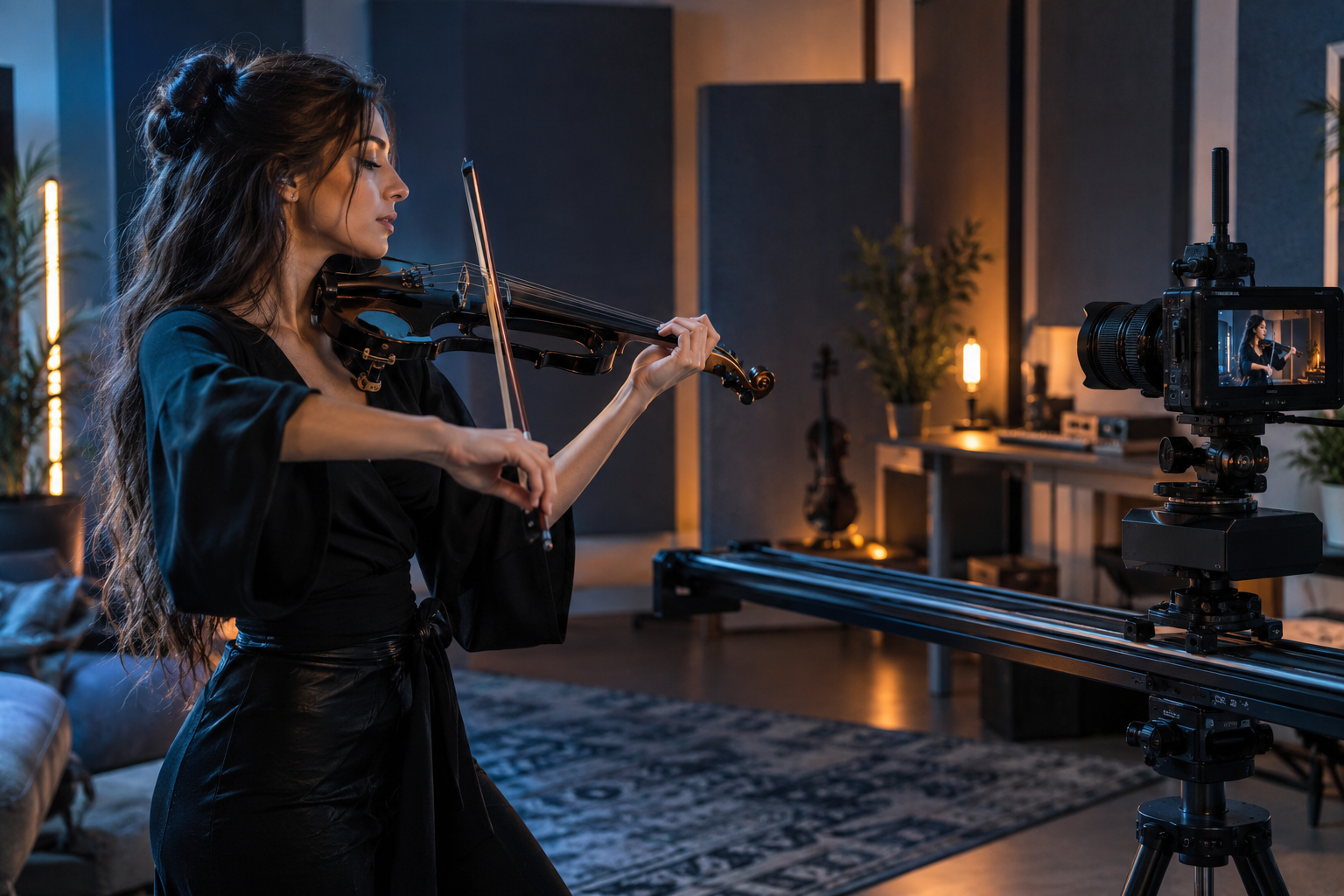
Shark Slider Nano II belongs in a premium comparison when camera motion is becoming a recurring part of releases, sponsor work and performance content. The case for it is a more developed production workflow, not a magic improvement to a weak shot. Pros: polished ecosystem potential. Cons: budget rises quickly once support, head and power needs are included.
Manufacturer details · Compare Amazon listings
A GVM 80 cm Motorized Slider is worth comparing when the priority is a longer, repeatable performance pass on a controlled budget. It gives a useful reference point against compact rails: a longer track changes the shot, but also adds legs, weight and setup. Pros: practical track length. Cons: do a vibration and motor-noise test with the actual camera before a paid shoot.
Manufacturer details · Compare Amazon listings
Rhino ROV Pro Traveler is a relevant comparison for a mobile creator who wants a system built around transport and repeatable motion. It is the kind of purchase to research as a complete workflow, including the head, batteries and packing plan. Pros: purposeful travel-video direction. Cons: check current compatibility and whether its movement range matches the shots you storyboard.
Manufacturer details · Compare Amazon listings
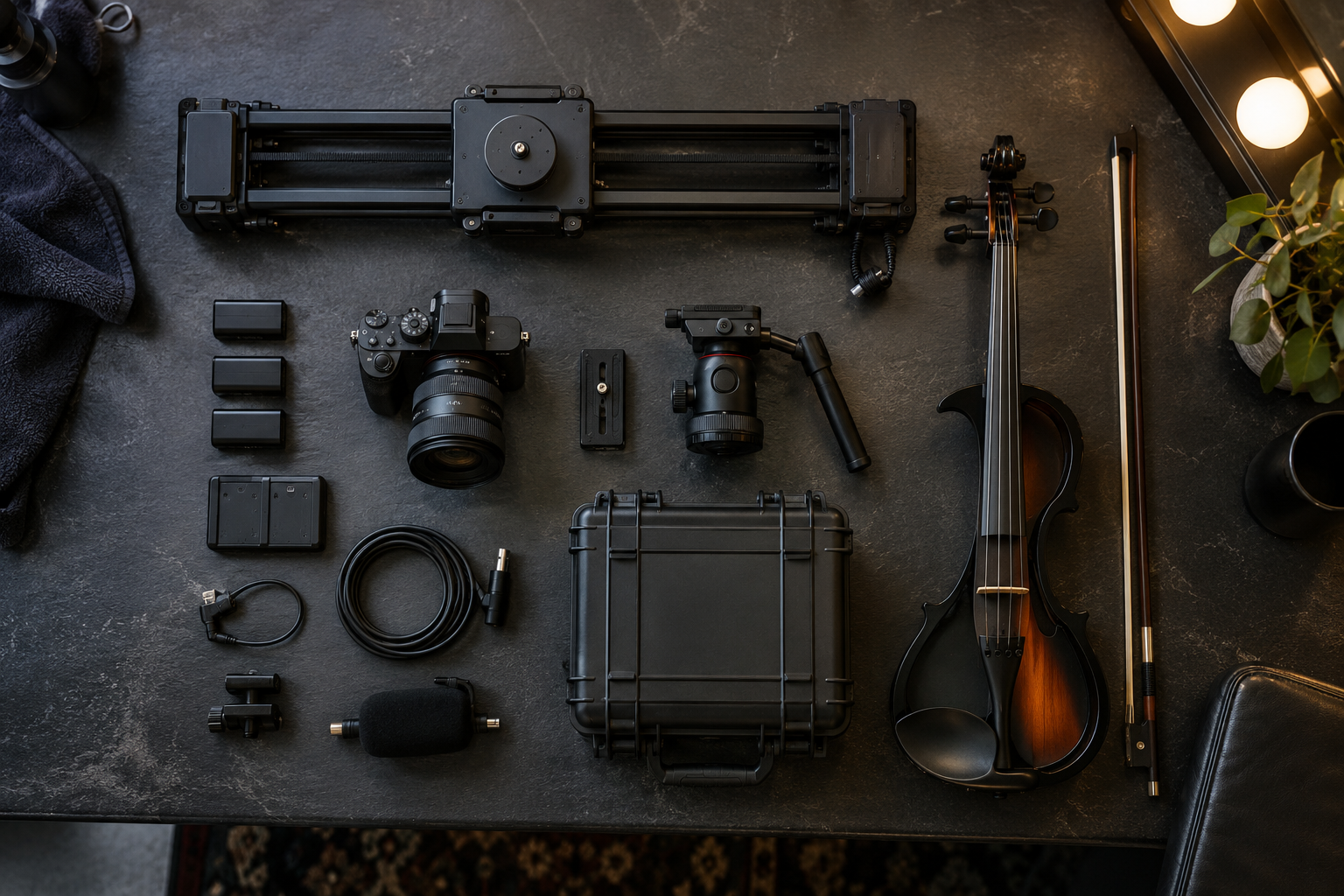
Weigh the camera, lens, cage, plate, monitor and head together. A horizontal figure does not automatically apply to incline or vertical movement. Use supports rated for the whole rig, level the track and keep a safety margin rather than running at the stated maximum.
Record a one-minute pass with the live microphone position, not just room audio from a phone. A slider can work beautifully for playback, silent B-roll or separately captured video, then be the wrong choice beside a sensitive violin mic. Plan the shot around the audio instead of hoping post-production will erase mechanical noise.
Set a start and end frame, then choose one very slow speed that respects the phrasing. Fast motion can pull attention from bow detail and face. For Tanya Strings, the ideal move feels like the camera is listening: it develops the visual story while the electric violin remains the lead voice.
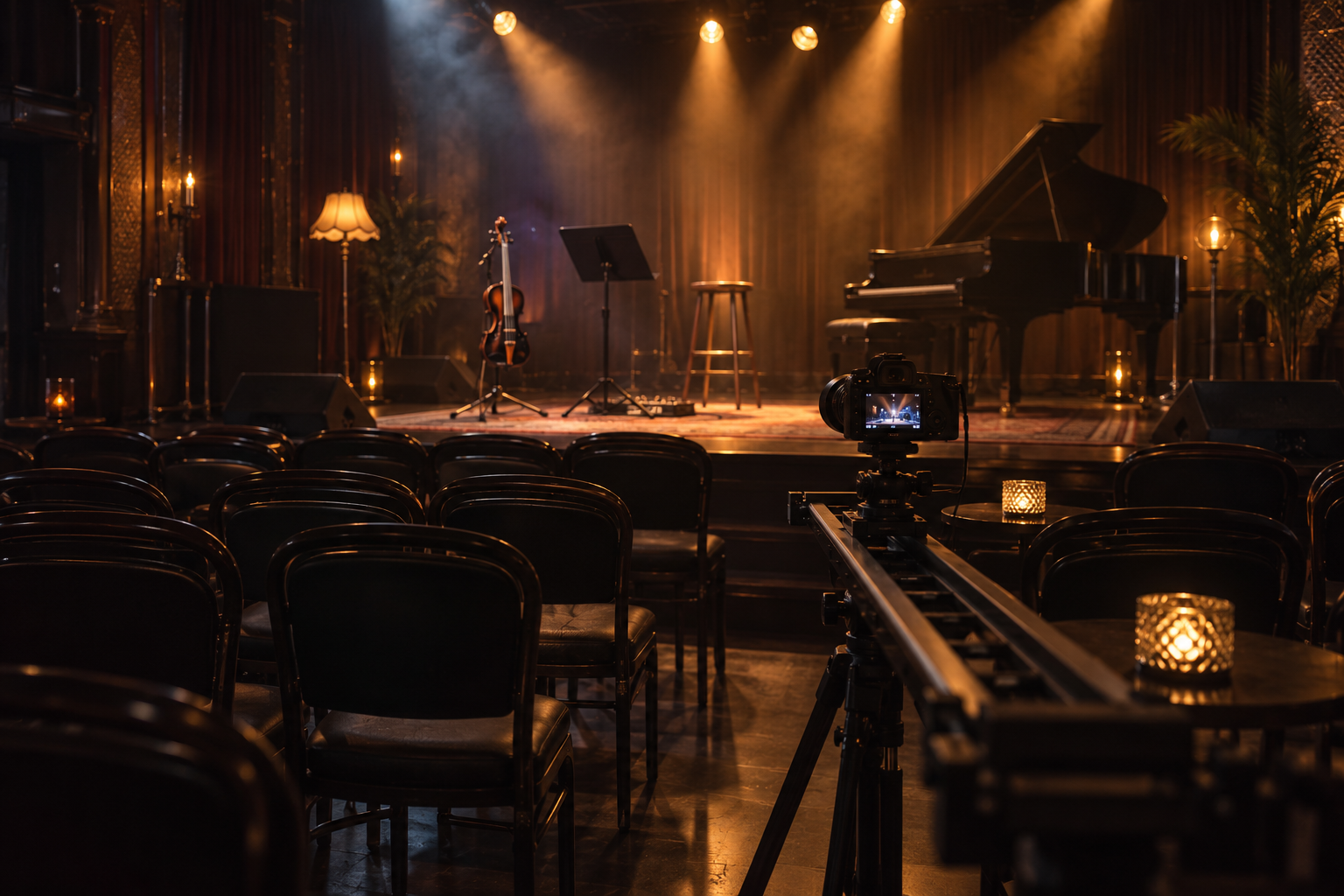
Tanya Strings is a world-class electric violin performer and content creator, so the slider should protect performance focus rather than turn a live set into a technical obstacle course. I would use a compact unit for one composed lateral pass in a music video, or a longer rail for a controlled pre-show take while recording clean audio separately. I would mark the safe bow zone, lock camera exposure and focus, test the motor sound, then leave the motion to run. A beautiful move is a frame around the artist, never the reason the audience stops hearing the music.
No. A motorized slider earns its place when repeatable, slow camera motion helps a solo performance feel more dimensional without adding another camera operator.
A short 20 cm travel slider or an 80 cm track is usually easier to position than a long rail. Measure the room with the camera and tripod footprint included.
Test the motor at the real microphone distance. Record a silent camera pass before a featured take, and use a separate audio capture if the mechanical sound reaches the mic.
No. The slider needs stable support. Two tripods or a well-rated centre support are part of the camera-movement purchase, not an optional afterthought.