Violin News: Wieniawski Opens, Naumburg’s Field and the Stage Signal
This week’s violin news points in three directions at once: a major competition is about to begin, another has put its next generation on the map, and live-production manufacturers are refining the tools around the performance. The 17th Henryk Wieniawski International Violin Competition opens in Poznań on October 8. In New York, the Naumburg Foundation has announced 42 violinists for its centennial-year competition. Meanwhile, DiGiCo’s Quantum638 console and sE Electronics’ V8 vocal microphone make a simple point for stage artists: your musical voice travels through a team and a signal path. Tanya’s performer take: preparation is artistic, technical and public-facing at the same time.
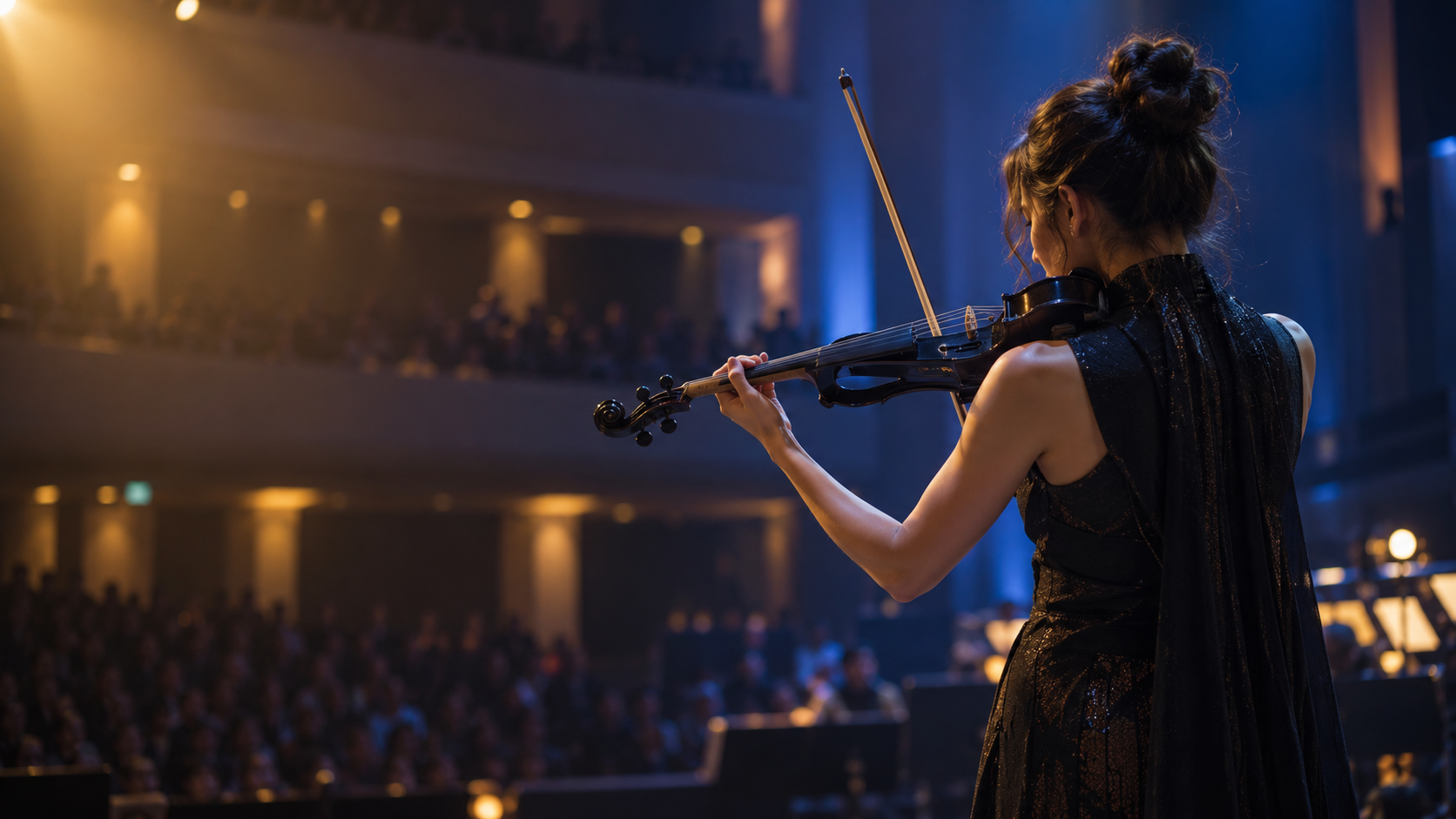
Why does the Wieniawski Competition matter this week?
The official 17th Henryk Wieniawski International Violin Competition site confirms that the event begins in Poznań on October 8 and runs through October 25. Fifty selected violinists will compete for a €120,000 prize pool, with the first round devoted entirely to Wieniawski. The opening concert features Tae-Yeon Kim with the Poznań Philharmonic, and the competition will make broadcasts available online.
That first-round focus gives the event a particular character. Wieniawski asks for clarity of line, polished rhythm and a real point of view. For viewers, it is a rare chance to hear many approaches to the same composer. For performers, it is an invitation to think of repertoire as a calling card: style and personality need to arrive together.
What can an artist take from the format?
- Choose one short work that shows your signature sound before a large appearance.
- Record a full run-through, then listen for pacing as well as notes.
- Prepare a simple livestream or social post that tells fans where to follow the performance.
Tanya’s performer take: technique gets attention; a distinct musical silhouette is what stays in a listener’s memory after the final chord.
Who is heading toward Naumburg’s centennial competition?
On September 28, the Walter W. Naumburg Foundation announced 42 participants for the 2026 International Violin Competition, scheduled for October 27 to November 1 in New York City. The preliminary rounds will be closed, but the October 30 semifinal at Manhattan School of Music and the November 1 final at 92NY will be public and livestreamed.
Its prize structure is worth noticing because it reaches beyond a cheque: first prize includes recitals in New York and at the San Francisco Conservatory of Music, a commissioned work and a recording of it. That is a useful model for the whole field. Emerging players need platforms to develop an audience and repertoire after a result, while presenters need a way to introduce them in a meaningful programme rather than a hurried cameo.
For music fans and event planners, bookmark the public rounds now. A competition stream can become more engaging when you listen for programme choices, stage presence and how a player reshapes a hall’s energy, not just a scorecard.
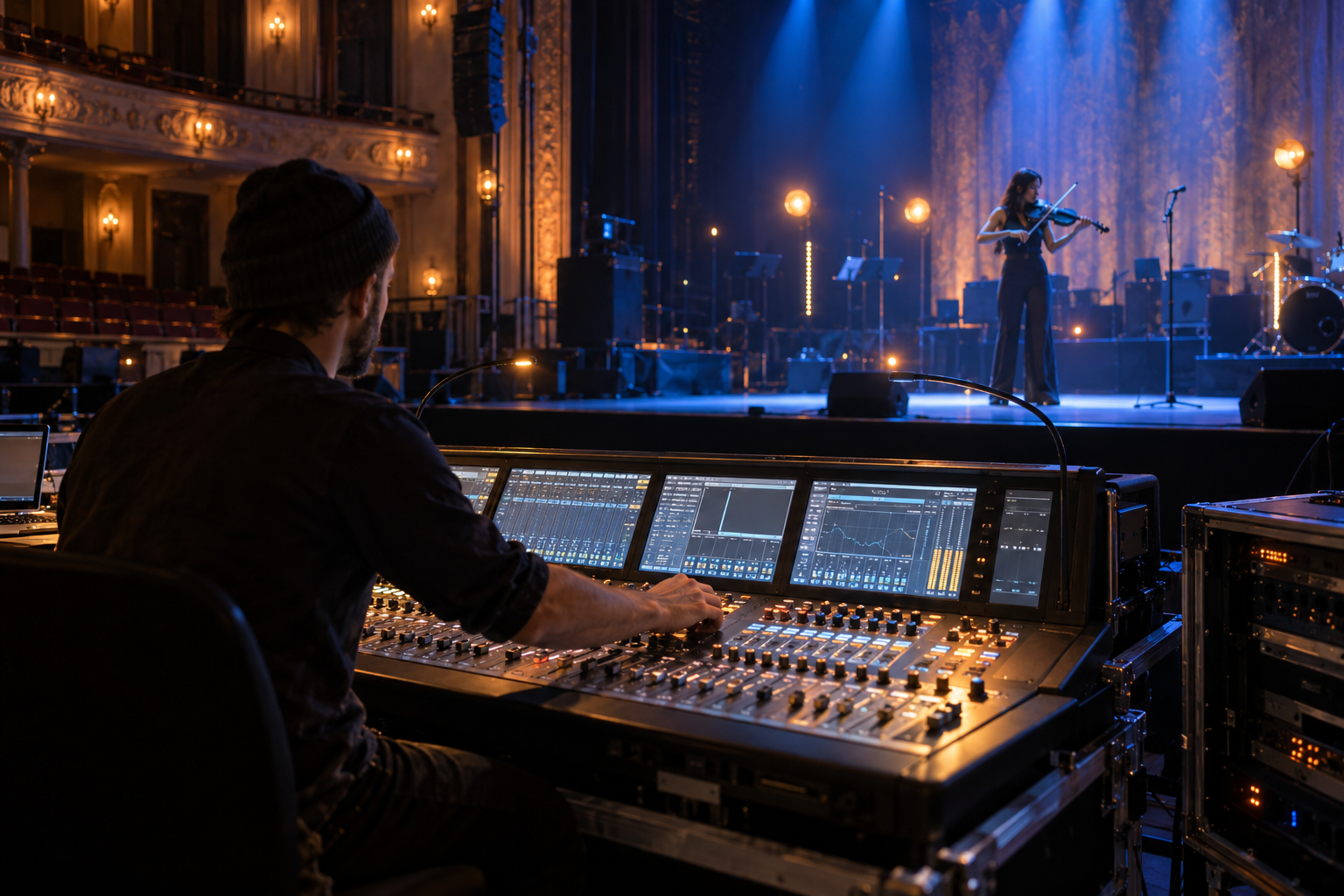
What do new live-audio launches tell performers?
DiGiCo has launched the Quantum638, a new console built around a familiar large-format layout with 256 input channels, single- or dual-engine options and theatre-oriented control features. This is venue-scale news, not a shopping recommendation for a solo violinist. Its relevance is that productions are increasingly designed around speed, redundancy and repeatable cues. A visiting electric violinist benefits when their own setup is equally easy to understand.
For artists who sing, speak or host as part of a show, sE Electronics also introduced its V8 dynamic vocal microphone on October 2. The manufacturer highlights a tight supercardioid pattern, integrated shock mounting and an approach aimed at gaining vocal clarity on loud stages. Specs never replace a soundcheck, but the announcement is a timely reminder to discuss vocal position, monitors and feedback risk with the crew before doors open.
How can a performer make the signal path kinder to everyone?
Bring a one-page input list: instrument output, DI requirement, phantom-power needs, pedals, playback and monitor preference. Label cables, keep a short reference phrase ready, and say plainly what “good” should sound like. An event planner can request the same information in advance and allow enough time for a quiet first pass. Tanya Strings approaches electric-violin performance and creator work with that kind of preparation: expressive music first, supported by technology that lets the room hear it clearly.