Violin News: YCA’s New Field, Lyon Duos and Strange Machines
Today’s violin news is about how artists move forward: through a career-facing audition, a chamber-music application and a recording that treats technology as a musical subject. Young Concert Artists has named 38 semifinalists for its 2026 Susan Wadsworth International Auditions, including seven violinists. In France, applications have opened for Lyon’s 2027 violin-and-piano-duo competition. And the Balourdet Quartet’s new Strange Machines turns six centuries of music, electronics and new commissions into one deliberate listening journey. Tanya’s performer take: the strongest opportunities ask for both artistic clarity and dependable collaboration.
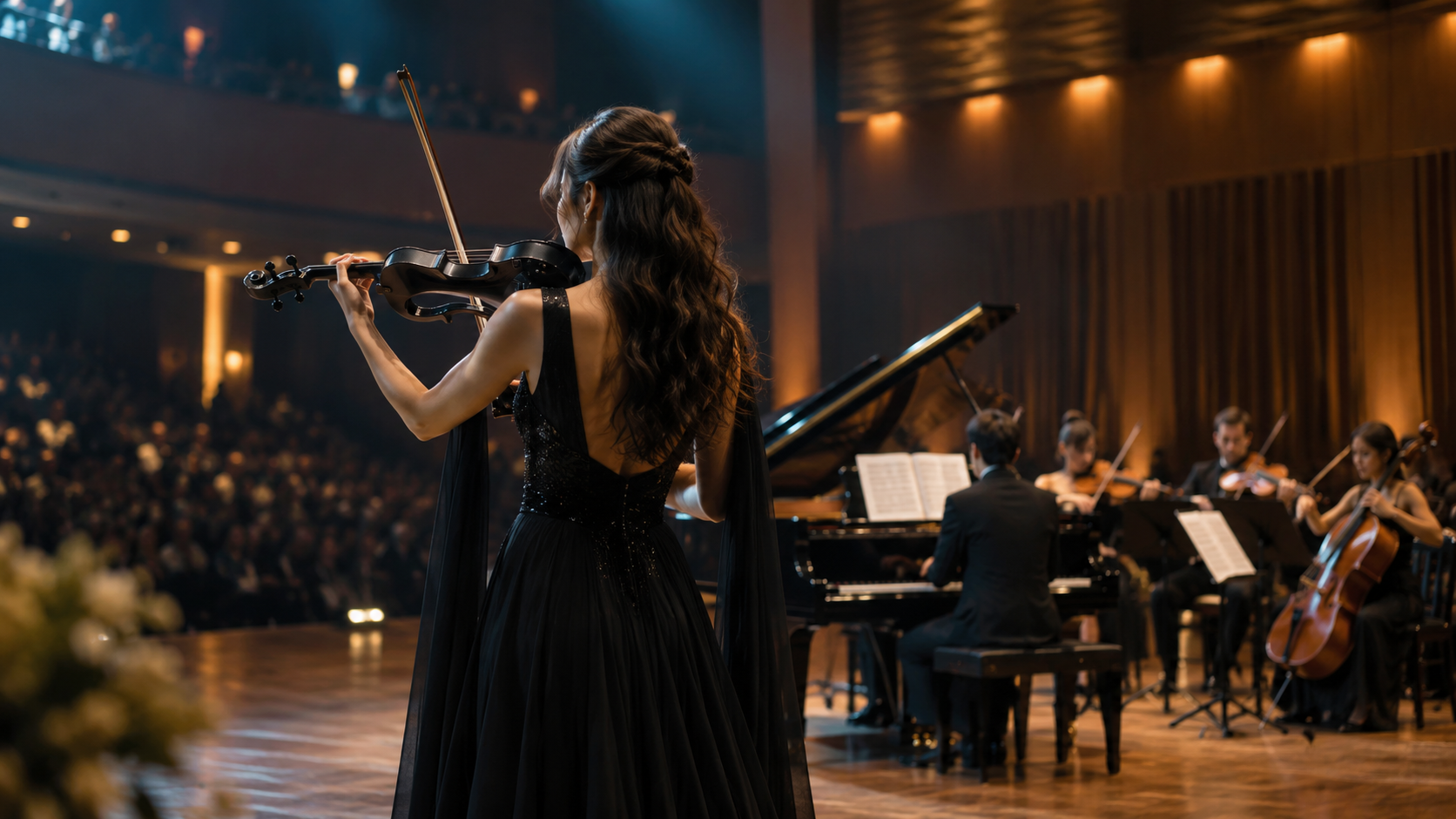
Original AI-generated editorial image for Tanya Strings.
Why does Young Concert Artists’ new semifinal field matter?
On October 8, The Violin Channel reported that 38 artists advanced from more than 150 applicants to the remaining rounds of the 2026 YCA Susan Wadsworth International Auditions. The violinists are Sameer Agrawal, Gabrielle Després, Yeyeong Jin, SoHyun Ko, Masha Lakisova, Tianyou Ma and Christina Nam. Unlike a prize ladder, YCA’s audition model measures each artist against a standard and can bring selected artists into a three-year fellowship with management, performance opportunities, media work and mentoring.
The official YCA audition page places the semifinals on November 4–6, with the final on November 8 at Merkin Hall. For a performer, that framing is useful: an audition package has to communicate more than technical security. It needs a recognisable point of view, varied repertoire and a practical sense that the artist can build a public relationship with listeners.
What can a live artist take from that?
- Make a short program feel like a coherent show, not a list of difficult extracts.
- Keep video, stage photo and biography aligned with the music you actually perform.
- Prepare collaborators early: a pianist, engineer or camera operator should understand the arc of the set.
Tanya’s performer take: world-class electric violin performance is not a lesson in virtuosity; it is a clear artistic identity that can travel from a concert hall to a filmed session or event stage.
What is Lyon’s new violin-and-piano-duo call offering?
The 22nd Lyon International Chamber Music Competition is dedicated to violin and piano duo in 2027. According to the October 8 announcement, applications close December 20, 2026; the competition runs April 21–24 in Lyon, and musicians born after January 1, 1994 may apply. Around 12 duos will progress from video selection, with two recital rounds before an hour-long final recital. The listed prize pool exceeds €21,000 and includes future concert engagements.
This is especially good news for artists who think of the piano part as an equal voice. The final’s required Chausson Concert excerpt, scored for violin, piano and string quartet, points toward a larger collaborative world rather than a soloist-plus-accompanist hierarchy. Prospective players should confirm rules and submission details directly with the competition organiser before applying.
How does this translate beyond the competition room?
Electric violinists working with a pianist, producer, DJ or backing-track operator face the same core task: agree on balance, breathing space and handoffs before the audience arrives. Build a shared cue sheet, rehearse transitions without stopping, and decide what happens when a monitor mix changes. Collaboration is part of the performance, not administrative work around it.
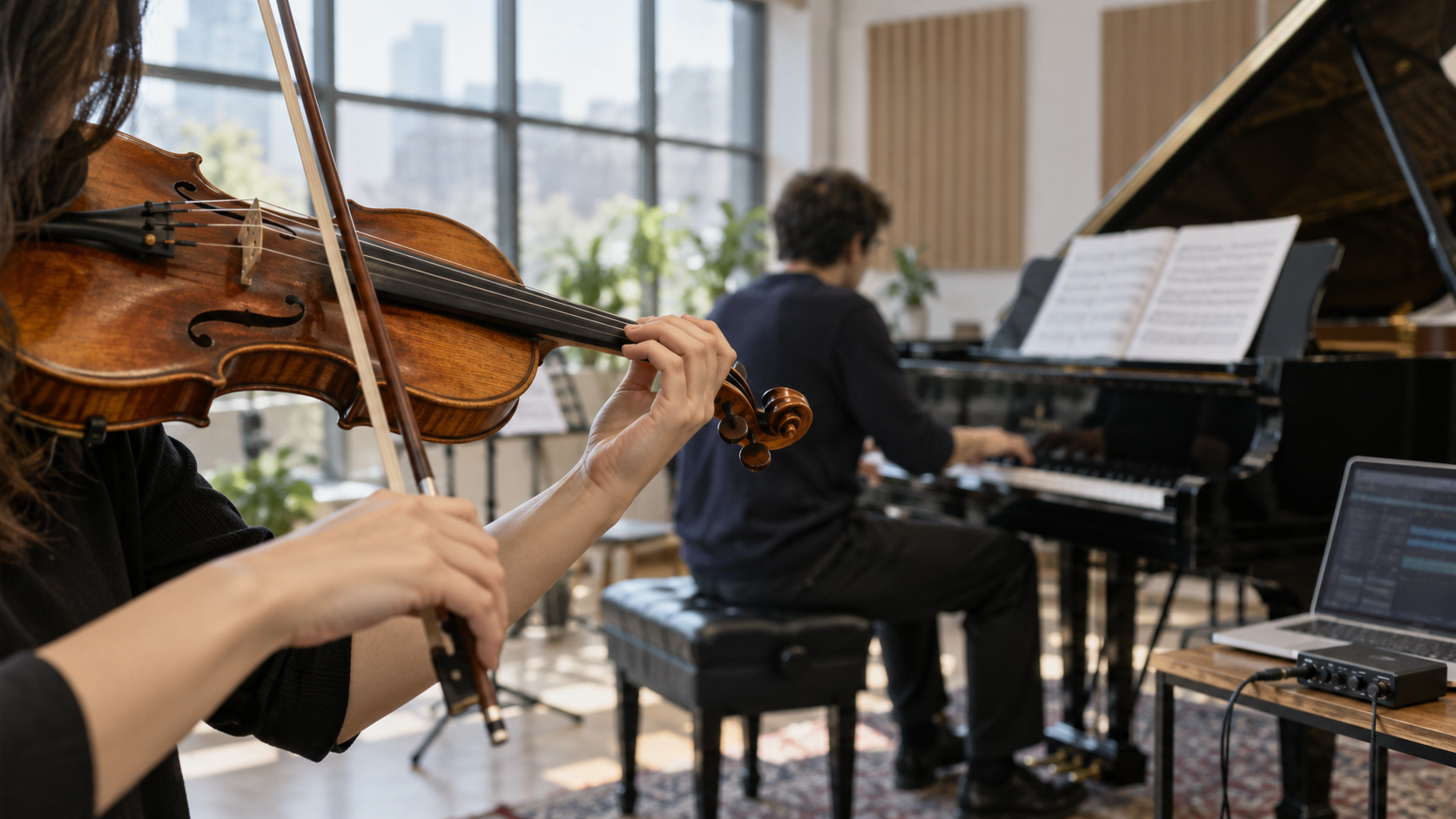
Original AI-generated editorial image for Tanya Strings.
Why is Balourdet Quartet’s Strange Machines worth hearing?
Released this week, the Balourdet Quartet’s debut album Strange Machines follows a technology-and-humanity thread across almost six centuries. The quartet’s notes connect works by Dufay, Antheil, Nina C. Young, Karim Al-Zand, Paul Novak and Isaac Smith; some of the contemporary music uses electronics or looks directly at contemporary technology. The project’s point is not to make a gimmick of machines. It asks how tools reshape musical imagination, memory and connection.
That makes it a sharp listen for a creator-led string artist. An electric instrument, loop, visual, plugin or camera is valuable when it amplifies the emotional reason for a piece. It becomes noise when it substitutes for one. Balourdet’s project keeps the players’ collective timing and colour at the centre, which is exactly where technology should sit in a compelling crossover performance.
What should artists and listeners watch next?
YCA’s November audition rounds will show how its new field develops; Lyon applicants have until December 20 to prepare a serious duo submission; and Strange Machines offers a timely reference for anyone programming strings alongside technology. Tanya Strings follows that same performer-first idea: make the musical story unmistakable, then build the stage, sound and image around it so audiences can feel it.