
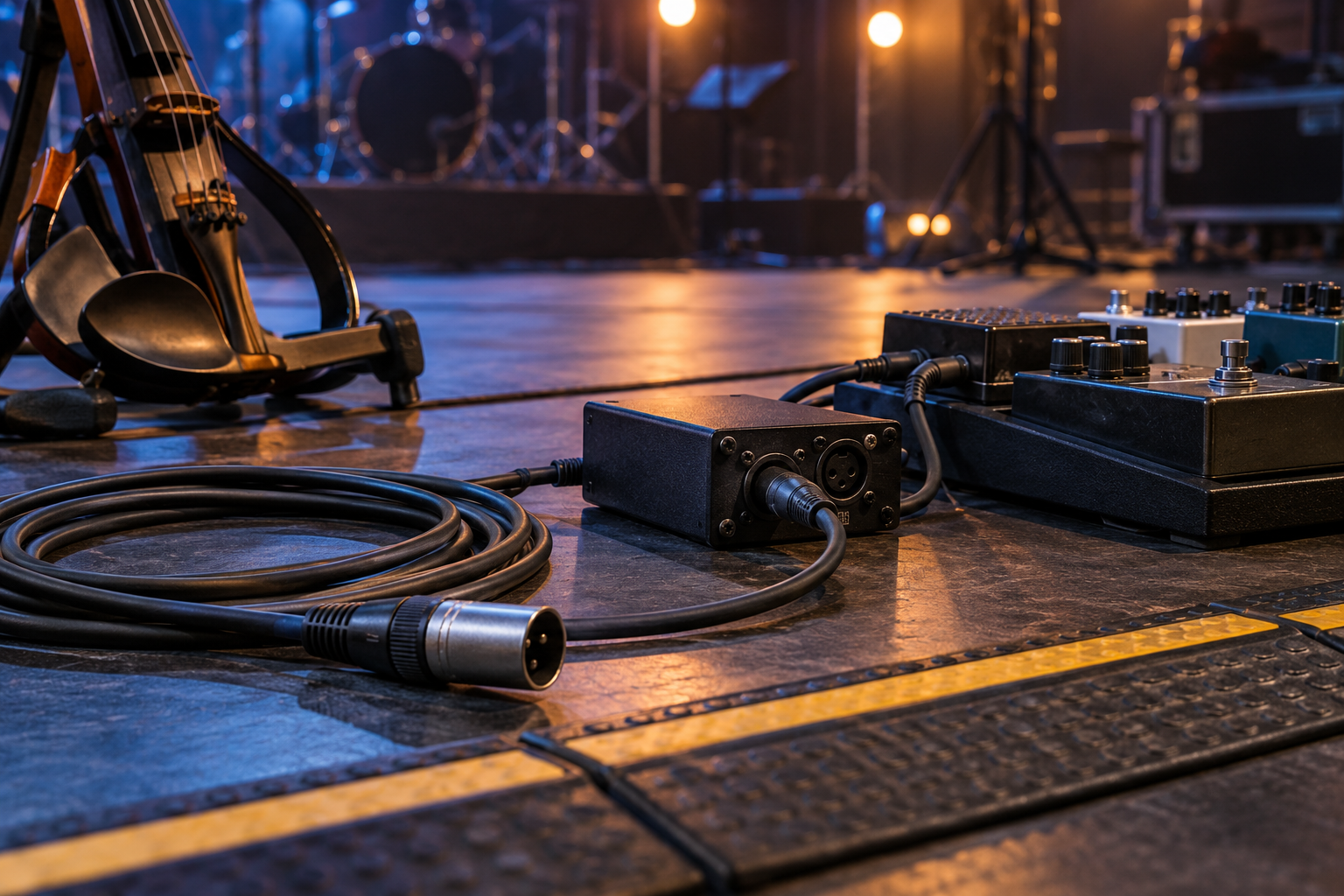
The best XLR cable for an electric violinist is a dependable balanced lead with solid connectors, enough length for a safe stage route, and no unnecessary bulk. Use it after your DI box, preamp, pedalboard output, wireless receiver or compact mixer, where it carries a balanced signal to front of house. For most premium event and small-concert rigs, a 5–10 m cable from a trusted pro-audio range is the practical starting point. Tanya Strings would spend for reliability and quiet handling, then keep a tested spare ready; a cable is small, but it protects the entire performance chain.
Some links in this article are affiliate links. I may earn a commission if you make a purchase, at no extra cost to you.
Separate the two cable jobs. A high-impedance violin pickup normally meets an instrument cable before a DI, preamp or pedalboard. From that balanced output onward, an XLR cable is the normal way to reach the venue snake, mixer or powered speaker. Choose flexible cable, strain-relieved connectors and a length that reaches without crossing a walk path. A premium cable is a sensible touring investment, but the right route and a backup matter just as much.
| Cable to compare | Best fit | Why it stands out | Buying check |
|---|---|---|---|
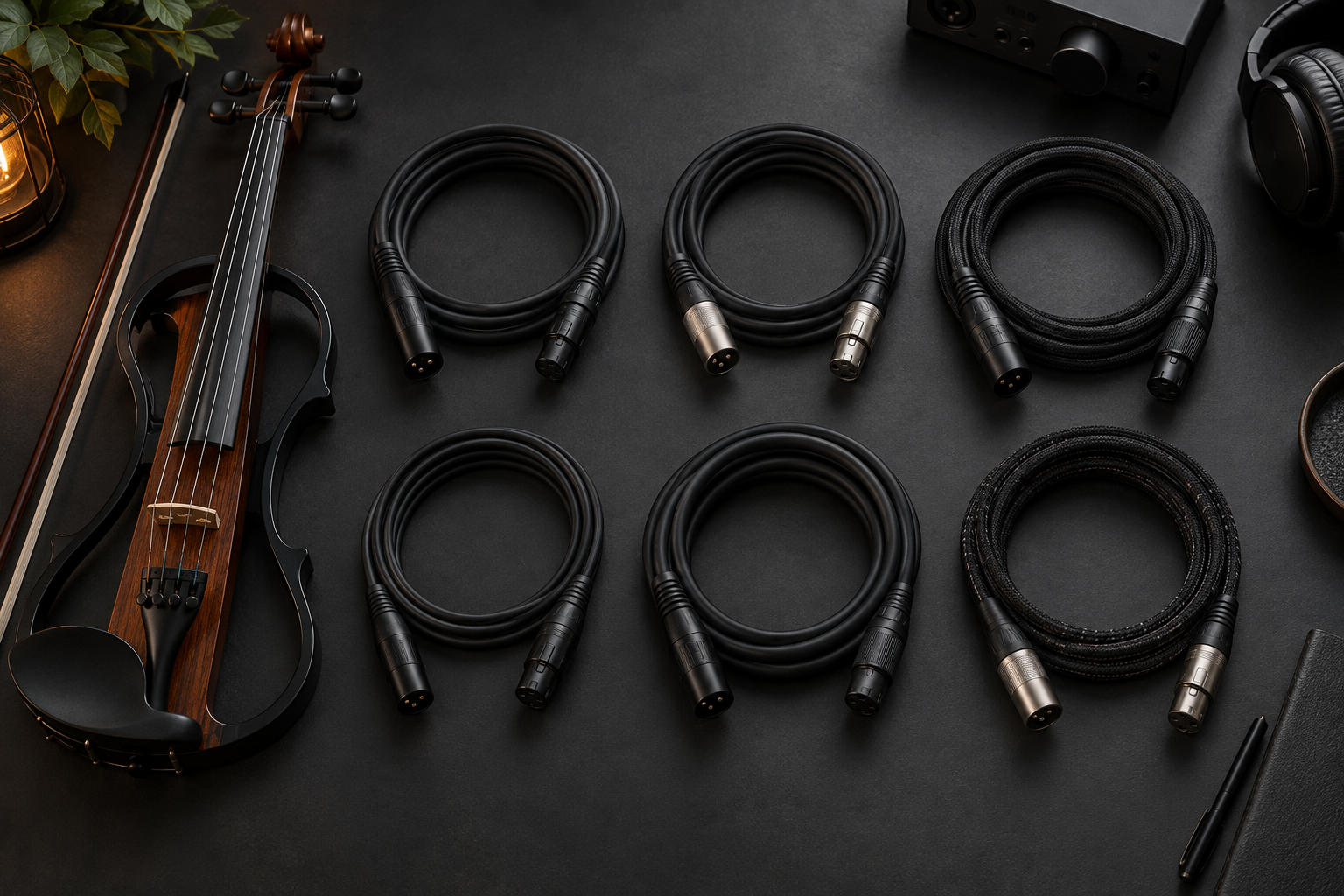
| Mogami Gold Studio XLR | Premium permanent rig | Established pro-audio cable line | Choose only the length you use |
| Canare Star Quad XLR | Noise-conscious live routes | Quad-conductor construction option | Confirm flexibility for your setup |
| Pro Co Excellines XLR | Working stage spare | Practical gigging cable format | Inspect connector strain relief |
| Hosa Pro XLR | Budget-conscious backup | Accessible replacement route | Test before show day |
| Monoprice Premier XLR | Home studio and short runs | Value-focused option | Check exact connector style |
| Amazon Basics XLR | Emergency spare or creator desk | Simple widely available cable | Do not make it your only lead |
Mogami Gold Studio is a sensible premium reference when a cable will live in a recurring performance or creator rig. Mogami presents its microphone cable family for professional audio use. Pros: a recognised pro-audio option and an easy choice for a dependable main lead. Cons: it costs more than a basic spare, so buy the needed length rather than an oversized coil.
Manufacturer details · Compare Amazon listings
Canare Star Quad is worth comparing where a performer wants a dependable balanced line and works around lighting, power or dense stage infrastructure. Pros: the Star Quad format is well known in professional audio and makes a useful specification to compare. Cons: cable geometry and jacket feel are personal, so test whether the lead coils and routes comfortably in your actual bag.
Manufacturer details · Compare Amazon listings
Pro Co Excellines is a useful middle-ground comparison for working events, rehearsals and an extra line in the case. Pros: a familiar stage-cable format and a practical choice for a spare you will actually carry. Cons: as with any ready-made cable, inspect the connector shell, latch and strain relief before putting it into a critical signal path.
Manufacturer details · Compare Amazon listings

Hosa Pro XLR is a practical comparison for a backup cable or low-risk creator route. Pros: straightforward availability and a familiar connector format. Cons: budget gear still needs the same inspection discipline: plug it in, wiggle-test the ends gently and listen before doors open. A backup earns its place only when it has been tested.
Manufacturer details · Compare Amazon listings
Monoprice Premier XLR is a value comparison for a home creator desk, compact mixer or short backup route. Pros: it can make it affordable to label and carry a redundant lead. Cons: do not choose purely by the lowest price; verify connector security, length and return policy before relying on any cable at a one-take event.
Manufacturer details · Compare Amazon listings
Amazon Basics XLR is best viewed as a readily available spare, simple desktop link or emergency replacement. Pros: easy availability can rescue a missing short lead. Cons: every critical rig should include a known-good tested cable rather than depend on an unopened package. Carry it as redundancy, not as the entire plan.
Retailer details · Compare Amazon listings
Follow the signal path. XLR is common after a DI or balanced device, but an XLR connector alone does not guarantee every output is balanced. Check the labels and manual for your preamp, pedalboard, wireless receiver or mixer. Never assume phantom power or an adapter is harmless.
Measure from the DI or output point to the stage box, allowing a gentle service loop and avoiding traffic lanes. Shorter is lighter to manage; too short forces stress on the connector. Tanya Strings would label 3 m, 5 m and 10 m leads so a fast changeover stays calm.
Look for connector latches that click confidently, a jacket that coils without fighting you and strain relief that stays straight. Before a major event, run a short soundcheck through each cable, including any switcher or mixer. Retire unreliable leads to non-critical use.
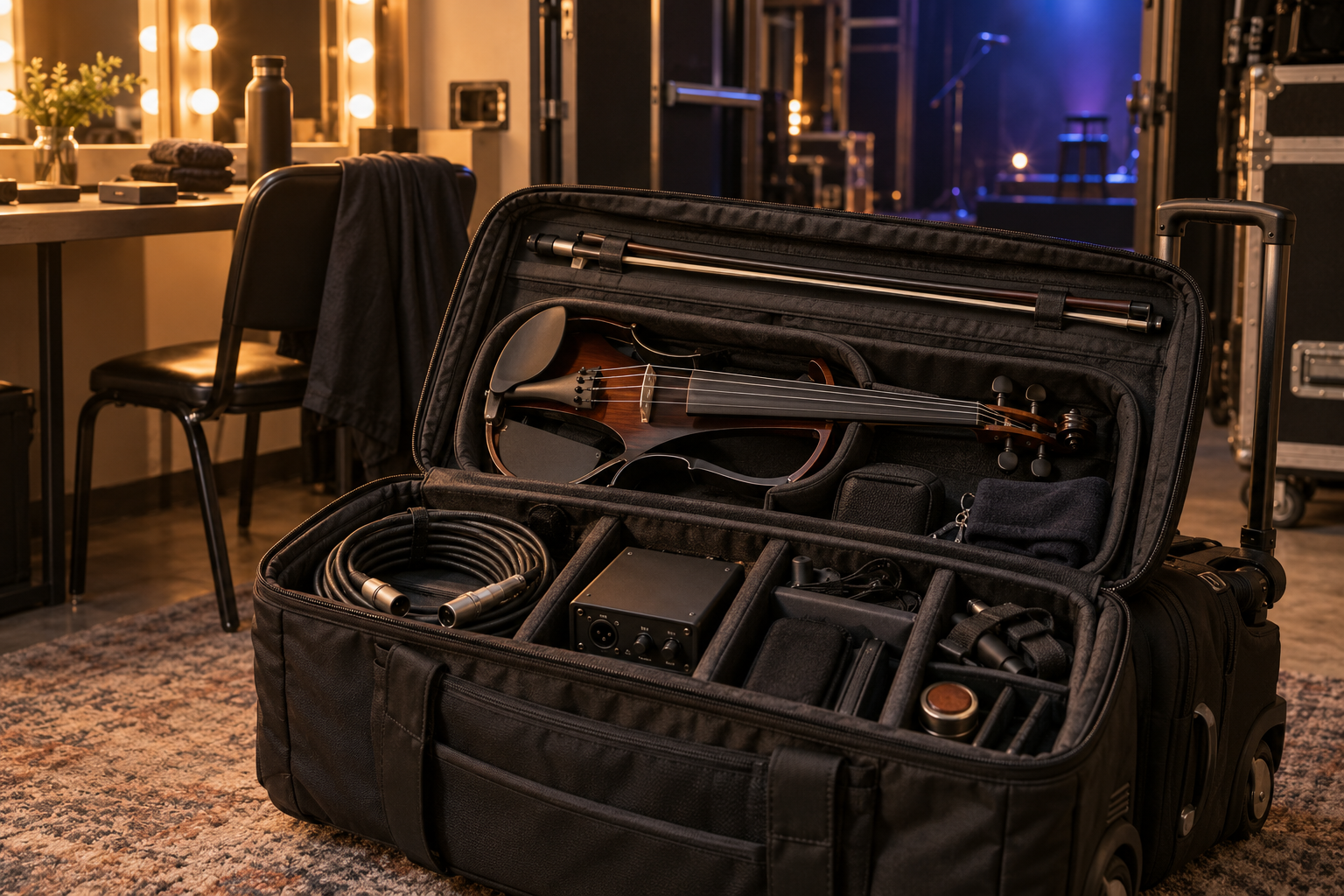
Tanya Strings is a world-class electric violin performer and content creator, so a cable choice has to protect the performance, camera cue and audience experience at once. I would keep one flexible main XLR, one clearly marked spare and one shorter lead for creator sessions. The final test is not a brand name; it is a quiet, repeatable handoff from violin rig to PA, with no cable underfoot and no uncertainty during the first note. These are specification-based buying ideas, not claims that Tanya has personally tested every listed product.
Yes, when a DI, preamp, mixer or wireless receiver sends a balanced output to the PA. The violin itself usually connects to the first stage with an instrument cable, not XLR.
Choose the shortest length that reaches with a relaxed safe route. Five to ten metres works for many compact stages; longer runs need a deliberate cable plan.
A reliable balanced cable supports a clean connection, but it does not replace correct DI settings, gain structure or a thoughtful monitor mix.
Yes, when the connected devices are designed for it. Check the DI, microphone or receiver documentation before enabling it.