Violin News: Wieniawski Live, Bach Finalists and Music China
Today’s violin news connects three versions of the modern performance world: a major competition heard in real time, a focused solo-Bach final that audiences can stream, and a global trade fair where instruments meet sound technology. In Poznań, the 17th Henryk Wieniawski International Violin Competition is in the final stretch of Stage 1. In New York, three violinists are among five finalists for the Lillian and Maurice Barbash J.S. Bach Competition on October 15. And in Shanghai, Music China is preparing its October 28–31 edition with violin-family exhibitors alongside audio and music-tech activity. Tanya’s performer take: visibility now depends on how well artistry, production and audience access support one another.
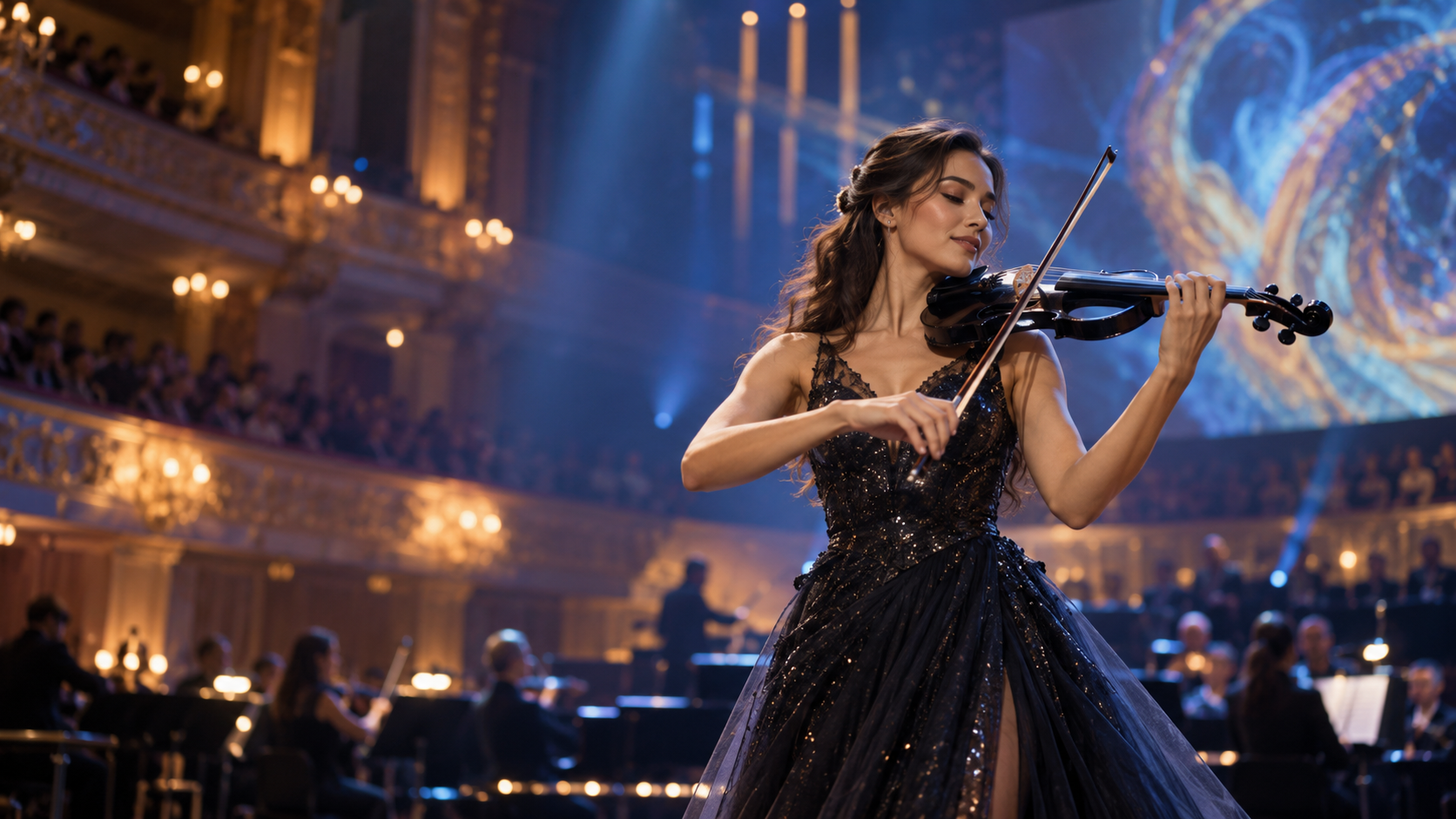
Original AI-generated editorial image for Tanya Strings.
What is happening at Wieniawski this weekend?
The 17th Henryk Wieniawski International Violin Competition is now deep into its opening round in Poznań. The official schedule places Stage 1 on October 9–12, followed by Stage 2 on October 13–15, with the final set for October 22. The competition says 50 players selected through preliminary rounds are competing for a €120,000 prize pool, including €60,000 for first prize. Its unusually focused first stage is dedicated entirely to Wieniawski’s music; later rounds widen into Polish and international repertoire before finalists play one of Wieniawski’s concertos with the Poznań Philharmonic.
For listeners outside Poland, the organiser has made access part of the event. Its broadcast page points to the Wieniawski Society YouTube channel and partner streams at The Violin Channel, medici.tv and Amadeus.tv, while social channels carry stage and backstage updates.
What should performers listen for?
- How a player shapes a recognisable opening before reaching for speed or volume.
- Whether phrasing remains legible when virtuosic writing becomes dense.
- How camera framing and audio balance either clarify or flatten a live performance.
Tanya’s performer take: an electric violin set has the same test. A strong sound design should make the musical identity easier to hear, never hide it behind effects, light or spectacle.
Why does the Bach Competition final deserve attention?
The Barbash Arts Foundation’s announcement names five finalists from 102 applicants for its 2026 competition: violinists Leah Amory, Emrik Revermann and Yebin Yoo, plus cellist Peter Eom and violist Alessandra Yang. The final takes place at Stony Brook University’s Staller Center on Thursday, October 15 at 1:00 p.m. and will be streamed by The Violin Channel. The contest is for unaccompanied Bach on bowed string instruments, and its Grand Prize includes $10,000 plus six paid engagements.
Solo Bach is a useful counterweight to modern production tools. There is no backing track to repair a lost line or arrangement to redistribute attention. Every decision about pulse, articulation and silence has to carry the listener. For event planners and fans, the stream reveals personal musical voice rather than production scale.
What can creators borrow from a solo programme?
Keep the visual frame calm enough for the audience to read the bow, hands and physical phrasing. If you share a live clip, make the first few seconds sonically clear, then let the performance earn attention. That approach works for a Bach partita, an original electric-violin piece or a crossover arrangement.
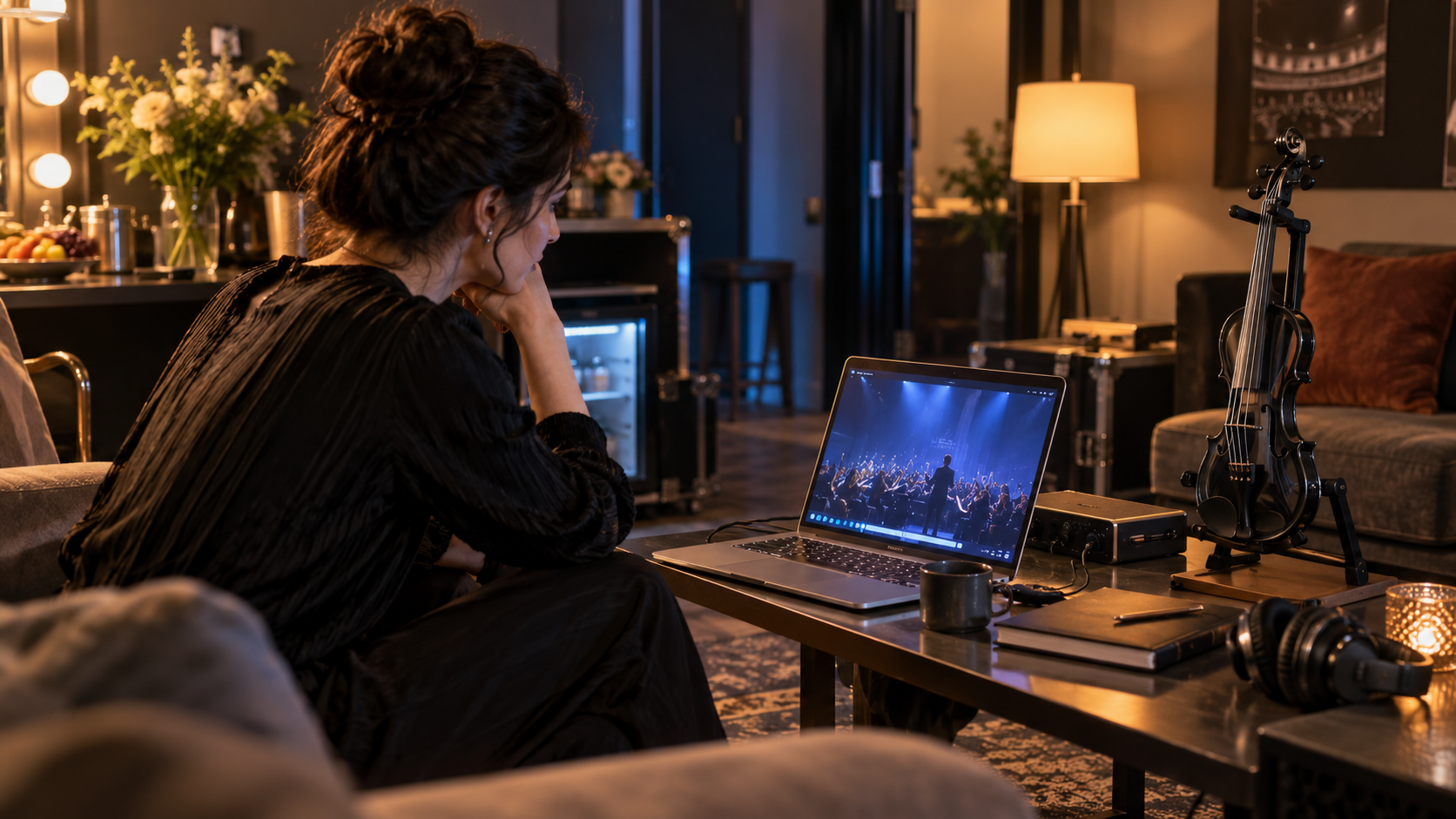
Original AI-generated editorial image for Tanya Strings.
How could Music China matter to string performers?
Music China returns to the Shanghai New International Expo Centre from October 28–31. Its September 30 press release says more than 1,600 exhibitors from 25 countries and regions are expected, with a visible violin-family presence alongside audio and technology products. The programme also includes forums, workshops and live performance activity. It is trade-fair news, but it has a practical performer angle: the instrument and the live-production chain are increasingly discussed in the same room.
That matters when an artist is deciding how to travel, amplify, record or film a show. The best purchase is rarely the most complicated unit on a stand. It is the piece of gear that fits a reliable signal path, a fast changeover and the story of the set. Tanya Strings follows that performer-first rule: choose technology for musical purpose, then make the experience feel effortless for the audience.
What should audiences watch next?
Wieniawski’s Stage 1 closes October 12 before the next round begins the following day. The Bach Competition final is October 15, and Music China opens October 28. Together they show precision under pressure, individual voice and the systems behind live music.