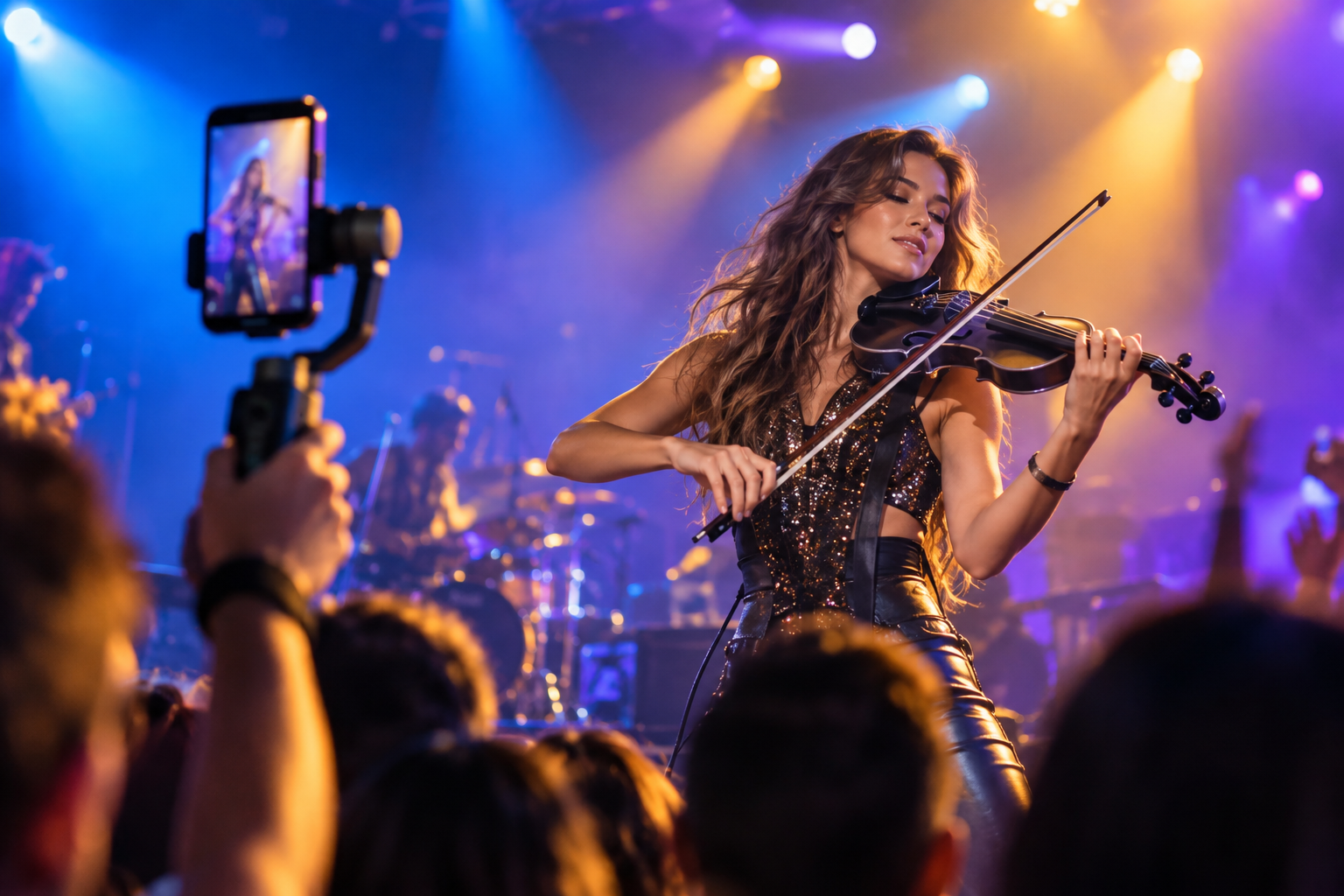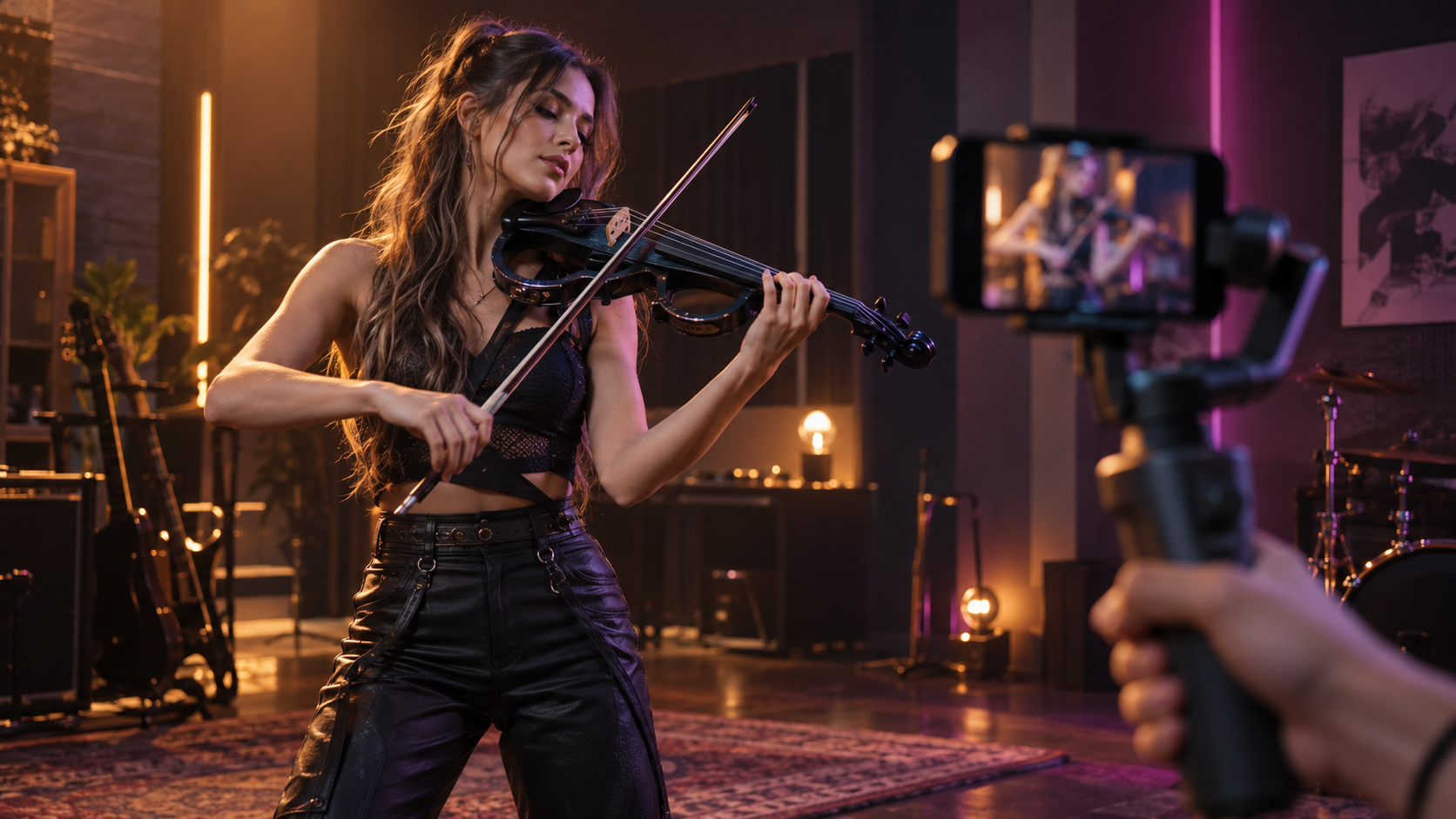
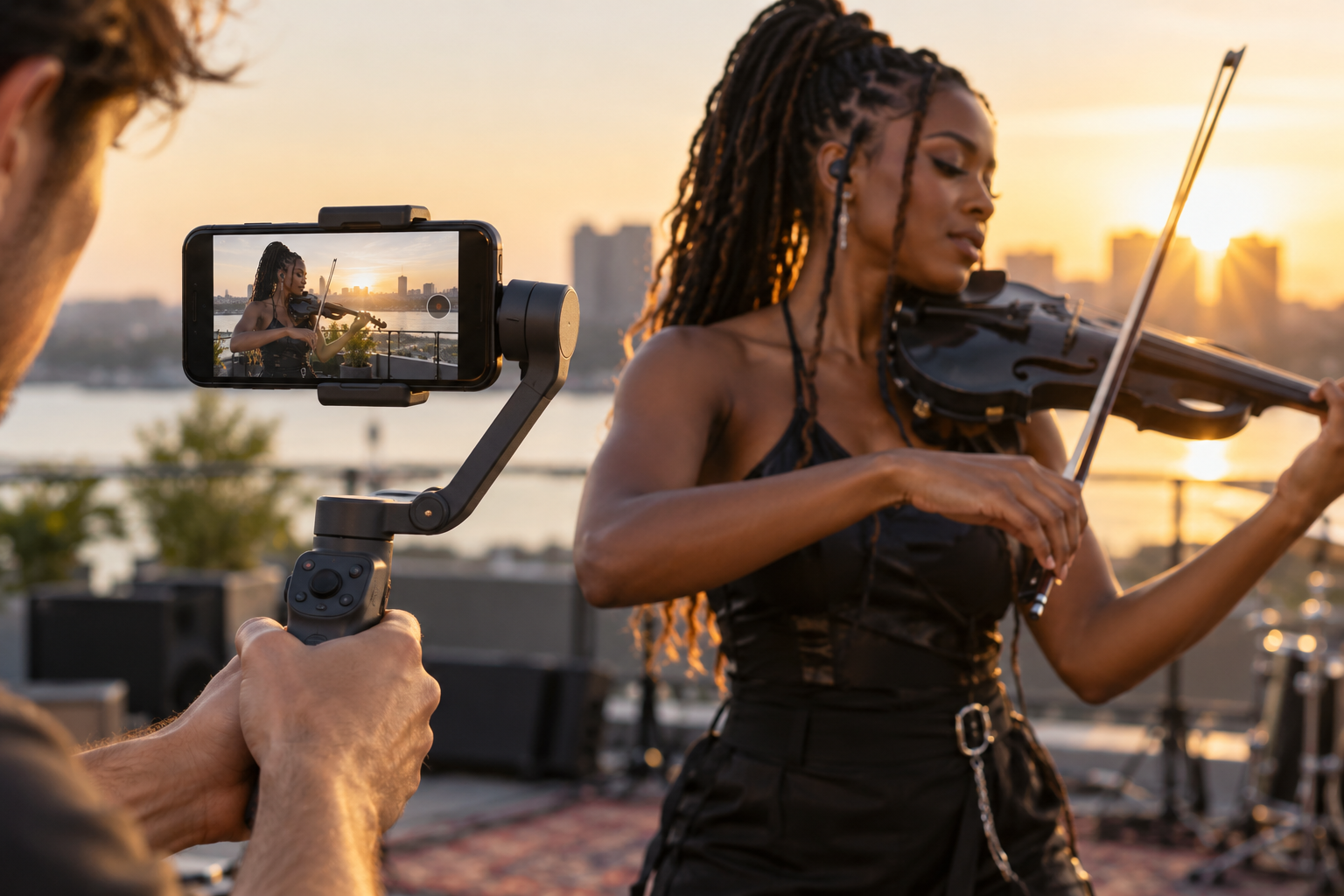
The best smartphone gimbal for an electric violin performance video is the one that balances your phone securely, starts fast and lets the camera operator follow your movement without fighting the controls. For Tanya Strings-style concert reels and polished creator clips, choose a stabilizer with a dependable clamp, enough battery for rehearsal and a workflow you can repeat under real show pressure. A gimbal is most valuable for walking entrances, orbit shots and moving backstage material; a stable tripod remains better for a fixed full-performance frame. Buy for reliable filming, not for an app feature you will never use.
Some links in this article are affiliate links. I may earn a commission if you make a purchase, at no extra cost to you.
A phone stabilizer earns its space in a violin creator kit when it makes motion look intentional. It will not replace composition, stage lighting or a clean direct audio capture. First decide who operates it: if you play while a collaborator films, prioritise tracking and quick balance; if you film yourself between takes, prioritise setup speed and a small travel profile. Test it with the same phone case, lens attachment and performance outfit you will use on shoot day.
| Gimbal | Best fit | Why compare it | Watch for |
|---|---|---|---|
| DJI Osmo Mobile 7P | All-round performance clips | Current compact ecosystem | Phone compatibility and extras |
| Insta360 Flow 2 Pro | Fast solo creator workflow | Built-in tripod-style convenience | Check your phone’s balance |
| Hohem iSteady V3 | Feature-focused mobile filming | Tracking-oriented option | Learn modes before a shoot |
| Zhiyun Smooth 5S AI | More deliberate creative moves | Control-led filming approach | Size in a travel bag |
| Feiyu Vimble 4 | Compact content days | Portable three-axis option | Confirm current app support |
| DJI Osmo Mobile SE | Value stabilised basics | Simple entry to the category | Feature limits versus newer models |
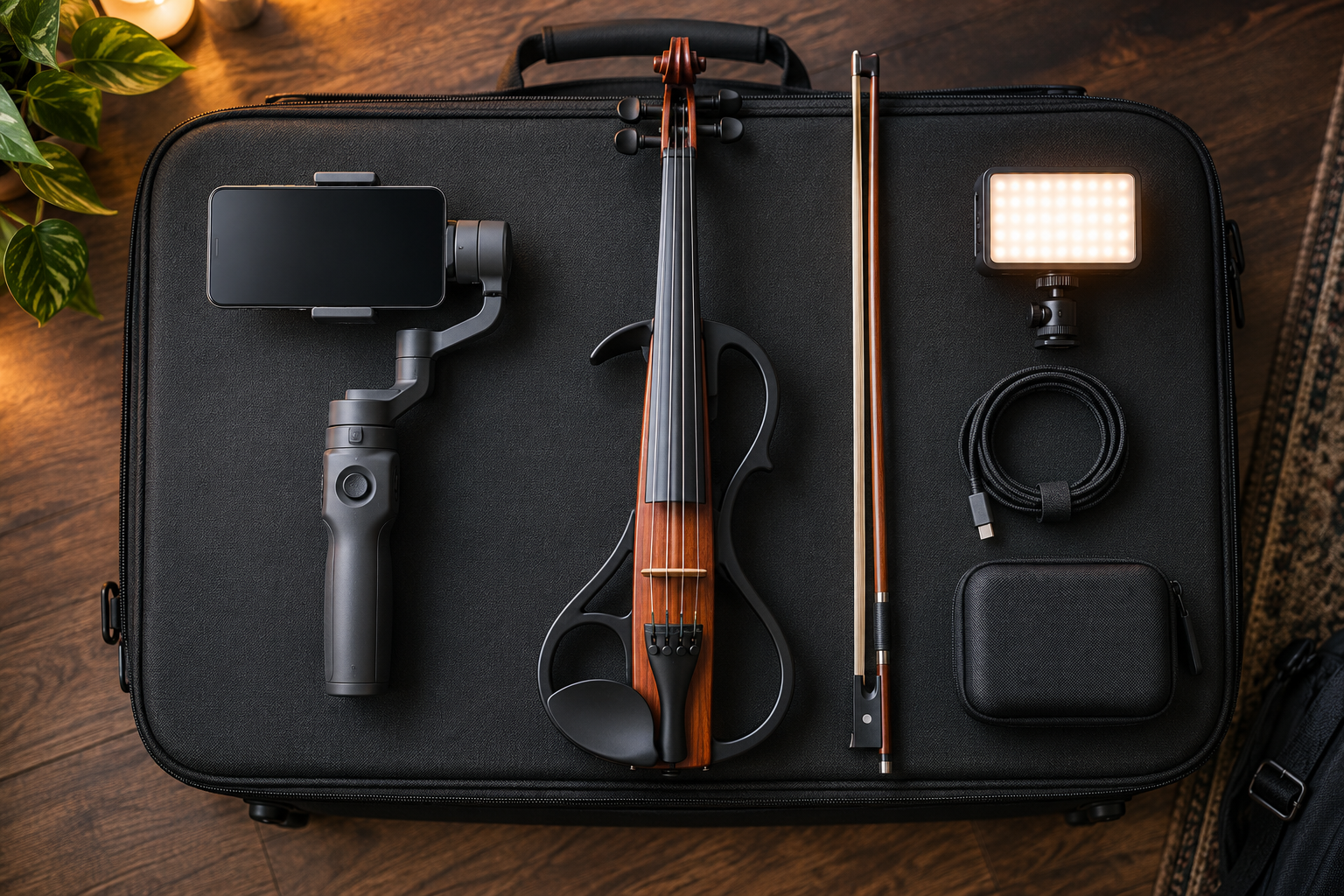
DJI Osmo Mobile 7P is a sensible comparison for a performer who wants a compact current-generation gimbal for rehearsals, short-form content and event footage. Pros: a broadly familiar mobile-stabilizer workflow and a small profile. Cons: its feature set is only useful if the operator learns it before doors open. Build one repeatable routine: mount, balance, choose the frame, record a ten-second test and check it. Manufacturer details · Compare Amazon listings
Insta360 Flow 2 Pro deserves a look when a fast creator workflow matters as much as smooth footage. Pros: it is designed around the phone-first shooting process and can suit a one-person content session. Cons: do not assume tracking solves blocking; a bow can leave frame quickly during a dynamic phrase. Mark a small performance area and rehearse the operator’s route. Manufacturer details · Compare Amazon listings
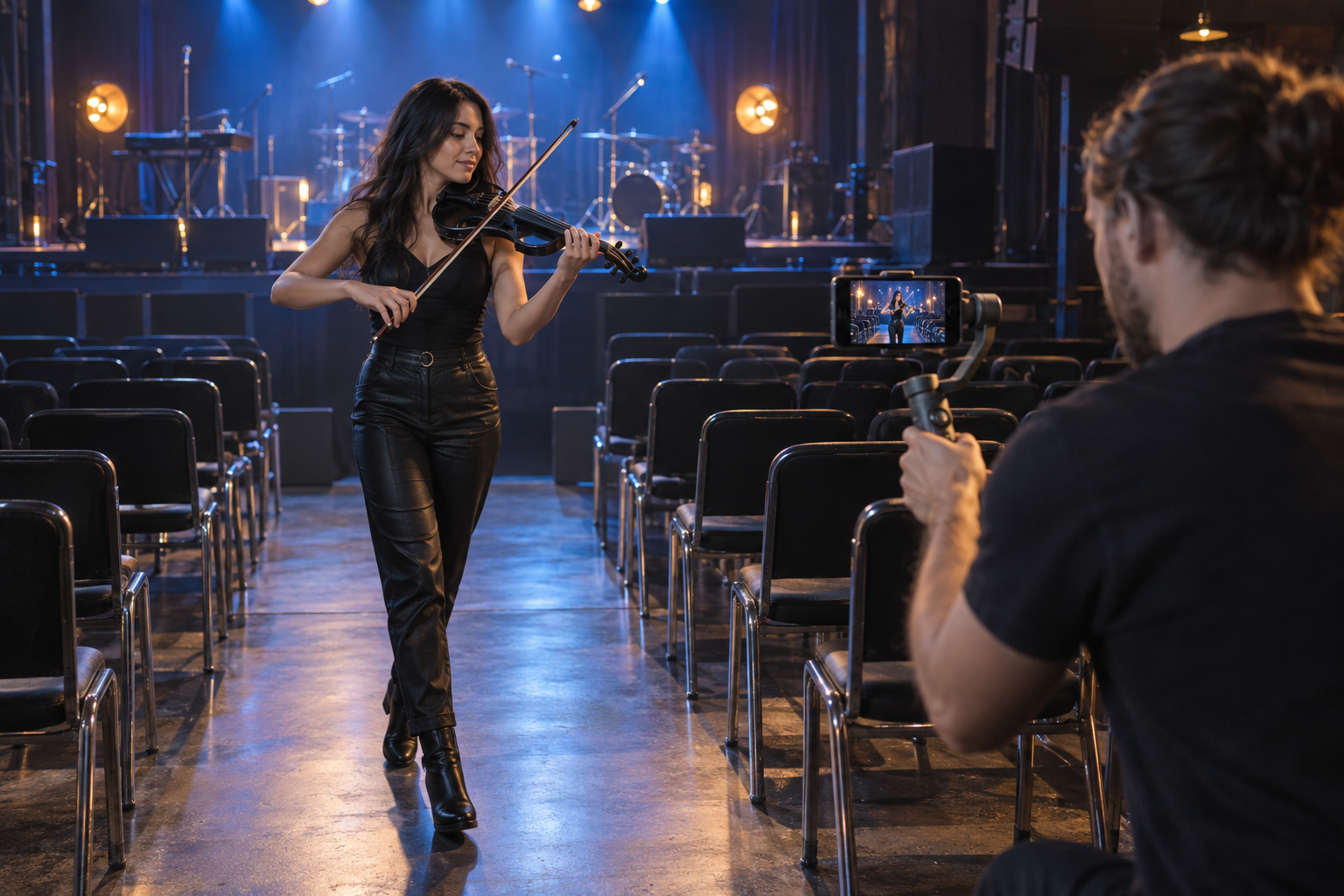
Hohem iSteady V3 is worth comparing if you want a feature-rich phone rig without moving to a camera system. Pros: a mobile-video focus and a package aimed at active shooting. Cons: more modes can mean more pre-show decisions. For a live violin performance, pick one follow mode and keep it there; your visual language should support the phrasing, not chase every movement. Manufacturer details · Compare Amazon listings
Zhiyun Smooth 5S AI belongs on the list for artists who schedule intentional location shoots rather than only quick backstage clips. Pros: it invites more controlled camera movement. Cons: a larger control-focused device can feel like more gear to manage on a travel date. Pack it only when the shot list calls for movement, then use a tripod for the main take. Manufacturer details · Compare Amazon listings
Feiyu Vimble 4 is a compact reference point for performers who need something light enough to travel with alongside an electric violin case. Pros: it keeps the category focused on stabilisation and portability. Cons: mobile app support and phone compatibility deserve a check before purchase. Confirm your exact phone dimensions with its normal case fitted, rather than testing only a bare phone. Manufacturer details · Compare Amazon listings
DJI Osmo Mobile SE makes sense when the requirement is simply steadier handheld phone footage for clips, venue arrival shots and social cutaways. Pros: it is a more modest route into stabilised shooting. Cons: it may not have the latest control or tracking options. Tanya Strings would put the saved budget into dependable audio, a compact light or an extra phone power bank before buying features that never reach the final edit. Manufacturer details · Compare Amazon listings
Check the supported phone width, thickness and weight with your case, wireless receiver or lens attachment. A gimbal balanced at home can struggle once a case is added. Keep a small microfiber cloth and a charged power bank in the same pouch so the video setup is complete, not scattered through the car.
For a full performance, a locked tripod frame is usually more useful. Use a gimbal for an arrival, an opening walk, an arc around a sustained phrase or an audience-side detail. Leave bow-tip space above and below the frame; a beautiful face-tracking shot fails if the bow disappears on every up-bow.
Electric violin content should sound as controlled as it looks. Record a direct feed from your interface or mixer when practical, clap once for sync, and retain a phone-audio safety track. At a live date, ask the venue before recording and make sure the operator never blocks an aisle or audience sightline.
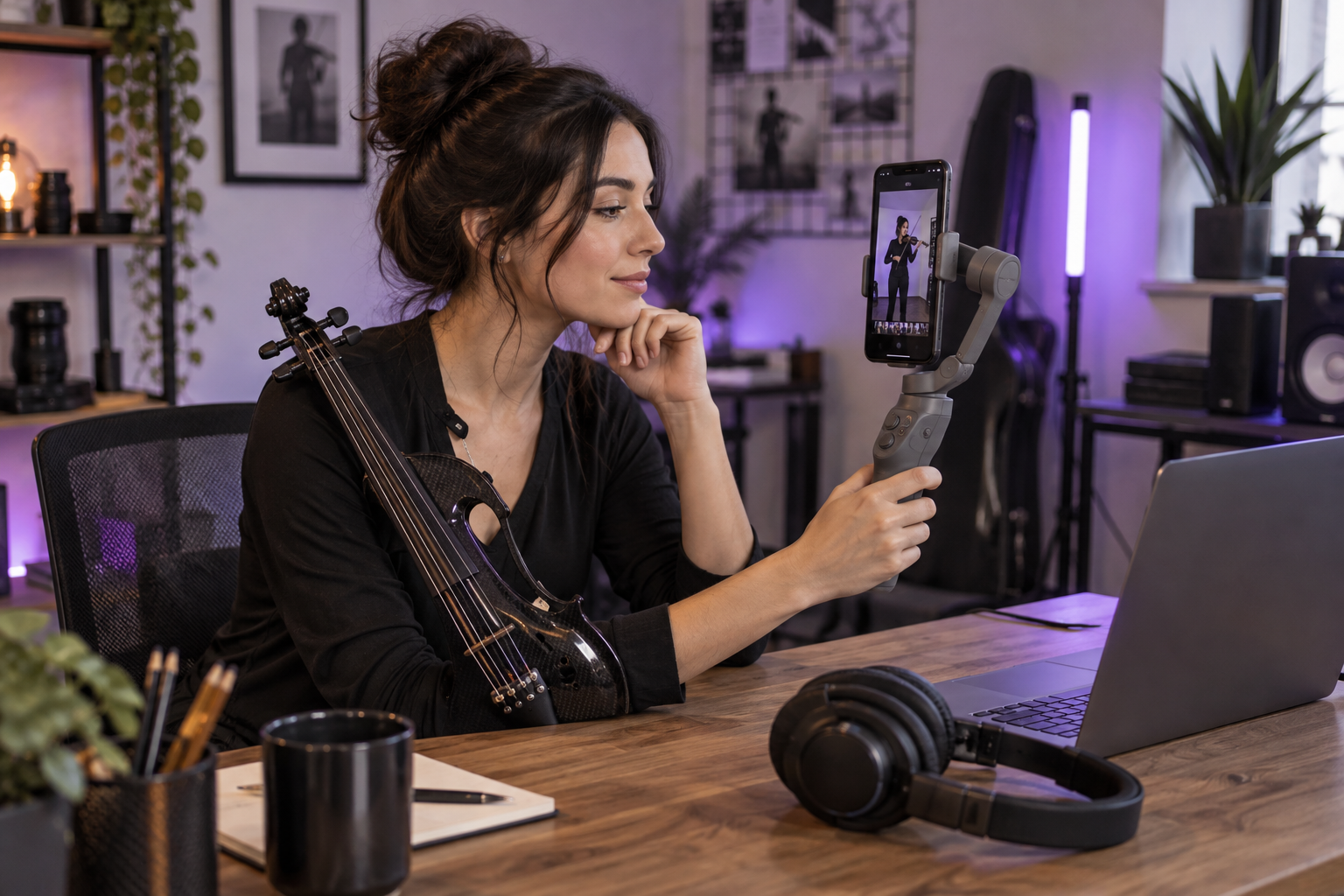
Tanya Strings is a world-class electric violin performer and content creator, so the camera move has to serve the musical moment. I would prepare a short shot list: one fixed master performance, one moving close detail and one vertical social shot. Then I would film the complete phrase before collecting extra movement. That protects the performance first and makes the edit far calmer. These are specification-based buying ideas, not claims that Tanya has personally tested every listed product.
Yes. A phone gimbal can smooth walking shots, controlled pans and backstage footage. It cannot improve poor light or clipped audio, so treat it as one part of a planned performance-video setup.
Not for every reel. A tripod is better for a locked full-body performance. A gimbal earns its place when movement tells part of the story or when another person is filming you.
Use vertical framing for short-form social posts and horizontal framing for YouTube, a website hero or a concert recap. Rehearse the bowing space in the chosen frame before recording a full take.
For a quick post, phone audio can work in a quiet setting. For an electric violin performance, record the direct signal or mixer feed separately when possible, then sync it in editing.