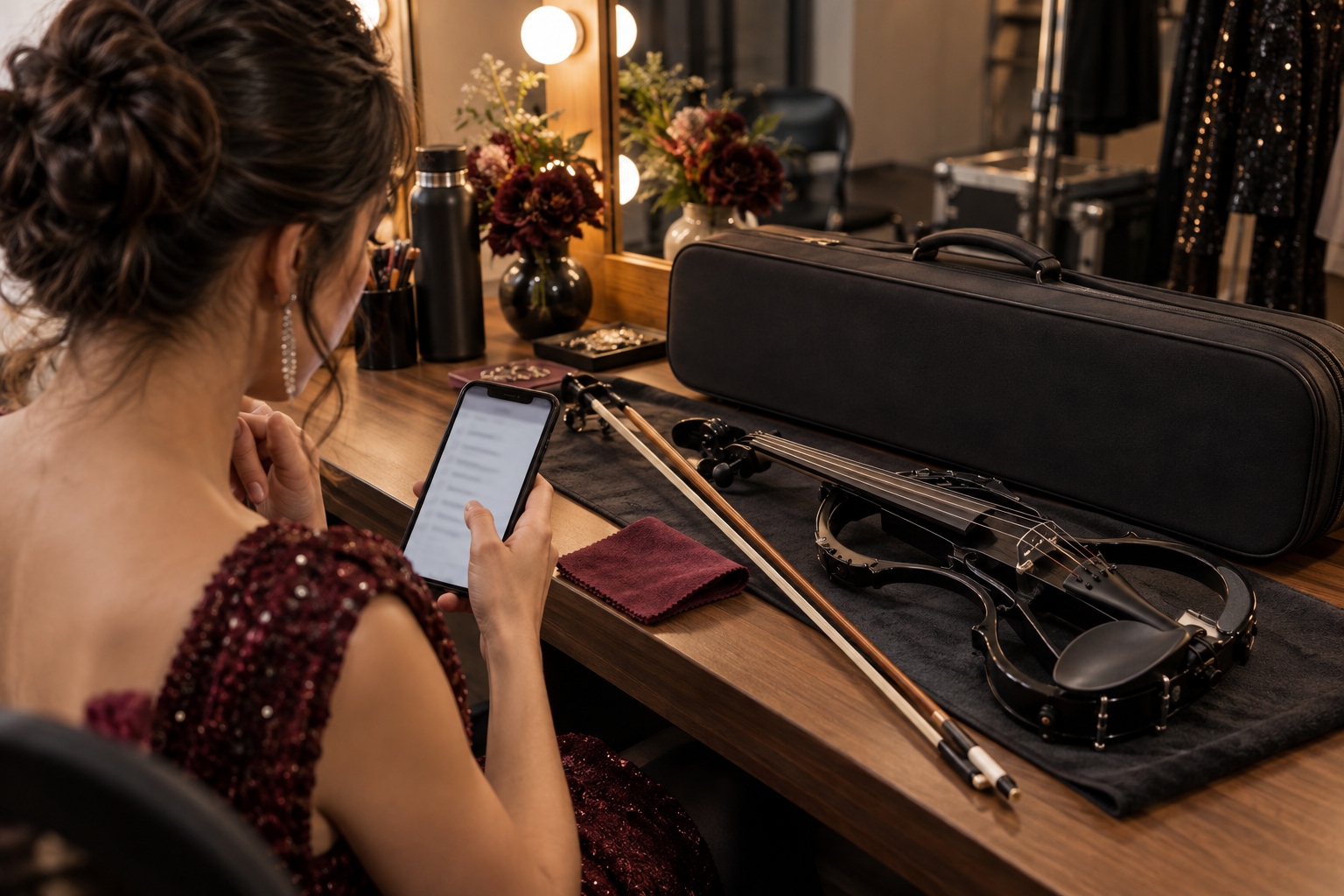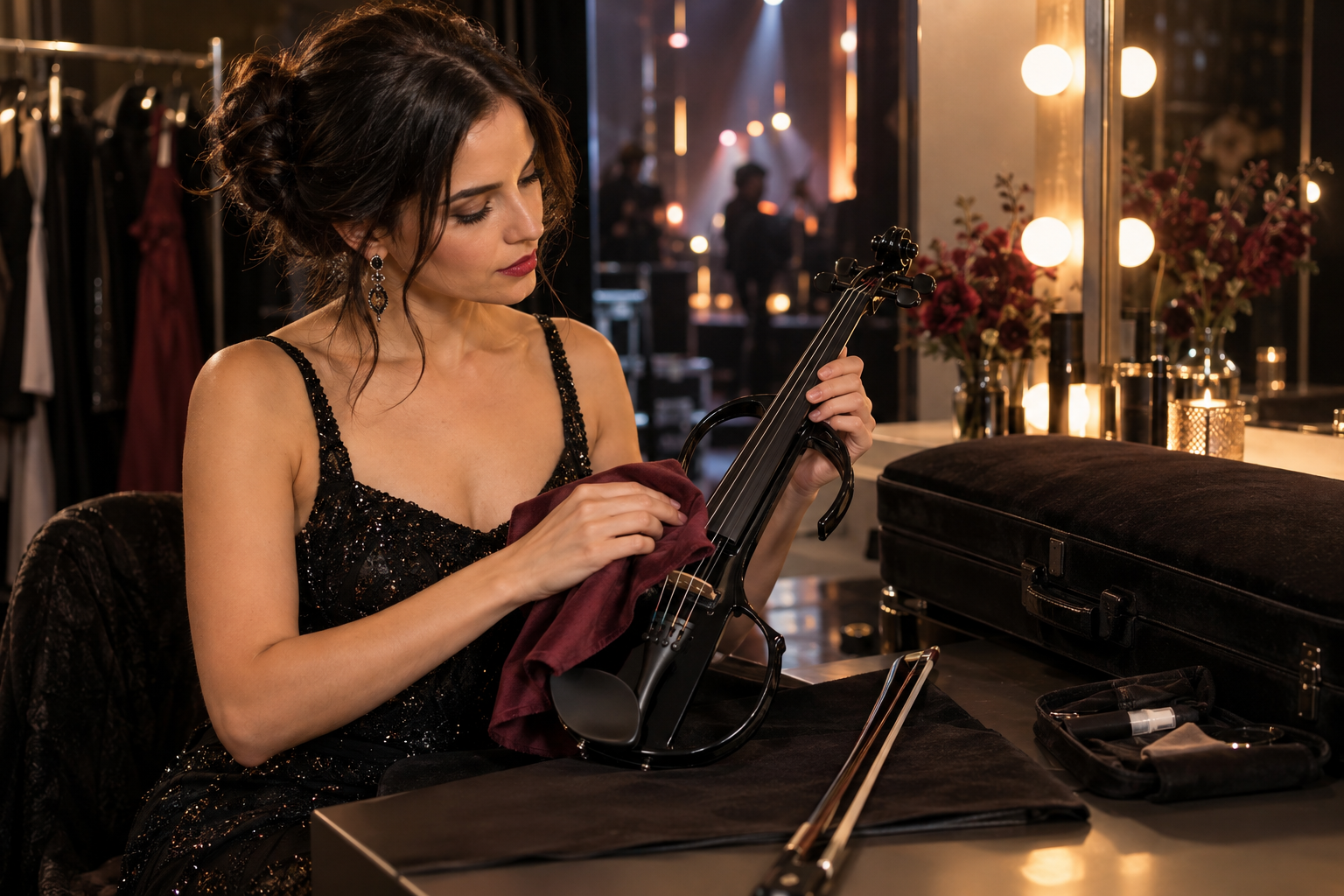
The best electric violin cleaning kit is a small, disciplined set built around a high-quality dry microfiber cloth, a safe storage pouch and only finish products approved for your specific instrument. For a Tanya Strings-style stage routine, start by removing rosin dust after every set, keep liquids away from pickups, jacks and controls, and pack the same kit in the case for every date. MusicNomad Premium String Instrument Care Kit is the strongest all-in-one starting point; D’Addario Restore, W. E. Hill & Sons Varnish Cleaner, Super Sensitive Microfiber Cloth, MusicNomad Nomad Tool and Planet Waves Micro-Fiber Polish Cloth fill more focused needs. Cleanliness protects confidence, not just appearance.
Some links in this article are affiliate links. I may earn a commission if you make a purchase, at no extra cost to you.
Choose the smallest kit that makes you consistent. A dry cloth does most of the daily work; a cleaner earns its place only when your maker says the finish can handle it. Electric violin bodies can combine wood, composite, lacquer, matte paint and exposed electronics, so a product that suits one instrument may be wrong for another. Read the care instructions from your maker first, test only in an inconspicuous permitted area, and keep every bottle capped in a separate pouch.
| Product | Best for | Why compare it | Watch for |
|---|---|---|---|
| MusicNomad Premium String Instrument Care Kit | Complete starting kit | One organised route for regular care | Confirm finish compatibility |
| D’Addario Restore | Careful finish maintenance | Dedicated instrument-care option | Use only as directed |
| W. E. Hill & Sons Varnish Cleaner | Traditional instrument-care reference | Focused specialist option | Not for every electric finish |
| Super Sensitive Microfiber Cloth | Daily rosin removal | Simple low-risk essential | Wash it without fabric softener |
| MusicNomad Nomad Tool | Detail cleaning access | Compact precision tool | Keep away from sensitive hardware |
| Planet Waves Micro-Fiber Polish Cloth | Second cloth in the case | Useful separation of jobs | Do not reuse a gritty cloth |
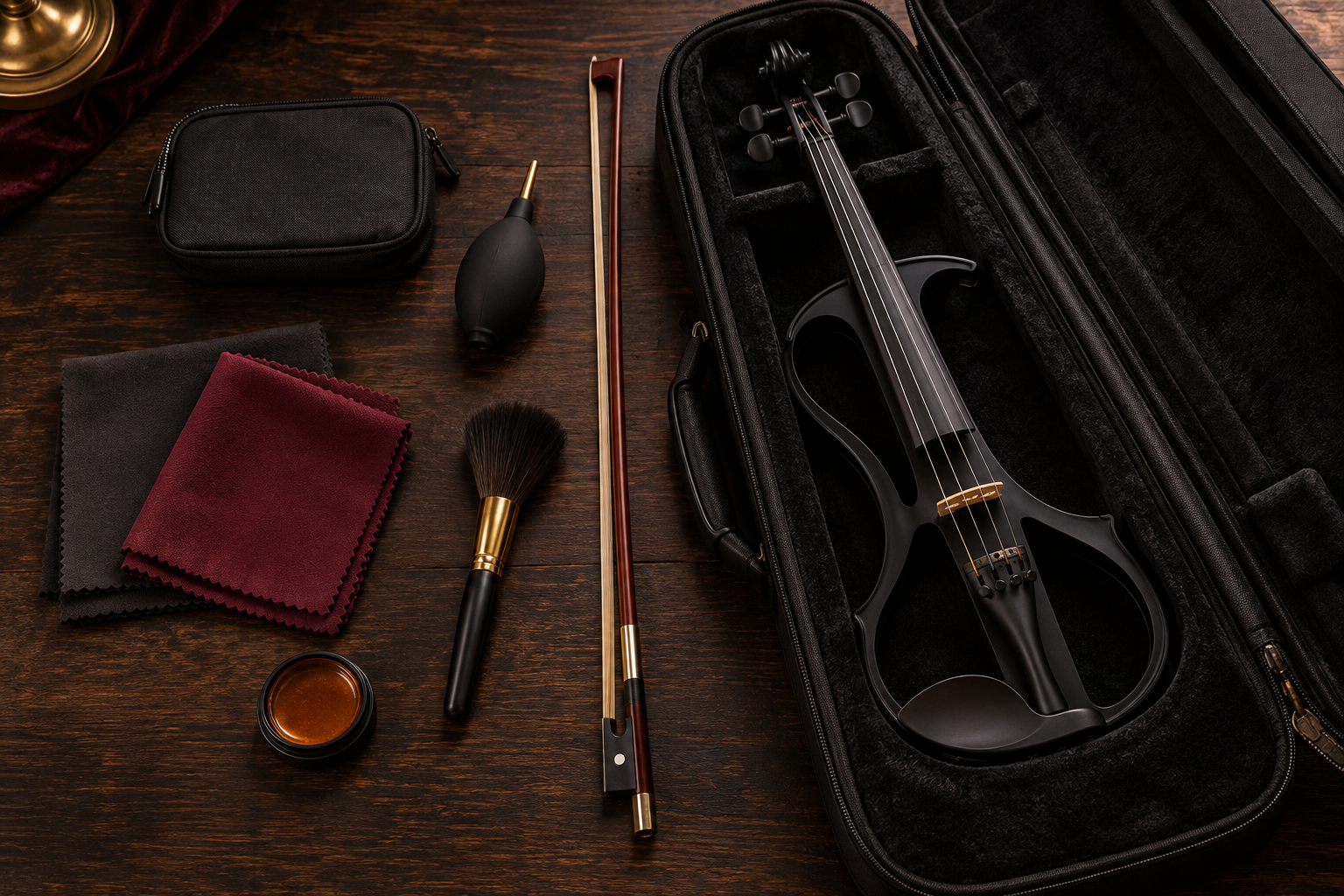
MusicNomad’s kit is the practical all-round comparison when you want a pouch-friendly system rather than a pile of unrelated products. Pros: a coordinated starting point that encourages routine. Cons: no kit can overrule the finish guidance for your own electric violin. I would use it to establish a calm post-set ritual, then remove anything that does not suit the instrument. Maker details · Compare Amazon listings
D’Addario Restore is worth comparing when the manufacturer permits a controlled finish-care product and the instrument needs more than a dry wipe. Pros: purpose-built instrument-care positioning. Cons: it should never become a substitute for checking the maker’s advice or for cleaning electronics with the wrong liquid. Apply product to a cloth, not directly to the instrument, unless the instructions specifically say otherwise. Maker details · Compare Amazon listings

W. E. Hill & Sons is a specialist reference for performers who already know their finish can accept this type of care. Pros: a focused heritage-oriented option. Cons: traditional varnish cleaner is not automatically appropriate for every modern electric body, painted surface or composite material. Get approval from your luthier or instrument maker before it enters the case. Maker details · Compare Amazon listings
A dedicated microfiber cloth is the least glamorous and most valuable recommendation here. Pros: it handles the everyday rosin-dust pass without adding moisture or complexity. Cons: once it picks up grit, it can scratch a surface, so keep it clean and replace it when needed. Tanya Strings would keep one cloth for the instrument and a different one for bow stick and metal hardware. Maker details · Compare Amazon listings
The Nomad Tool belongs in the consideration set for careful detail access around strings and hard-to-reach surfaces. Pros: compact, targeted cleaning approach. Cons: it is not a reason to poke into pickups, wiring gaps or bridge hardware. Use a light touch and treat it as a finishing tool after the basic cloth routine, not a cure for neglected maintenance. Maker details · Compare Amazon listings
A second dedicated cloth prevents the common touring mistake of using one dusty cloth for every job. Pros: inexpensive redundancy in the case and a simple separation between body, bow and backup work. Cons: it is still only as safe as its condition; do not keep a cloth that has been dropped on a dirty stage. Maker details · Compare Amazon listings
Ask the maker, not a marketplace listing. Matte paint, satin surfaces, composites and acoustic-style varnish can need different care. Never let spray or liquid travel toward a jack, battery compartment, pickup, control cavity or cable connection.
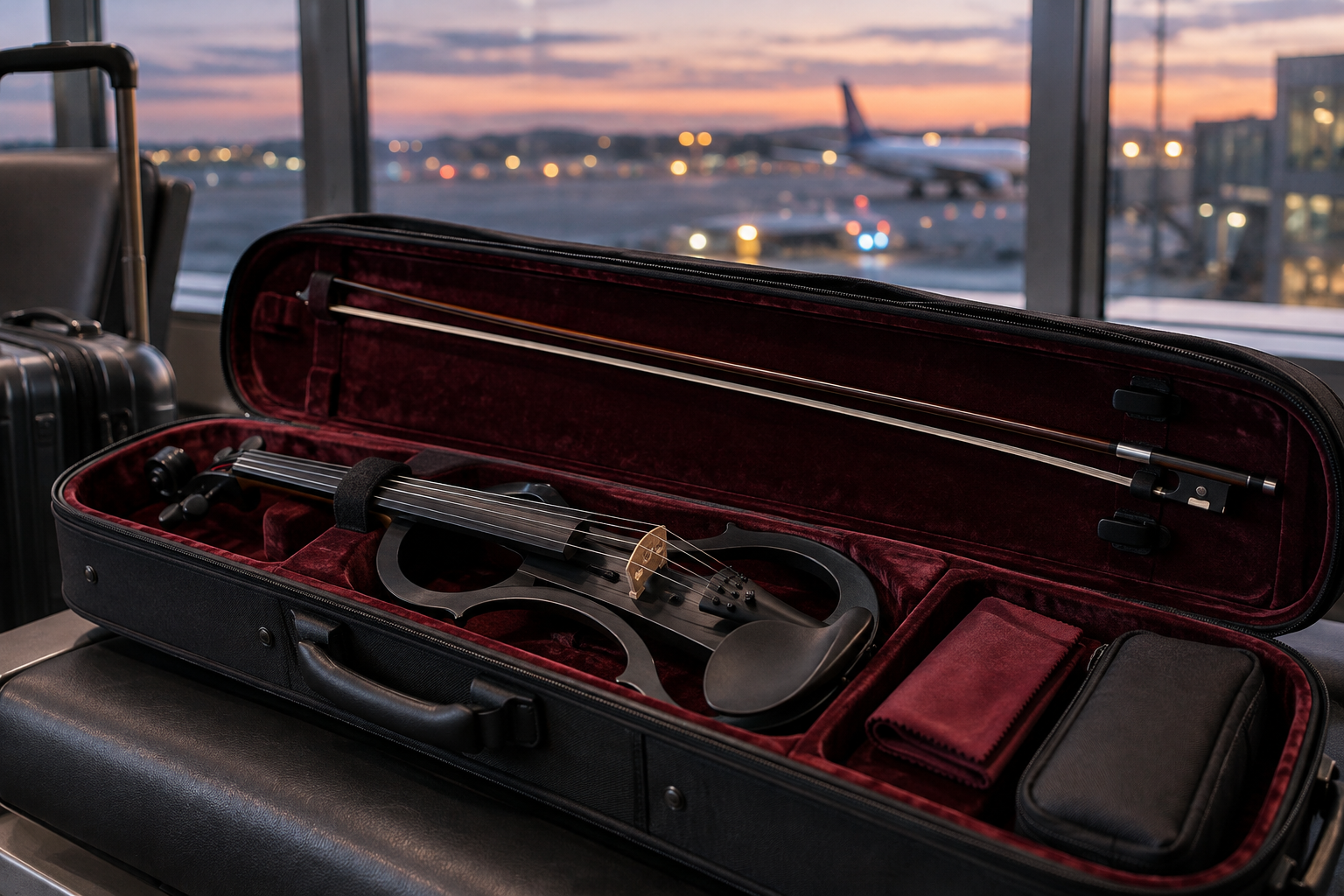
Use a zip pouch that closes fully and keep it in the same case compartment as your spare strings and emergency cable. A kit left at home does not help after a humid outdoor set, a dusty venue or a fast airport change.
My performer rule is two minutes after soundcheck and two minutes after the show: inspect strings and bridge area, dry-wipe rosin dust, check the cloth, then close the case. If a job needs solvents, repairs or diagnosis, schedule it away from a rushed call time.

Tanya Strings is a world-class electric violin performer and content creator, so the instrument has to look composed in a close-up reel and feel dependable under stage lights. I would keep the routine deliberately unglamorous: dry cloth first, maker-approved care only when needed, and no experimental product five minutes before a show. A clear body, clean strings and an organised case make the gear disappear, leaving the audience with the performance. These are specification-based buying ideas, not claims that Tanya has personally tested every product listed.
Only if the instrument maker permits it for your exact finish. Start with a dry microfiber cloth. Keep liquids away from electronics, jacks, pickups and controls, and never spray a product directly on the instrument.
After each performance, use a clean dry microfiber cloth with gentle pressure. Work around the bridge, strings and fingerboard without pushing dust into hardware or gaps. Do not use household cleaners.
Carry one dedicated microfiber cloth, a separate bow cloth, a small pouch, a dry air blower if appropriate, spare strings and only maker-approved cleaner. Keep the kit inside the case so the routine travels with the instrument.
Cleaning will not change the electronic signal path, but removing rosin dust can preserve a comfortable bow response and a professional stage appearance. Solve noise, gain or pickup issues with the correct technical setup instead.