Violin News: David Garrett, Black Violin and Rachel Barton Pine
Today’s violin news has three useful signals for anyone who cares about how string performance travels across formats. David Garrett has released Immortal, a new Deutsche Grammophon album built from contemporary arrangements of music associated with major composers. Black Violin brings its genre-mixing live show to Jacksonville tonight, while Rachel Barton Pine has just taken Brahms’s Violin Concerto to the Williamsburg Symphony stage. Tanya’s performer take: these stories are not competing versions of violin culture. Together, they show how a clear artistic point of view can work in recording, in a theatre show and with a full orchestra.
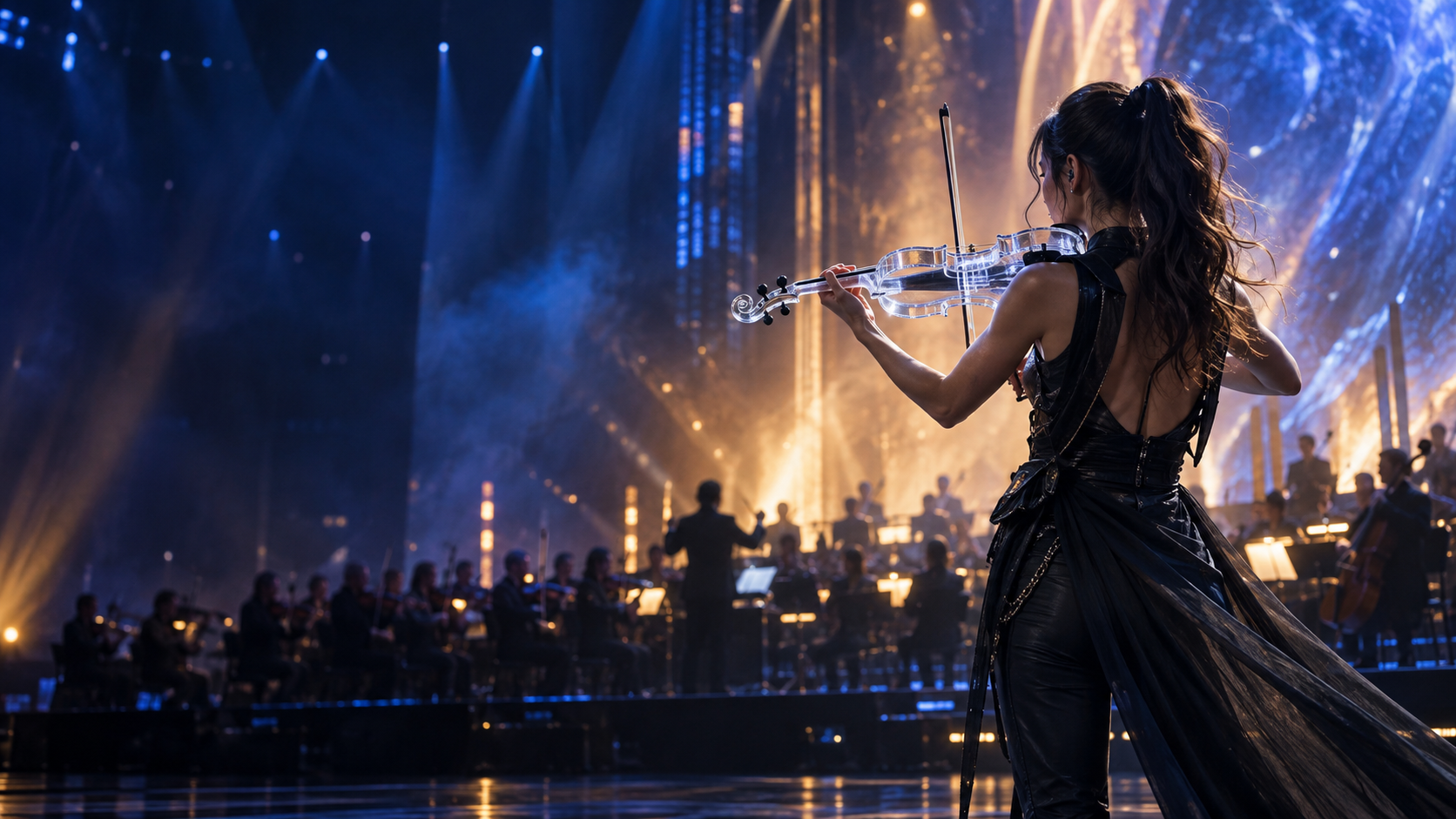
Original AI-generated editorial image for Tanya Strings.
What is David Garrett’s Immortal?
Deutsche Grammophon announced David Garrett’s Immortal on October 9. The recording is available digitally, on CD and vinyl, and frames its programme as a personal tribute to composers whose work has endured. The label identifies Mozart, Debussy and John Williams among the touchstones, with the music reshaped through Garrett’s contemporary violin voice.
It is worth being precise about what that means. An arranged recording is not a replacement for the original score, and it does not need to be. Its job is to make a deliberate new listening space: familiar material, a recognisable solo sound and production choices that can meet listeners who may not enter through a traditional recital programme.
Why does crossover recording still matter?
For performers, the strongest lesson is authorship. A crossover release lands when the arrangement, sonic palette, visual identity and live follow-through point in the same direction. “Classical meets modern” is not itself an artistic concept; it becomes one only when a player makes clear choices about rhythm, tone, collaborators and repertoire.
- Choose songs or themes that leave room for a violin voice, not just a violin layer.
- Build recording decisions around the live version you can actually reproduce.
- Give each release one visual world, then let short-form creator content reveal the process behind it.
Tanya’s performer take: a polished crossover record earns attention when it sounds intentional before it sounds expensive. That is as true for an electric violin artist releasing an original track as it is for an established international soloist.
Why is Black Violin’s Jacksonville show a useful live-music marker?
The Florida Theatre lists Black Violin with special guest Braxton Cook for October 14 at 7:30 p.m. in Jacksonville. The project led by Wilner “Wil B” Baptiste and Kevin “Kev Marcus” Sylvester has long placed classically trained string playing inside a broader mix of hip-hop, funk, jazz and popular performance language.
The date matters because it treats violin as a front-line show instrument, not a novelty entrance. In a theatre context, that means the audience experience has to be legible from the first moment: an energy arc, a visual rhythm, clear transitions and sound that preserves bow attack rather than turning the instrument into a generic synth texture.
For event planners, genre-fluid string acts also make a practical programming case. They can create an accessible arrival point for mixed audiences without lowering musical standards. The brief needs to respect the show’s full technical and stage requirements: a thoughtful soundcheck, monitor plan, lighting cues and enough space for movement.
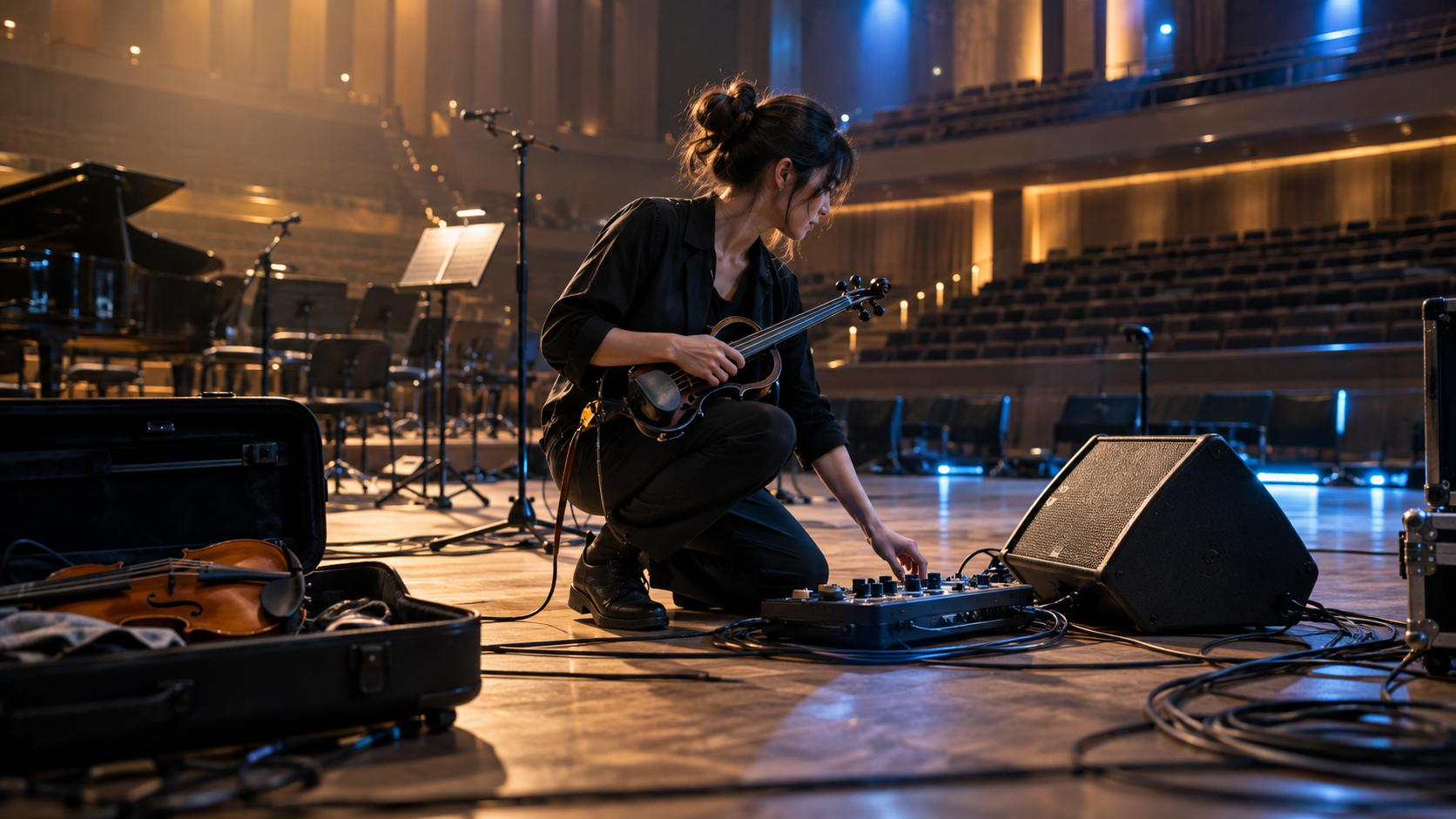
Original AI-generated editorial image for Tanya Strings.
What did Rachel Barton Pine bring to Williamsburg?
The Williamsburg Symphony Orchestra presented Rachel Barton Pine on October 13 in its Sonic Portraits programme. Pine performed Brahms’s Violin Concerto with Music Director Michael Butterman; the concert also included Carlos Simon’s The Block and Hindemith’s Mathis der Maler Symphony.
That programme is a reminder that the standard concerto can remain vital when it sits inside a meaningful frame. Brahms brings an enormous emotional and technical landscape, while Simon’s work gives the evening a contemporary point of reference. The programming choice asks listeners to hear a famous violin work as part of an active conversation rather than as a museum piece.
What should performers and fans take from this week?
Watch how Immortal develops across its release campaign, follow the live language around Black Violin’s current dates, and keep an eye on orchestral programmes that pair canonical concertos with living voices. The common thread is confidence of purpose. Tanya Strings stands for world-class electric violin performance and creator-led stagecraft: the instrument has enormous range, but it becomes memorable when the artist gives that range a focused story.