
The best portable Wi-Fi router for an electric violin livestream is the one that gives your camera, phone and streaming computer a stable, rehearsed connection without adding chaos at call time. For most creator-performers, GL.iNet Beryl AX is the flexible travel-router starting point; TP-Link TL-WR1502X, NETGEAR Nighthawk M6, TP-Link M7350, GL.iNet Spitz AX and Cudy LT500D fit different venue, mobile-data and budget plans. Choose by your actual internet source first, then by power, ports and SIM compatibility. Tanya Strings treats the connection like a stage cable: tested before doors, backed up, and quiet while the music takes focus.
Some links in this article are affiliate links. I may earn a commission if you make a purchase, at no extra cost to you.
Start by separating two jobs. A travel router shares and tidies an internet connection you already have, such as Ethernet at a venue or hotel Wi-Fi. A cellular hotspot or 5G router supplies internet through a SIM or eSIM plan. For a solo concert stream, a small travel router can keep the camera, control phone and laptop on one familiar local network; for outdoor work, the cellular device and its coverage plan become the main decision. No router replaces a venue test or a local recording backup.
| Product | Best for | Why compare it | Watch for |
|---|---|---|---|
| GL.iNet Beryl AX | Flexible travel rig | Compact travel-router approach | It needs an internet source |
| TP-Link TL-WR1502X | Simple Wi-Fi 6 travel use | Small creator carry-on option | Check venue login workflow |
| NETGEAR Nighthawk M6 | Mobile-data production | Dedicated 5G hotspot category | Carrier and data-plan fit |
| TP-Link M7350 | Compact LTE backup | Portable hotspot format | Coverage and SIM bands |
| GL.iNet Spitz AX | Cellular router setup | More deliberate mobile-network route | Plan antenna and power |
| Cudy LT500D | Fixed or travel 4G option | Ethernet plus cellular category | Confirm regional compatibility |
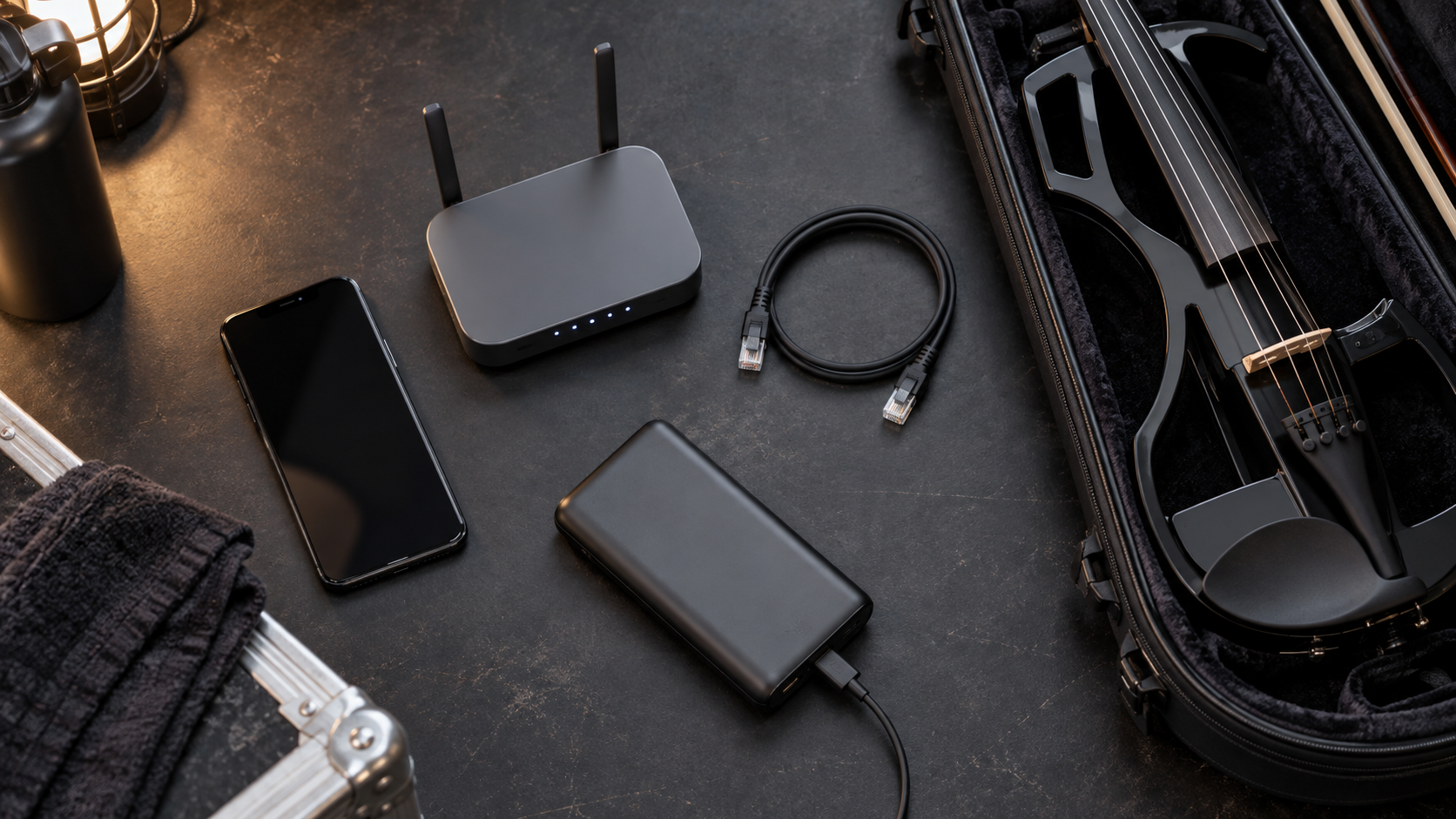
Beryl AX is a practical travel-router reference when the internet is supplied by a venue Ethernet port, trusted Wi-Fi or tethered phone and you want your own controlled local network. Pros: compact travel-focused format and useful separation between the public connection and your stream kit. Cons: it is not a cellular modem; plan the upstream connection before the show. Manufacturer details · Compare Amazon listings
TP-Link TL-WR1502X belongs on the shortlist for a compact Wi-Fi 6 travel-router setup where your laptop, camera control and phone need a familiar network at each date. Pros: small purpose-built travel category and straightforward connection management. Cons: captive portals and restrictive venue Wi-Fi still need a full rehearsal. Manufacturer details · Compare Amazon listings
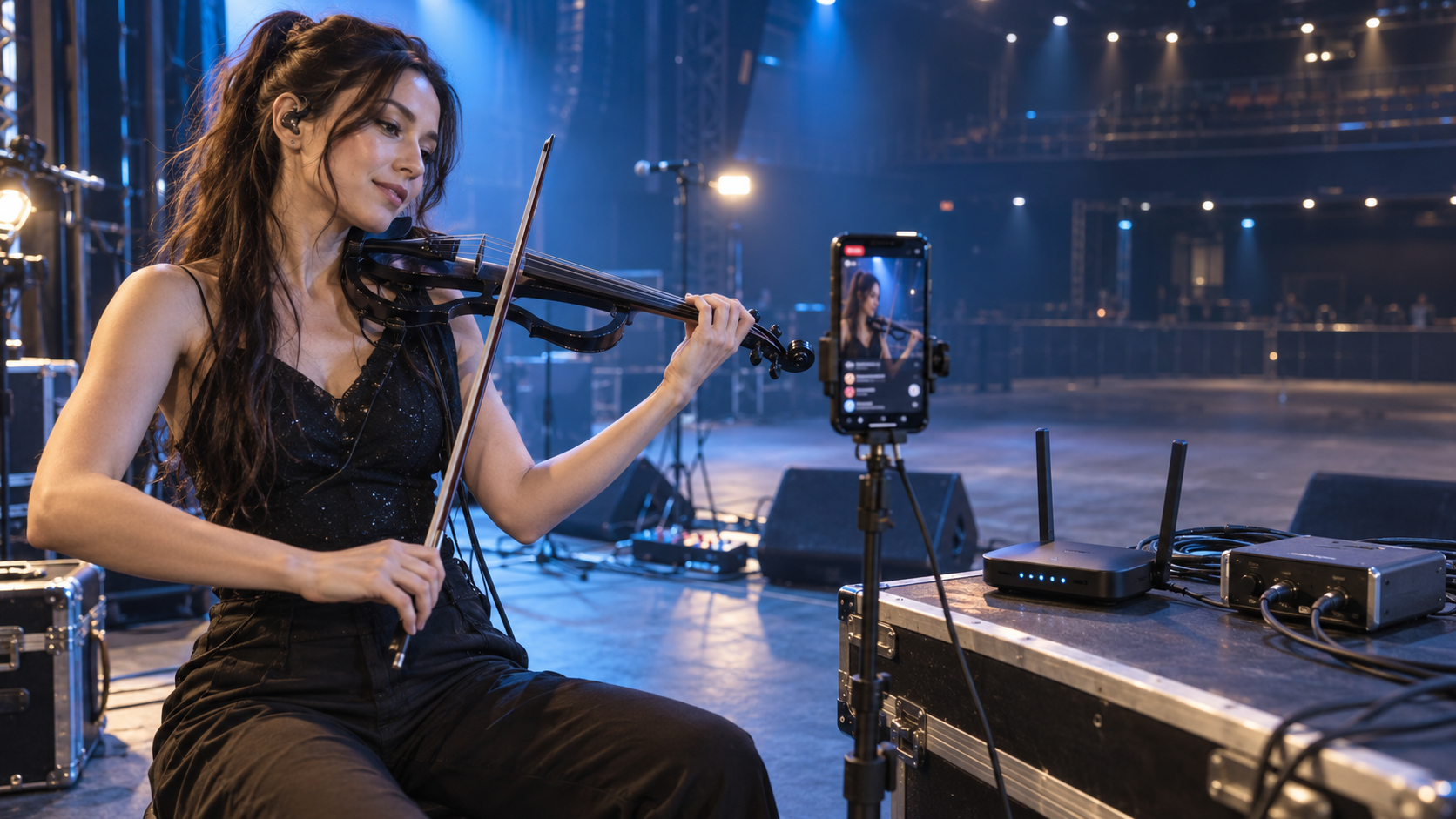
Nighthawk M6 is the comparison point for performers whose internet source is mobile data rather than venue infrastructure. Pros: dedicated 5G-hotspot category for a deliberate mobile workflow. Cons: the strongest hardware cannot overcome weak coverage, limited data allowance or a SIM that does not support the relevant bands. Check your carrier and venue signal in advance. Manufacturer details · Compare Amazon listings
TP-Link M7350 is worth comparing when a small LTE hotspot is the backup layer for a phone-led stream, remote rehearsal or content upload. Pros: portable hotspot form and a simple second-path mindset. Cons: treat it as a connectivity plan, not a guarantee: confirm local LTE coverage, SIM activation and remaining data before travel. Manufacturer details · Compare Amazon listings
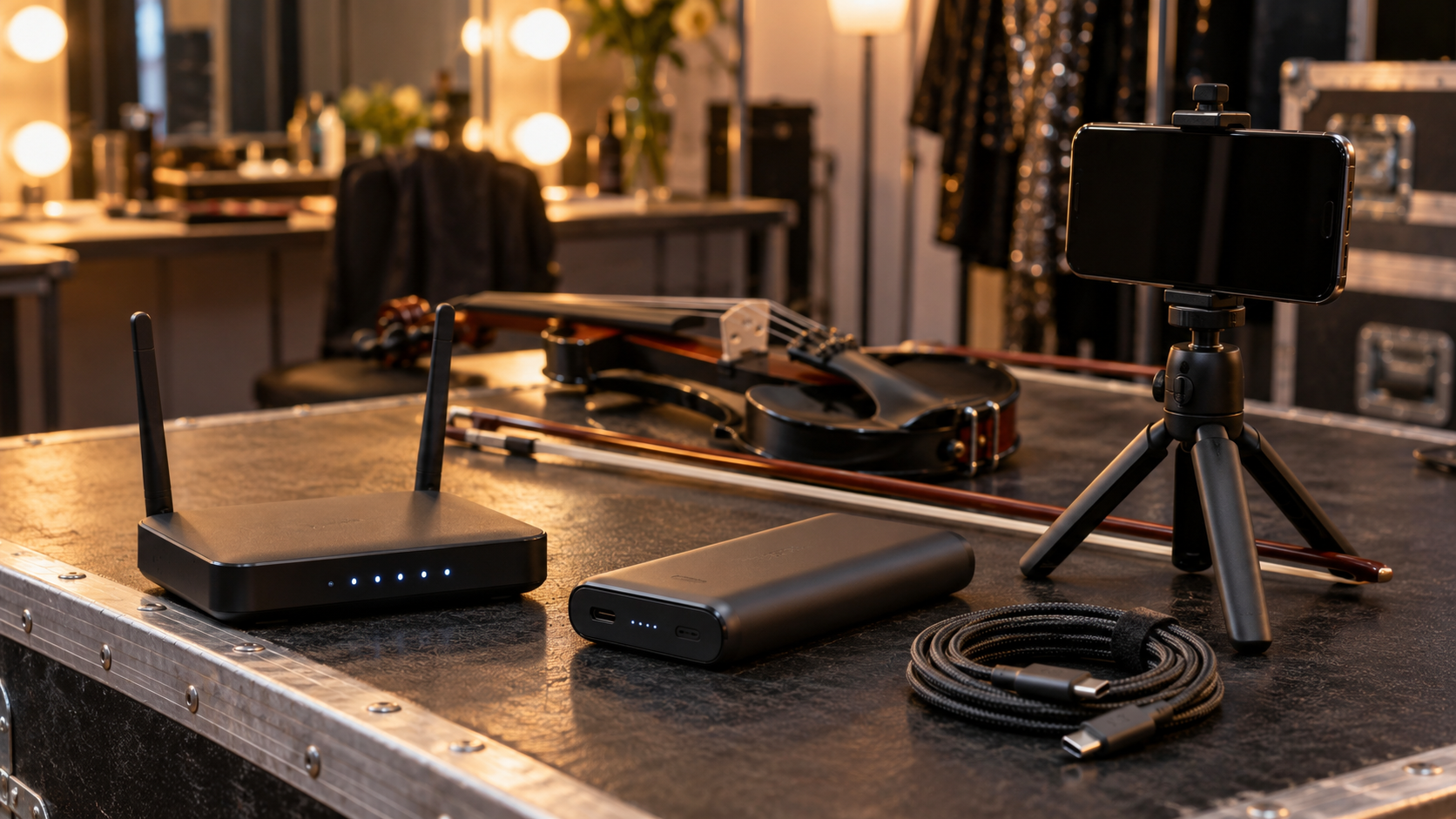
Spitz AX is for the performer considering a more configurable cellular-router route instead of a pocket hotspot. Pros: useful category for a dedicated mobile-data rig with Ethernet needs. Cons: it asks for more attention to SIM support, power, placement and setup than a simple phone tether. Build and test it long before a ticketed broadcast. Manufacturer details · Compare Amazon listings
Cudy LT500D gives you a 4G-router category reference when you want to compare Ethernet ports and a SIM-based connection in one box. Pros: a more desk-friendly route for a rehearsal space, pop-up studio or carefully packed show kit. Cons: check supported bands and physical power needs rather than assuming every version works in every country. Manufacturer details · Compare Amazon listings
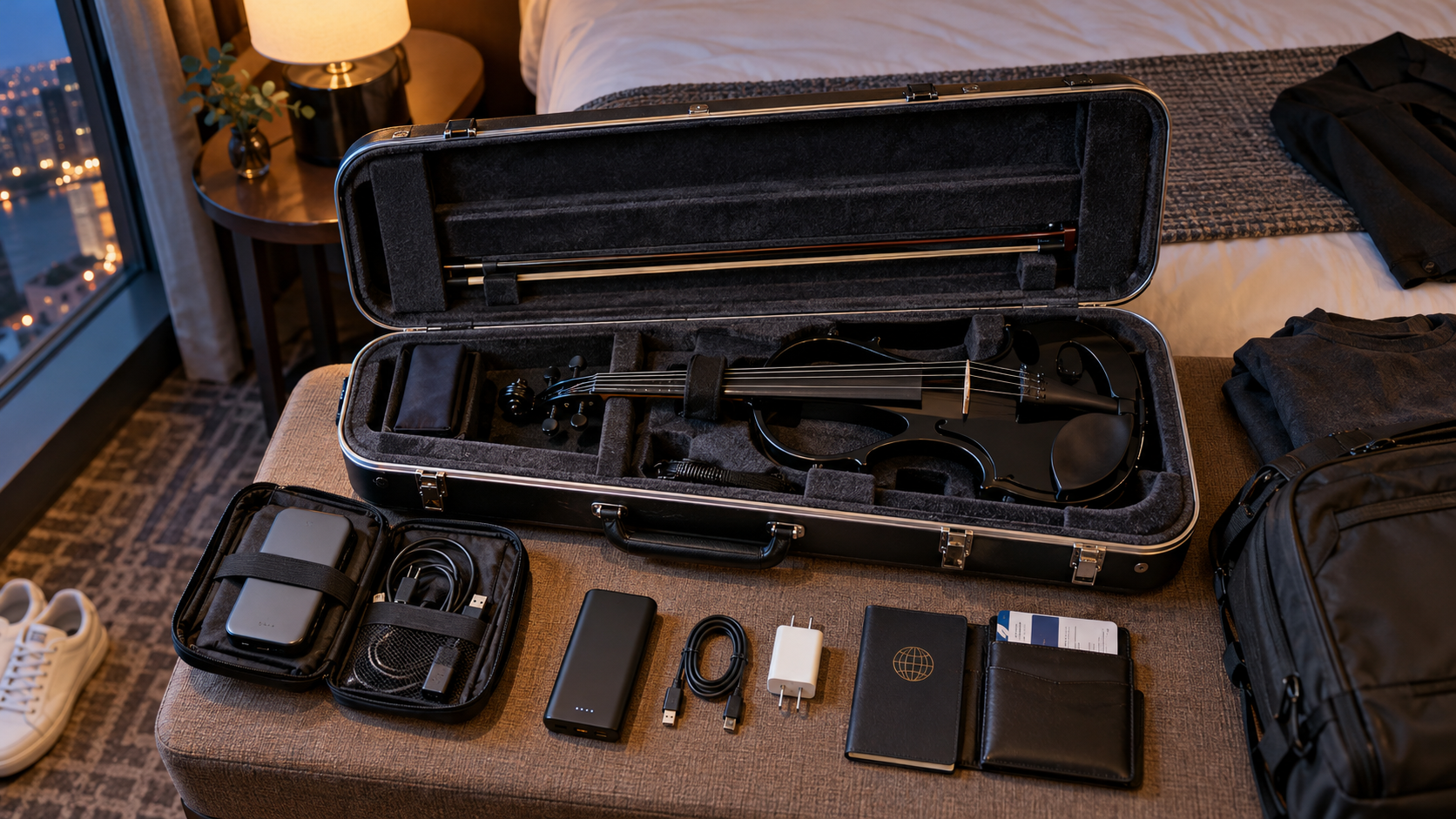
Write it down: venue Ethernet, venue Wi-Fi, a phone tether, a dedicated SIM or two independent mobile carriers. This decides the category. Ask the promoter about upload capacity, login screens and whether the connection is shared with guests. A private router helps organize your rig, but it does not grant priority on a crowded public network.
Check whether the router can use the same USB-C battery system as the phone and camera, or whether it needs a dedicated adaptor. Keep a labelled charging cable and test the full performance length. Networking gear that dies during the encore is just another single point of failure.
Record a clean local copy, keep a phone-data option ready, and decide in advance when to stop troubleshooting. For music, a stable recorded release is better than a fractured live broadcast. Make the technical decision before your violin is in hand.

Tanya Strings is a world-class electric violin performer and content creator, so I would make the network disappear into the production routine. I would arrive with the router name and password already set, connect each device in the order rehearsed, run an unlisted test with the exact violin audio feed, then keep the phone and power bank visible enough for a fast check. The audience comes for a living performance, not a network experiment. A calm connection plan lets the bow, sound and camera work with the same confidence.
It can give your devices a more controlled local network, but it cannot create strong mobile coverage where none exists. Test the venue connection and keep a recorded fallback plan.
Use a travel router to organize an existing wired, hotel or venue connection. Use a cellular hotspot or 5G router when mobile data is the actual internet source. Some performers carry both roles.
Test upload speed, stream stability, camera connection, audio sync, power and the exact destination account. Run the test from the performance position, not only from home.
No. It protects the network side of the broadcast. Build the violin pickup, DI, mixer and monitoring chain separately, then check the finished audio on the stream.