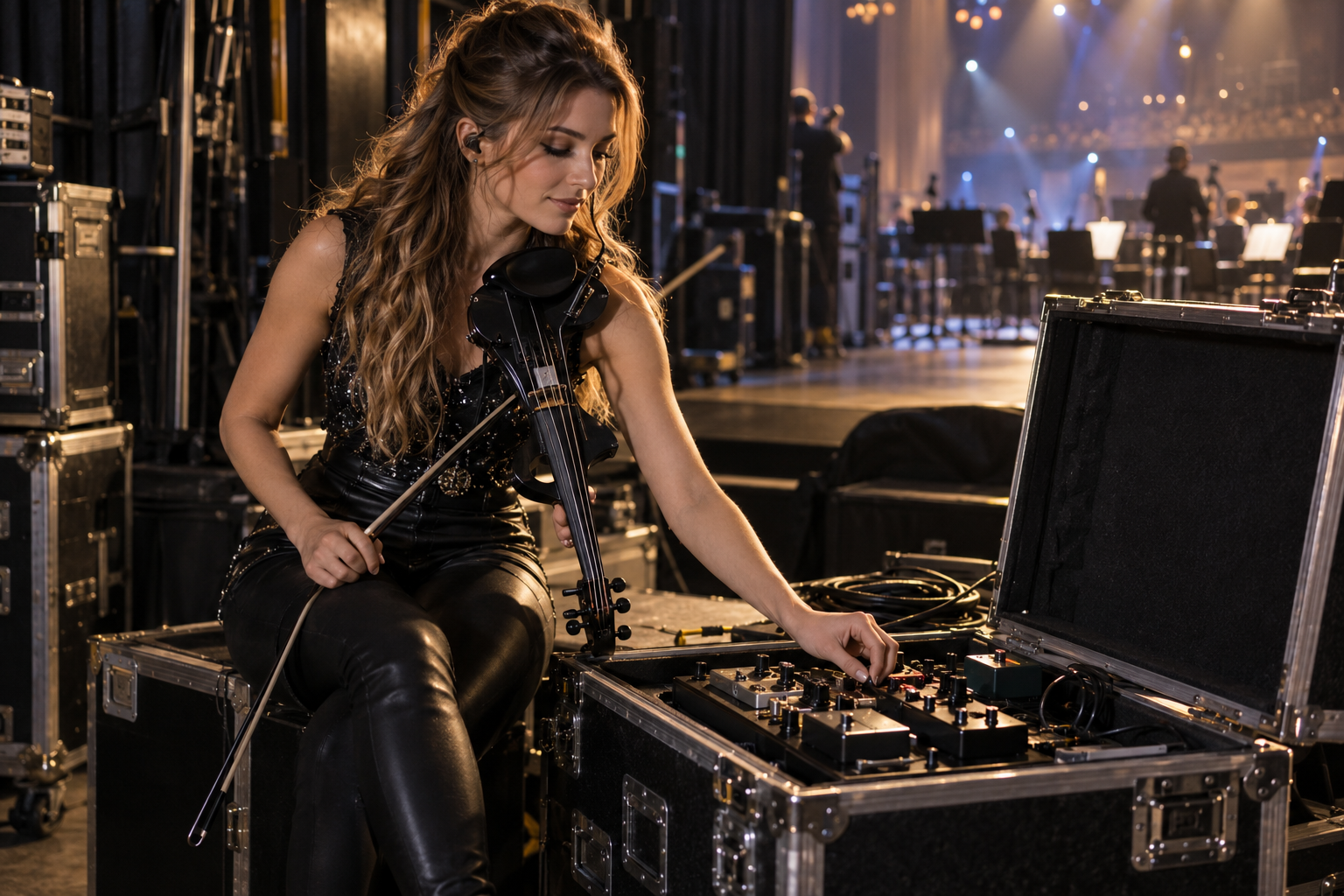
The best pedalboard flight case for an electric violinist is sized around the board you already trust on stage, with enough lid depth, foam and hardware to protect pedals without turning load-in into a workout. For a touring-style rig, compare Gator G-TOUR, Odyssey FZGSPRA, Rockville RC, ProX, Gator G-TOUR Small and Donner options by interior dimensions first. Tanya Strings treats a case as part of the performance system: it preserves the signal chain, speeds a calm setup, and lets the audience meet the music rather than a scramble of loose pedals.
Some links in this article are affiliate links. I may earn a commission if you make a purchase, at no extra cost to you.
Measure before browsing. Include the board, tallest footswitch, right-angle plugs, power supply, cable exits and the lid clearance. A compact rig for violin, DI and two pedals has different needs from a wide board with wireless, octave, delay and expression control. Wheels can help on festival dates; a lighter shell can be smarter for local work. The useful case is the one that arrives safely and opens into the same rehearsed layout every time.
| Case | Best for | Why compare it | Watch for |
|---|---|---|---|
| Gator G-TOUR PEDALBOARD-LGW | Larger touring boards | Road-case category with wheels | Exterior size |
| Odyssey FZGSPRA8880W | Wide prepared rig | Large glide-style case format | Exact board dimensions |
| Rockville RC | Budget hard-case route | Aluminum flight-case category | Lid depth and foam |
| ProX XS-PEDALBOARD | Traditional road hardware | ATA-style comparison | Choose the right size |
| Gator G-TOUR Small | Compact violin board | Smaller protected setup | Future pedal expansion |
| Donner DB-3 | Light local transport | Affordable board-and-case format | Not every route needs wheels |
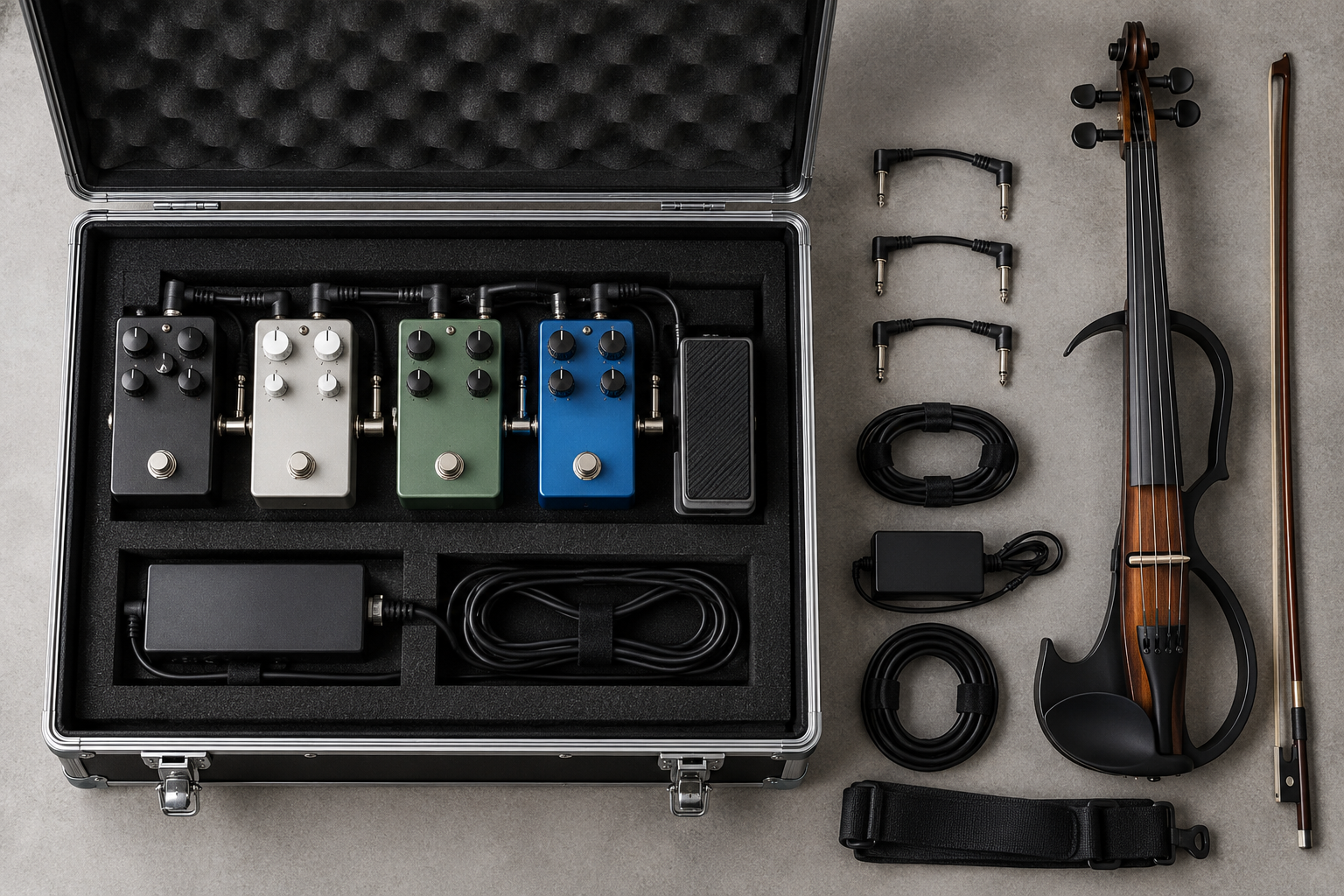
Gator’s G-TOUR category is a sensible reference for a larger board that travels often and needs a wheeled road-case approach. Pros: protection-focused construction category and easier movement through long venues. Cons: it adds size and weight, so confirm that the outer dimensions suit your car, storage and airline plan. Manufacturer details · Compare Amazon listings
Odyssey FZGSPRA8880W is worth comparing when a wide, pre-wired pedalboard needs a substantial transport shell. Pros: it represents the big-board flight-case format performers often choose for fixed signal chains. Cons: this is only practical when its interior dimensions match your board and wiring exactly. Manufacturer details · Compare Amazon listings
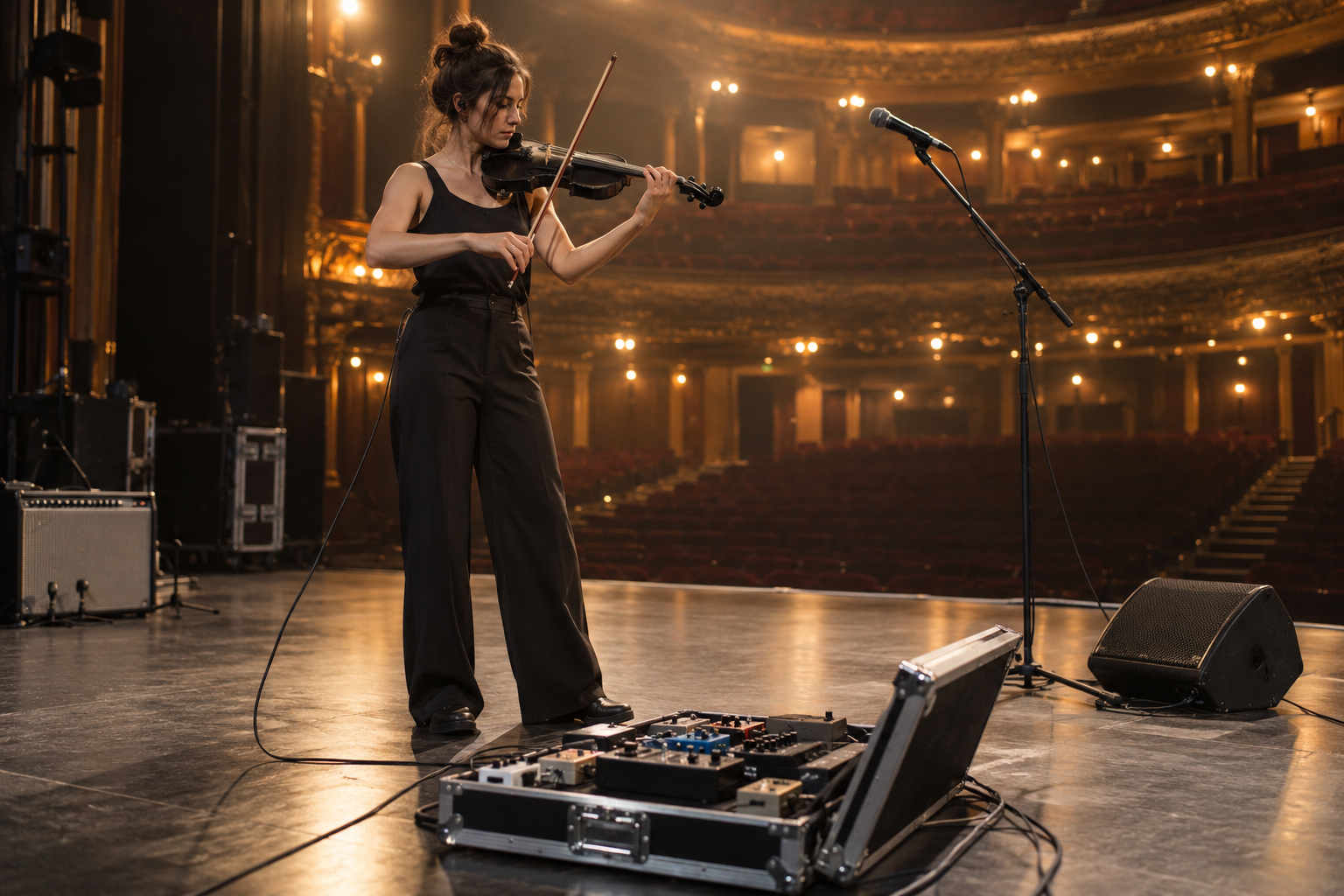
A Rockville RC-style aluminum case is a useful budget hard-case comparison for a smaller board that needs more than a fabric bag. Pros: hard-shell category and adaptable foam approach. Cons: check corners, latches, handle comfort and whether the interior truly clears installed pedals before committing. Manufacturer details · Compare Amazon listings
ProX XS-PEDALBOARD cases belong in the comparison when you want an ATA-style case with conventional road hardware. Pros: useful case category for players who keep a board assembled between dates. Cons: model sizes vary, so do not buy from a name alone: map the internal measurement to your pedalboard. Manufacturer details · Compare Amazon listings
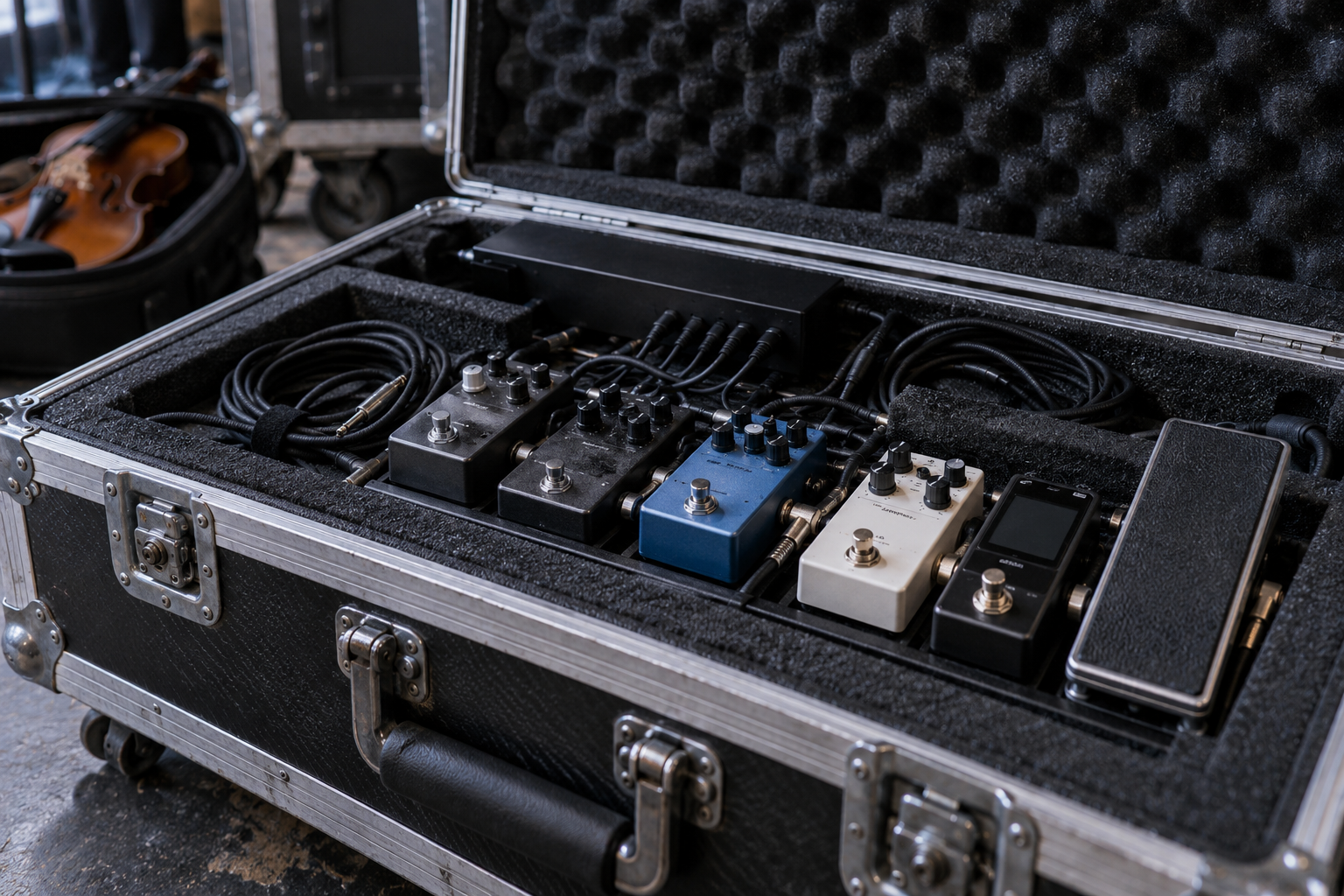
A smaller Gator G-TOUR configuration can suit an electric violinist whose chain is deliberately compact: perhaps wireless, DI, one modulation pedal and delay. Pros: protection without carrying space you do not use. Cons: a tight case can become limiting when you add an expression pedal or larger power supply later. Manufacturer details · Compare Amazon listings
Donner DB-3 is a practical comparison for local dates, rehearsals and content sessions where a lighter board-and-case format is preferable to a full road trunk. Pros: simpler carry and an accessible entry point. Cons: it is not the first choice for repeated freight handling or stacked touring cases. Match protection to the actual journey. Manufacturer details · Compare Amazon listings

Measure the tallest point after the board is wired, including plugs that rise above a stompbox. Compressing a cable against the lid is an expensive way to discover a bad fit. If the case uses removable foam, make the first packing test at home and photograph the successful layout.
Think beyond the stage. Check car boot width, stairs, loading docks and whether the case is carried alone with a violin case. A wheeled case can be ideal for a long venue corridor and awkward on a small public-transport route. Keep the rig physically realistic.
Protecting the board should not hide every connection. Plan where the power lead, instrument cable and DI output leave the case. Label the non-obvious ends. Tanya Strings would test the full unpack-to-first-note sequence during rehearsal, then leave it unchanged for the show.

Tanya Strings is a world-class electric violin performer and content creator, so I would buy for repeatable performance rather than an impressive-looking empty box. I would build the complete board, measure it wired, lift the loaded case, and run a stage setup from the case on the floor. The best choice holds the signal chain securely, opens without fuss, and survives the same travel rhythm as the instrument. When the technical layer is dependable, the performance can stay expressive, present and camera-ready.
It is worthwhile when the board travels in vehicles, checked production cases or busy backstage areas. It protects the prepared layout and reduces reset time.
Often yes, when the case is built around the board and has enough clearance for switches, cables and power. Check lid depth first.
Measure with the tallest pedal, side plugs and any permanent power lead. Leave room for foam and safe routing, not meaningless bulk.
No. The flight case protects the effects rig; your electric violin still needs its own correctly fitted instrument case.