Violin News: Alexandra Conunova, Alexi Kenney and Seoul
Today’s violin news is about the live moment: Alexandra Conunova made her Cincinnati Symphony Orchestra debut in Khachaturian’s Violin Concerto on October 17–18; Alexi Kenney brought Prokofiev’s First Concerto to Monterey Symphony in Carmel on the same weekend; and Seoul International Music Festival has just closed a 2026 edition built around collaborations, premieres and established repertoire. Tanya’s performer take: these are three different kinds of visibility: an orchestral debut, a soloist with an unconventional curatorial identity, and a festival where string players meet across ensembles. For audiences and event planners, the shared lesson is that a violin programme becomes memorable when its artistic point of view is clear before the first note.
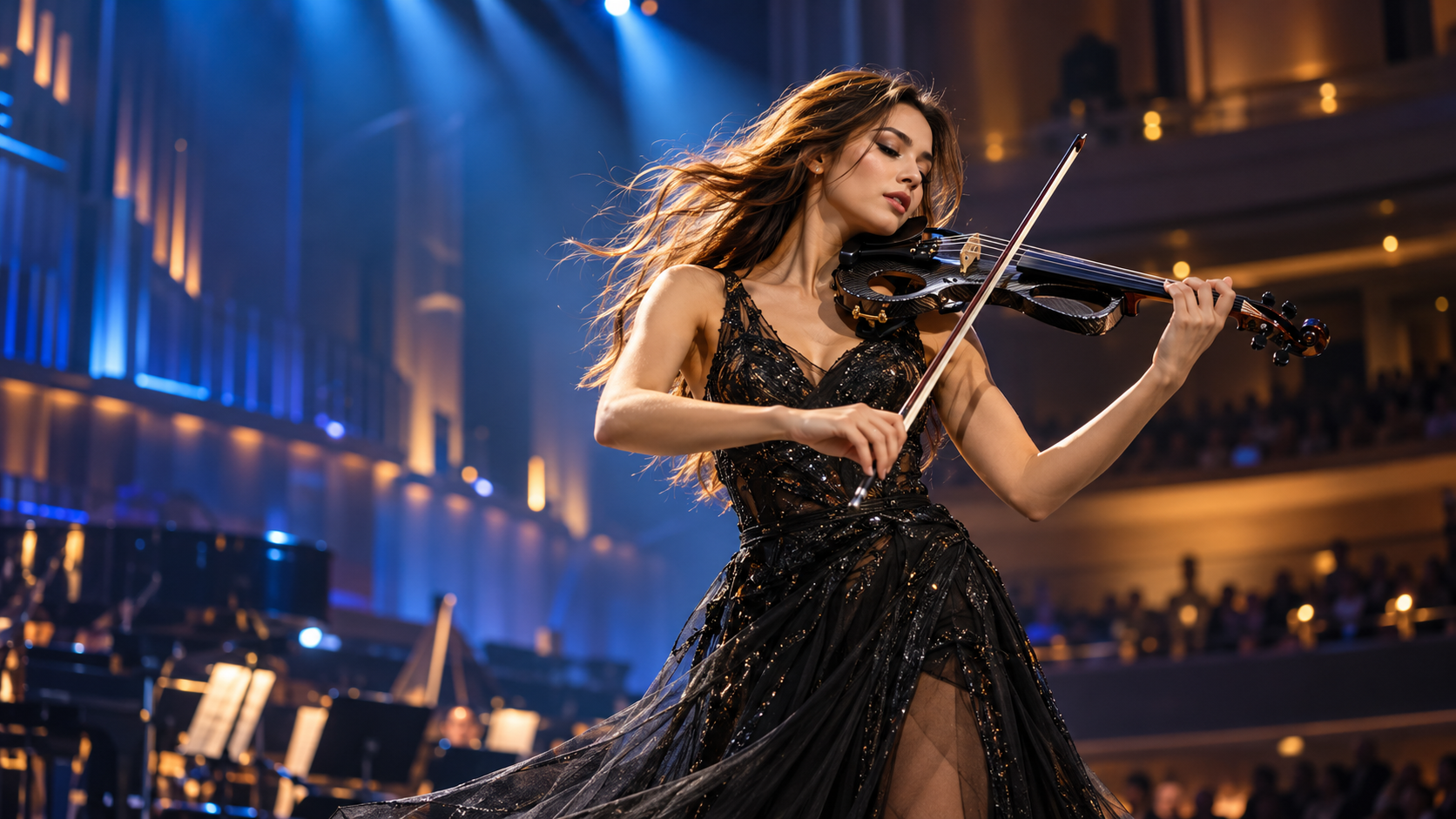
Original AI-generated editorial image for Tanya Strings.
What did Alexandra Conunova bring to Cincinnati?
The Cincinnati Symphony Orchestra’s official concert page placed Alexandra Conunova at Music Hall for October 17 and 18, performing Khachaturian’s Violin Concerto with Cristian Măcelaru. The programme framed the concerto with Dorothy Howell’s Lamia and Brahms’s choral works Nänie and Schicksalslied, a substantial canvas for a debut rather than a lightweight showcase.
Khachaturian asks for range: a bold public sound, restless rhythm and a line that can still sing. That contrast makes it ideal concert news for a performance-led site. A concerto appearance is not merely a list of difficult passages; it is a chance to show how an artist controls energy in a large room and stays legible inside a dense orchestral texture.
Why does that matter beyond a classical hall?
For an electric violinist, the translation is direct. The instrument and amplification may change, but the stage problem stays familiar: design a sound that projects character without becoming harsh, and create enough dynamic contrast that the audience notices a journey rather than a steady volume level. Event teams can support that work with a real soundcheck, clear sightlines and a lighting look that follows the show’s emotional arc.
- Give the opening a recognisable sonic signature.
- Reserve the brightest, most saturated sound for a genuine peak.
- Let quieter passages have visual focus instead of treating them as downtime.
Tanya’s performer take: virtuosity lands hardest when it is attached to shape and intention. A player can be technically fearless and still make the audience feel invited into the story.
How did Alexi Kenney’s Prokofiev date frame a solo career?
At Carmel’s Sunset Center, the Monterey Symphony presented Alexi Kenney in Prokofiev’s Violin Concerto No. 1 on October 17–18, alongside Berwald, Copland and Barber. The official listing foregrounds a useful part of Kenney’s public identity: he moves between concertos, experimental projects, commissions and collaborative work. That is more interesting than a generic “versatile violinist” label because the programme itself demonstrates the range.
Prokofiev’s First Concerto begins in a floating, inward-facing world before it turns sharp, athletic and theatrical. In a weekend programme culminating in Appalachian Spring, that makes a strong piece of concert curation: lyricism is allowed to coexist with edge. It is also a reminder to artists making video and social content that contrast is an asset. A short clip can show both intimacy and release without pretending the violin has only one personality.
What did the Seoul International Music Festival underline?
The Seoul International Music Festival ran October 8–16 under the theme “Bravo, My Life!” Its 2026 programme brought violinists, other string players and international guests into a series that promised collaborations, premieres and fresh readings of familiar music. Now that the festival has closed, it is a good moment to notice the format rather than chase a single headline: festivals create a temporary home for artists whose audiences may not normally overlap.
That matters for fans who want a broader listening map, and for presenters planning crossover or electric-violin events. Collaboration needs a visible reason: a shared repertoire idea, an unusual combination of artists, or a production concept audiences can describe after they leave. The detail is what turns a calendar entry into an occasion.
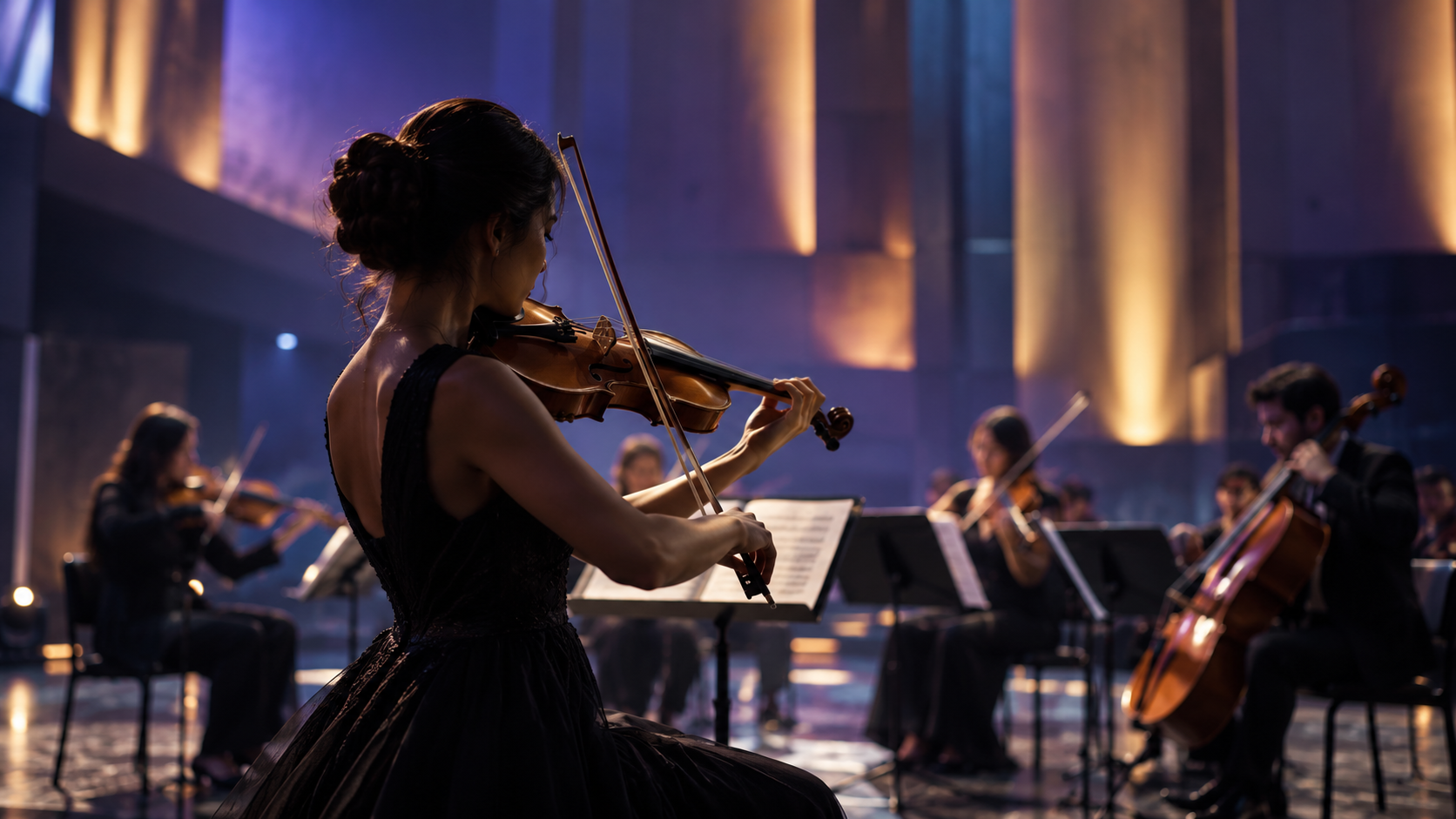
Original AI-generated editorial image for Tanya Strings.
What should performers and listeners take forward?
Conunova’s large-scale concerto debut, Kenney’s distinctive concert profile and Seoul’s collaborative festival model make one current message very clear: violin performance thrives on specific identity. Tanya Strings approaches the instrument as a world-class electric violin performer and content creator, so the practical question is always how sound, image and repertoire meet in front of a real audience. Whether you are booking a stage, building a set, or choosing your next concert, look for artists and programmes that give the violin a vivid role, not simply a familiar slot.