Violin News: Joshua Bell, Ray Chen and Venice
Today’s violin news moves between three very different stages. Joshua Bell and the Academy of St Martin in the Fields are scheduled in Shenzhen as their Asia tour begins; Ray Chen and pianist Chelsea Wang play a sold-out recital in Charlottesville tonight; and the 70th Venice Biennale Musica continues through October 24 with premieres and experiments in listening. Tanya’s performer take: a major tour, an intimate duo recital and a contemporary festival all ask the same question in different ways: what makes a violin event feel present, rather than merely prestigious? For performers, presenters and fans, the answer starts with a clear artistic frame and finishes with a real sense of occasion.
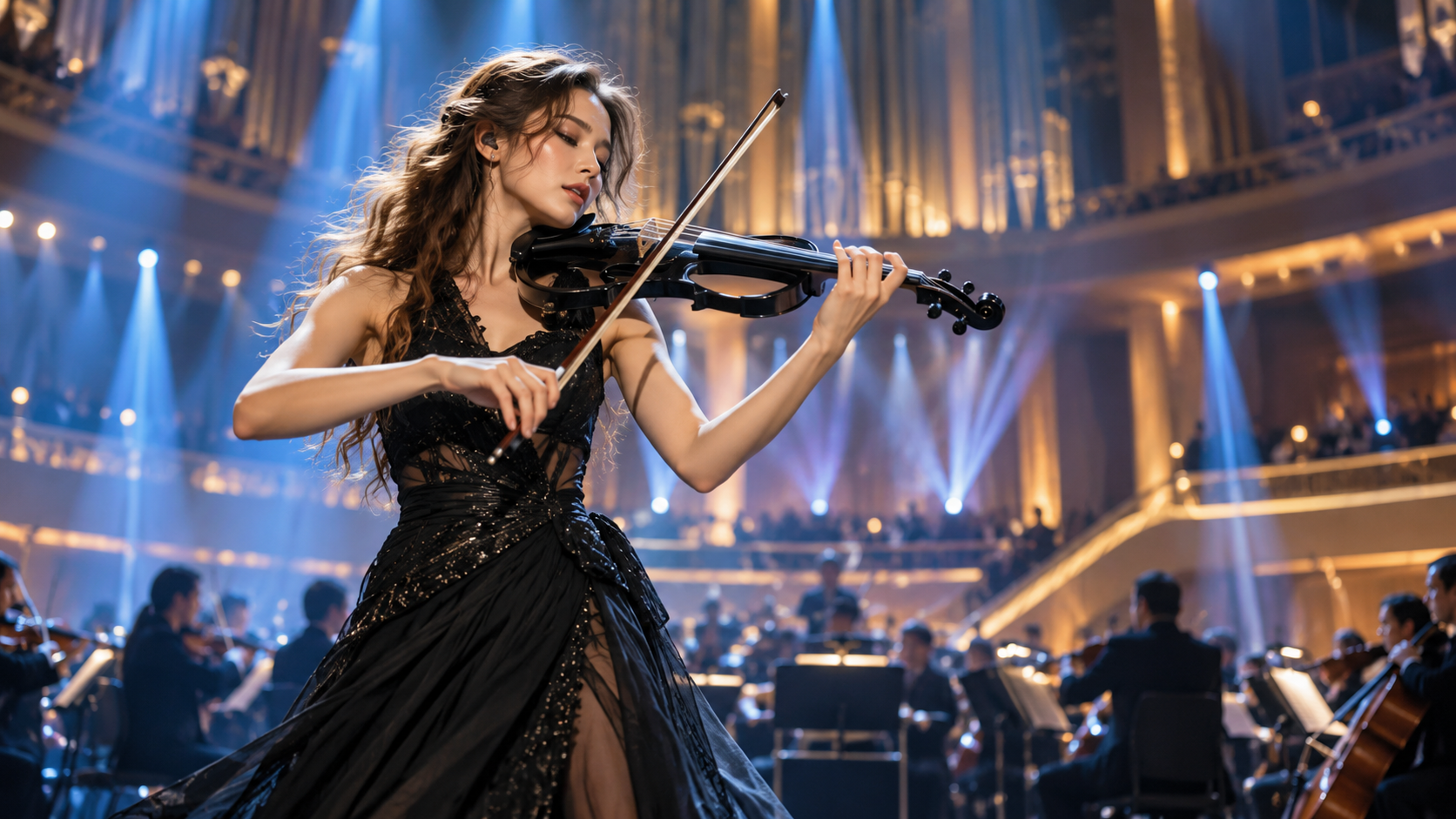
Original AI-generated editorial image for Tanya Strings.
What does Joshua Bell’s Shenzhen date signal?
Joshua Bell’s official schedule lists October 20 in Shenzhen with the Academy of St Martin in the Fields, the opening point of an Asia tour. His current season pairs the orchestra’s travelling identity with concertante repertoire and major symphonic works, and the official site places this tour before a later European run. A long itinerary works best with a recognisable programme, not simply a famous name.
For a violin soloist, touring with a chamber orchestra changes the visual and musical proposition. The conversation on stage can feel more immediate than a conventional concerto platform; leadership, listening and ensemble timing become part of what the audience sees. That is valuable for an electric violin performer too. A well-built live set can show more than a solo sound: it can reveal how a player cues a band or hands the spotlight to another musician.
Why should event planners notice the tour format?
Scale is not the same as distance. A travelling production needs a dependable technical advance, a local team that understands its pacing and a programme description audiences can grasp in one sentence. The strongest tours preserve their personality from city to city while leaving room for the room itself.
- Describe the musical idea before listing credentials.
- Protect rehearsal and soundcheck time across travel days.
- Make the on-stage relationship visible in lighting and camera coverage.
Tanya’s performer take: audiences remember a tour when it feels like a living musical conversation, not a branded transit route.
Why is Ray Chen’s recital a useful counterpoint?
The University of Virginia Arts Box Office lists Ray Chen and Chelsea Wang at Old Cabell Hall on October 20, with the event sold out. Their programme moves from Mozart’s B-flat Sonata, K. 454 and Grieg’s Third Sonata to Bach’s E-major Partita, then Sarasate’s Playera and Carmen Fantasy. Its arc offers conversation, solitude and a theatrical finish in one evening.
A violin-and-piano recital is an excellent lesson in set design for content creators. The repertoire has to offer changing camera energy without losing its musical logic. Bach can create a close, concentrated moment; Sarasate allows a more outward final chapter. A performer making short-form video can learn from that contrast: use a quiet frame to earn the impact of the fast, bright one that follows.
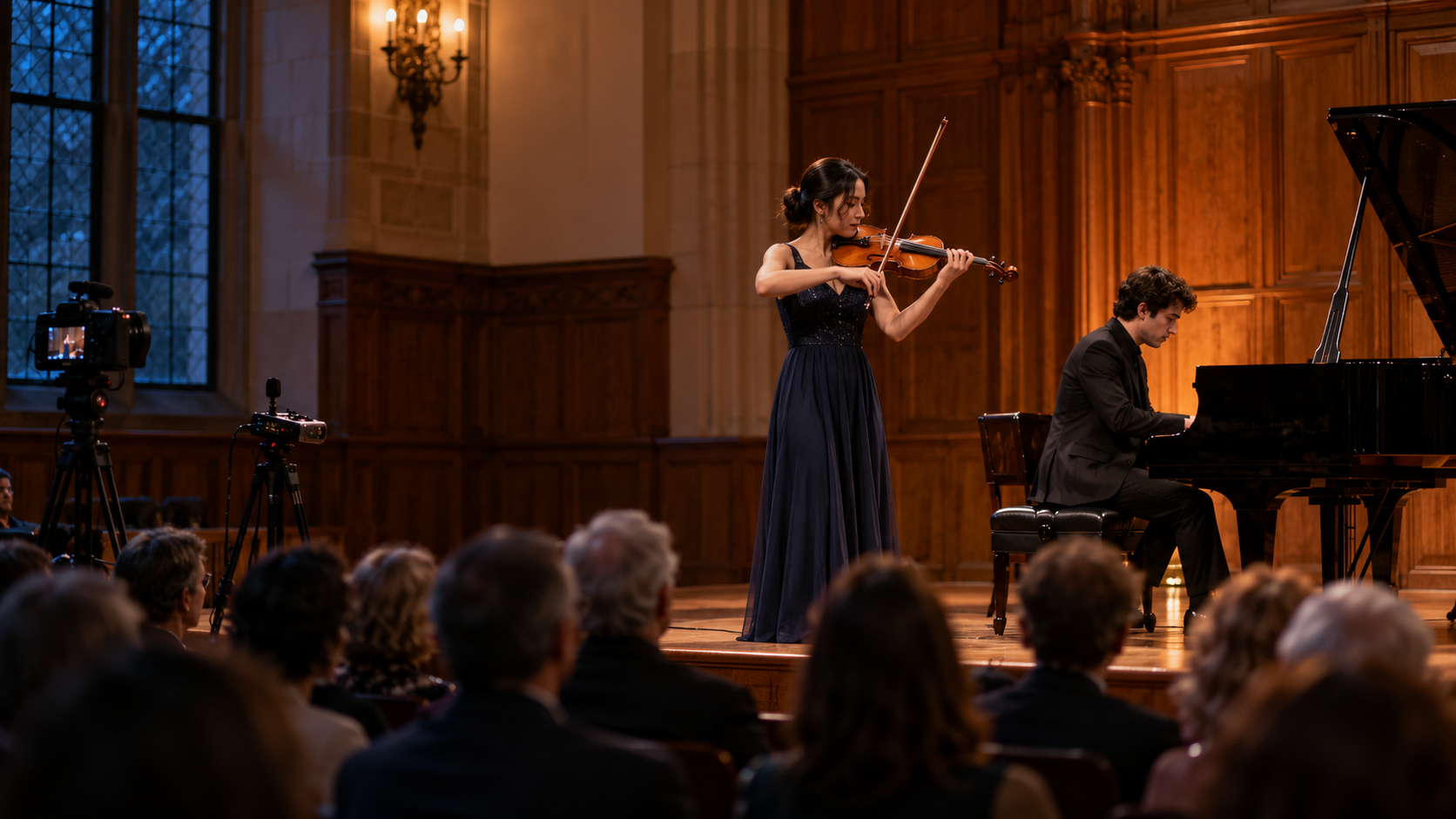
Original AI-generated editorial image for Tanya Strings.
How is Venice Biennale Musica expanding the listening field?
The official Venice Biennale Musica listing confirms that its 70th International Festival of Contemporary Music runs from October 10 to 24 under the title A Child of Sound, curated by Caterina Barbieri. The programme foregrounds world premieres, site-specific work and connections across experimental, classical and electronic practice. That is not violin news in the narrow celebrity sense, but it is important news for string players who want to hear where stage language and sound design are going.
New-music festivals give audiences permission to listen without a map. For violinists, that can mean treating texture, processing and space as compositional partners instead of background decoration. For presenters, it means explaining the invitation clearly: a risk can be exciting when the audience knows why it belongs in the room.
What should performers and listeners take forward?
Bell’s touring scale, Chen and Wang’s focused duo craft, and Venice’s appetite for new sound all point toward intentional programming. Tanya Strings approaches every stage as a world-class electric violin performer and content creator: the instrument, the production and the story need to meet at the same moment. Whether you are booking a concert, planning a crossover set or choosing your next ticket, look for the details that turn a violin appearance into an experience with a point of view.