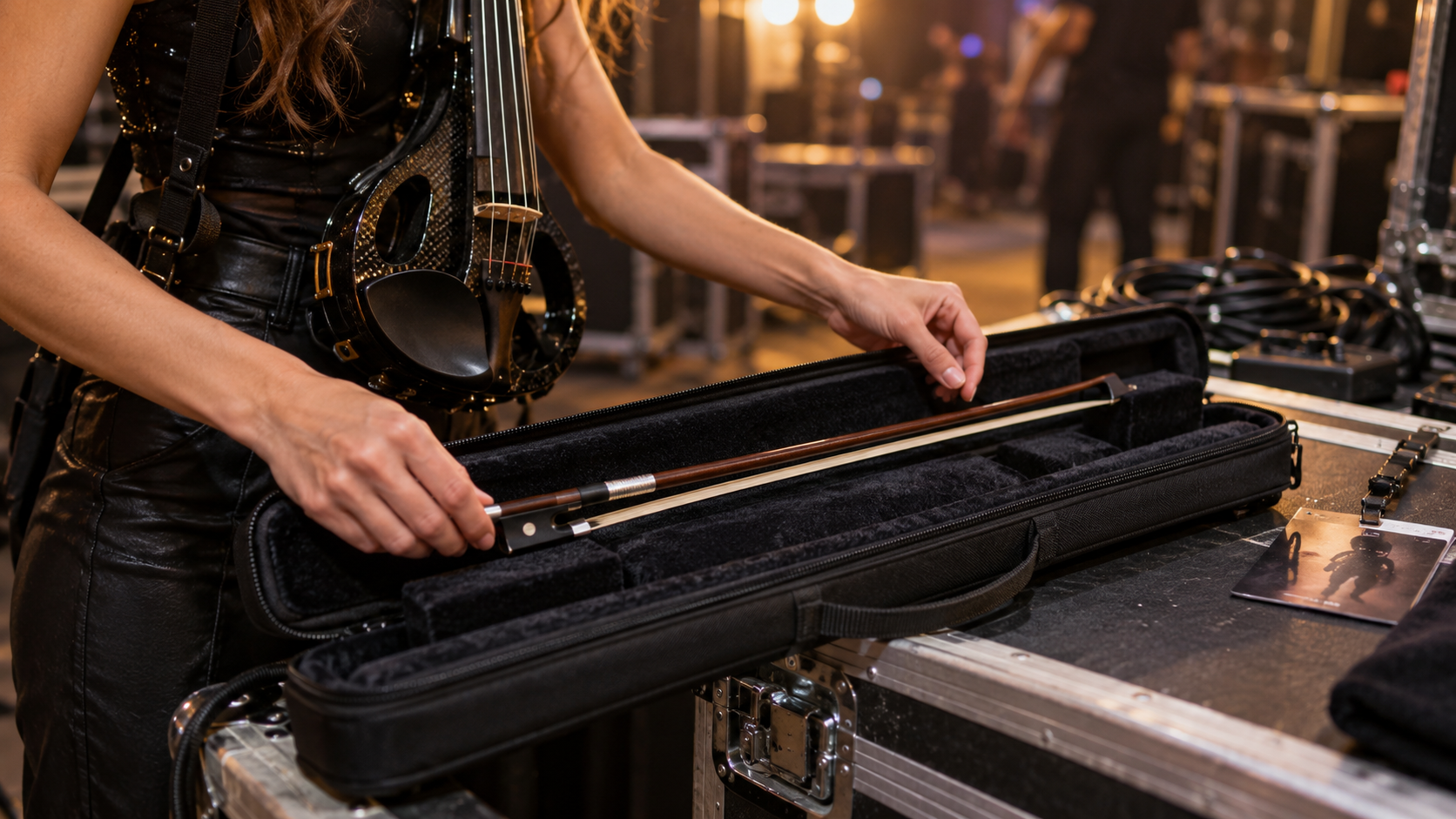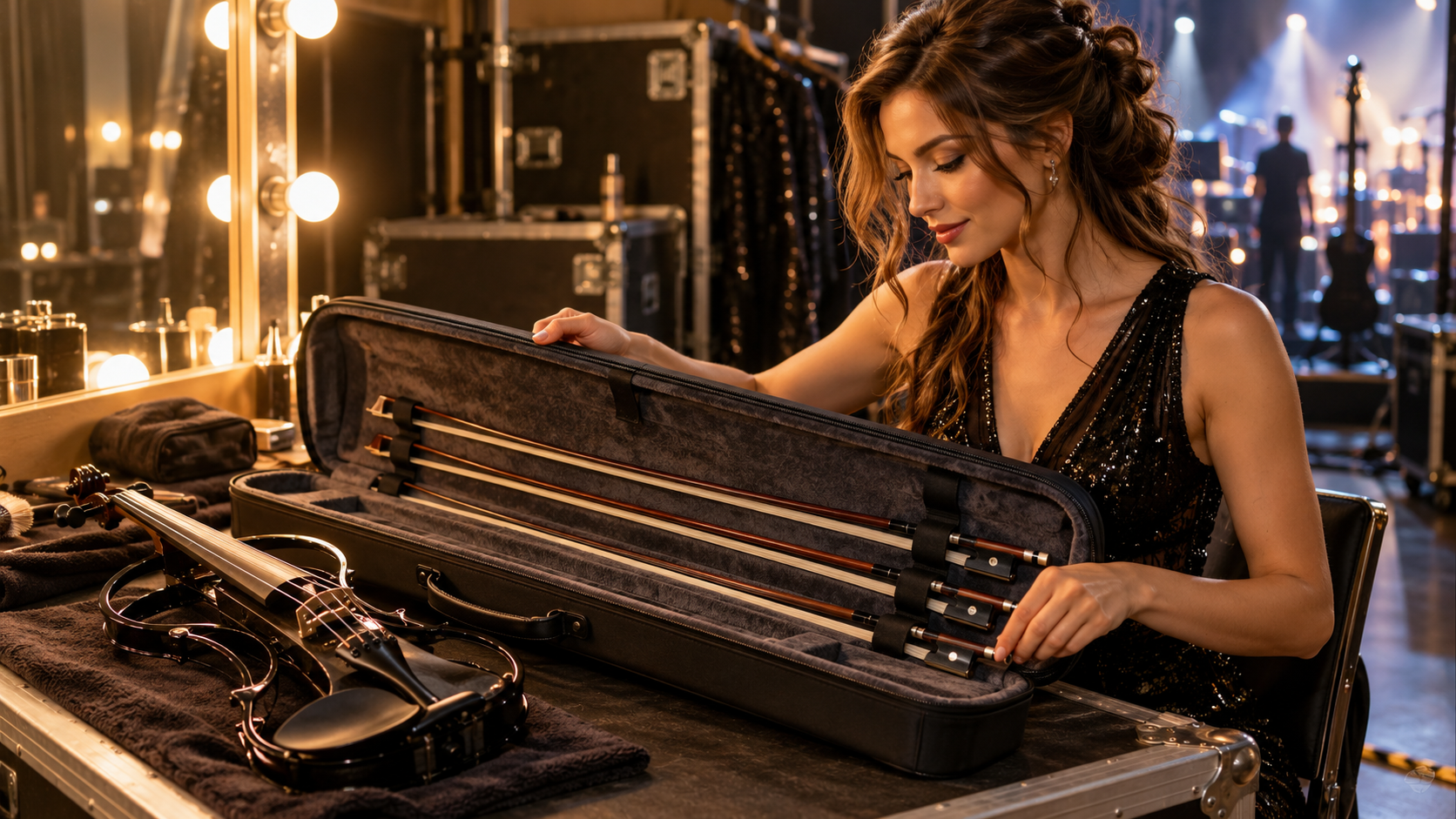
The best violin bow case for a touring electric violinist is a dedicated case that fits the exact bows you carry, secures them without stressing the stick or hair, and survives the trip from backstage to airport. For focused two-bow protection, compare BAM Hightech, GEWA Maestro, GEWA Matrix, GEWA Space, BAM Bow Tube and a fitted violin case with secure bow holders. Tanya Strings approaches a bow case as performance insurance: a primary bow and a ready backup should arrive calm, clean and usable, whether the next set is a gala, club date or filmed performance.
Some links in this article are affiliate links. I may earn a commission if you make a purchase, at no extra cost to you.
Buy for the bow first, then the travel plan. A bow case has a narrower job than an instrument case: it must hold the stick straight, keep frog and tip from knocking together, and remain easy to reach during a fast changeover. Measure the longest bow you will carry, including its screw, and decide whether you need one, two or more slots. For a self-supporting electric violin on a stage stand, a separate bow case can keep the backup secure at the wings rather than loose in a crowded instrument case.
| Option | Best for | Useful feature | Check first |
|---|---|---|---|
| BAM Hightech 2 Bows | Premium two-bow travel | Hard shell and two dedicated mounts | Budget and exterior length |
| GEWA Maestro | Traditional dedicated case | Purpose-built bow-case format | Exact model capacity |
| GEWA Matrix | Comparing case materials | Dedicated bow-case family | Fit and current specification |
| GEWA Space | Travel-oriented comparison | Another dedicated format | Latch and carry layout |
| BAM Bow Tube | Light secondary protection | Simple compact tube option | Protection level for your route |
| Fitted violin case holders | One-case local gigs | No separate piece to carry | Mount security and capacity |
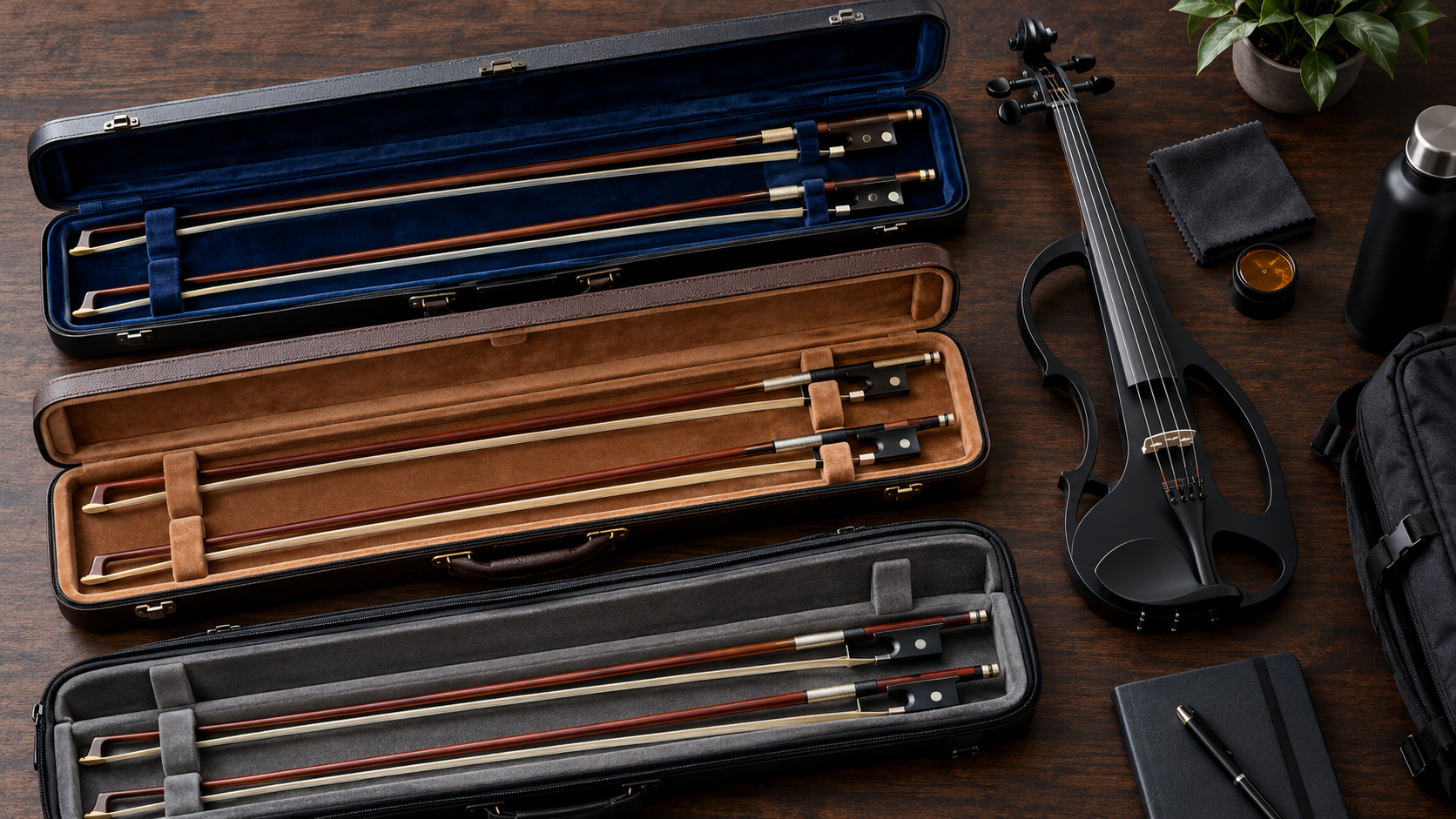
BAM’s Hightech 2 Bows Case is the premium benchmark when two protected bows need their own hard shell. The maker lists two secured mounting slots, magnetic clip retention, a triple-ply shell and an airtight seal. Pros: an intentional two-bow format and travel-minded construction. Cons: it is an expensive, separate item, so it makes most sense when the second bow is truly part of the show plan. Manufacturer details · Compare Amazon listings
GEWA’s Maestro range is worth checking for artists who want a conventional, dedicated bow case rather than a full violin shell. Pros: GEWA lists Maestro within its bow-case catalogue, making it a focused category comparison. Cons: the range includes variants, so do not assume every listing has the same capacity, material or interior. Confirm the exact model and dimensions with the seller before ordering. GEWA bow-case catalogue · Compare Amazon listings
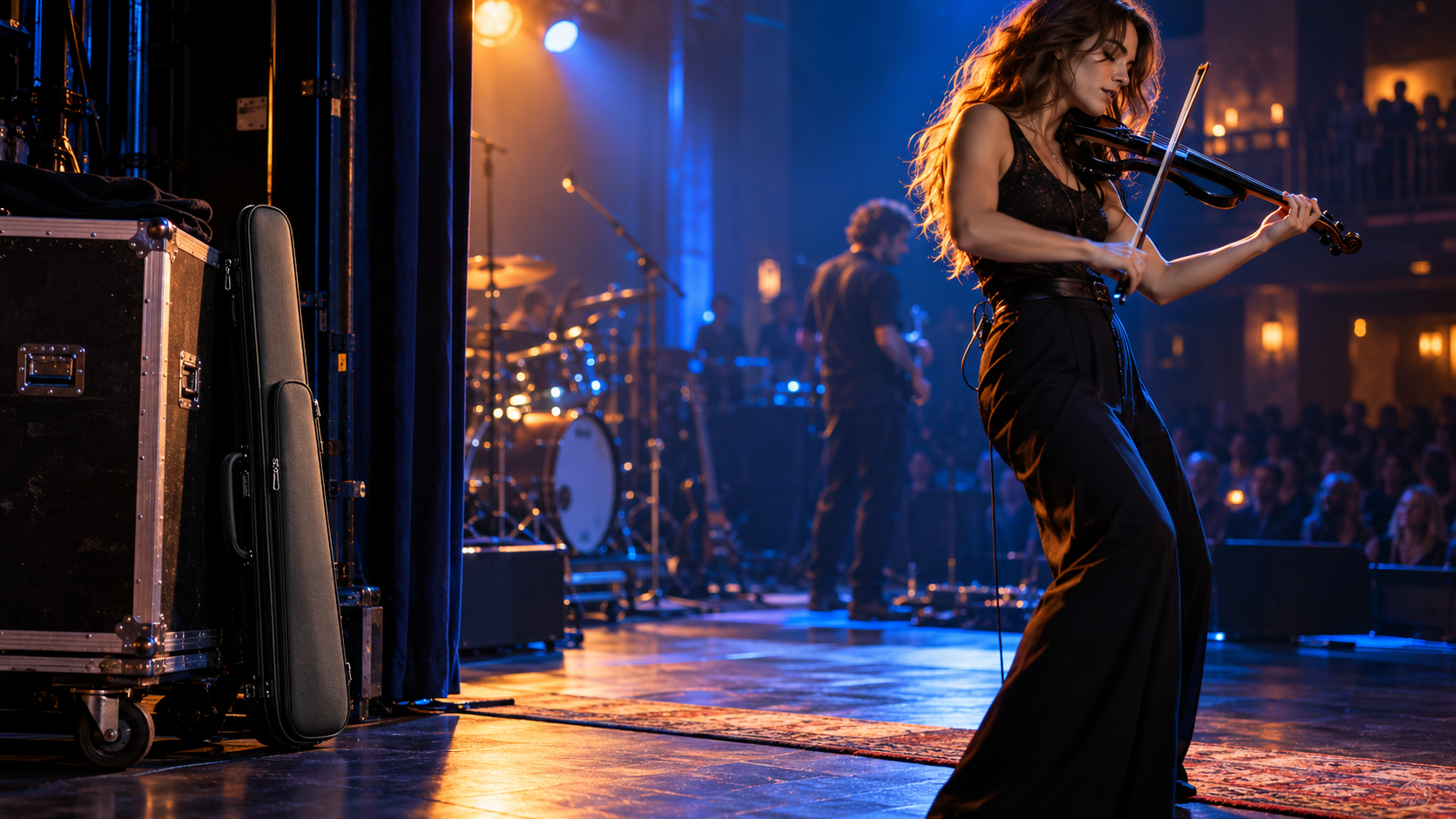
GEWA Matrix belongs on the shortlist when you are comparing dedicated cases across the same maker’s material and design families. Pros: it gives a touring performer a like-for-like alternative to examine beside Maestro rather than comparing unrelated bags. Cons: specifications vary by product version and retailer stock, so use the published listing as the final authority. I would check clip placement with the actual bow, not just rely on the category name. Manufacturer catalogue · Compare Amazon listings
GEWA Space is another worthwhile dedicated bow-case comparison for a performer who needs choices in carrying layout and finish. Pros: it is listed among GEWA’s bow-case options, so it serves a different role from a loose bow sleeve. Cons: never infer that a case protects every type of bow equally; confirm the internal length, number of mounts and whether the closure works for your routine. Manufacturer catalogue · Compare Amazon listings
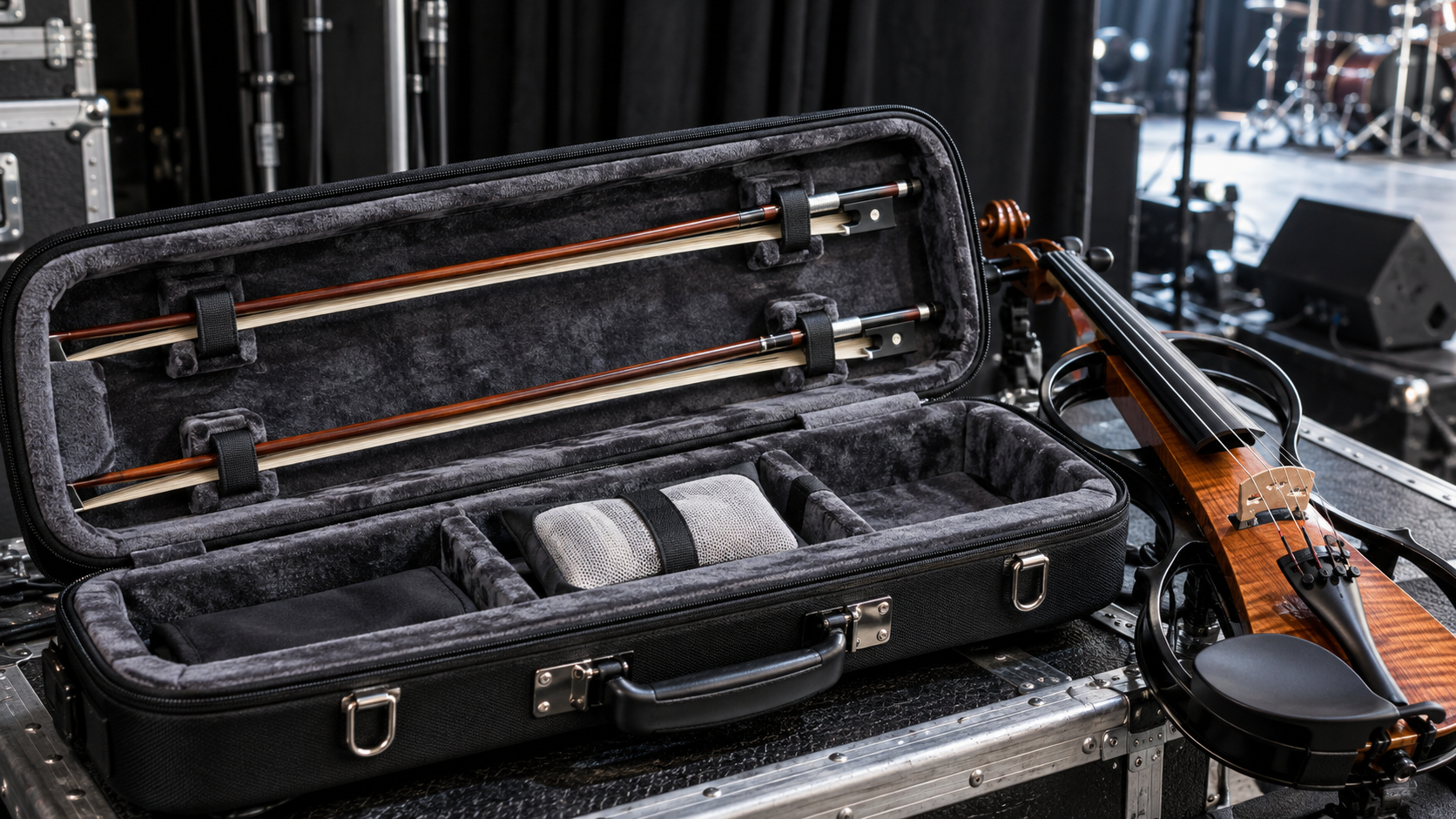
A BAM Bow Tube is a lighter, simpler direction for a second bow that needs protection inside a larger carry system. Pros: compact form and easy packing. Cons: a tube is not automatically the answer for every airline or hard-road situation; compare its protection, length and closure against your actual itinerary. Tanya Strings would reserve lightweight protection for controlled transport and choose a stronger dedicated shell for harder travel days. Manufacturer accessories · Compare Amazon listings
For local performances, a quality violin case with secure bow holders can be the cleanest solution. Pros: one fewer item at load-in and a familiar home for both bows. Cons: access can be slower when the instrument case is under a table or the violin is already on a stand, and some fitted cases only carry two bows. Treat this as a practical alternative, not a claim that every violin case is equal. Example fitted-case details · Compare Amazon listings
Measure first. A bow case should not push against the tip, crowd the screw, or compress the hair. Test the exact primary and spare bows if possible, especially when one is carbon fiber and the other is wood.
A short car transfer and an airport connection are not the same job. Look at shell, seal, latch security, strap attachment and how the case rides beside the electric violin case. Airline rules can change, so check the carrier before every trip.
Place the case where it is protected but reachable. At soundcheck, open it with the same hands and costume you will use on stage. This small rehearsal prevents a loose bow, a misplaced key or a frantic search under low light.

Tanya Strings is a world-class electric violin performer and content creator, so a bow has to be ready for a close-up camera angle as well as a demanding live entrance. I would pack the main bow and a prepared backup, loosen hair after the performance, close the case before moving any other equipment, and keep the bow case in my visual line during load-in. That repeatable rhythm protects the performance more than a complicated collection of accessories. These are performer-focused buying considerations, not claims that Tanya has personally tested every item listed.
It is useful when you travel with more than one bow, carry a backup, or need bows protected while the electric violin is on a stand. It does not replace checking venue and airline rules.
Many performers carry a primary bow and a compatible backup. Choose capacity around the real show and travel plan rather than filling empty slots.
Treat a valuable bow as carry-on whenever airline rules and space permit. Check the carrier’s current policy before travel, and use appropriate protection if checking is unavoidable.
Confirm internal length, capacity, secure retention, shell protection, latches, carry method and exact bow fit.