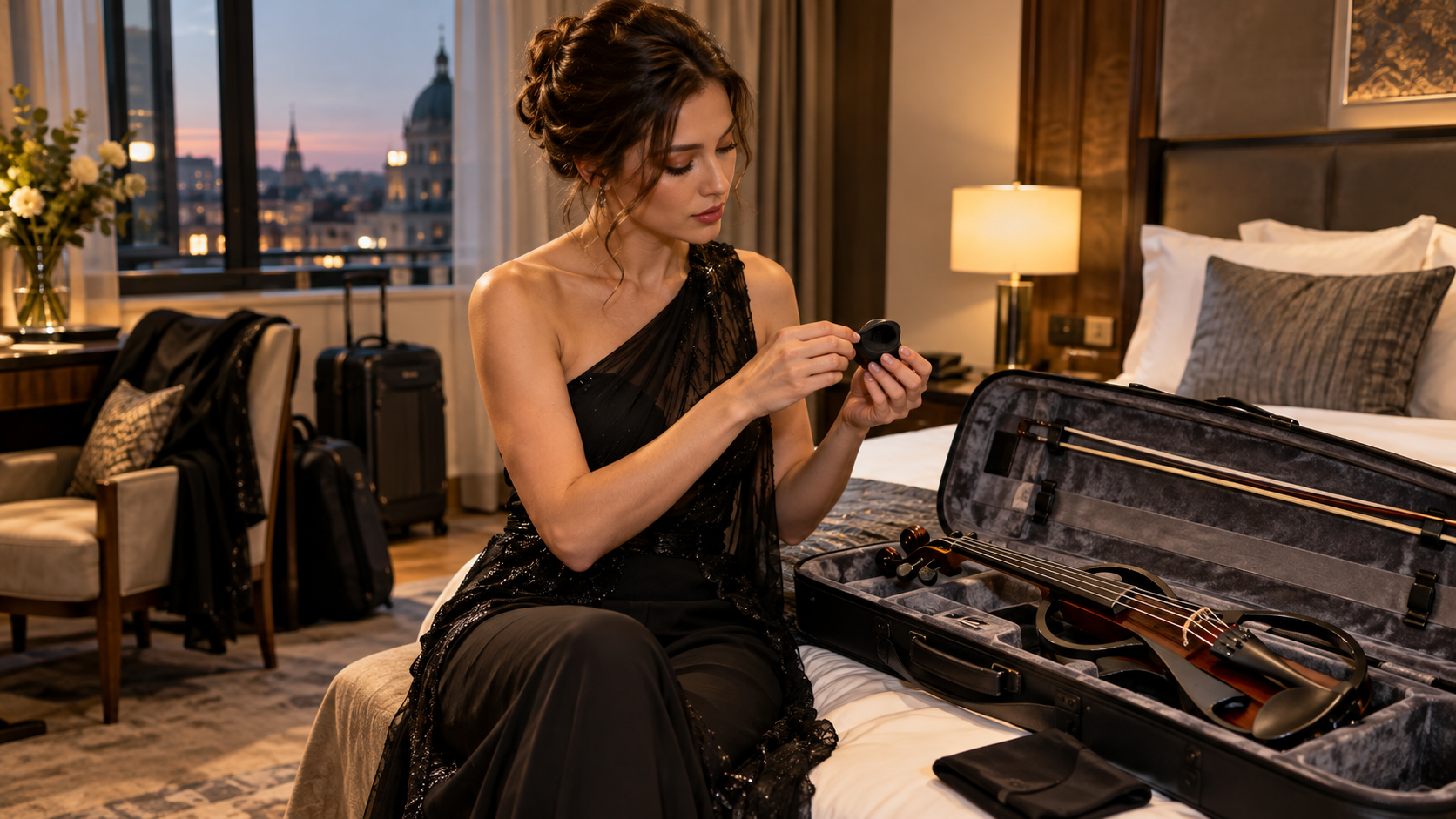
The best violin practice mute for a touring electric violinist is a compact model that fits the bridge gently, cuts enough acoustic volume for a considerate hotel or backstage warm-up, and disappears into a case pocket after use. Compare an Artino PM-01, WMutes Violin Practice Mute, Roth-Sihon Ultra Practice Mute, GEWA Practice Mute, Tourte Two-Hole Practice Mute and D'Addario Spector Mute by fit, weight and how much reduction your room really needs. Tanya Strings treats a mute as a performer’s contingency tool: it keeps hands and bow awake when plugging in is impossible, without pretending that every room permits playing.
Some links in this article are affiliate links. I may earn a commission if you make a purchase, at no extra cost to you.
Start with the bridge, not the brand. A practice mute is an acoustic accessory for a traditional violin; a solid-body electric violin may not need one when unplugged, and some bridge shapes do not accept one safely. For a performer moving between rehearsal room, green room and hotel, the right mute has three jobs: fit without force, remain easy to remove, and reduce sound enough that the warm-up stays considerate. It is not a pass to play at any hour or volume.
| Option | Best for | Why compare it | Check first |
|---|---|---|---|
| Artino PM-01 | Compact case-pocket option | Dedicated practice-mute search | Exact bridge fit |
| WMutes Violin Practice Mute | Simple removable solution | Purpose-led comparison | Instrument size |
| Roth-Sihon Ultra Practice Mute | Maximum reduction search | Ultra-mute category | Pressure on bridge |
| GEWA Practice Mute | Established accessory range | Violin-accessory alternative | Current listing details |
| Tourte Two-Hole | Light everyday mute | Small traditional shape | Reduction may be modest |
| D'Addario Spector | Low-profile comparison | Known accessory family | Use case and fit |
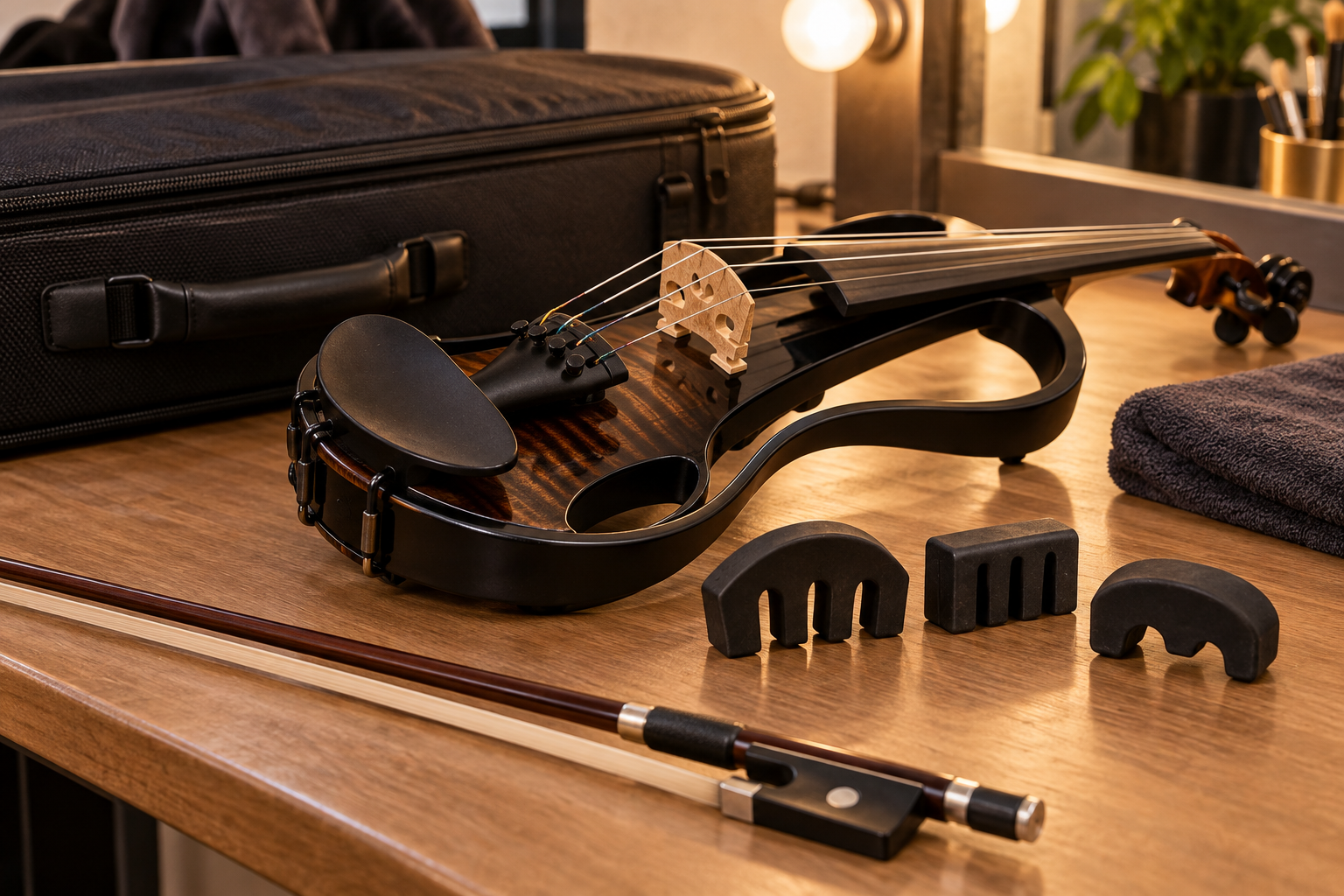
The Artino PM-01 is a sensible starting search for an artist who wants a dedicated practice-mute format in a small accessory pocket. Pros: it is easy to compare against other compact mutes and keeps the purchase focused on quiet preparation. Cons: a name and listing photo cannot confirm fit; measure and read the seller’s instrument-size guidance before buying. Artino details · Compare Amazon listings
WMutes is worth comparing when you want a purpose-labelled option for an acoustic violin warm-up before an electric set. Pros: it keeps the intent clear and gives you another fit and material option to evaluate. Cons: do not assume a mute makes a room soundproof. Test it only where playing is allowed, and remove it if the bridge feels crowded. WMutes details · Compare Amazon listings

Roth-Sihon Ultra is for performers who specifically need to compare stronger reduction-oriented options. Pros: the product search makes the intended use unmistakable. Cons: higher reduction can change the familiar response and feel under the bow, so reserve it for a short readiness check rather than judging stage tone. Roth-Sihon details · Compare Amazon listings
GEWA is useful on a shortlist because its accessories give touring players a familiar maker to compare alongside specialist mute brands. Pros: it is a practical catalogue comparison for someone already shopping violin-care or case accessories. Cons: range names and retailer stock change, so confirm the exact product, 4/4 compatibility and supplied instructions before checkout. GEWA details · Compare Amazon listings
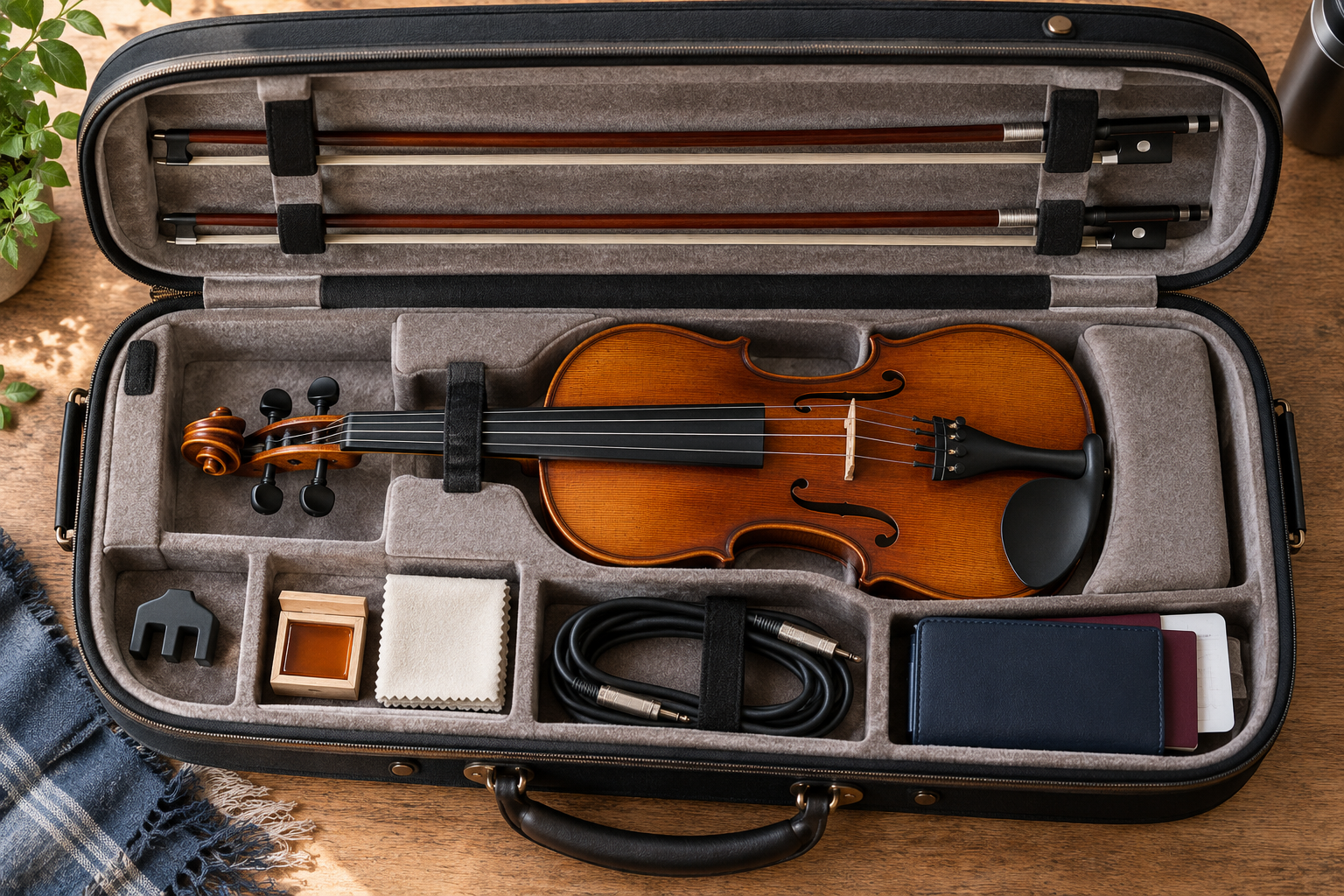
A Tourte Two-Hole style mute belongs in the comparison when low weight and a traditional small form matter more than maximum reduction. Pros: it is unobtrusive and easy to keep available. Cons: it may not give the degree of quiet you need for a thin-walled room, so choose from the actual environment rather than the smallest accessory. Tourte details · Compare Amazon listings
D'Addario’s Spector mute is another compact reference point for a performer deciding between traditional and reduction-focused designs. Pros: it is a recognizable accessory family that is easy to replace while travelling. Cons: it serves a different job from a heavy practice mute, so check whether your priority is a subtle colour change or genuinely quieter preparation. D'Addario details · Compare Amazon listings
Confirm size and bridge clearance before ordering. Never force rubber or metal onto a bridge, and do not rely on a generic listing for a nonstandard electric-violin design. Ask the instrument maker when the fit is unclear.
Choose reduction for the location. A green room with a closed door, a hotel room and a shared apartment need different decisions. A mute lowers output; it does not erase it. Keep warm-ups brief and honor venue rules and quiet hours.
Keep the mute in a small pocket or pouch, away from the bridge during travel. Before soundcheck, remove it, check the bridge alignment and return to the normal performing setup. This reduces the chance that a quiet warm-up accessory sneaks onto stage.
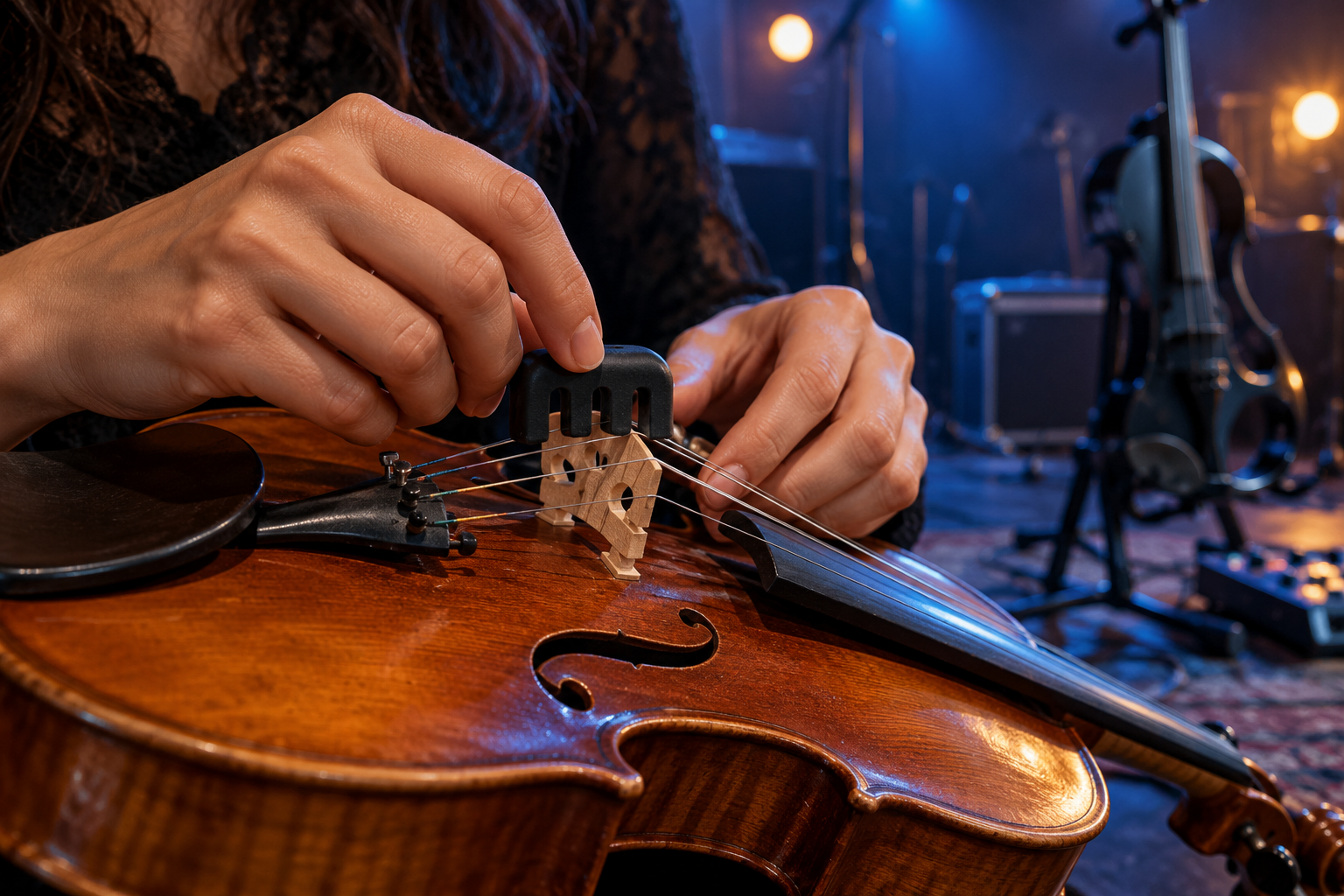
Tanya Strings is a world-class electric violin performer and content creator, so preparation has to translate into a confident live entrance and a clean camera-ready moment. I would use a compact mute for a short, permitted acoustic check when the electric rig is unavailable, then remove it before plugging in and verify every part of the stage chain at soundcheck. The mute is a quiet backup plan, not a substitute for the live tone, monitoring or the venue’s rules. These are performer-focused buying considerations, not a claim that Tanya has personally tested every item listed.
No. It reduces acoustic output, but it does not make a violin silent. Use it respectfully and ask what is appropriate in the room.
Only if the bridge and body safely accept it. Many solid-body electric violins are already quiet unplugged; check the maker’s guidance first.
Use the size made for your instrument, fit it gently over the bridge, and remove it after the warm-up. Do not force it or leave it on during transport.
A compact backup is sensible because these accessories can be misplaced. Keep it in the case accessory pocket, not loose in a bag.